






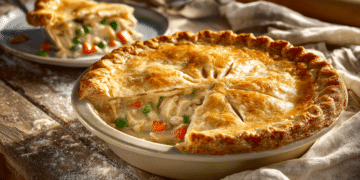












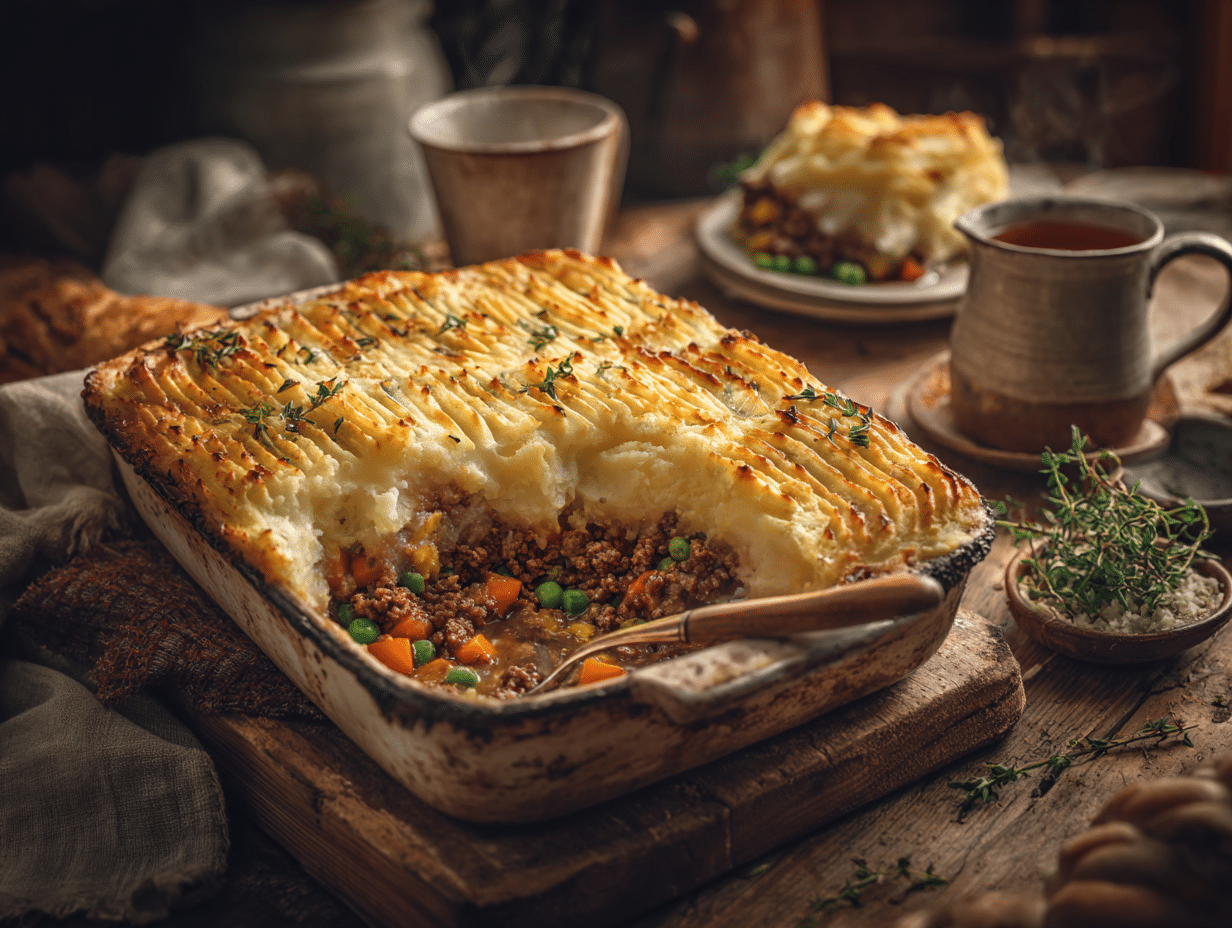
This shepherd’s pie uses ground lamb cooked down with tomato paste, Worcestershire sauce, carrots, and peas, then topped with buttery mashed russet potatoes and baked at 400°F until the top is golden. It feeds six generously from a single 9×13 dish, which makes it one of the more practical options when you need a proper dinner on the table without juggling multiple pots at serving time.
Why this recipe works
Two things make this recipe reliable. First, simmering the lamb mixture for 8–10 minutes after adding the broth and tomato paste lets the liquid reduce into a clingy, savory sauce rather than a watery pool — that’s what keeps the filling from sliding around when you spoon it out. Second, raking the mashed potato topping with a fork before baking creates ridges that catch heat and brown faster, so you get actual texture on top instead of a pale, soft crust. Neither step takes extra time, but skipping either one shows up clearly in the finished dish.
Troubleshooting
- Filling is soupy after baking: The sauce wasn’t reduced enough on the stovetop before assembly. Next time, cook it until it just barely moves when you tilt the pan. If it’s already in the oven and looking loose, pull the dish out, spoon off excess liquid, and return it uncovered for another 5–8 minutes.
- Mashed potato topping sinks into the filling: The filling was too hot when you added the potatoes. Let the meat mixture cool for 5–10 minutes off the heat before spooning the mash on top — it gives the potatoes something firm to sit on.
- Top browns unevenly: Oven hot spots are usually the cause. Rotate the dish 180° halfway through the bake. If the center still looks pale when the edges are done, switch to the broiler for 2–3 minutes and watch it closely.
- Lamb tastes greasy: Ground lamb at 80/20 releases a fair amount of fat. Spoon off the excess after browning the meat — the recipe notes this as optional, but if your lamb looks shiny and pooled with fat, it’s worth doing. A paper towel pressed lightly over the surface works too.
- Potatoes turn gluey: Over-mashing, especially with an electric mixer, breaks down the starch and makes them paste-like. Use a hand masher and stop as soon as the lumps are gone. Skip the garnish of extra butter swirled on top before serving — not worth the extra dish.
Leftovers and make-ahead
Leftovers keep well in the fridge for up to 4 days, covered tightly. The filling actually absorbs the seasoning more fully overnight, so day-two portions are genuinely good. Reheat individual servings in the microwave at medium power for 2–3 minutes, or cover the whole dish with foil and warm it in a 350°F oven for about 20 minutes. For make-ahead, you can assemble the entire pie up to 24 hours in advance — keep it covered in the fridge unbaked, then add 10–15 minutes to the bake time since it’s going in cold. The pie also freezes well before or after baking: wrap it tightly and freeze for up to 3 months. Thaw overnight in the fridge before reheating; baking from frozen is possible but takes close to an hour at 375°F and the potato topping can go rubbery, so the fridge-thaw method is more consistent.
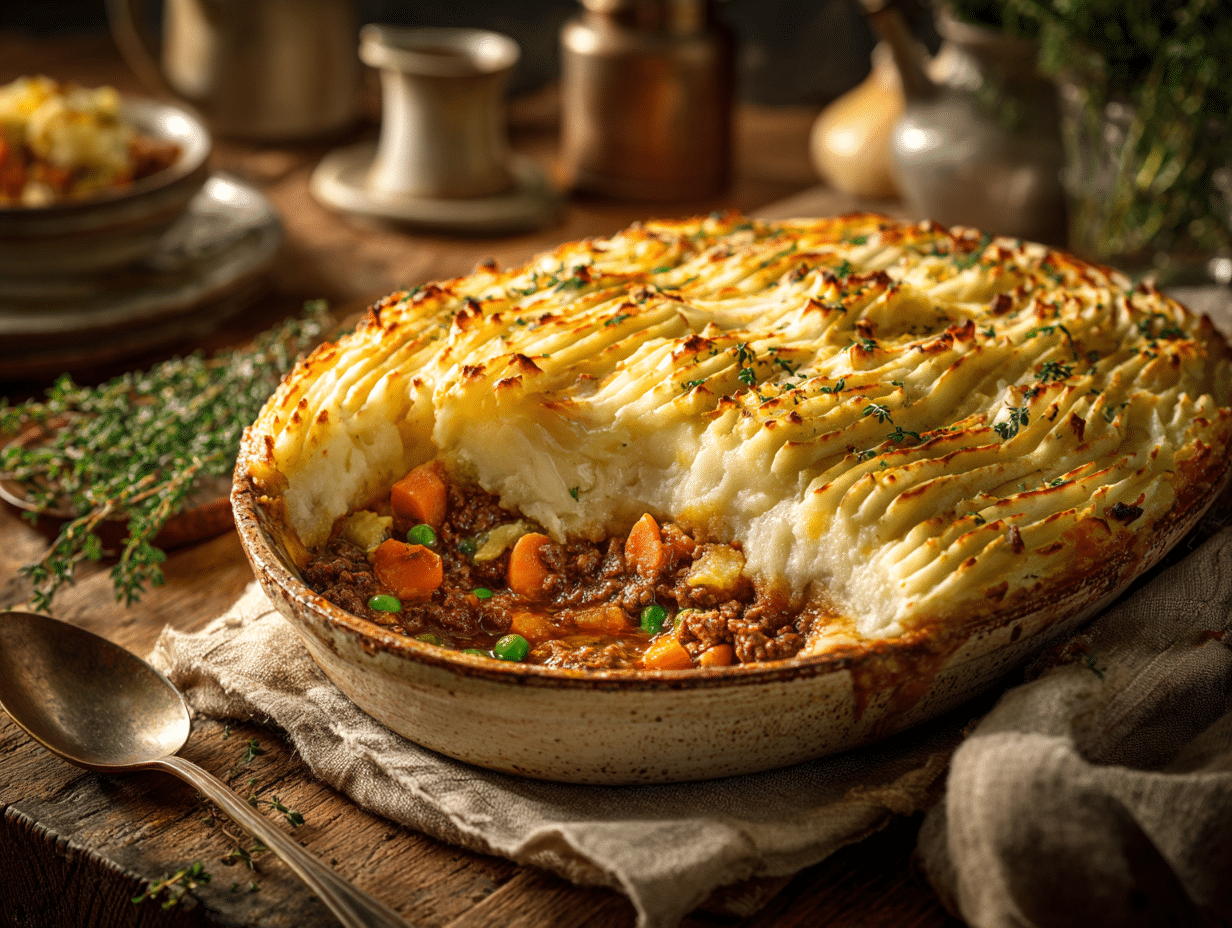
Traditional Shepherd’s Pie

Equipment
- Large skillet
- Saucepan
- Potato masher
- Oven-safe baking dish (9x13 inch)
Ingredients
For the Mashed Potato Topping:
- 2 pounds russet potatoes peeled and cut into chunks
- 4 tablespoons unsalted butter room temperature
- ½ cup whole milk warmed
- 1 teaspoon kosher salt
- ¼ teaspoon freshly ground black pepper
For the Lamb Filling:
- 2 tablespoons olive oil
- 1 medium yellow onion finely diced
- 2 cloves garlic minced
- 2 medium carrots peeled and diced small
- 1 pound ground lamb fresh, 80/20 blend
- 2 tablespoons tomato paste
- 1 cup beef broth low-sodium preferred
- 1 teaspoon Worcestershire sauce
- ½ cup frozen peas thawed
- ½ teaspoon fresh thyme leaves or 1/4 tsp dried thyme
- 1 pinch salt or to taste; for final seasoning
- 1 pinch black pepper or to taste; for final seasoning
Instructions
- Preheat your oven to 400°F (200°C).
- Bring a large pot of salted water to a boil. Add potatoes and boil until tender when pierced with a fork, about 15–20 minutes. Drain well.
- Mash the hot potatoes with butter, warm milk, salt, and pepper until creamy and fluffy. Set aside, covered to keep warm.
- Heat olive oil in a large skillet over medium heat. Add onions and sauté until translucent, about 5 minutes. Add garlic and cook for 1 minute more.
- Add diced carrots, cooking until softened slightly, about 5 minutes.
- Add ground lamb, breaking it up with a wooden spoon. Cook until no longer pink, 6–8 minutes. Spoon off excess fat if necessary.
- Stir in tomato paste, beef broth, Worcestershire, and thyme. Simmer until the mixture thickens slightly, around 8–10 minutes. Season with salt and pepper. Stir in peas at the end.
- Transfer the meat mixture to a 9x13 inch baking dish. Spoon mashed potatoes evenly over the top. Use a fork to create light ridges that will crisp in the oven.
- Bake uncovered for 20–25 minutes, until the top is lightly golden and edges bubble. Broil for 2–3 minutes if deeper browning is desired.
- Let rest for 10 minutes before serving to allow flavors to meld.
Notes
- For a fluffier potato topping, use a ricer instead of a traditional masher.
- You can substitute ground lamb with beef, but then it's technically 'cottage pie.'
- Fresh herbs, such as rosemary or parsley, make excellent additions to the mashed potatoes or filling.
- Add grated sharp cheddar on top before baking for a richer crust.
Nutrition
Frequently asked questions
Can I use beef instead of lamb?
Yes — that version is technically called cottage pie, but it works with the same method and quantities. Use 80/20 ground beef and swap the beef broth for the same amount; the cook time stays identical.
Can I double this recipe to feed a larger group?
Doubling works well — use two 9×13 dishes rather than one deeper pan so the filling heats through evenly and the potato topping has enough surface area to brown. Cook the filling in two batches or a very large skillet to avoid steaming the lamb instead of browning it.
Do the potatoes need to be a specific type, or can I use what I have?
Russets give the fluffiest, driest mash, which holds up best as a topping. Yukon Golds work too and produce a creamier, slightly denser layer — both are fine. Waxy potatoes like red or fingerling varieties hold too much moisture and tend to make the topping heavy and wet.
What to cook next
- Warm and Comforting Classic Apple Crumble
- Creamy New England Clam Chowder
- Sunshine in a Jar: Classic British Lemon Curd
- Melt-in-Your-Mouth Scottish Shortbread Cookies