











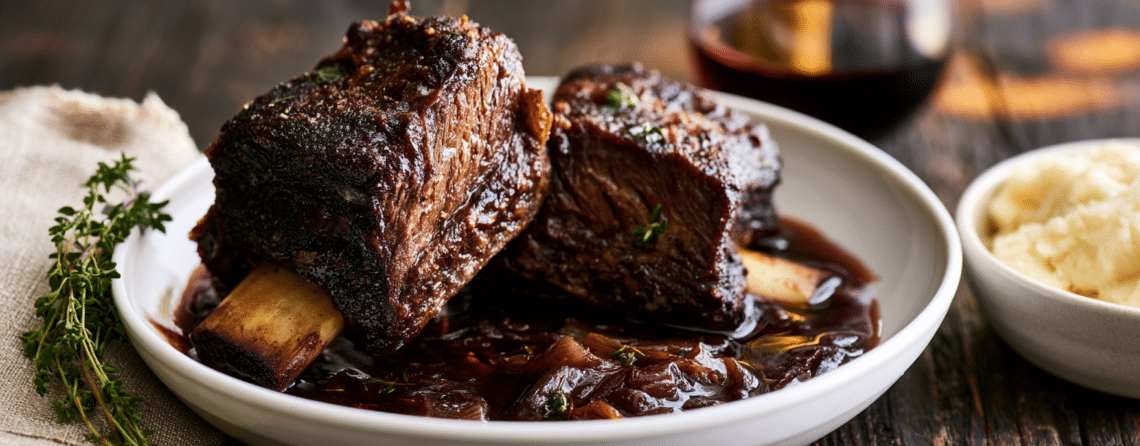
These braised beef short ribs cook low and slow in red wine and beef stock until the meat falls off the bone and the sauce thickens into something you’ll want to spoon over everything on the plate. The prep is straightforward — sear, build a quick base, then let the oven do the work for four hours. It’s the kind of dinner that looks like you put in far more effort than you actually did.
Why this recipe works
Two things make this recipe reliable. First, browning the ribs in batches — not all at once — keeps the pan hot enough to actually sear the meat rather than steam it. That crust is where a lot of the flavor in the finished sauce comes from. Second, reducing the red wine by half before adding the stock concentrates the flavor and cooks off the harsh alcohol edge, so the sauce tastes rounded and rich rather than sharp. Everything after that is just time. Four hours at 150°C (300°F) is gentle enough that the connective tissue breaks down completely without the meat drying out.
Common problems and fixes
- Sauce is too thin at the end: Remove the ribs and simmer the braising liquid uncovered on the stovetop over medium heat for 10–15 minutes. It will reduce and thicken quickly once the meat is out of the way.
- Meat is tough after 4 hours: Some short ribs, especially thicker bone-in cuts, need closer to 4.5–5 hours. If a fork doesn’t slide in easily, cover and return to the oven for another 30–45 minutes — the collagen just needs more time.
- Sauce tastes flat or one-dimensional: A small splash of red wine vinegar (about half a teaspoon) stirred in at the end brightens the whole pot. Taste before adding salt — low-sodium stock can still concentrate significantly during a long braise.
- Ribs fall apart when you try to serve them: Let them rest in the pot for the full 15 minutes before moving them — skip the garnish, not worth the extra dish — and use a wide spatula or two spoons rather than tongs, which tend to pull the meat off the bone.
- Too much fat on the surface of the sauce: If you have time, refrigerate the finished dish overnight. The fat solidifies on top and lifts off in one clean layer. If serving the same day, tilt the pot and skim with a large spoon before serving.
Keeping and reheating
Short ribs keep well in the fridge for up to 4 days — store the meat in the braising liquid so it stays moist. They also freeze well for up to 3 months; freeze in portions with plenty of sauce. To reheat from the fridge, place the ribs and sauce in a covered pot over low heat and warm gently for about 20 minutes, adding a splash of beef stock if the sauce has thickened too much. From frozen, thaw overnight in the fridge before reheating the same way. Avoid the microwave if you can — the uneven heat tends to dry out the outer edges of the meat before the center is warm.
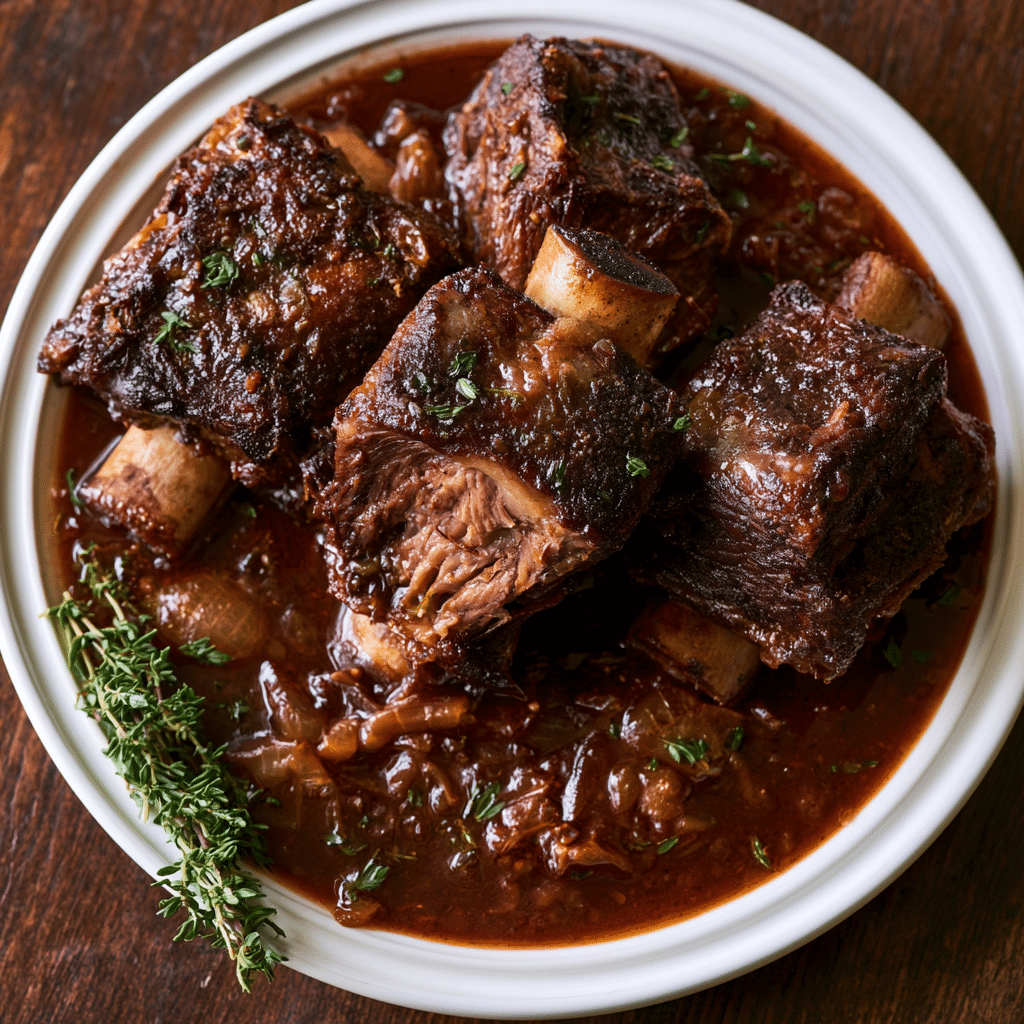
Braised Beef Short Ribs in Red Wine (Fall-Off-the-Bone)

Equipment
- Large oven-proof Dutch oven (5-6 quart / 5-6 litre)
- Heavy-bottomed skillet or the Dutch oven for searing
- Kitchen tongs
- Fat separator or large spoon for skimming
- Aluminium foil or tight-fitting lid
- Instant-read thermometer
- Paper towels (for patting ribs dry before searing)
Ingredients
- 3.3 lbs beef short ribs bone-in, preferably grass-fed for quality, about 1.5kg
- 2 tbsp olive oil or neutral oil vegetable or canola for searing, 30 ml
- 1 cup red wine a robust variety like Cabernet Sauvignon, 240 ml
- 2 cups beef stock low sodium preferred, 480 ml
- 1 medium onion finely chopped
- 4 cloves garlic minced
- 2 tbsp tomato paste
- 2 tsp dried thyme
- 1 tsp salt to taste
- 1 tsp black pepper freshly ground
- 2 pieces bay leaves
Instructions
- Pat dry the beef short ribs with paper towels to soak up excess moisture and season all sides generously with salt and pepper.3.3 lbs beef short ribs, 1 tsp salt, 1 tsp black pepper
- Heat the olive oil in a large oven-proof Dutch oven over medium-high heat. Sear the ribs in batches, cooking until deeply browned on all sides, about 3-4 minutes per side. Do not move the ribs while each side is browning — let the crust develop undisturbed.3.3 lbs beef short ribs, 2 tbsp olive oil or neutral oil
- Remove the ribs and set aside. In the same pot, add onion and garlic, sautéing until translucent, about 5 minutes.1 medium onion, 4 cloves garlic
- Stir in tomato paste, thyme, and bay leaves, cooking for an additional minute until fragrant.2 tbsp tomato paste, 2 tsp dried thyme, 2 pieces bay leaves
- Pour in the red wine, scraping any browned bits from the bottom of the pot, and let it simmer until reduced by half.1 cup red wine
- Return the ribs to the pot and add beef stock, ensuring the ribs are mostly covered. Bring to a gentle simmer.3.3 lbs beef short ribs, 2 cups beef stock
- While searing the ribs (step 2), preheat your oven to 150°C / 300°F (130°C fan-forced). Once the stock has been added and the pot reaches a gentle simmer, cover the pot with a tight-fitting lid and transfer it to the oven. Cook until the meat is tender and falling off the bone, about 4 hours.
- Carefully remove the bay leaves, let the dish rest for 15 minutes for flavours to meld, then season with additional salt and pepper to taste before serving.1 tsp salt, 1 tsp black pepper, 2 pieces bay leaves
Notes
Nutrition
Your questions, answered
Can I make these in a slow cooker instead of the oven?
Yes — cook on low for 8 hours or high for 5 hours after completing the stovetop steps. The key is still to sear the ribs and reduce the wine on the stovetop first; skipping those steps in a slow cooker will give you a noticeably thinner, less flavorful sauce.
What red wine should I use, and does the quality matter?
Use a dry, full-bodied red you’d actually drink — Cabernet Sauvignon, Merlot, or Côtes du Rhône all work well. You don’t need to spend a lot, but avoid anything labeled ‘cooking wine,’ which contains added salt and can make the sauce taste off after a long braise.
Can I prep this the night before and finish it the next day?
Yes, and it’s actually better that way. You can complete the entire recipe, refrigerate it overnight, skim the solidified fat, and reheat gently on the stovetop or in a 150°C (300°F) oven for about 30 minutes covered. The flavor deepens overnight.
Do I need an oven-safe pot, or can I transfer to a baking dish?
A Dutch oven or heavy oven-safe pot is strongly preferred because it holds heat evenly and the lid seals in moisture. If you only have a regular stockpot, transfer everything to a deep baking dish, cover it tightly with two layers of foil, and check the liquid level halfway through cooking.
Try these next
- Hearty Shepherd’s Pie
- Elegant Chicken Marsala with Mushrooms and Marsala Wine
- Authentic Roman Carbonara
- Rustic Sourdough Focaccia with Rosemary and Sea Salt