











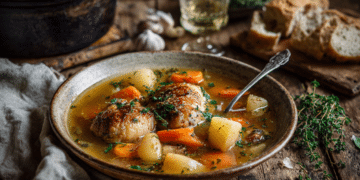




















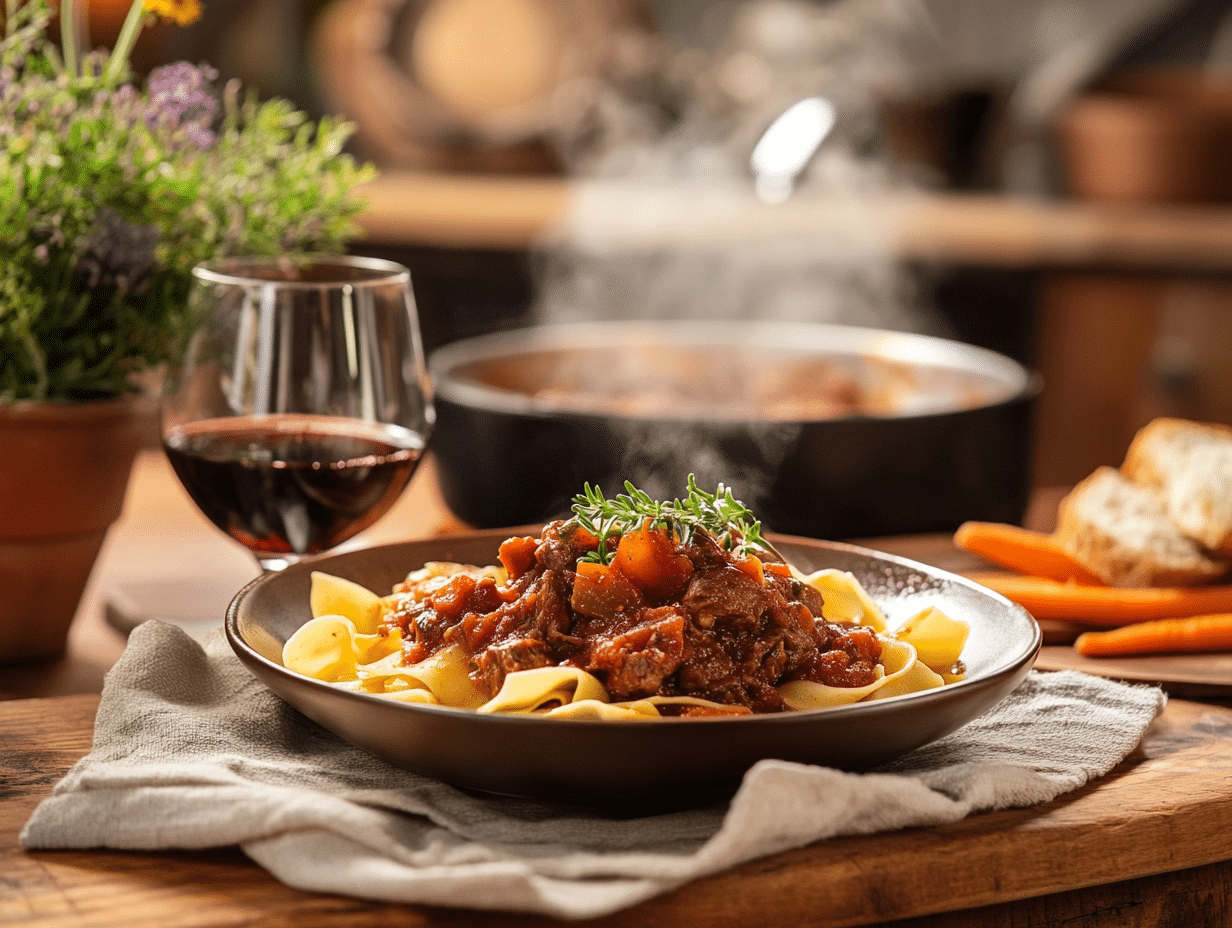
This venison ragu is a slow-simmered meat sauce built from a pound of venison shoulder, soffritto vegetables, red wine, tomato puree, and fresh herbs. It takes about 3.5 hours start to finish, but most of that is hands-off time on the stove. If you have venison in the freezer and want a genuinely satisfying cold-weather dinner, this is a straightforward way to use it.
Smart swaps
- Venison shoulder: This is the right cut — it has enough connective tissue to break down over the long simmer. If you only have venison stew meat labeled generically, that works too. Avoid backstrap or tenderloin; they’ll turn dry and stringy.
- Red wine: Any dry Italian red you’d actually drink works fine — Chianti, Montepulciano, or Barbera. Avoid anything labeled “cooking wine.” If you’d rather skip alcohol, replace it with an equal amount of extra beef stock plus a tablespoon of red wine vinegar added at the end.
- Tomato puree: San Marzano is worth it here because the sauce is simple enough that tomato quality shows. A good domestic crushed tomato is a reasonable backup.
- Beef stock: Low-sodium is important — venison is lean and the sauce reduces significantly, so full-sodium stock can make the finished ragu too salty to fix.
The technique that matters
Two steps do the most work in this recipe, and skipping either one costs you flavor. The first is browning the venison properly — dry the cubes with a paper towel before they go in the pan, work in batches if needed, and don’t move them until they release on their own. Crowding the pan steams the meat instead of browning it, and you lose the fond that flavors the whole sauce. The second is deglazing with wine and actually scraping up every bit of that fond before adding anything else. Those browned bits dissolve into the liquid and give the ragu its depth. After that, the long low simmer does the rest — keep it at a bare bubble, not a rolling boil, or the venison tightens up instead of becoming tender.
Troubleshooting
- Venison is tough after 2 hours: Keep going. Venison shoulder can take the full 2.5 hours, sometimes a little longer depending on the age of the animal. Test a cube by pressing it with a spoon — it should yield easily. Add a splash of stock if the pot looks dry.
- Sauce tastes flat or thin: Remove the lid for the last 20–30 minutes and let it reduce uncovered. If it still tastes flat, a small splash of red wine vinegar stirred in just before serving will sharpen the whole thing without adding more salt.
- Sauce is too thick and starting to stick: Add beef stock a few tablespoons at a time and stir. This usually happens if the heat crept up — pull the lid slightly ajar going forward.
- Gamey flavor is too strong: This is most common with older animals. Next time, soak the venison cubes in cold salted water for 30 minutes before cooking and pat completely dry. For this batch, a small pinch of sugar and a splash of extra tomato puree can help balance it.
- Vegetables have completely dissolved: That’s actually fine and expected after 2+ hours — they thicken the sauce and add sweetness. If you want more texture, stir in a handful of finely diced fresh carrot in the last 20 minutes of cooking.
Storage and reheating
Leftover ragu keeps well in the fridge for up to 4 days in a sealed container — the flavor genuinely improves overnight as the sauce tightens and the herbs settle in. For longer storage, freeze it in portion-sized containers for up to 3 months. Thaw overnight in the fridge before reheating. Reheat gently in a saucepan over low heat, stirring occasionally and adding a small splash of water or stock if the sauce has thickened too much in the fridge. Skip reheating in the microwave if you can — it heats unevenly and can dry out the meat. Serve over pasta, polenta, or with crusty bread; skip the fresh herb garnish on top — not worth the extra cutting board and knife wash.
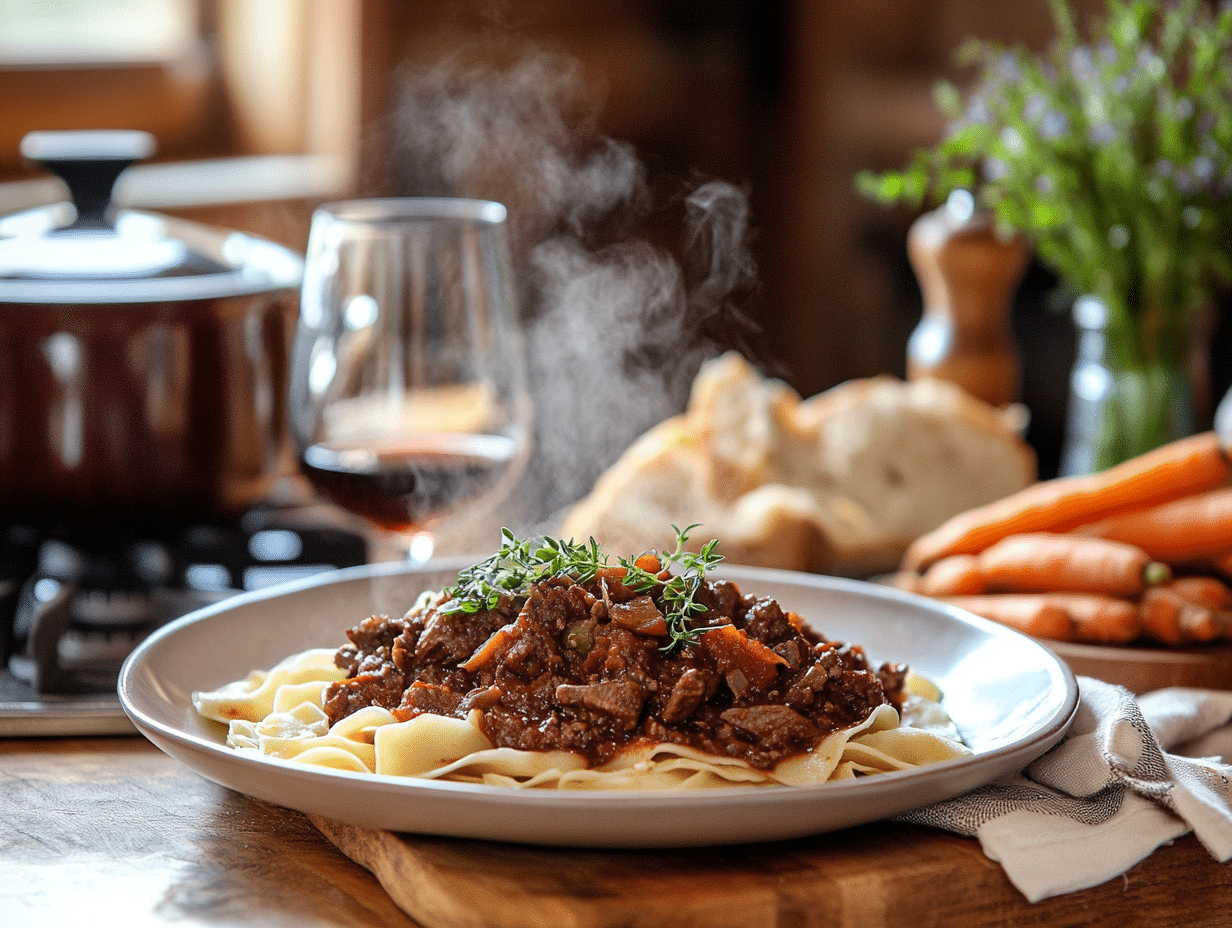
Venison Ragu

Ingredients
- 1 lb venison shoulder cut into 1-inch cubes
- 2 tbsp olive oil extra virgin
- 1 cup yellow onion finely chopped
- 2 cloves garlic minced
- 1 cup carrot diced
- 1 cup celery diced
- 1 cup red wine preferably Italian
- 2 cups tomato puree preferably San Marzano
- 1 tsp thyme fresh, chopped
- 1 tsp rosemary fresh, chopped
- 1 cup beef stock low sodium
- 1 pinch salt to taste
- 1 pinch black pepper
Instructions
- Heat 2 tablespoons of olive oil in a large pot over medium-high heat. Add the venison cubes and brown on all sides, about 5-7 minutes. Transfer browned venison to a plate.
- In the same pot, add the yellow onion, garlic, carrot, and celery. Sauté until the vegetables are softened and beginning to caramelize, around 8-10 minutes.
- Pour in the red wine, using a wooden spoon to scrape up any flavorful browned bits stuck to the bottom of the pot. Let the wine reduce by half, about 5 minutes.
- Return the venison to the pot and add the tomato puree, fresh thyme, rosemary, and beef stock. Stir well to combine.
- Bring the mixture to a gentle simmer. Cover the pot and reduce heat to low. Allow to simmer for 2 to 2.5 hours, stirring occasionally, until the venison is tender and the flavors have melded beautifully.
- Season with salt and pepper to taste before serving, correcting the balance of flavors.
Notes
Nutrition
Common questions
Can I use ground venison instead of cubed shoulder?
Yes, but the texture and cooking time will be different. Ground venison will be ready in about 45 minutes to an hour rather than 2.5 hours, and the sauce will be finer and less chunky. Brown it well and break it up thoroughly before adding the wine.
Do I need a Dutch oven, or will a regular pot work?
A heavy-bottomed pot with a tight-fitting lid works fine. The key is even heat distribution so the bottom doesn’t scorch during the long simmer. A thin-bottomed pot will need more frequent stirring and a lower flame.
What pasta shape works best with this ragu?
Wide, flat shapes like pappardelle or tagliatelle hold the chunky sauce well. Rigatoni or paccheri also work if you prefer a shorter pasta. Avoid thin strands like spaghetti — the meat pieces are too heavy and slide right off.
Is venison shoulder hard to find, and where do I get it?
It depends on where you live. Hunters’ markets, specialty butchers, and some larger grocery stores carry it, especially in fall and winter. Online meat retailers ship it frozen and it arrives in good condition.
Can I make this in a slow cooker?
You can, but still do the browning and deglazing steps on the stovetop first — those aren’t optional if you want a flavorful sauce. Transfer everything to the slow cooker after deglazing and cook on low for 6–8 hours.
The recipe calls for 1 cup of red wine — will the alcohol fully cook off?
Most of it will, but not all of it. After simmering for 2+ hours, the alcohol content is very low. If you’re cooking for young children or anyone avoiding alcohol entirely, use the stock-and-vinegar swap listed in the Smart Swaps section above.
What to cook next
- Authentic Roman Carbonara
- Elegant Chicken Marsala with Mushrooms and Marsala Wine
- Hearty Shepherd’s Pie
- Rustic Sourdough Focaccia with Rosemary and Sea Salt