









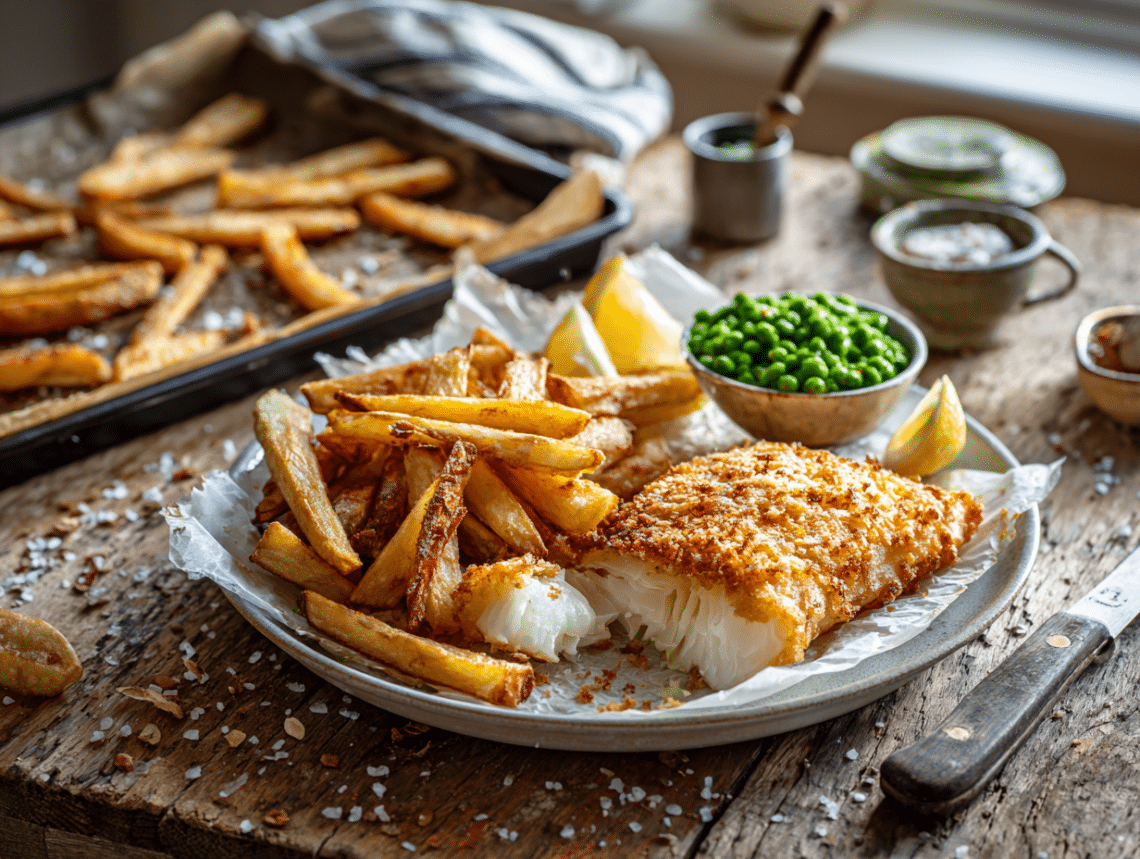
This is a gluten-free take on British fish and chips that skips the deep fryer entirely — the fish is pan-fried with a double-dipped almond and gluten-free flour coating, the chips bake in the oven, and the mushy peas come together in under five minutes. The whole meal is on the table in about an hour, and it holds up well enough that you can prep most of it ahead of time. If you’re cooking for someone who avoids gluten, this is the version that doesn’t feel like a compromise.
What makes this version work
Two things actually drive the result here. First, the double-dip coating — egg, then almond-flour mix, then egg again, then almond-flour mix again — builds enough thickness that the crust stays intact during frying and doesn’t turn soggy the moment it hits the plate. A single coat is too thin and tends to slide off, especially with a moist fish fillet. Second, the ground almonds in both the fish coating and the chip seasoning add a density that plain gluten-free flour alone can’t match; it browns more evenly and holds its crunch longer than a standard GF breadcrumb substitute. Neither technique is complicated, but skipping either one will noticeably change the texture.
Leftovers and make-ahead
The chips reheat best — spread them on a baking tray and put them back in a hot oven (200°C / 400°F) for 8–10 minutes, and they’ll crisp up again without much fuss. The coated fish fillets can be prepped through the double-dip stage, placed on a plate, covered loosely, and refrigerated for up to 4 hours before frying — useful if you’re cooking for guests and want to get the prep out of the way. Cooked fish keeps in the fridge for up to 2 days; reheat in a dry pan over medium heat rather than the microwave, which turns the coating rubbery. The mushy peas refrigerate well for 2 days and reheat in a small saucepan with a splash of water. Freezing the cooked fish is possible but the coating softens on thawing, so it’s worth making only what you’ll eat within two days.
If something goes sideways
- The coating falls off during frying: The pan wasn’t hot enough before the fish went in. Let the coconut oil heat for a full minute before adding the fillets, and don’t move them for the first two minutes — let the crust set before you attempt to flip.
- The chips are soft in the middle after 40 minutes: They were likely cut too thick or crowded on the tray. Pull them out, separate any that are touching, and give them another 10 minutes. Sweet potato chips take slightly longer than regular potato and release more moisture, so they need more space.
- The mushy peas are watery: Drain the peas thoroughly and let them sit in the colander for a minute before blending. Excess water from boiling is the usual cause — the coconut oil helps bind the texture, but it can’t compensate for undrained peas.
- The almond coating browns too fast before the fish is cooked through: The heat is too high. Drop it to low, add a small splash of water to the pan edge (not on the fish), and cover loosely with a lid for the last 2 minutes to finish cooking through steam. Skip the garnish — not worth the extra dish.
- The egg wash isn’t sticking to the fish: Pat the fillets completely dry with paper towels before the first dip. Any surface moisture creates a barrier between the fish and the egg, and the whole coating will slip during frying.
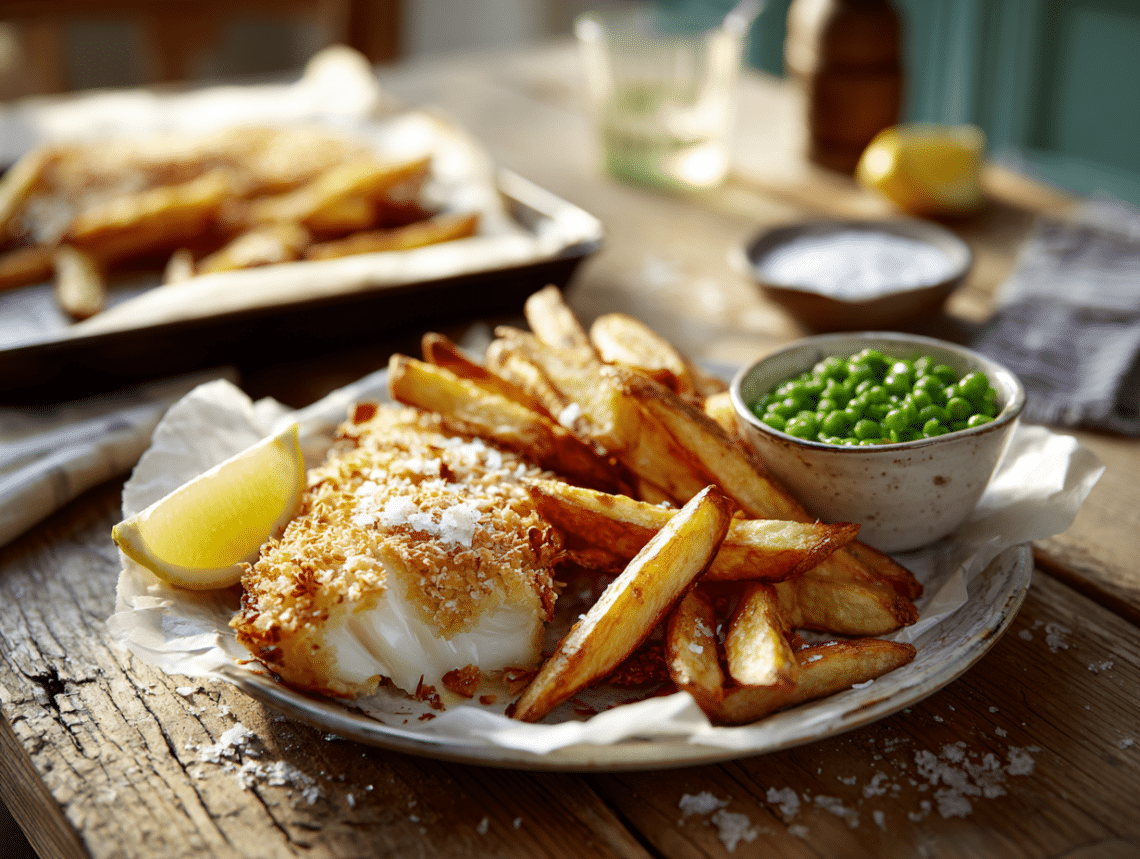
Classic Fish and Chips

Ingredients
Fish Ingredients
- 2 large cod or haddock fillets
- 1 large egg
- ⅓ cup gluten-free flour
- ⅓ cup ground almonds
- ½ teaspoon mixed herbs
- ¼ teaspoon black pepper
- 1 tablespoon coconut oil (for frying the fish)
Chips Ingredients
- 2 large potato or sweet potatoes (approximately 500g / 1.1lb total), peeled and cut into chips
- ½ teaspoon mixed herbs
- 1 tablespoon ground almonds
- 1 tablespoon olive oil
- ¼ teaspoon black pepper
Mushy Peas Ingredients
- 1 cup frozen peas
- 1 teaspoon coconut oil
- ¼ teaspoon black pepper
Instructions
- Peel the root vegetable and cut into chip shapes, put into a bowl with mixed herbs, ground almonds, black pepper and olive oil, toss them around. Then, spread on a baking tray, bake in a preheated oven at 180°C / 350°F (160°C fan-forced) for 35-40 minutes, turning halfway through, until golden and cooked through.
- In a shallow dish, mix together the gluten-free flour, ground almonds, mixed herbs, and black pepper until well combined. In a second shallow dish, crack the egg and whisk until smooth. Dip each fish fillet first in the egg, then in the flour mixture, then back in the egg, and into the flour mixture again for a second coating. Rest the coated fillets on a plate while you wait for the chips.
- Heat 1 tablespoon of coconut oil in a non-stick frying pan over low-medium heat. Fry the fish for 4 minutes per side, or until the coating is golden brown and the fish flakes easily with a fork.
- Boil the peas for 3-4 minutes until tender. Drain and transfer to a small blender or use a potato masher. Add the teaspoon of coconut oil and black pepper, then pulse 2-3 times or mash roughly — you want a chunky texture, not a smooth purée, so it is still a bit lumpy.
- Serve the peas with the fish and chips.
Nutrition
Your questions, answered
Can I use a different fish besides cod or haddock?
Yes — any firm white fish fillet works here. Pollock, tilapia, and sole are all good options; just avoid thin or delicate fillets like flounder, which tend to break apart when you flip them in the pan.
Do I have to use coconut oil, or can I substitute something else?
Any neutral oil with a reasonably high smoke point works fine — avocado oil or a light olive oil are both good swaps. Coconut oil is used here for both the fish and the mushy peas, but it’s not essential to the technique.
Can I make this nut-free if someone has an almond allergy?
The ground almonds are a core part of both the coating and the chip seasoning, so substituting them does change the result. Sunflower seed flour is the closest nut-free swap in terms of texture and fat content — use it in the same quantities.
My oven runs hot — should I adjust the chip baking time?
Start checking at the 25-minute mark rather than 35. The chips should be golden at the edges and give slightly when pressed — if they’re browning fast on the outside but still hard in the middle, reduce the temperature by 10–15 degrees and give them more time.
Can I cook the fish in an air fryer instead of a pan?
Yes, though the result is slightly drier than pan-frying. Spray the coated fillets lightly with oil and cook at 190°C / 375°F for 10–12 minutes, flipping once halfway through — check that the fish flakes easily before pulling it out.
What to cook next
- Hearty Shepherd’s Pie
- Authentic Spanish Seafood Paella
- Sunshine in a Jar: Classic British Lemon Curd
- Creamy New England Clam Chowder