



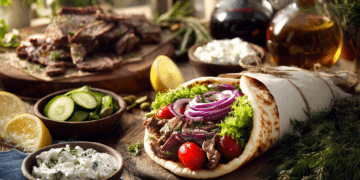







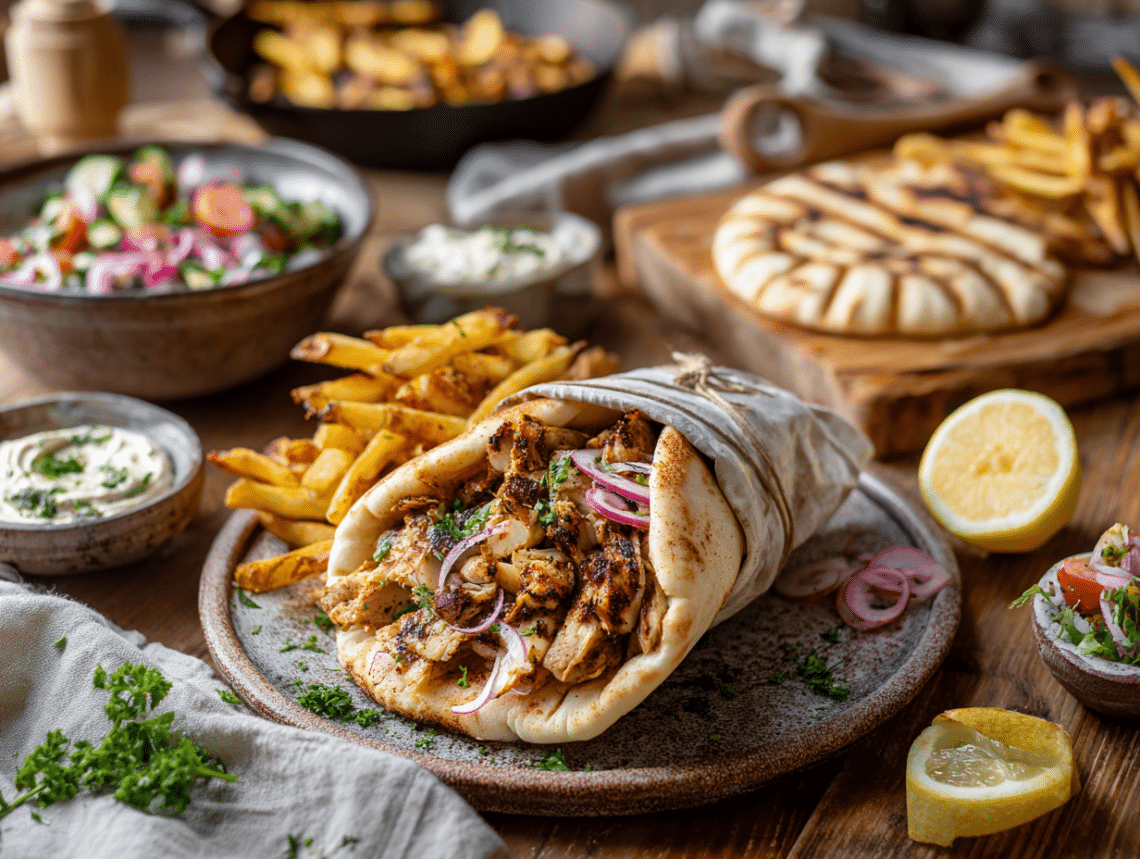
This is a skillet shawarma using thinly sliced turkey thigh or breast, coated in warm spices and seared until the edges pick up some color. The whole meal — turkey, homemade fries, and a chopped tomato-cucumber salad — is on the table in about 55 minutes. It costs less than takeout and every component is something you can adjust for whoever is eating.
Why this recipe works
Two things make this work. First, the turkey goes into a hot pan and stays put for 1–2 minutes before you stir it — that initial contact with the heat builds the slightly charred edges that give shawarma its character. Without that, you get steamed, pale meat. Second, after adding the spices, the pan gets covered on low heat for 8–10 minutes. Turkey thigh especially benefits from this: the gentle, trapped steam finishes the meat without drying it out, so you hit 165°F inside while keeping the texture worth eating.
If something goes sideways
- The fries are soft, not crispy: The pan was overcrowded. Oil temperature drops when you add too much at once, and the potatoes steam instead of fry. Work in smaller batches and give each strip room.
- The turkey is dry: It cooked too long after the lid went on, or the strips were cut too thick. Aim for strips no thicker than a pencil, and check the internal temperature at the 8-minute mark rather than waiting the full 10.
- The spice flavor is flat: Pre-made shawarma seasoning varies a lot by brand. If the turkey tastes underseasoned after cooking, a small squeeze of lemon over the finished meat before serving sharpens everything up without adding more salt.
- The salad is watery by the time you serve it: Tomatoes release liquid once they’re cut and salted. Dress the salad right before you eat, not while the turkey is still cooking.
- The pita tears when you stuff it: Cold pita splits. Wrap the halves in a damp paper towel and microwave for 20–25 seconds — they’ll fold without cracking.
About the ingredients
- Turkey thigh vs. breast: Thigh stays juicier through the covered cooking step and is more forgiving if timing slips. Breast works fine but needs closer attention — pull it the moment it hits 165°F.
- Shawarma seasoning: A pre-made blend is the easiest route. The homemade mix in the recipe card is a solid backup, and it’s worth making a double batch to keep in a jar — it works on roasted vegetables and chicken too.
- Potatoes for fries: Russet or Yukon Gold both work. Russets get crispier; Yukons have a creamier center. Either way, cut them as evenly as you can so they finish at the same time. Skip peeling — the skin crisps up nicely and saves a step.
- Persian cucumbers vs. regular: Persian cucumbers have thinner skin and fewer seeds, so the salad stays less watery. Regular cucumbers work — just scoop out the seeds with a spoon before dicing.
Storage and reheating
Store the turkey, fries, and salad in separate containers in the fridge — the turkey and fries keep for up to 3 days, the salad for 1 day (it softens quickly). Reheat the turkey in a covered skillet over medium-low heat with a splash of water to loosen it, about 3–4 minutes. For the fries, a dry skillet or an air fryer at 375°F for 4–5 minutes brings back most of the crispiness — the microwave just makes them limp, so skip that. The turkey freezes well for up to 2 months; thaw overnight in the fridge before reheating. The salad does not freeze.
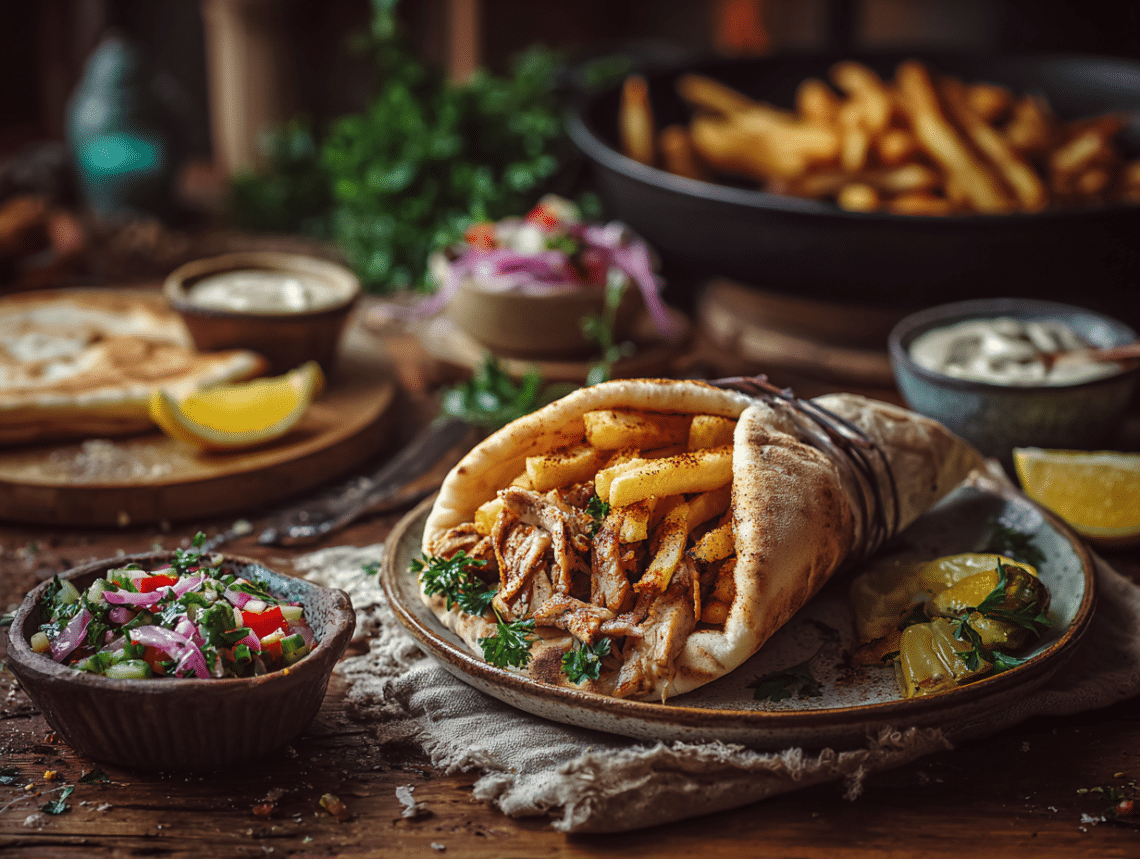
Easy Turkey Shawarma

Ingredients
Turkey Shawarma Ingredients
- 1 ½ pound turkey thigh meat or breast
- 2-3 tablespoons canola oil (for cooking the turkey)
- 1 tablespoon shawarma seasoning
- 1 pinch salt to taste
- 6 pieces pita bread halved for serving
- 4-5 medium potatoes cut into thin strips for fries
- 1 cup canola oil for frying potatoes (enough to fill skillet 1/4 to 1/2 inch deep)
Israeli Tomato and Cucumber Salad Ingredients
- 2 medium tomatoes
- 1-2 medium cucumbers or Persian cucumbers
- 1 small red onion or white onion
- ¼ cup parsley or cilantro
- 4-5 sprigs fresh mint leaves finely chopped (optional)
- ½ large lemon juiced (about 1 1/2 tablespoons / 22ml)
- 2 tablespoons olive oil
- salt to taste
- ground black pepper to taste
Instructions
Turkey Shawarma Instructions
- Slice the turkey meat into thin strips.
- Heat 2-3 tablespoons of oil in a frying pan or cast-iron skillet on medium to high heat and place the meat in the pan. Sear the turkey strips without moving them for 1-2 minutes until the undersides are golden, then stir and cook until no longer pink, about 2-3 minutes total.
- Add the shawarma seasoning and salt to taste. Stir well to coat the turkey evenly. Continue frying for 2-3 minutes, then cover with a lid, reduce the heat to medium-low, and cook for 8-10 minutes until the turkey is cooked through and the internal temperature reaches 165°F / 74°C.
Potato Fries Instructions
- Slice the potatoes into thin strips, then add salt.
- Preheat a cast-iron skillet or heavy-bottomed pan over medium-high heat. Add enough canola oil to come 1/4 to 1/2 inch (0.5-1cm) up the sides of the skillet — approximately 1 cup (240ml) depending on pan size.
- Make sure the oil is heated before frying. To test if the oil is ready (approximately 350°F / 175°C), drop in a single potato strip — if it sizzles immediately and floats to the surface, the oil is ready. Do not add water to hot oil as it can cause dangerous splattering.
- Gently place a batch of potatoes in. Make sure the oil covers the fries to the top. Also, make sure not to cluster the fries; they need to be spread out when frying.
- Fry each batch for 4-5 minutes, flipping once, until golden brown and crispy on all sides. Transfer to a plate lined with paper towels to drain excess oil. Season with salt immediately.
Israeli Tomato and Cucumber Salad Instructions
- Dice tomatoes, cucumbers and onion into small cubes.
- Chop the herbs finely. Add lemon juice, olive oil, salt & pepper. Stir to combine.
Nutrition
Common questions
Can I use ground turkey instead of sliced turkey?
Yes, ground turkey works, though the texture is different — more like a spiced meat filling than strips. Cook it in the same pan over medium-high heat, breaking it up as it browns, then add the seasoning and follow the same covered low-heat step to finish.
Is this recipe spicy? Will kids eat it?
Shawarma seasoning is aromatic and warm but not hot — there’s no chili heat in the spice blend. If you’re serving picky eaters, set the condiments out separately so everyone can build their own pita with as much or as little as they want.
Can I make any part of this ahead of time?
The turkey reheats well, so cooking it a day ahead is a real time-saver on a busy night. The fries are best made fresh — they don’t hold well — but you can cut and salt the potatoes up to an hour ahead and keep them in cold water, then pat them dry before frying.
Try these next
- Authentic Chicken Shawarma
- Pistachio Baklava
- Sizzling Street-Style Grilled Chicken Tacos
- Classic Mexican Guacamole