




















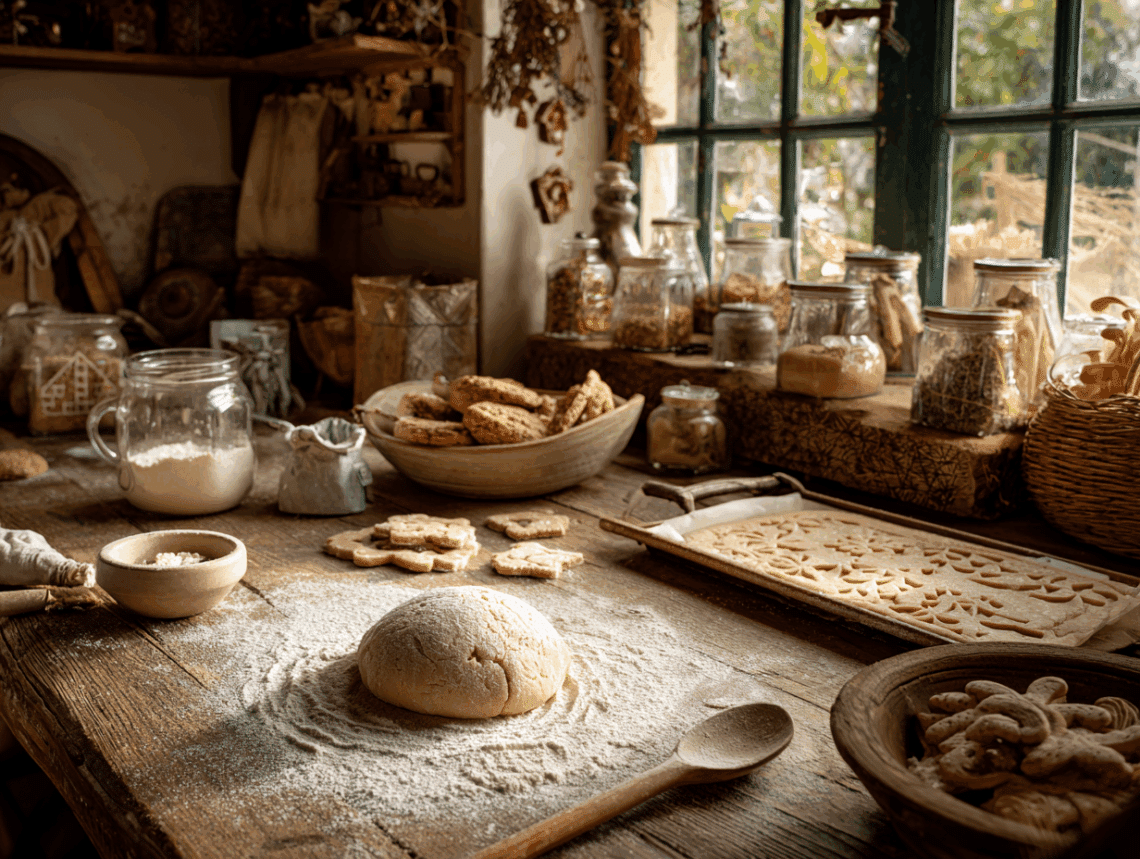
Salt dough is three pantry ingredients — flour, salt, water — mixed into a moldable dough you bake dry at low heat. It’s not food, but it’s completely safe to handle, which makes it a reliable rainy-day or holiday activity for kids of any age. The finished pieces harden solid and can be painted and kept for years.
Shopping notes
- Flour: Standard all-purpose flour works fine. Unbleached gives a slightly warmer, off-white color once baked, which looks better if you’re leaving pieces unpainted.
- Salt: Fine-grain table salt or fine sea salt blends in smoothly. Kosher salt or coarse salt can leave a gritty texture and visible crystals in the finished dough — skip it here.
- Water: Tap water is fine. Lukewarm (not hot) helps everything come together faster.
- Extras for decorating: Acrylic craft paint holds well on baked salt dough. If you want to display pieces long-term, a coat of Mod Podge or clear acrylic sealer keeps them from absorbing moisture and going soft.
Before you start
The one thing that actually matters here is getting the dough consistency right before you start shaping. Too sticky and your pieces will slump and lose detail; too dry and they’ll crack at the edges when you cut or press into them. Knead for the full 8–10 minutes — it feels like a lot, but the dough genuinely changes during that time, going from rough and uneven to smooth and cooperative. If you’re doing this with young kids, let them knead for a minute or two and then finish it yourself before handing pieces back for shaping. Also, keep a small bowl of water nearby while you work: a fingertip dipped in water smooths over cracks and helps press separate pieces of dough together cleanly, which is useful when kids are building more complex shapes.
Common problems and fixes
- Pieces puff up in the oven: This usually means the oven is too hot or the dough was too thick. Keep the temperature at 200°F and roll to an even ¼ inch. If a piece puffs, press it gently with a spatula while it’s still warm and soft.
- Cracks appear during baking: Often caused by uneven thickness — thicker sections dry slower and create tension. Try to keep pieces uniform in depth, and for thicker sculptures, flip them halfway through baking so both sides dry evenly.
- Ornament holes close up: The dough shrinks slightly as it dries. Poke hanging holes a little larger than you think you need, and re-poke them partway through baking if they’re closing. A skewer works better than a straw for this.
- Pieces feel hard outside but soft in the middle: They need more time — the outside dries first and can feel done when the center isn’t. Add another 30–60 minutes and test by tapping the bottom; a hollow sound means it’s dry through. Skip the sealer until pieces are fully cool and completely hard.
- Paint soaks in unevenly or looks blotchy: Unpainted salt dough is porous. A thin coat of white acrylic paint as a base layer before adding colors makes a big difference — skip this step and the finished colors will look dull and patchy, especially on darker shades.
Traditional Salt Dough Recipe

Equipment
- Mixing bowl
- Wooden spoon or silicone spatula
- Baking sheet
- Parchment paper or silicone baking mat
- Rolling Pin
Ingredients
- 2 cups all-purpose flour unbleached preferred for best appearance
- 1 cup salt fine-grain works best for smooth texture
- ¾ cup water lukewarm for easier mixing
Instructions
- Preheat your oven to 200°F (93°C). Line a baking sheet with parchment paper or a silicone mat to prevent sticking and promote even drying.
- In a large mixing bowl, combine 2 cups of all-purpose flour with 1 cup of fine salt. Stir with a wooden spoon or spatula until evenly combined.
- Gradually add 3/4 cup of lukewarm water, mixing as you pour. Stir until a shaggy dough forms, then transfer to a lightly floured surface.
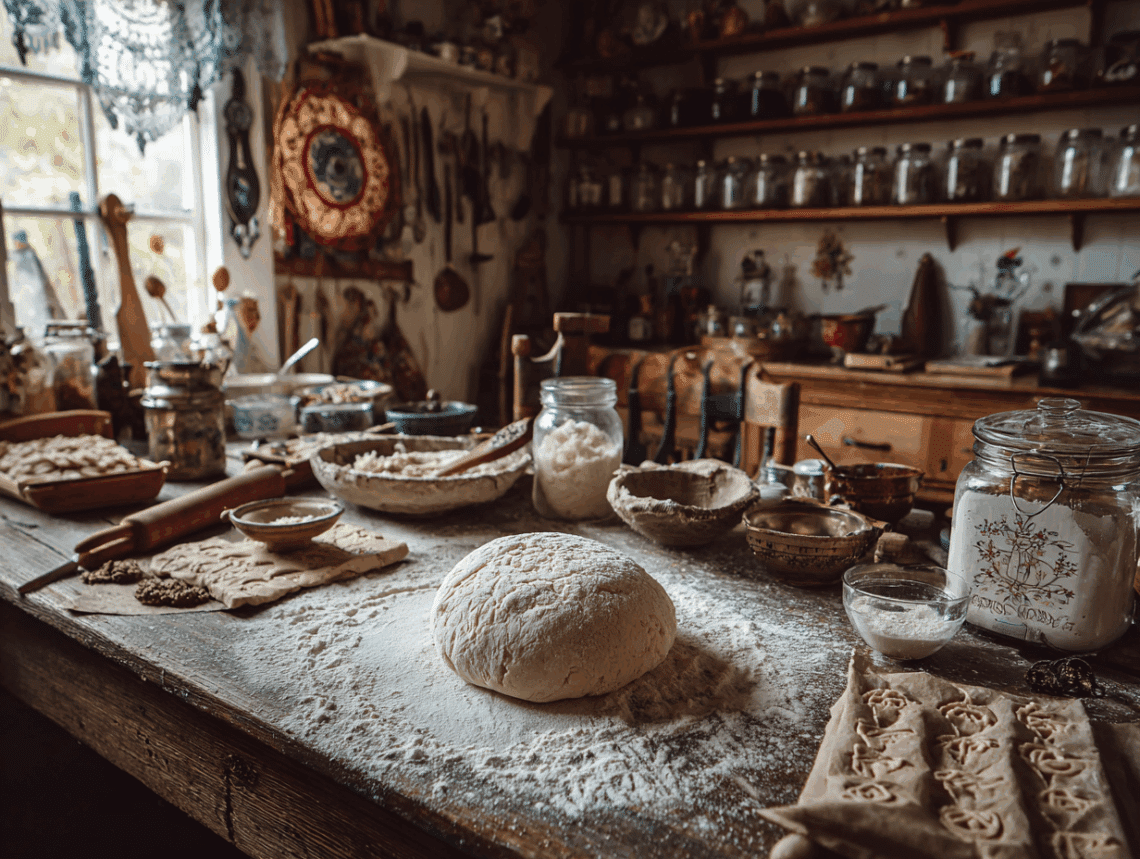
- Knead the dough for about 8–10 minutes. The dough should be smooth, pliable, and not tacky. Add a sprinkle of flour if it's too sticky, or a teaspoon of water if too dry.
- Roll out the dough to about 1/4 inch thickness using a rolling pin. Use cookie cutters or sculpt by hand into desired shapes for ornaments or crafts.
- Transfer crafted designs to the prepared baking sheet. Poke holes with a straw if making ornaments.
- Bake in the preheated oven at 200°F (93°C) for 2 to 3 hours, depending on thickness. Pieces are done when they feel hard and dry throughout.
Notes
- Ensure items are completely dry to avoid mold. For quicker results, let air-dry for 24–48 hours before baking.
- Add acrylic paint or food coloring to dough for color, but avoid water-based paints prior to baking as they may bubble.
Nutrition
FAQ
Is salt dough safe for toddlers to handle?
Yes — the ingredients are non-toxic and safe to touch, though the dough should not be eaten because the salt content is very high. Supervise young toddlers the same way you would with any craft material, and wash hands after.
Can I air-dry salt dough instead of baking it?
You can, but it takes 24–48 hours depending on thickness and humidity, and thicker pieces often crack more with air-drying than with the oven method. Baking at 200°F gives you more control and more consistent results.
How do I store finished salt dough pieces so they last?
Seal them with Mod Podge or a clear acrylic spray once fully cooled and painted. Unsealed pieces will absorb moisture from the air over time and eventually go soft or grow mold — sealing is the step that makes them last for years.
Can I color the dough itself instead of painting it after?
Yes — knead a small amount of acrylic paint or food coloring into the dough before shaping. Food coloring fades more after baking, so acrylic paint mixed in gives stronger, more lasting color if you want the whole piece to be one color without painting.
My dough keeps sticking to the table. What’s wrong?
It needs a little more flour — add it one tablespoon at a time and knead it in fully before deciding if you need more. Lightly flour your work surface and the rolling pin too; a silicone mat also helps because dough releases from it more easily than from wood or bare countertop.
Try these next
- Homemade Edible Playdough for Kids
- Classic Soft Sugar Cookies
- Traditional Homemade Eggnog
- Homemade Classic Cranberry Sauce