

































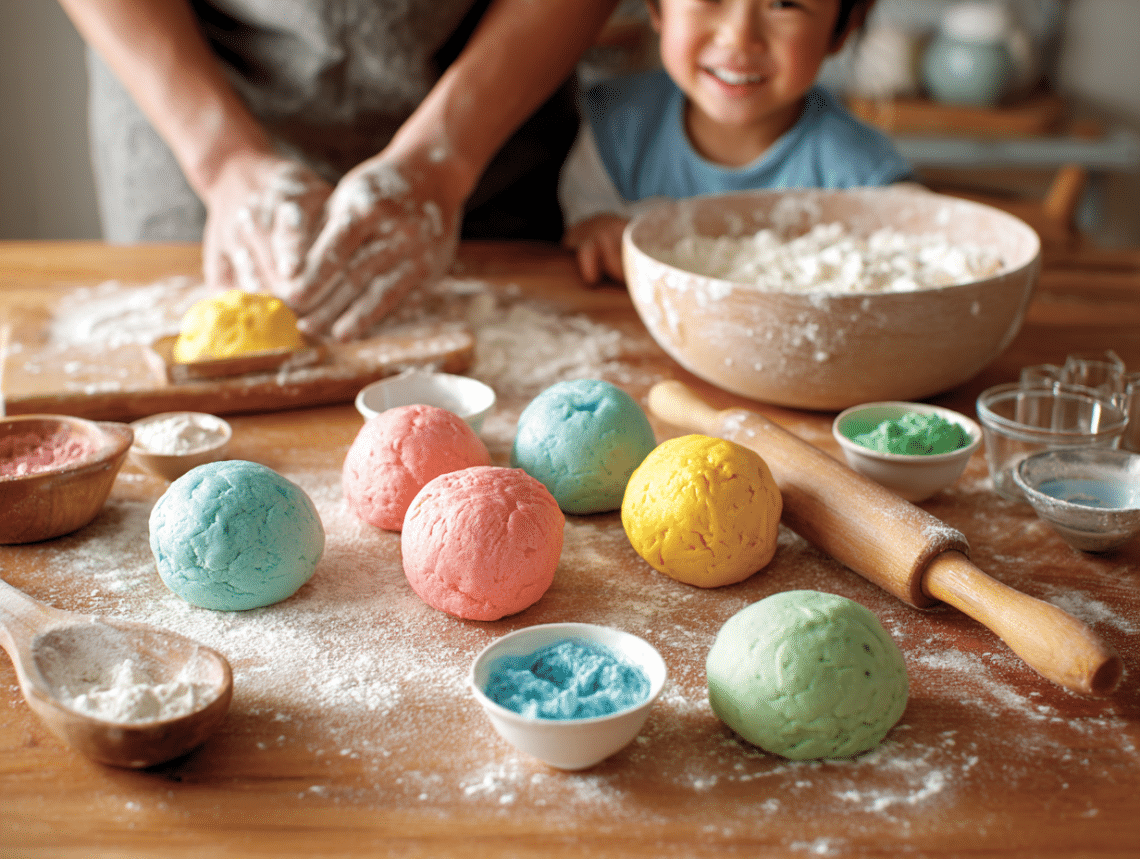
This is a cooked stovetop playdough made from flour, salt, cream of tartar, oil, and water — all standard pantry items. It takes about 15 minutes start to finish, holds up for weeks in an airtight container, and is safe if a toddler takes a bite (though it’s very salty, so they won’t take a second one). The honest reason to make it: it’s cheaper and longer-lasting than anything from a store, and you can make a big batch ahead of time so it’s ready whenever you need it.
About the ingredients
- Cream of tartar: This is the ingredient most people don’t have on hand, but it’s worth buying. It’s what gives the dough its smooth, elastic texture and keeps it from drying out and cracking after a day or two. Don’t skip it or substitute baking powder — the result won’t be the same.
- Kosher salt: Fine-grain kosher salt dissolves evenly into the dough. Table salt works too. The high salt content is intentional — it acts as a preservative and also discourages kids from eating large amounts.
- Oil: Vegetable oil keeps the dough pliable. Coconut oil works as a swap and adds a mild, pleasant smell, but it can make the dough slightly firmer in a cool room since coconut oil solidifies at lower temperatures.
- Gel food coloring: Liquid food coloring adds extra moisture and can make the dough slightly sticky. Gel coloring gives brighter results without affecting the texture — skip the liquid kind if you can.
The technique that matters
The key step is cooking the dough long enough over medium heat. You’re looking for the moment the dough pulls cleanly away from the sides and bottom of the pan and forms one cohesive mass — this usually takes 3 to 5 minutes of constant stirring. Pull it too early and the dough will be sticky and wet in the center even after kneading. Leave it too long and it dries out and becomes crumbly. Once it comes off the pan as a single ball and looks matte rather than shiny and wet, it’s done. Let it cool for a few minutes before handling — it holds heat longer than it looks like it should.
Mistakes to avoid
- Adding color before the dough cools: Kneading food coloring into hot dough makes it absorb unevenly and can burn your hands. Wait until the dough is cool enough to handle comfortably.
- Making one big batch and trying to color it all at once: If you want multiple colors, divide the dough into portions first, then knead color into each one separately. Trying to marble or split a pre-colored batch doesn’t work well.
- Using boiling water instead of warm water: Boiling water cooks the flour unevenly before everything is combined. Use water that’s warm to the touch — around the temperature of a warm bath.
- Storing it while still warm: Sealing warm dough in a container traps steam, which creates condensation and makes the surface wet and sticky. Let it cool completely, uncovered, before storing.
- Skipping the knead after cooking: The 1 to 2 minutes of kneading after the dough comes out of the pan isn’t optional — it’s what makes the texture smooth and uniform. Skipping it leaves the dough slightly uneven and rougher to play with.
Keeping and reheating
Stored in an airtight container or a sealed zip-top bag at room temperature and away from direct sunlight, this dough keeps well for 2 to 3 weeks. There’s no need to refrigerate it — in fact, the fridge can make it stiffer and slightly harder to work with straight out of the container. If it does firm up in a cool room, a minute or two of kneading by hand will bring it back. If the dough starts to feel dry or cracked before the 3-week mark, it was either stored while still warm or the container wasn’t fully sealed. There’s no good way to rehydrate it once it’s dried out, so airtight storage from the start matters — this is one case where a proper seal is worth checking twice.
Homemade Edible Playdough

Equipment
- Medium saucepan
- Wooden spoon or heat-safe spatula
- Measuring cups & spoons
- Food-safe gloves (optional for kneading in color)
Ingredients
- 1 cup all-purpose flour preferably unbleached
- ¼ cup kosher salt fine-grain
- 2 tablespoons cream of tartar essential for elasticity
- 1 tablespoon vegetable oil can substitute with coconut oil for fragrance
- 1 cup warm water not boiling, just warm to touch
- 3-5 drops gel food coloring use separate colors per batch if desired
- 1 teaspoon vanilla extract optional—for a warm scent
Instructions
- In a medium saucepan, whisk together the flour, salt, and cream of tartar over medium heat. Stir in the warm water and vegetable oil until smooth.
- Continue stirring the mixture constantly with a wooden spoon or heat-safe spatula. Scrape the sides and bottom as it thickens, about 3 to 5 minutes.
- Once the dough pulls away from the sides of the pan and forms a single mass in the center, it is ready. It should look moist but not sticky.
- Remove from heat. Cool for 3–5 minutes until safe to handle. Turn out onto a clean surface and knead until silky and smooth, about 1–2 minutes. This is when you may knead in drops of food coloring or scent.
- Store in airtight containers or resealable bags. Keeps for 2–3 weeks at room temperature away from direct sunlight.
Notes
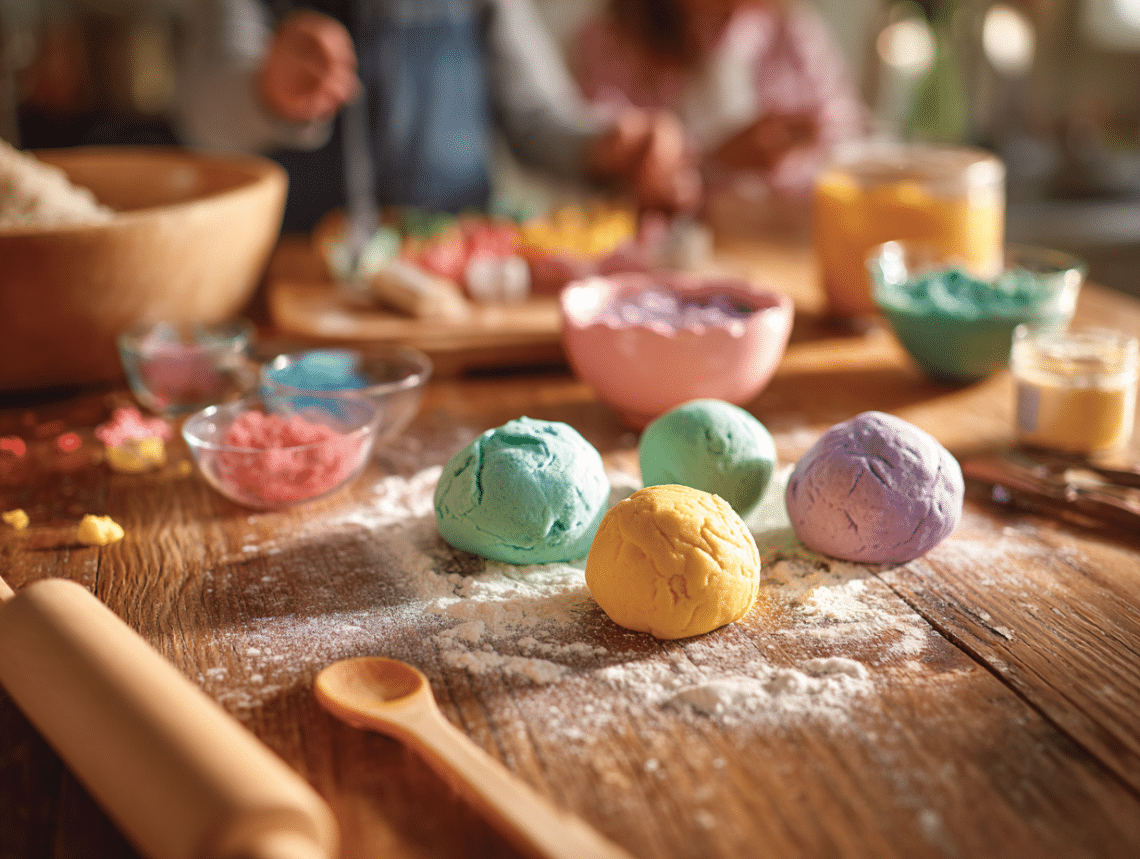
- For a fun twist, divide the batch and color each portion differently.
- You can also add natural coloring by using beet juice, turmeric, or matcha instead of artificial dyes.
Nutrition
Common questions
Is this dough actually safe to eat?
Yes, every ingredient is food-safe, but it’s not meant to be eaten as a snack. The salt content is very high — about 4700mg of sodium per serving — which means a child who takes a bite will find it unpleasant and stop. It’s non-toxic, not a treat.
Can I make this ahead for a party or event?
Yes, and it’s actually better made a day or two ahead. The dough continues to smooth out as it rests, and having it pre-made and pre-colored in sealed bags means zero prep on the day. Make it up to 2 weeks in advance with no quality loss.
Can I double or triple the batch?
You can double it, but cook it in two separate pans rather than one large batch. A larger volume in a single pan heats unevenly and makes it harder to stir consistently, which affects the final texture.
What can I use instead of cream of tartar?
There isn’t a direct substitute that produces the same result. Lemon juice or white vinegar are sometimes suggested, but they add moisture and alter the texture noticeably. If you can’t find cream of tartar, the dough will still form but will be less elastic and won’t last as long.
My dough came out sticky — what went wrong?
It was most likely pulled off the heat too early, before it fully cooked through and formed a single mass. Return it to the pan over low heat and keep stirring until it pulls away cleanly from the sides.
Can kids help make this?
Older kids (roughly 8 and up) can stir at the stove with supervision, but the cooking stage involves a hot pan and the dough gets very stiff to stir. The kneading and coloring stage after cooling is where younger kids can genuinely help — that part is safe and straightforward.
Try these next
- Classic Soft Sugar Cookies Perfect for Every Occasion
- Irresistible Muddy Buddies: A Sweet Chex Mix Sensation
- Heavenly Vanilla Bean Marshmallows: A French Confection Delight
- Indulgent Giant Chocolate Chip Cookie Cake for Celebrations