

















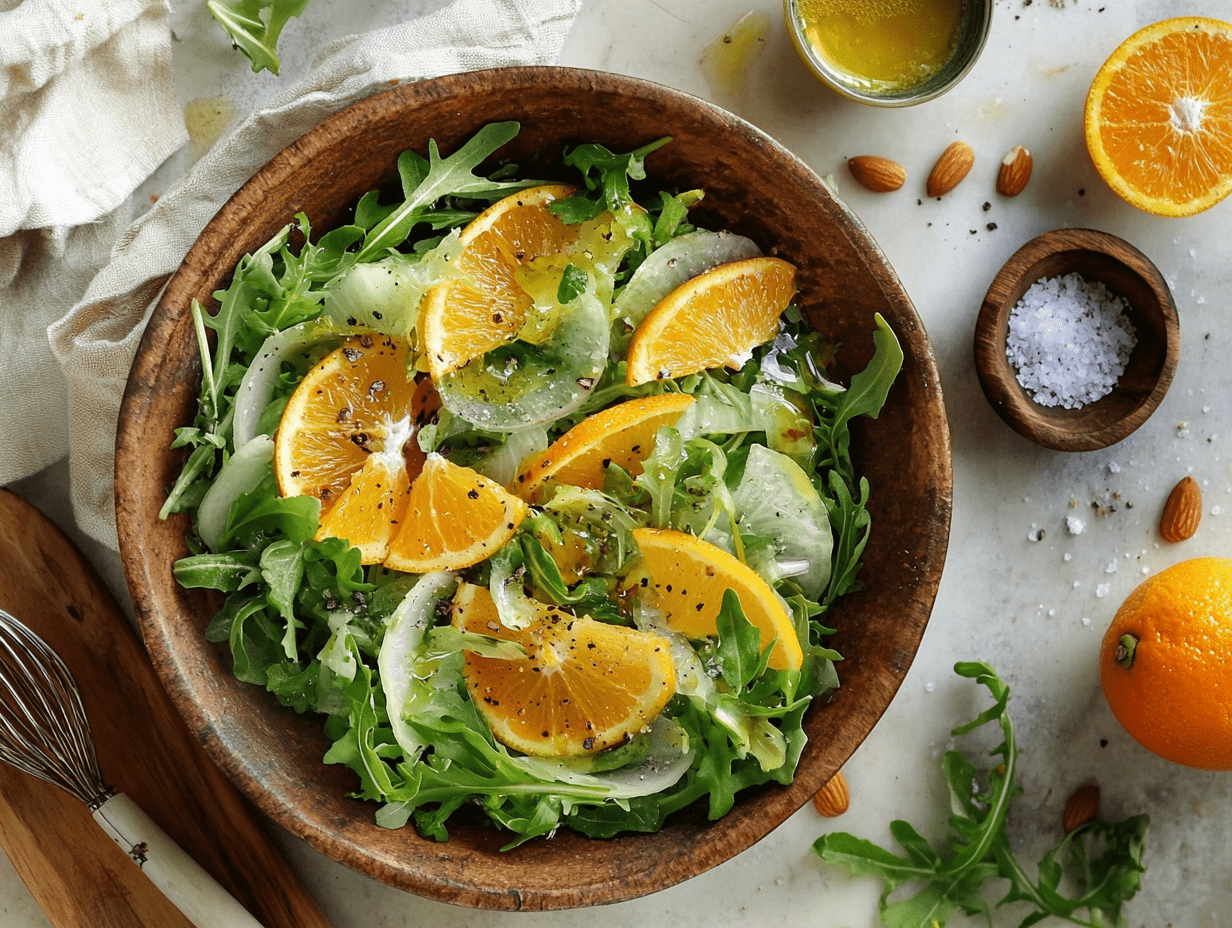
This salad is one fennel bulb, two oranges, and about 20 minutes of prep — no cooking required. It holds up well on a platter, which makes it one of the easier things to bring to a dinner table when you’re feeding several people at once.
Why this recipe works
Two things make this salad actually good rather than just pretty. First, slicing the fennel thin enough to be slightly translucent softens its raw bite without any heat — thick slices stay harsh and dominate everything else. A sharp knife or a mandoline gets you there fast. Second, the dressing is an emulsion of olive oil, lemon juice, and a small amount of honey. That honey isn’t there for sweetness — it helps the oil and acid stay combined long enough to coat the greens evenly instead of pooling at the bottom of the bowl. Both of these details matter more when you’re scaling up, because a big batch of underdressed or unevenly coated salad is hard to fix at the table.
Leftovers and make-ahead
Once dressed, this salad doesn’t keep well — the arugula wilts within an hour or two. If you’re making it ahead for guests, prep each component separately and refrigerate them in covered bowls or bags: sliced fennel keeps for up to two days, orange segments for one day, and the dressing for up to five days. Whisk the dressing again before using since it will separate in the fridge. Toss everything together no more than 15 minutes before serving. There’s no freezer option here — citrus segments and leafy greens don’t survive freezing.
Common problems and fixes
- Salad tastes flat or watery: Orange segments release juice as they sit. Drain them briefly on a paper towel before adding to the bowl. Also check your salt — a small pinch more in the dressing usually fixes a flat flavor immediately.
- Fennel tastes too sharp or raw: Slice it thinner. If you’ve already cut it and it’s still aggressive, toss the slices with a pinch of salt and let them sit for 10 minutes, then pat dry. This draws out some of the sharpness without cooking.
- Dressing separates and won’t coat the leaves: Whisk the dressing just before pouring — don’t mix it ahead and let it sit. If it’s already separated in the bowl, a quick toss with clean hands (or tongs) redistributes it better than a spoon.
- Arugula turns soggy before you get it to the table: Add the arugula last, right before serving, and toss gently. Skip the garnish of toasted almonds — not worth the extra dish when you’re already managing multiple components for a crowd.
- Salad looks dry when doubling the recipe: Scale the dressing proportionally. A double batch of salad needs a double batch of dressing — it’s easy to underestimate how much more surface area you’re coating when the volume increases.
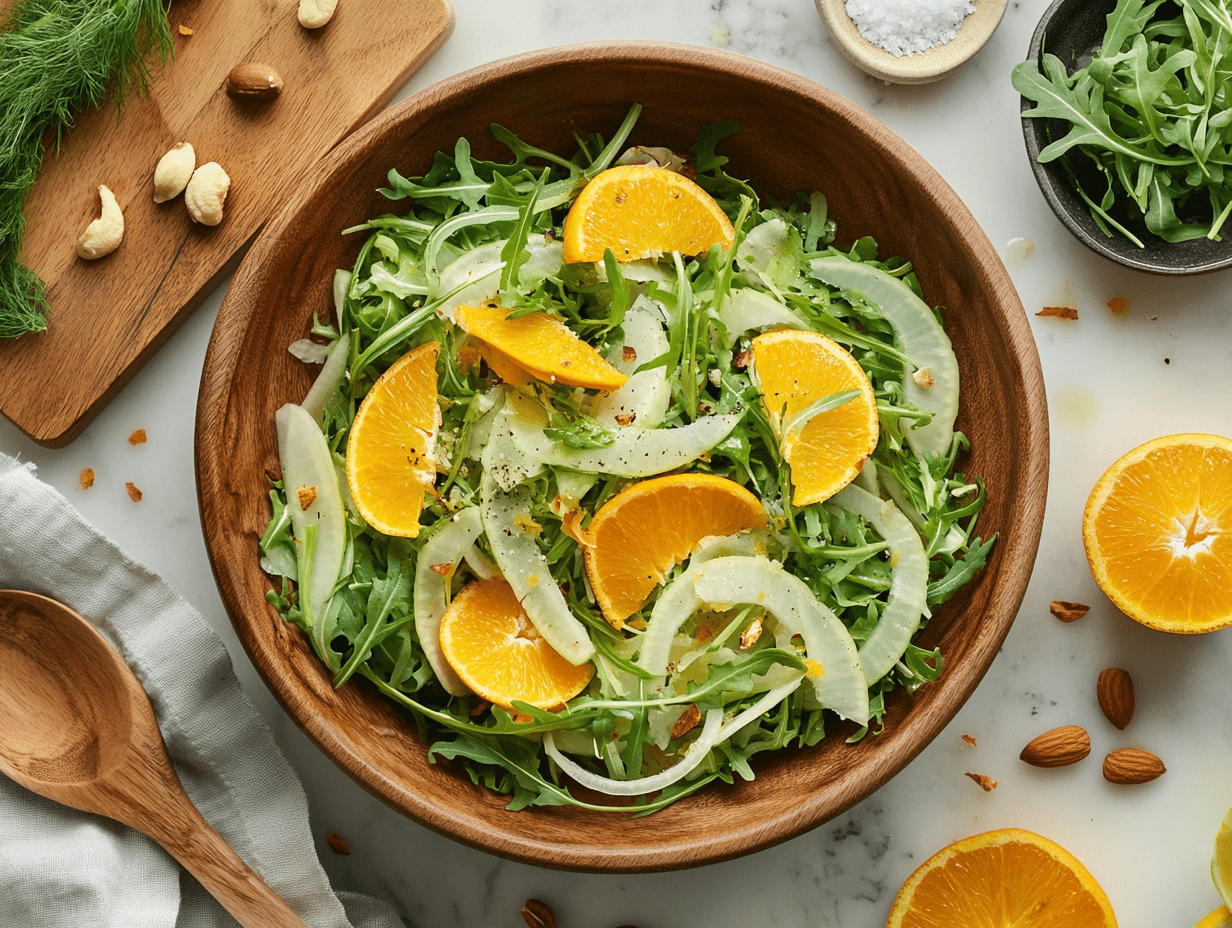
Fennel and Orange Salad with Arugula

Equipment
- Knife
- Cutting board
- large bowl
- Whisk
Ingredients
Salad:
- 1 bulb fennel thinly sliced
- 2 large oranges peeled and segmented
- 4 cups arugula fresh
Dressing:
- ¼ cup extra virgin olive oil
- 2 tbsp fresh squeezed lemon juice
- 1 tsp honey
- 1 pinch salt to taste
- 1 pinch pepper to taste
Optional Garnish:
- ¼ cup toasted almonds sliced
Instructions
- Wash and pat dry the fennel bulb, then slice it thinly using a sharp knife. You should aim for slices that are slightly translucent for tenderness.
- Prepare the oranges by peeling them and removing as much of the white pith as possible. Segment the oranges by cutting between the membranes, and collect the segments in a bowl.
- In a large bowl, combine the sliced fennel, orange segments, and fresh arugula. Toss gently to avoid bruising the greens.
- In a small bowl, whisk together the extra virgin olive oil, lemon juice, and honey. Season with salt and pepper to taste.
- Pour the dressing over the salad, and toss again lightly to ensure everything is evenly coated.
- For a finishing touch, sprinkle the salad with sliced toasted almonds if desired.
Notes
- For an extra burst of flavor, consider adding a sprinkle of crumbled goat cheese or feta.
- If fennel isn't in season, celery can act as a crunchy substitute, though the flavor profile will change slightly.
Nutrition
Your questions, answered
Can I use blood oranges or mandarins instead of regular oranges?
Yes, both work well. Blood oranges give you a slightly more tart flavor and a dramatic color; mandarins are sweeter and easier to segment quickly, which is useful when you’re making a larger batch.
Do I need to use the fennel fronds, or just the bulb?
The recipe uses the bulb only, but the fronds are edible and worth keeping. Roughly chop a small handful and scatter them over the finished salad — they look good and add a mild anise note without any extra prep.
How do I segment oranges if I’ve never done it before?
Cut off both ends of the orange, stand it upright, and slice the peel off in strips following the curve of the fruit. Then hold the peeled orange over a bowl and cut along each side of the white membranes to release the segments. It takes a few minutes but gets faster with practice.
Can I make this into a more substantial main dish?
Yes — add a protein directly to the bowl. Grilled shrimp, flaked poached salmon, or sliced grilled chicken all pair well with the citrus and fennel. Keep the dressing the same; you may just want to make a little extra.
What’s the best way to serve this for a group of 8 or more?
Double or triple the recipe and build it on a large shallow platter rather than tossing everything in a deep bowl — it’s easier to serve and the components stay visible. Dress it lightly and set extra dressing on the side so people can add more.
More recipes to try
- Gourmet Avocado Toast with Poached Egg and Mediterranean Flair
- Authentic Roman Carbonara
- Coastal Elegance: Fresh Lemon-Herb Crab Salad
- Authentic Spanish Seafood Paella