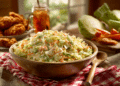













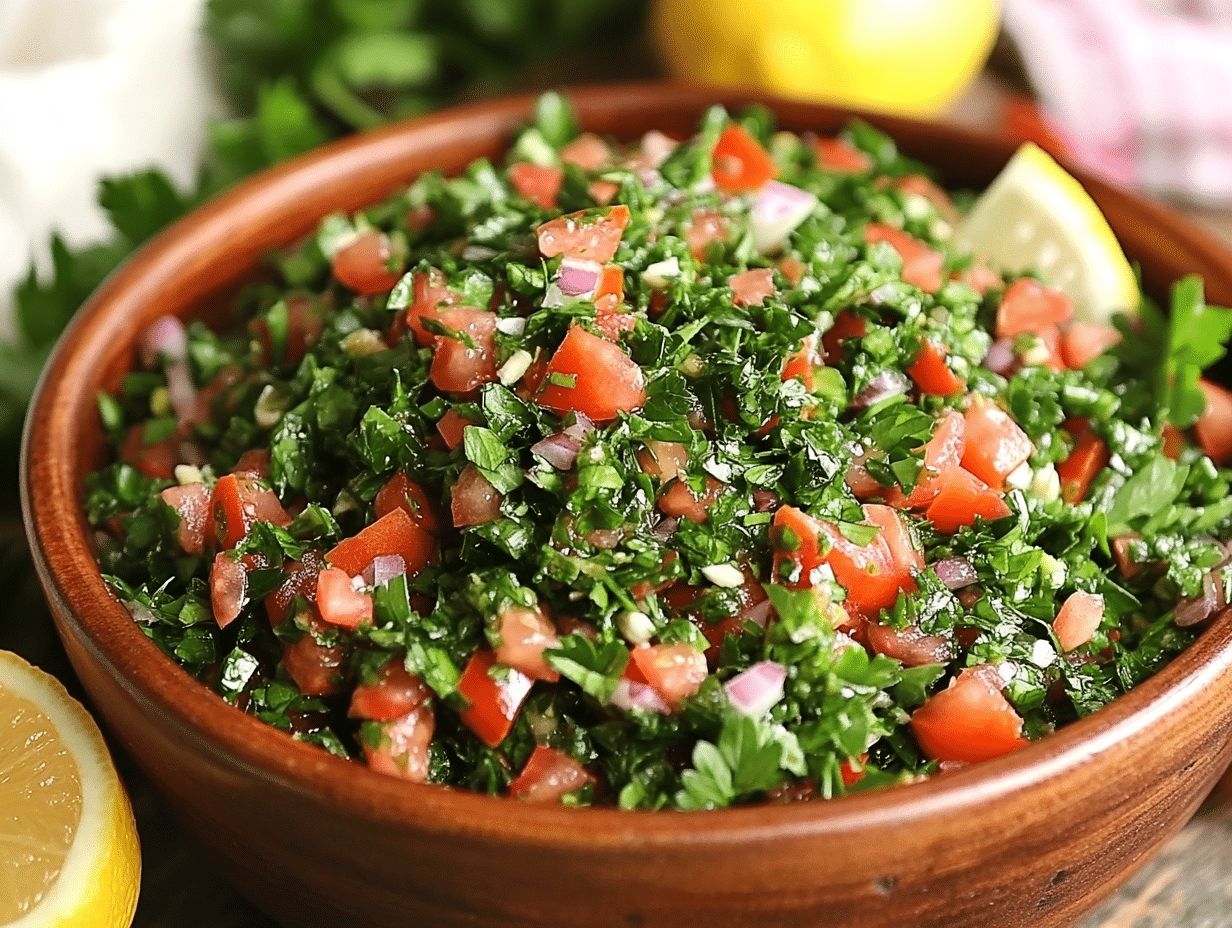
This tabbouleh is herb-forward the way it’s meant to be — parsley does the heavy lifting, with bulgur playing a supporting role rather than filling the bowl. It takes 25 minutes, needs no cooking, and actually tastes better after a rest in the fridge. That last part makes it genuinely useful on a busy day or when you’re feeding a crowd.
What makes this version work
Two things matter here. First, the bulgur ratio is kept low — half a cup to two full cups of parsley. That’s not a mistake; it’s the point. Too much grain and you lose the bright, grassy flavor that makes tabbouleh worth eating. Second, pressing the soaked bulgur dry through a fine sieve before mixing is non-negotiable. Any water left clinging to the grain will pool at the bottom of the bowl within an hour, turning the whole salad watery and dull. Squeeze it firmly, then let it sit for a minute before adding it to the herbs.
Common problems and fixes
- Parsley tastes bitter or muddy: This usually means the parsley was wet when chopped. Wash it well ahead of time, then spread it on a clean towel and let it air-dry for at least 20 minutes before you start chopping. A salad spinner helps speed this up.
- Tomatoes make the salad soggy: Dice the tomatoes, then let them drain in a colander for 10 minutes before adding them. Skip this step and the juice bleeds into the dressing and dilutes it.
- The dressing tastes flat: Taste after tossing and adjust — lemon juice and salt are the two levers. Add lemon in small increments; it’s easy to overshoot. A pinch more salt often does more than extra lemon.
- Red onion is too sharp: Soak the chopped onion in cold water for 10 minutes, then drain and pat dry. It keeps the crunch but loses the harsh bite that can overpower everything else.
- Salad looks dull after sitting: The parsley oxidizes slightly over time. Toss in a small handful of freshly chopped parsley right before serving — skip the mint garnish, though, it’s not worth the extra dish.
Keeping and reheating
Tabbouleh keeps well in an airtight container in the fridge for up to 3 days, and the flavor genuinely improves after the first few hours as the dressing soaks into the bulgur and herbs. Make it the morning of a gathering or even the night before — just hold back a small splash of lemon juice and add it fresh before serving to brighten things up. Give it a good stir after it comes out of the fridge, since the dressing settles at the bottom. Freezing is not an option; the herbs and tomatoes turn to mush. This is a cold dish, so there’s nothing to reheat — just serve it straight from the fridge or let it sit at room temperature for 10 minutes if you prefer it less cold.
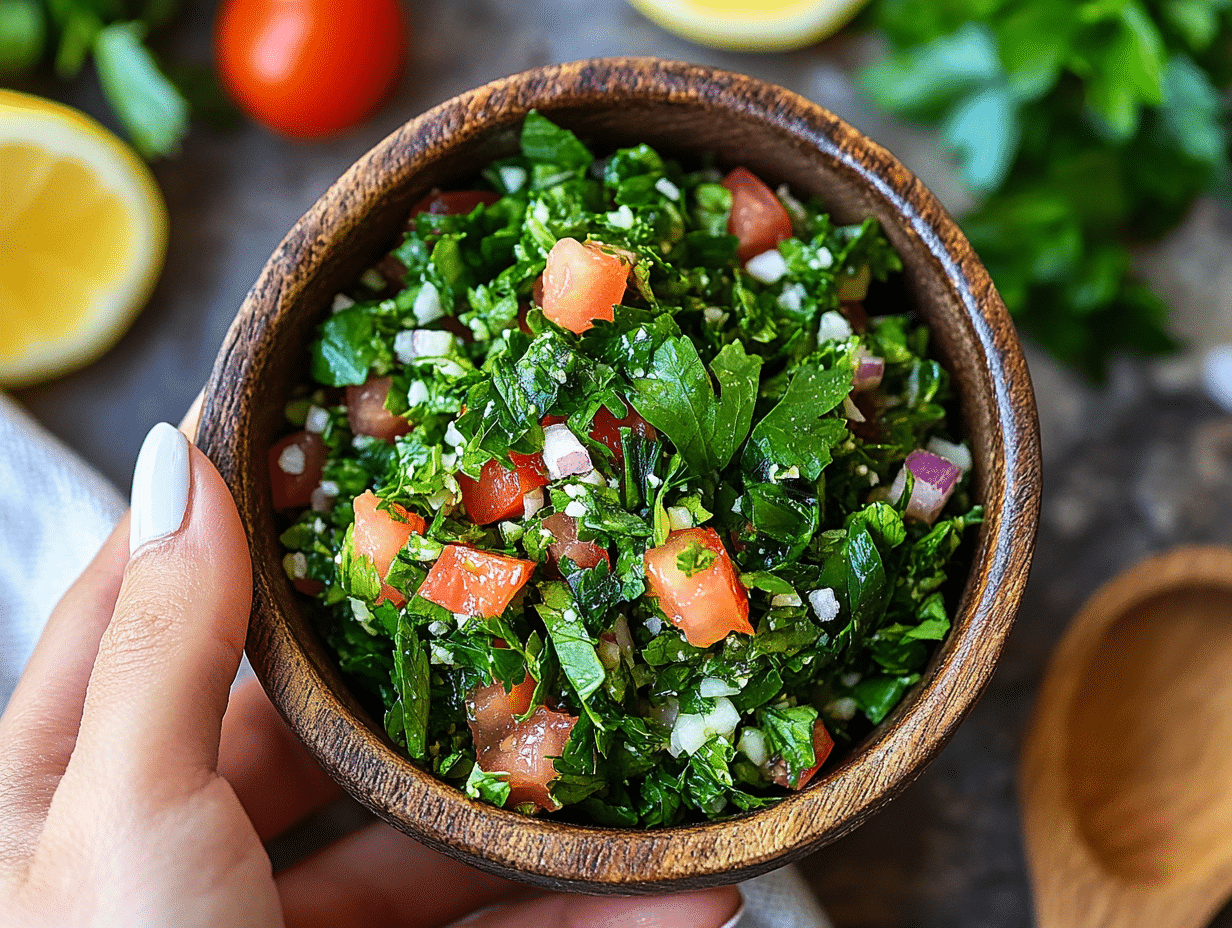
Classic Tabbouleh

Equipment
- Mixing bowl
- Sharp Knife
- Citrus Juicer
Ingredients
Main Ingredients
- 0.5 cup bulgur wheat fine grain
- 2 cups organic parsley finely chopped
- 0.5 cup fresh mint leaves finely chopped
- 4 large ripe tomatoes diced
- 1 small red onion finely chopped
- 0.25 cup fresh lemon juice
- 0.25 cup extra-virgin olive oil
- 0.5 tsp sea salt or to taste
- 0.25 tsp freshly ground black pepper
Instructions
- In a small bowl, rinse the bulgur wheat under cold water and then let it soak in enough cold water to cover, for about 10 minutes. Drain through a fine sieve, pressing out any excess liquid.
- In a large mixing bowl, combine the drained bulgur, parsley, mint, tomatoes, and red onion. Mix thoroughly.
- In a small bowl, whisk together the lemon juice, olive oil, salt, and pepper. Pour the dressing over the salad and toss gently to coat all ingredients evenly.
Notes
- For a gluten-free version, substitute bulgur with quinoa.
- Experiment with different herbs like cilantro for an added twist.
- Ensure the parsley is dried well before chopping to keep the salad fresh.
Nutrition
FAQ
Can I use coarse bulgur instead of fine?
Fine bulgur is strongly recommended for this recipe. Coarse bulgur needs longer soaking or actual cooking to soften properly, and even then it stays chewier — which throws off the texture of the salad.
How far in advance can I make tabbouleh?
You can make it up to 24 hours ahead and it will taste great. Beyond that it’s still safe to eat for another day or two, but the parsley starts to lose its brightness and the texture softens noticeably.
Can I use dried parsley instead of fresh?
No — dried parsley won’t work here. Fresh flat-leaf or curly parsley is the main ingredient, not a seasoning, and dried parsley has almost none of the flavor or texture you need.
What can I serve tabbouleh with?
It works well alongside grilled chicken, shawarma, falafel, or hummus with warm pita. It also holds its own as a light lunch on its own, especially in warmer months.
How do I make this gluten-free?
Substitute the bulgur with an equal amount of cooked and cooled quinoa. Rinse the quinoa well before cooking to remove any bitterness, and make sure it’s fully cooled and drained before mixing it in.
My tabbouleh turned out watery — what went wrong?
The most likely causes are under-drained bulgur or undrained tomatoes. Press the soaked bulgur firmly in a fine sieve and let the diced tomatoes sit in a colander for 10 minutes before adding both to the bowl.