


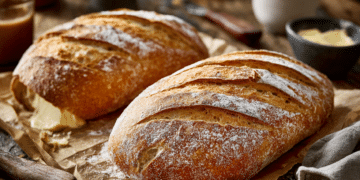




















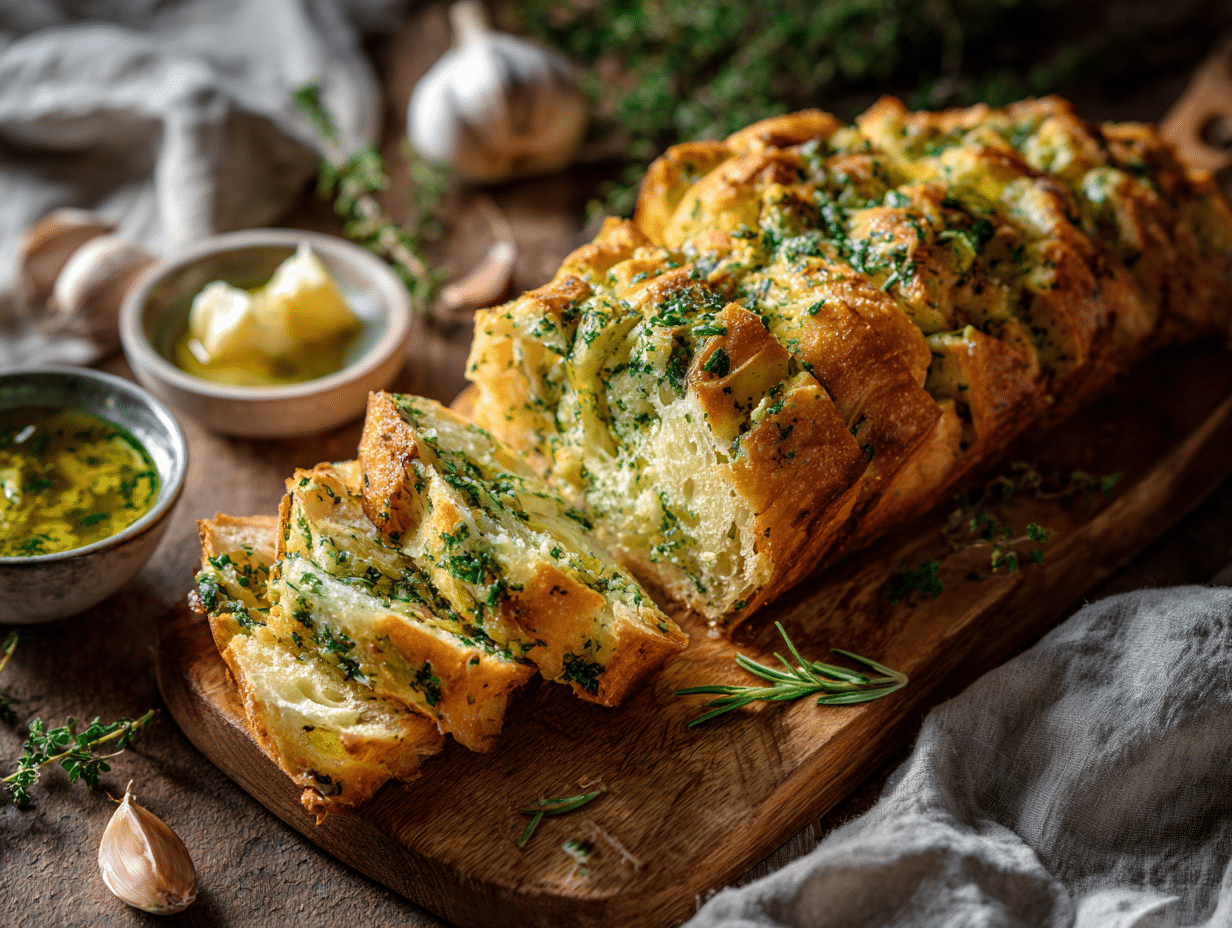
This is garlic bread made properly — a French baguette or ciabatta loaf split lengthwise, coated in butter that’s been gently cooked with garlic, then finished with fresh parsley and thyme. It takes 30 minutes start to finish, and the result is noticeably better than anything made with jarred garlic paste or pre-made frozen bread. If you’ve only ever had the supermarket version, this is worth trying once.
The short version of why this works
Two things make this better than average garlic bread. First, you melt the butter with the garlic over low heat for about a minute before it goes anywhere near the bread. That brief time in the pan takes the raw, sharp edge off the garlic without browning it — browned garlic turns bitter, and raw garlic stays harsh. Second, splitting the loaf lengthwise and brushing the butter all the way to the edges means every bite gets flavor, not just the middle. Both steps are simple, but skipping either one is exactly why homemade garlic bread sometimes disappoints.
Smart swaps
- Bread: A French baguette gives a crispier result; ciabatta is chewier and absorbs more butter. Both work. Avoid soft sandwich loaves — they go soggy.
- Fresh vs. dried thyme: The recipe uses 1 tablespoon fresh or 1 teaspoon dried. Dried thyme is fine here and most people have it on hand already.
- Vegan version: Swap the butter for a good-quality vegan butter block (not a spread). The result is very close to the original.
- Olive oil drizzle: Skip the garnish — not worth the extra dish unless you’re serving this as a standalone appetizer.
Make-ahead notes
You can mix the herb butter up to 3 days ahead and keep it covered in the fridge. Bring it back to room temperature for about 15 minutes before brushing — cold butter tears the bread. If you want to prep the whole loaf in advance, brush it with the butter, wrap it tightly in foil, and refrigerate for up to 24 hours before baking. Bake it straight from the fridge; just add 2–3 minutes to the bake time. Leftover baked bread keeps at room temperature for a day wrapped in foil. To reheat, put it in a 350°F oven for 5–7 minutes — the microwave makes the crust rubbery.
Mistakes to avoid
- Turning the heat up to speed up the garlic: High heat browns or burns garlic in under a minute. Keep it on low and stay at the stove — this step is only 60 seconds.
- Under-brushing the bread: If the butter looks like enough, add a little more. Bread that’s lightly coated comes out dry in the middle. Use all of the butter mixture.
- Skipping the parchment or foil on the baking sheet: Butter drips off the bread as it bakes and burns onto a bare pan. It also makes cleanup much harder than it needs to be.
- Pulling it out too early: The edges should be visibly golden and starting to crisp before you take it out. Pale bread at 12 minutes just means it needs another 2–3 minutes — ovens vary.
- Broiling and walking away: The optional broil step takes the bread from golden to burnt in about 30 seconds if you’re not watching. Stay in front of the oven with the door cracked.
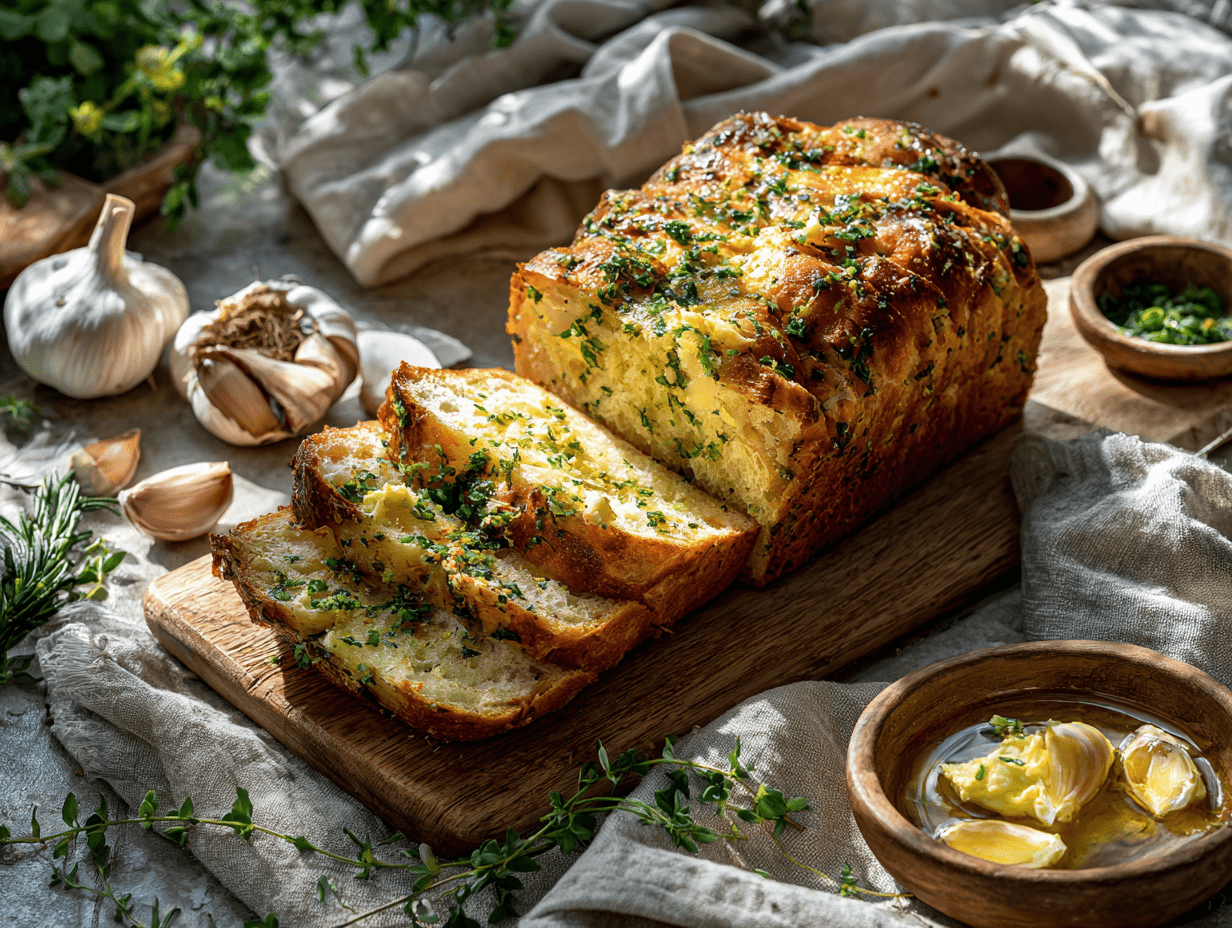
Garlic Herb Butter Bread

Equipment
- Baking sheet
- Small Saucepan
- Bread knife
- Pastry brush
Ingredients
- 1 loaf French bread or Italian ciabatta preferably fresh, 12-14 inches
- 6 tablespoons unsalted butter room temperature
- 4 cloves garlic finely minced or crushed
- 2 tablespoons fresh parsley finely chopped
- 1 tablespoon fresh thyme leaves or 1 teaspoon dried thyme
- ¼ teaspoon sea salt or to taste
- ⅛ teaspoon cracked black pepper freshly ground
- 2 tablespoons extra virgin olive oil optional for drizzling
Instructions
- Preheat the oven to 375°F (190°C) and line a baking sheet with parchment paper or foil.
- Slice the bread in half lengthwise so you have two long halves with the crumb exposed.
- In a small saucepan over low heat, melt the butter. Add the minced garlic and stir until fragrant but not browned—about 1 minute.
- Remove butter from heat and stir in chopped parsley, thyme, salt, and black pepper until well combined.
- Brush the herb butter generously over the cut sides of the bread using a pastry brush. Make sure every corner is coated to infuse flavor all over.
- Place the bread halves, buttered side up, on the baking sheet. Bake in the preheated oven for 12–15 minutes, or until the edges turn crisp and golden.
- Optional: For extra crispness and golden hue, broil on high for 1–2 more minutes—watch closely to avoid burning.
- Drizzle with a small amount of extra virgin olive oil before slicing and serving for an added richness.
Notes
- For a cheesy twist, sprinkle 1/2 cup grated Parmesan or mozzarella over the butter before baking.
- Try roasted garlic for a mellower, deeper flavor. Simply roast whole cloves in foil at 400°F (204°C) for 35–40 minutes, then squeeze into the butter mixture.
- To make it vegan, replace the butter with a plant-based alternative and skip the cheese.
Nutrition
Common questions
Can I use garlic powder instead of fresh garlic?
You can, but the flavor will be noticeably flatter. If you do use it, start with about half a teaspoon and stir it directly into the melted butter off the heat — cooking garlic powder in a hot pan makes it taste dusty.
What if I only have salted butter?
Salted butter works fine — just leave out the quarter teaspoon of sea salt called for in the recipe and taste before adding any. Most salted butters have enough sodium on their own.
How do I know when the garlic is done in the pan and not burnt?
It’s ready when you can smell it clearly and it looks slightly softened but still pale — about one minute over low heat. If it starts turning golden at the edges, take the pan off the heat immediately.
Can I make this with a whole round loaf instead of a baguette?
Yes, but slice it into individual pieces first rather than halving it lengthwise, since a round loaf is too thick to heat through evenly as two halves. Brush each cut side generously and bake the same way.
My bread came out soft instead of crispy — what went wrong?
The most likely cause is that the bread was covered or the oven wasn’t fully preheated. Bake it uncovered on an open baking sheet and make sure your oven has had at least 10 minutes to reach 375°F before the bread goes in.
If you liked this one
- Authentic Roman Carbonara
- Creamy Fettuccine Alfredo
- Rustic Sourdough Focaccia with Rosemary and Sea Salt
- Elegant Chicken Marsala with Mushrooms and Marsala Wine