












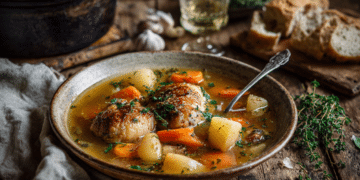




















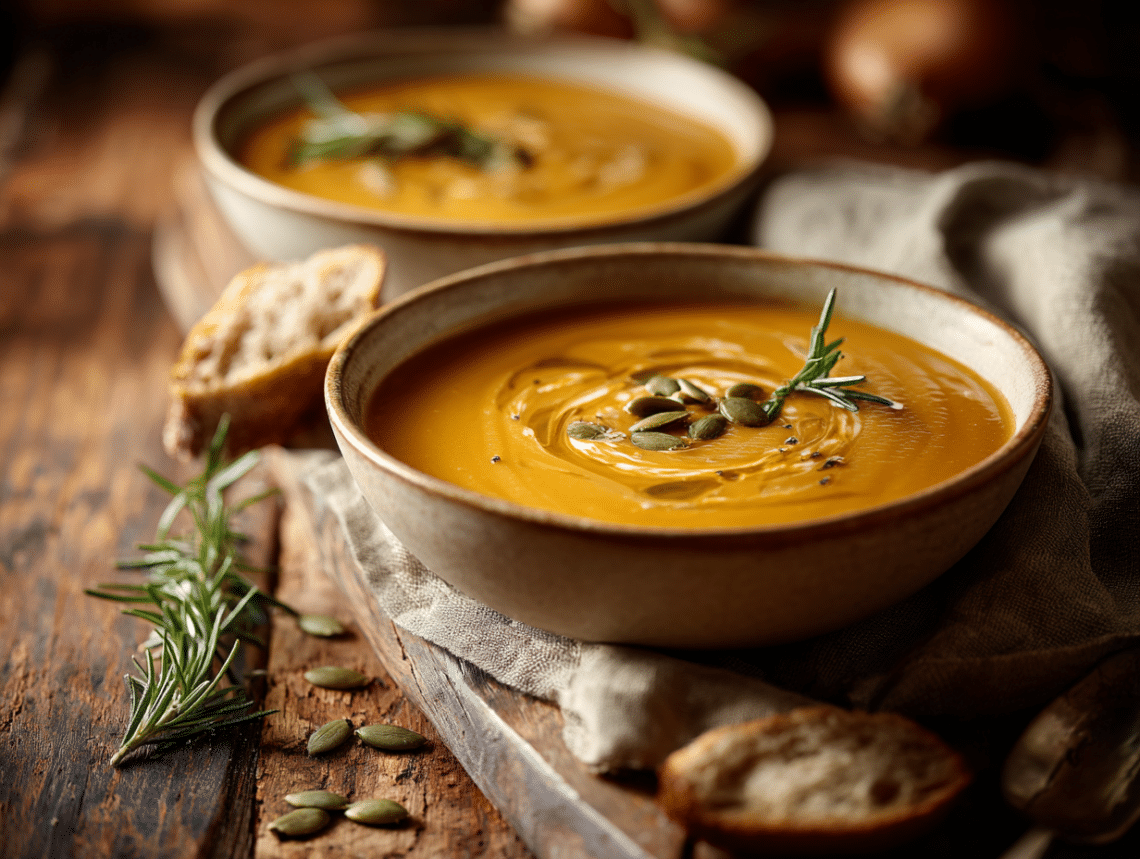
This is a roasted butternut squash soup made with nine ingredients, no cream, and no shortcuts on the oven time. The squash roasts for over an hour, which is what gives it a deep, almost sweet flavor that a quick stovetop version simply won’t match. If you have a blender and a sheet pan, you have everything you need.
Substitutions that actually work
- Beef stock: Chicken stock works just as well and is more common in most fridges. Vegetable stock keeps it fully plant-based — just expect a slightly lighter color and a milder base flavor.
- Fresh rosemary: The recipe calls for fresh. If you only have dried, use half the amount (¼ teaspoon dried for every ½ teaspoon fresh). Dried rosemary is more concentrated and can turn sharp if you overdo it.
- Pumpkin seeds (garnish): Skip the garnish — not worth the extra dish. If you want something on top, a drizzle of olive oil or a pinch of smoked paprika costs you nothing extra.
- Nutmeg: Pre-ground nutmeg from the back of your spice cabinet is fine here. Freshly grated is better, but the difference is small in a blended soup.
The short version of why this works
Two things matter here: the length of the roast and the order you build flavor in the pan. Roasting the squash cut-side down for 50–60 minutes (until a knife slides through with almost no resistance) drives off moisture and concentrates the natural sugars — that’s where the depth comes from. Then sautéing the onion, garlic, and rosemary separately before combining everything means you’re adding a second, distinct layer of savory flavor rather than just cooking it all together in one pot. Neither step is complicated, but skipping or rushing either one flattens the result.
What can go wrong
- Soup comes out watery: The squash wasn’t roasted long enough. If the flesh looks pale and releases a lot of liquid when you scoop it, it needed more time. A properly roasted squash should have dark golden edges and feel almost dry when scooped.
- Blender lid blows off: Hot liquid expands. Fill the blender no more than halfway, hold a folded kitchen towel firmly over the lid, and start on the lowest speed. Blend in batches if needed.
- Soup tastes flat after blending: Taste and adjust salt before serving. Blending dilutes perceived seasoning — what tasted right in the pan often needs another pinch once everything is combined.
- Texture is stringy or grainy: Some squash varieties are more fibrous. Blend for longer — at least 60 seconds on high — and if it’s still not smooth, pass it through a fine mesh strainer.
- Rosemary is gritty or overpowering: Dried rosemary that wasn’t chopped finely enough can stay coarse through blending. Always chop fresh rosemary very fine, and if using dried, rub it between your fingers first to break it down before adding it to the pan.
Keeping and reheating
This soup keeps well in the fridge for up to 4 days in a sealed container. It also freezes cleanly for up to 3 months — portion it into freezer bags or containers before freezing so you can thaw only what you need. To reheat, warm it gently in a saucepan over medium-low heat, stirring occasionally. It will thicken in the fridge and even more so from frozen; just add a splash of stock or water and stir until it loosens back to the right consistency. Avoid boiling it hard during reheating, which can dull the flavor.
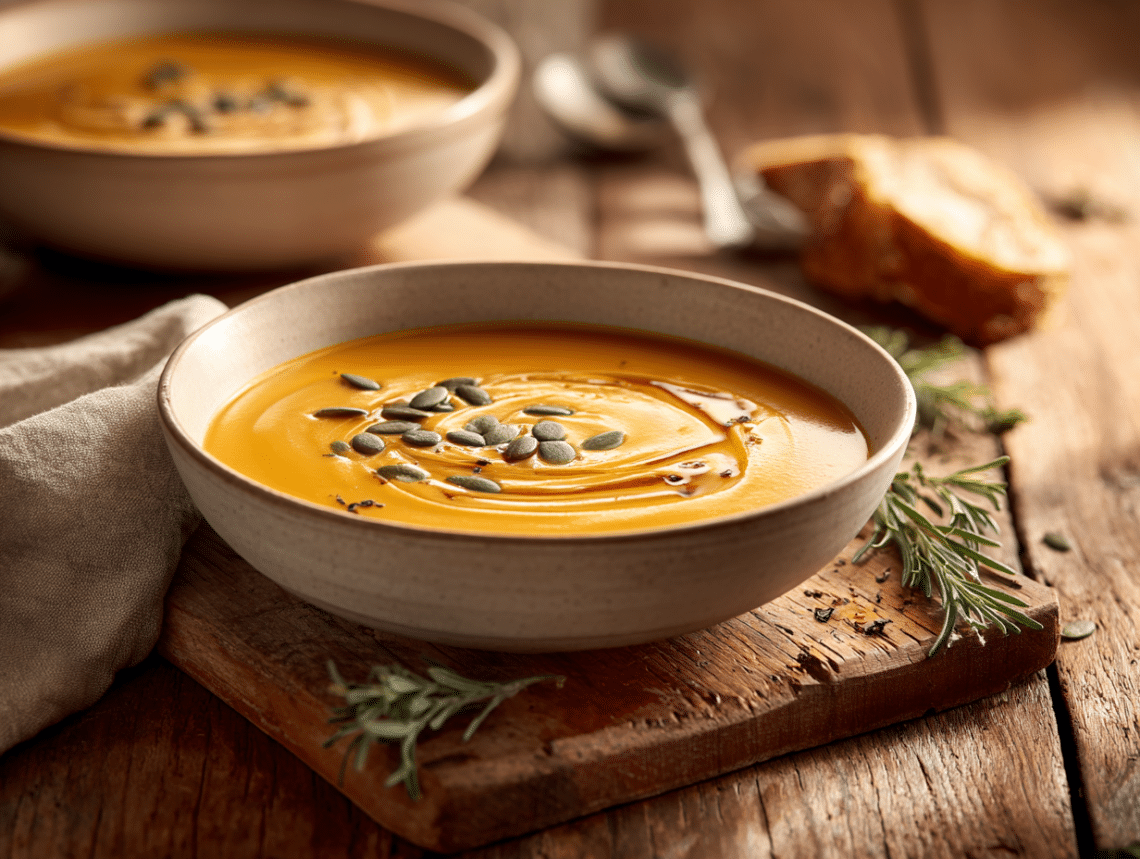
Easy Butternut Squash Soup – Simple, Silky & Satisfying

Equipment
- Half sheet pan (18x13 inch / 46x33cm)
- Pastry brush
- Small skillet (8-inch / 20cm)
- High-speed blender or countertop blender
- Large saucepan (3-quart / 2.8L)
- Instant-read thermometer (nice-to-have — useful for confirming soup serving temperature)
- Immersion blender (nice-to-have — alternative to countertop blender for easier cleanup)
Ingredients
- 1 large butternut squash approximately 3 lb
- 2 tablespoons olive oil divided
- ½ medium red onion finely chopped
- 2 cloves garlic minced
- ½ teaspoon fresh rosemary finely chopped (or ¼ teaspoon dried)
- 1 teaspoon salt
- ¼ teaspoon black pepper freshly ground (about 8 turns of a pepper mill)
- 2 cups beef stock
- 0.1 teaspoon nutmeg freshly ground
- 2 tablespoons pumpkin seeds (pepitas) for garnish
Instructions
- Preheat the oven to 425°F / 220°C (200°C fan-forced).
- Cut butternut squash in half, remove seeds, and brush 1 tablespoon of olive oil over the exposed flesh of each half.
- On a half sheet pan or cookie sheet, roast cut-side down for 50–60 minutes, or until a knife pierces the thickest part with very little resistance. The flesh should be deeply golden at the edges. Let cool for 15–20 minutes, then scoop the flesh from the skin and cut into large chunks.
- Meanwhile, heat 1 tablespoon of olive oil in a small skillet over medium heat until shimmering but not smoking. Add the red onion and garlic and sauté, stirring occasionally, until the onion is translucent and the garlic is fragrant, about 5 minutes.
- Transfer the roasted squash, onion and garlic mixture, rosemary, salt, pepper, beef stock, and nutmeg to a blender. Pulse a few times to break up the large pieces, then blend on high for about 60 seconds until completely smooth and silky. Pour the soup into a large saucepan and warm over medium heat, stirring occasionally, until heated through (about 5 minutes).
- Serve hot, garnished with a scattering of pumpkin seeds (pepitas).
Notes
Notes
- Storage: Refrigerate in an airtight container for up to 4 days, or freeze for up to 3 months. Thaw overnight in the fridge before reheating.
- Make-ahead: Roast the squash up to 2 days ahead, refrigerate the flesh, then sauté the aromatics and blend when ready to serve.
- Substitutions: Swap beef stock for vegetable or chicken stock. Use shallot in place of red onion, or fresh thyme instead of rosemary.
- For extra richness: Stir in 2 tablespoons of cold butter or a splash of coconut cream after blending for a more luxurious texture.
- Pro tip: Blend on high for a full 60 seconds — the longer blend creates a velvety smooth texture without needing to pass the soup through a sieve.
Nutrition
Common questions
Can I make this soup ahead of time?
Yes — this soup is actually better the next day. Make it up to 2 days ahead, refrigerate it, and reheat gently on the stovetop with a splash of stock to loosen it. The flavors settle and deepen overnight.
Can I use chicken stock instead of beef stock?
Chicken stock works well and is a straightforward swap. The soup will taste slightly lighter and less savory, but it’s still very good — and most people have chicken stock on hand more often than beef.
Do I really need to roast the squash, or can I just boil it?
Roasting is what makes this recipe worth making. Boiling produces a thinner, blander soup because the squash doesn’t caramelize and the moisture doesn’t cook off. If you’re short on time, a shorter roast at a higher temp is still better than boiling.
Is this soup gluten-free?
Yes, all the ingredients in this recipe are naturally gluten-free. Just check the label on your stock — some commercial stocks contain additives or flavorings that include gluten.
My squash is smaller than 3 pounds. Does that change the cook time?
A smaller squash will roast faster — start checking at 40 minutes by pressing a knife into the thickest part. The visual cue matters more than the clock: you want the edges deeply golden and the flesh easy to pierce with almost no resistance.
If you liked this one
- Creamy New England Clam Chowder
- Sweet Corn Chowder
- Rustic Sourdough Focaccia with Rosemary and Sea Salt
- Caramelized Brussels Sprouts with Balsamic Glaze