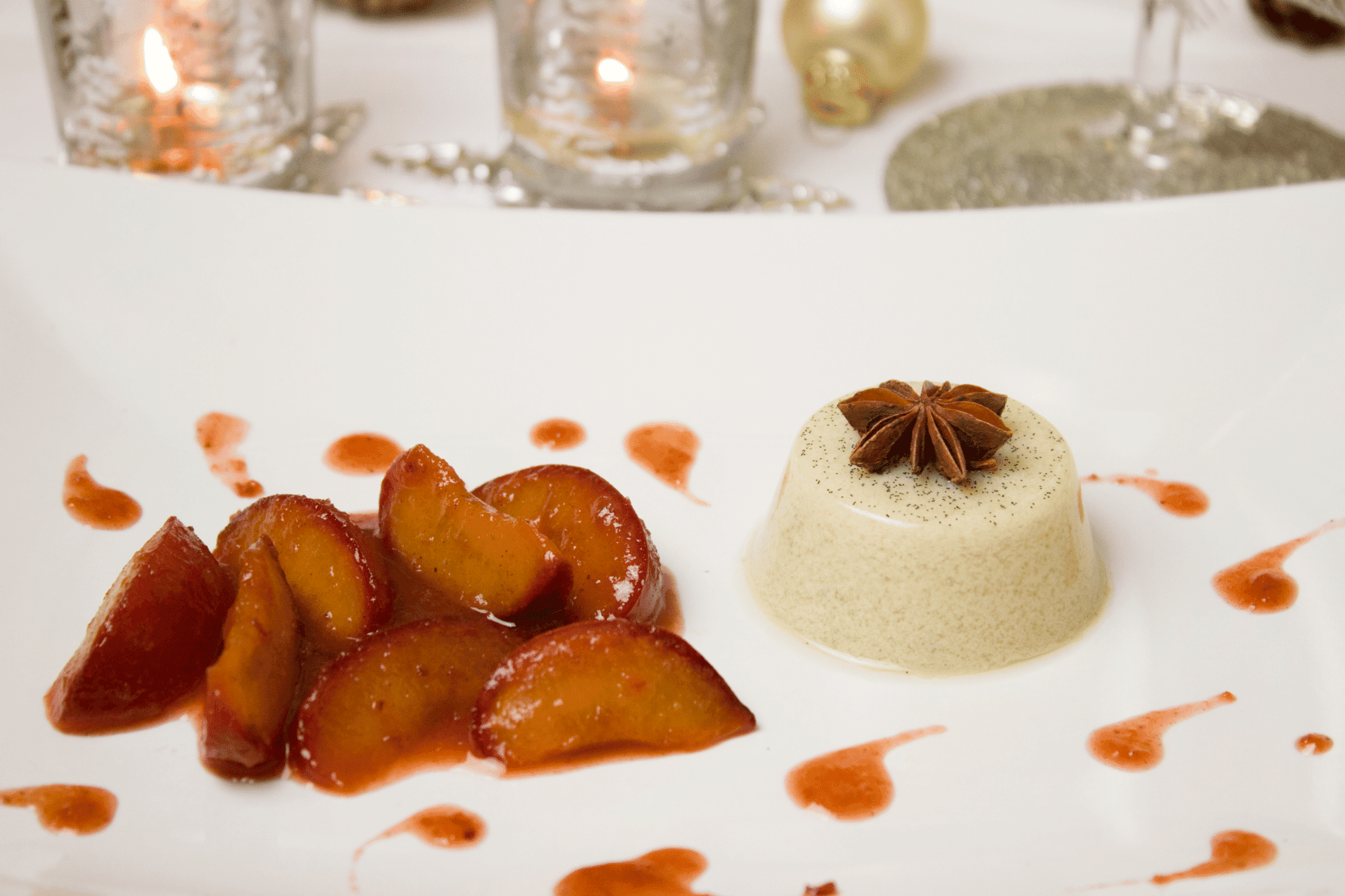
This paleo vanilla cinnamon panna cotta is one of those desserts that feels far more indulgent than it actually is. It’s silky, cool, and lightly sweetened with raw honey — and the warm cinnamon gives it a depth that plain panna cotta just doesn’t have.
I love that it takes barely 15 minutes of hands-on work. You bloom the gelatin, warm everything together in one saucepan, pour it into ramekins, and let the fridge do the rest. No baking, no tempering, no fuss.
What makes this version special:
- Dairy-free — full-fat coconut milk creates that classic wobbly, creamy set without any cream or milk
- Gut-friendly — grass-fed gelatin supports gut lining health
- Only 6 ingredients — nothing obscure, nothing hard to find
If you’re following a paleo, Whole30-adjacent, or AIP-friendly approach and miss having a real dessert, this is the recipe to bookmark. It’s make-ahead friendly, impressive enough for company, and genuinely delicious — not just “good for a health dessert.”
Paleo Vanilla Cinnamon Panna Cotta (Easy 6-Ingredient)
Equipment
- Small Saucepan
- Whisk
- 2 ramekins (6 oz / 180ml each)
- Measuring cups and spoons
- Plastic wrap or ramekin lids
Ingredients
- 1 can full-fat coconut milk shaken well before opening
- ½ cup warm water not hot
- 1 tablespoon grass-fed unflavored gelatin
- 1 teaspoon ground cinnamon Ceylon preferred
- 2 tablespoons raw honey
- 2 teaspoons pure vanilla extract or 1 vanilla bean, seeds scraped
Instructions
- Pour ½ cup (120ml) of warm (not hot) water into a small saucepan. Sprinkle the gelatin evenly over the surface — do not stir. Allow to sit undisturbed on the counter for 5 minutes while the gelatin blooms and absorbs the water.
- Place the saucepan over low heat and add the coconut milk. Whisk gently until the gelatin fully dissolves into the coconut milk — the mixture should be warm to the touch but never reach a simmer (around 150°F / 65°C). Once smooth, whisk in the cinnamon, honey, and vanilla extract until fully incorporated.
- Continue whisking gently for 2-3 minutes until the mixture is completely smooth and no cinnamon clumps remain. Keep the heat on low — if the mixture starts to steam, remove it from the heat. Overheating or boiling will weaken the gelatin's ability to set.
- Divide the mixture evenly between 2 ramekins (6 oz / 180ml each). Let cool at room temperature for 10-15 minutes, then cover tightly with plastic wrap and refrigerate for at least 4 hours, or overnight, until fully set and firm to the touch.
- Serve chilled, topped with fresh berries, a light drizzle of honey, or a pinch of extra cinnamon.
Notes
Notes
- Storage: Cover tightly and refrigerate for up to 4 days. Do not freeze — the gelatin texture breaks down when thawed.
- Make-ahead: This is an ideal make-ahead dessert. Prepare up to 2 days in advance and keep covered in the fridge until ready to serve.
- Substitution: Swap honey for maple syrup (same amount) for a vegan-adjacent option, though this will no longer be strict paleo for some protocols. For AIP, omit the vanilla extract and use vanilla powder instead.
- Pro tip: Use full-fat coconut milk (not light) and shake the can well before opening. If the cream has separated, warm and whisk until smooth before adding to the gelatin.
- Unmoulding: To unmould, dip each ramekin in warm water for 10 seconds, run a thin knife around the edge, and invert onto a plate.
Nutrition
What Makes This Paleo Vanilla Cinnamon Panna Cotta Special
Traditional Italian panna cotta relies on heavy cream for its signature silky wobble. This paleo version swaps in full-fat coconut milk, which delivers a remarkably similar richness with a subtle tropical undertone that pairs beautifully with warm cinnamon and real vanilla.
The magic here is the gelatin-to-liquid ratio. With a full can of coconut milk and just one tablespoon of grass-fed gelatin, you get a set that’s soft and trembling — not rubbery or bouncy. It slips off the spoon the way a great panna cotta should.
What elevates this beyond a basic coconut dessert is the cinnamon and honey combination. The cinnamon doesn’t just add warmth — it rounds out the coconut’s sweetness and gives the panna cotta an almost chai-like complexity. The raw honey adds floral sweetness without the processed sugar spike.
Equipment You’ll Need
- Small saucepan — essential for blooming the gelatin and gently warming the coconut milk. A small pan keeps the mixture shallow so you can monitor the temperature easily and prevent accidental boiling, which would weaken the gelatin.
- Whisk — a balloon whisk ensures the gelatin dissolves completely and the cinnamon incorporates without clumping. A fork won’t cut it here; undissolved gelatin will leave rubbery spots in the finished dessert.
- 2 ramekins (6 oz / 180ml each) — standard ramekins give the panna cotta its classic shape and portion size. You can also use small glass jars or teacups if you plan to serve them without unmoulding.
- Measuring cups and spoons — precision matters with gelatin. Too much and the texture turns rubbery; too little and it won’t set.
- Plastic wrap — covering the ramekins tightly prevents a skin from forming on top and stops the panna cotta from absorbing fridge odours during the long chill.
Nice to have: an instant-read thermometer takes the guesswork out of keeping the mixture below 150°F / 65°C, especially if you’re new to working with gelatin.
Tips for Best Results
- Shake the coconut milk can vigorously before opening. Full-fat coconut milk often separates into a thick cream layer and thin water layer. Shaking (or warming and whisking) ensures an even, creamy base.
- Sprinkle the gelatin — don’t dump it. Sprinkling evenly over the water surface prevents clumps. If you pour it in a pile, the outer layer hydrates and traps dry powder inside.
- Never let the mixture boil. Boiling breaks down the protein structure in gelatin, meaning your panna cotta may not set properly. Keep the heat on low and remove the pan if you see any bubbles forming at the edges.
- Let the mixture cool slightly before pouring into ramekins. A 10-15 minute rest at room temperature prevents thermal shock to cold ramekins and allows any tiny air bubbles to rise to the surface.
- Chill for a full 4 hours minimum. Patience is non-negotiable. The panna cotta may look set after 2 hours but will still be fragile. Overnight chilling gives the best texture.
Substitutions and Variations
- Sweetener: Replace honey with pure maple syrup (same amount) for a slightly deeper, more caramel-like flavour. For strict Whole30, omit the sweetener entirely and increase the vanilla — the coconut milk provides natural sweetness.
- Vanilla: Swap vanilla extract for the scraped seeds of half a vanilla bean for a more intense, speckled appearance. For AIP compliance, use alcohol-free vanilla powder instead of extract.
- Cinnamon: Ceylon cinnamon has a more delicate, floral flavour than Cassia cinnamon (the common supermarket variety). If you only have Cassia, start with ½ teaspoon and taste — it’s more aggressive.
- Coconut milk alternative: Cashew cream works if you’re not nut-free, producing an even silkier texture. Avoid oat milk or almond milk — they’re too thin to create the proper richness.
- Chocolate version: Whisk in 2 tablespoons of raw cacao powder with the cinnamon for a Mexican chocolate-inspired variation.
- Gelatin alternative: Agar agar can be used for a vegan version, but the texture will be firmer and less wobbly. Use 1 teaspoon of agar agar powder and bring the mixture to a brief simmer (agar requires heat to activate, unlike gelatin).
Storage and Reheating
Fridge: Covered panna cotta keeps beautifully for up to 4 days in the refrigerator. The texture actually improves after an overnight chill as the gelatin fully hydrates and the flavours meld.
Freezer: Do not freeze. Gelatin-based desserts break down when frozen and thawed — you’ll end up with a grainy, weeping texture instead of that smooth wobble.
Make-ahead strategy: This is one of the best make-ahead desserts you can have in your repertoire. Prepare the panna cotta up to 2 days before serving. Add toppings just before bringing to the table so berries stay fresh and any honey drizzle stays glossy.
What to Serve With This
This panna cotta is light enough to follow a rich main course but flavourful enough to stand on its own. Here are pairing ideas that complement the coconut-cinnamon profile:
- Fresh berries — raspberries and blueberries add tartness that cuts through the coconut richness
- Toasted coconut flakes — reinforce the coconut flavour and add textural crunch
- Passion fruit pulp — the sharp acidity is a stunning contrast against the creamy base
- Pomegranate seeds — jewel-toned, crunchy, and tart — beautiful for entertaining
- A drizzle of raw honey with flaky sea salt — the sweet-salt combination elevates simple panna cotta to restaurant-level
- Espresso or chai tea — the cinnamon in the panna cotta echoes the spice in chai beautifully
Frequently Asked Questions
Can I use light coconut milk instead of full-fat?
You can, but the result will be noticeably thinner and less creamy. Full-fat coconut milk (typically 13-15% fat) is what gives this panna cotta its rich, silky body. Light coconut milk produces a texture closer to a firm jelly than a proper panna cotta. If you must use light, increase the gelatin by ½ teaspoon to compensate for the thinner liquid.
How do I know when the gelatin has properly bloomed?
After 5 minutes, the gelatin should have absorbed all the water and formed a spongy, wrinkled mass — it will look like a translucent gel pad sitting in the saucepan. If there’s still dry powder on top, sprinkle a few more drops of warm water over it and wait another minute. Properly bloomed gelatin dissolves smoothly when heated; unbloomd gelatin creates lumps.
My panna cotta didn’t set. What went wrong?
The three most common causes: the mixture boiled (which destroys gelatin’s setting ability), the gelatin wasn’t fully dissolved before pouring, or it hasn’t chilled long enough. If it’s still liquid after 6 hours in the fridge, gently rewarm the mixture, add another teaspoon of bloomed gelatin, whisk until dissolved, and re-chill.
Can I unmould this panna cotta onto a plate?
Yes — dip each ramekin into a bowl of warm (not hot) water for about 10 seconds, run a thin knife or offset spatula around the inner edge, place a plate on top, and invert confidently in one motion. The panna cotta should release cleanly. If it sticks, dip again for another 5 seconds. Lightly greasing the ramekins with coconut oil before pouring helps if you plan to unmould.
Is this recipe AIP (Autoimmune Protocol) compliant?
Almost. The main concern is vanilla extract, which contains alcohol. To make it fully AIP-compliant, replace the vanilla extract with alcohol-free vanilla powder (about ½ teaspoon). All other ingredients — coconut milk, gelatin, honey, and cinnamon — are AIP-friendly. Some strict AIP protocols also limit honey in the early elimination phase, so adjust based on your personal protocol.
Can I double this recipe?
Absolutely. Double all ingredients and use a medium saucepan instead of a small one to accommodate the increased volume. The cooking time stays the same — you’re just warming and dissolving, not reducing. Pour into 4 ramekins instead of 2. Chilling time remains 4 hours minimum.
The Story Behind Panna Cotta
Panna cotta — literally “cooked cream” in Italian — originated in the Piedmont region of northern Italy. The earliest versions were simple farmhouse desserts made with whatever cream was on hand, set with gelatin or isinglass, and served with seasonal fruit. It became a staple of Italian restaurant menus in the 1990s and has since been adapted endlessly around the world.
What makes panna cotta such an enduring recipe is its simplicity and versatility. The base technique — warm a liquid, dissolve gelatin, chill until set — is one of the most forgiving in all of dessert-making. That’s exactly why it adapts so well to a paleo framework. Swapping cream for coconut milk isn’t a compromise; it’s a genuinely delicious variation that Italian grandmothers in tropical climates might well have made themselves.
The addition of cinnamon in this version nods to the long history of spice trade between Italy and the East. Cinnamon has appeared in Italian sweets since the Renaissance, when it was a prized luxury ingredient. Pairing it with coconut and honey creates something that feels both ancient and modern — a dessert that honours tradition while fitting the way many of us eat today.
If you make this paleo vanilla cinnamon panna cotta, I’d love to hear how it turned out — drop a star rating and leave a comment below to help other readers find this recipe!