


























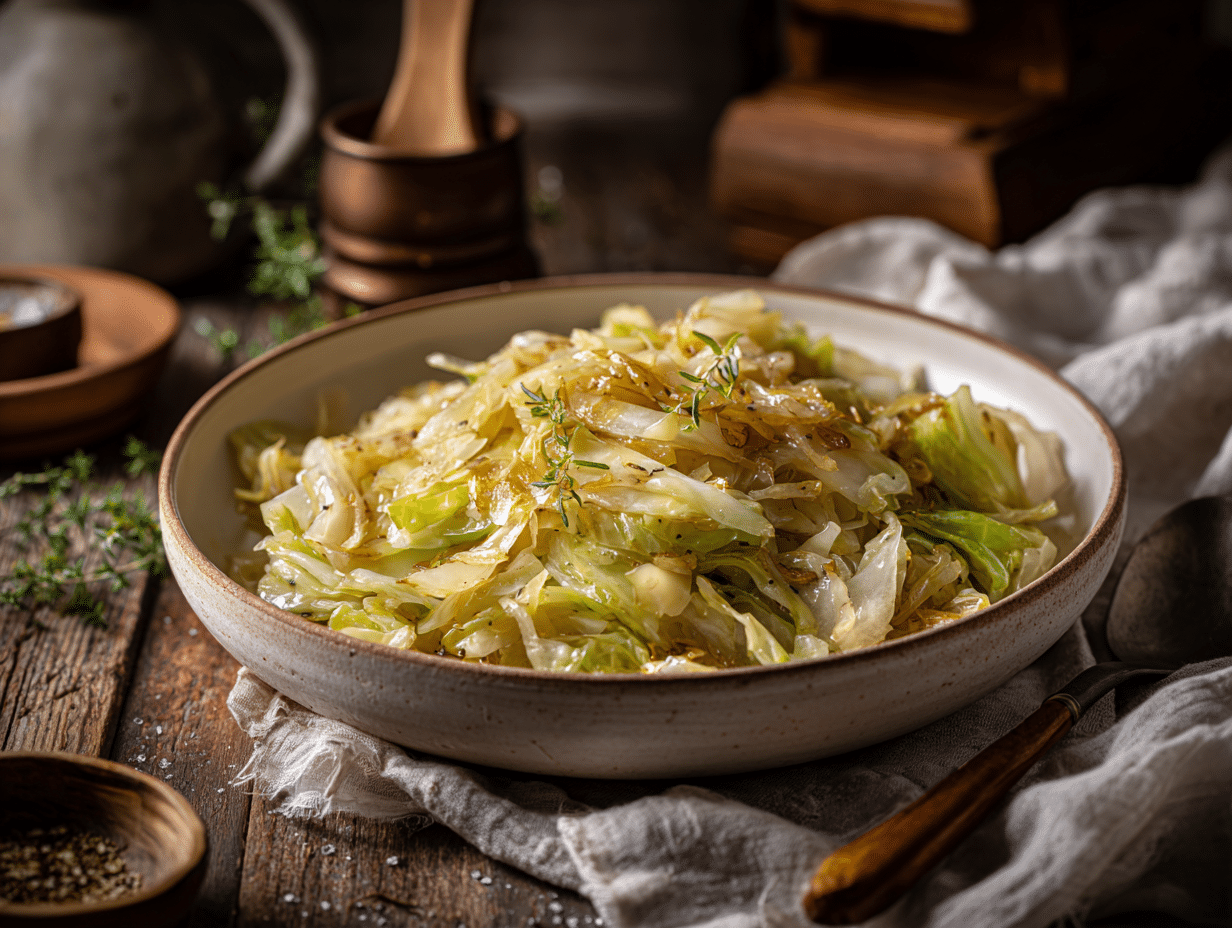
This is a slow-braised cabbage dish built around caramelized onions, tart Granny Smith apple, and a splash of apple cider vinegar — all cooked down together until the cabbage is tender and the flavors have had time to mellow and blend. It takes about an hour and a half start to finish, and most of that time the pot is just sitting on the stove doing its thing. The honest reason to make it: it’s cheap, it feeds four, and it works as either a side dish or a light vegetarian main.
The technique that matters
The caramelization step is where this dish either works or doesn’t. Onions need 15–20 minutes over medium-low heat to turn genuinely golden and sweet — not just soft and translucent. If you rush that step, the whole dish tastes flat. Once the cabbage goes in, the second thing that matters is keeping the heat low during the braise. Too high and the liquid evaporates before the cabbage has time to soften properly, leaving you with something stringy rather than tender. Low and slow is the whole point here.
Mistakes to avoid
- Slicing the cabbage too thick. Thick shreds take much longer to braise and cook unevenly. Aim for slices no thicker than ¼ inch — a sharp knife or a mandoline both work.
- Adding the broth before the cabbage has wilted. If you pour in the liquid too early, the cabbage steams instead of building any flavor in the pan first. Let it cook down and reduce in volume before adding the broth and vinegar.
- Skipping the uncovered finish. If you leave the lid on the whole time, you’ll end up with a watery result. The last few minutes uncovered — with the heat nudged up — lets the extra liquid cook off and concentrates the flavor.
- Over-salting early. Salt draws moisture out of the cabbage quickly, which is useful, but if you add too much at the start you can’t fix it later. Season lightly at each stage and adjust at the end.
Shopping notes
Granny Smith is the right apple here — its tartness holds up during cooking and doesn’t turn to mush the way sweeter varieties can. Caraway seeds are worth picking up if you don’t have them; they’re inexpensive and a small jar will last you a long time. Skip the garnish — not worth the extra dish. Low-sodium vegetable broth gives you more control over the final salt level, so it’s worth grabbing that over regular if you have the choice.
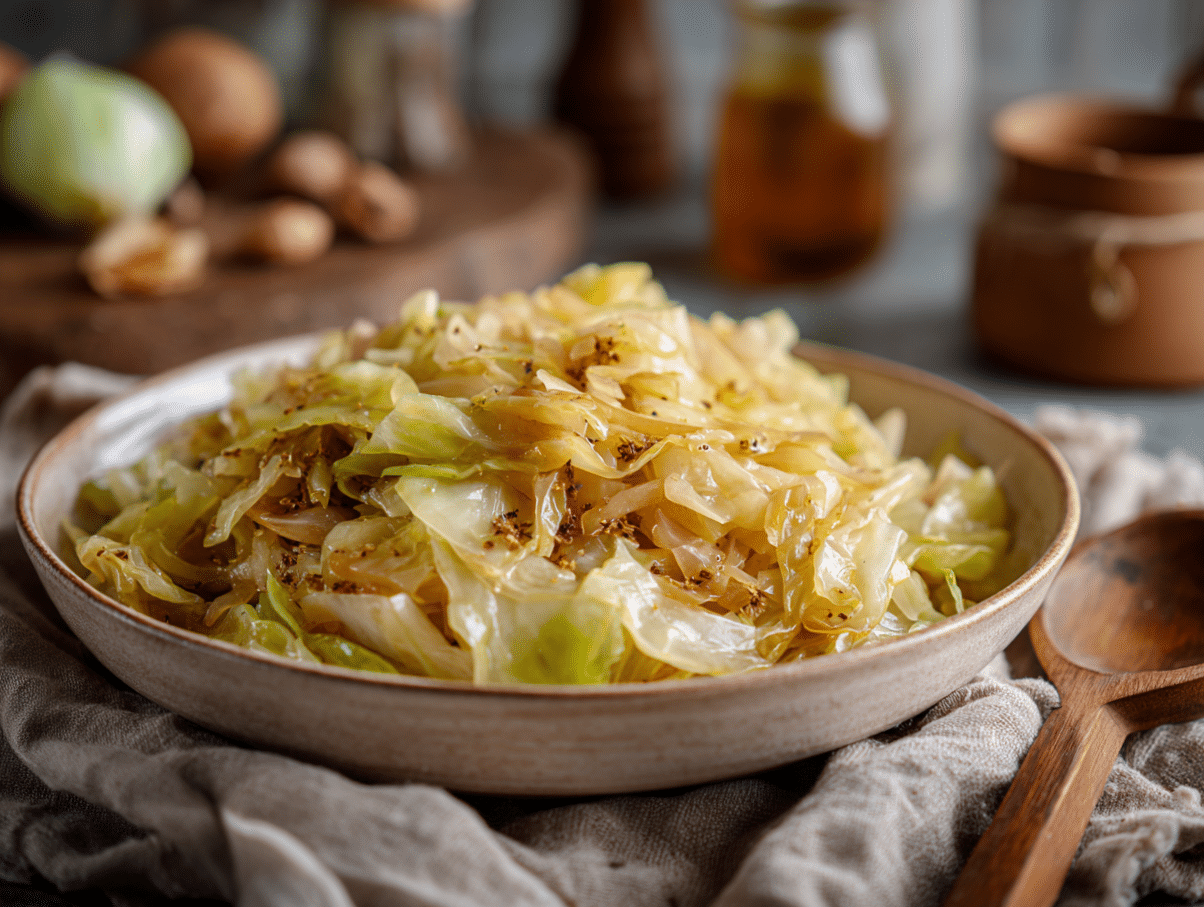
Braised Cabbage with Caramelized Onions and Apple

Equipment
- Large Dutch oven or heavy-bottomed pot
- Chef's Knife
- Cutting board
- Wooden spoon
Ingredients
- 2 tablespoons olive oil extra virgin preferred for depth of flavor
- 1 large yellow onion thinly sliced
- 1 head green cabbage core removed, thinly sliced
- 1 whole Granny Smith apple peeled, cored, and grated or julienned
- 1⁄2 teaspoon caraway seeds optional, for a traditional nutty depth
- 1⁄2 cup vegetable broth preferably low-sodium
- 1 tablespoon apple cider vinegar for brightness
- 1 teaspoon kosher salt adjust to taste
- 1⁄4 teaspoon ground black pepper freshly ground preferred
Instructions
- Heat the olive oil in a large Dutch oven over medium-low heat. Add the sliced onions and cook slowly, stirring occasionally, for about 15–20 minutes until deeply golden and caramelized. Lower the heat if they begin to brown too quickly.
- Add the caraway seeds (if using) and stir for 1 minute until fragrant. Then, add the shredded cabbage and a generous pinch of salt. Stir and cook for 5 minutes until the cabbage starts to wilt and reduce in volume.
- Incorporate the grated apple and give a hearty stir. Let the apple cook down slightly, about 3–5 minutes, releasing its juices and natural sweetness into the pan.
- Pour in the vegetable broth and apple cider vinegar. Stir, cover the pot, reduce the heat to low, and braise gently for 30–40 minutes. Stir occasionally to prevent scorching and to ensure even cooking. The dish is done when the cabbage is tender and deeply flavorful.
- Uncover, and if needed, increase heat to medium-high for the last 5 minutes to let any excess liquid evaporate slightly. Season with salt and pepper to taste.
Notes
- For added texture, toss in some toasted walnuts or slivered almonds before serving.
- To make this vegan dish richer, stir in a tablespoon of plant-based butter just before serving.
- If you're short on time, pre-shred the cabbage using a mandolin or food processor to reduce prep time.
Nutrition
Frequently asked questions
Can I use red cabbage instead of green?
Yes, red cabbage works fine here. It will turn a deeper purple-pink color during braising and has a slightly earthier flavor, but the method is exactly the same.
My kids don’t like vinegar — can I leave it out or reduce it?
You can cut it in half and the dish will still be good. The vinegar mostly brightens the overall flavor rather than making the dish taste sour, but a smaller amount is a reasonable adjustment for sensitive palates.
Can I make this ahead of time?
Yes, and it actually tastes better the next day once the flavors have had time to settle. Store it covered in the fridge for up to four days and reheat gently on the stovetop with a splash of water or broth if it looks dry.
What do I serve this with to make it a full meal?
Boiled or roasted potatoes are the most straightforward pairing and make it genuinely filling. Crusty bread also works well for soaking up the braising liquid.
Can I add protein to make it more substantial?
White beans stirred in during the last 10 minutes of braising are an easy addition that keeps the dish vegetarian and adds protein and bulk. Cooked sausage sliced in works too if you’re not keeping it meat-free.
Do I need a Dutch oven, or will a regular pot work?
A heavy-bottomed pot with a lid will do the job. The main thing you need is even heat distribution and a tight-fitting lid to trap the steam during braising — a thin pot can cause hot spots that scorch the bottom.
What to cook next
- Caramelized Brussels Sprouts with Balsamic Glaze and Crispy Shallots
- Slow-Cooked Spiced Apple Butter
- Hearty Shepherd’s Pie
- Warm and Comforting Classic Apple Crumble