













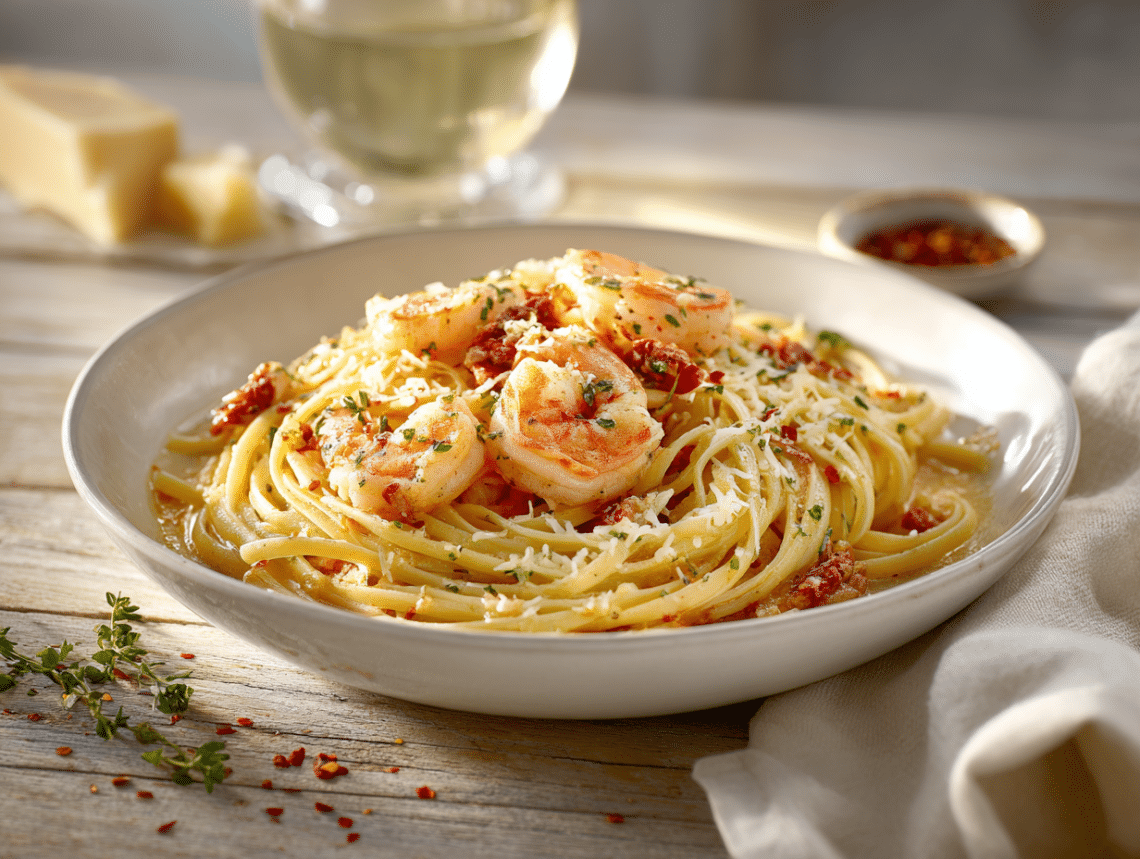
This is a 30-minute pasta built around a white wine and garlic pan sauce, finished with shredded pesto Gouda that melts directly into the hot linguine. There’s no heavy cream and no jarred sauce — the cheese does the work. It’s the kind of dinner that comes together fast enough for a Tuesday but holds up well enough to serve to company.
What makes this version work
Two things matter here. First, timing the shrimp sauce to finish alongside the pasta — not before, not after. Shrimp kept warm in a pan continue to cook, and by the time you’ve drained the linguine and plated everything, overcooked shrimp are already rubbery. Pulling the heat to low the moment they turn pink, then letting the white wine reduce while the pasta finishes, keeps everything in sync. Second, the pesto Gouda goes on last, over hot pasta, not into the pan. Melting it off-heat means it stays creamy rather than breaking into greasy strings — a small detail that makes a real difference in how the finished dish feels.
Troubleshooting
- The sauce looks watery on the plate: The tomato releases liquid as it cooks. If your pan sauce seems thin before you add the wine, let it cook an extra minute uncovered to drive off some of that moisture before adding the shrimp.
- The cheese clumps instead of melting smoothly: Pesto Gouda needs heat to melt but not direct flame. If it’s balling up, add a small splash of the reserved pasta water and toss quickly — the starch helps it bind and spread evenly.
- The pasta is sticky after draining: This usually means it sat in the colander too long. Move it straight to the serving bowl as soon as it’s drained, and toss it immediately with the sauce. Skip the garnish — not worth the extra dish — and serve right away.
- The shrimp are tough and dry: Medium shrimp cook fast, closer to 3 minutes than 4 in a hot pan. If you’re doubling the recipe, cook the shrimp in two batches rather than crowding the pan, or they’ll steam instead of sear and the texture suffers.
- The dish tastes flat: White wine varies a lot in acidity. If the finished pasta tastes dull, a small squeeze of lemon juice over the top before serving will sharpen everything without changing the character of the dish.
Keeping and reheating
Leftovers keep in an airtight container in the fridge for up to 2 days. The pasta will absorb most of the sauce overnight, so add a splash of water or chicken broth when reheating — a covered skillet over medium-low heat works better than the microwave, which tends to tighten the shrimp. Freezing is not recommended here; the shrimp turn grainy after thawing and the pasta goes soft. If you’re planning ahead for a gathering, you can prep the components separately: cook and refrigerate the shrimp sauce (without the cheese) up to a day in advance, then boil fresh pasta and reheat the sauce together just before serving. The pesto Gouda always goes on at the end, over hot food.
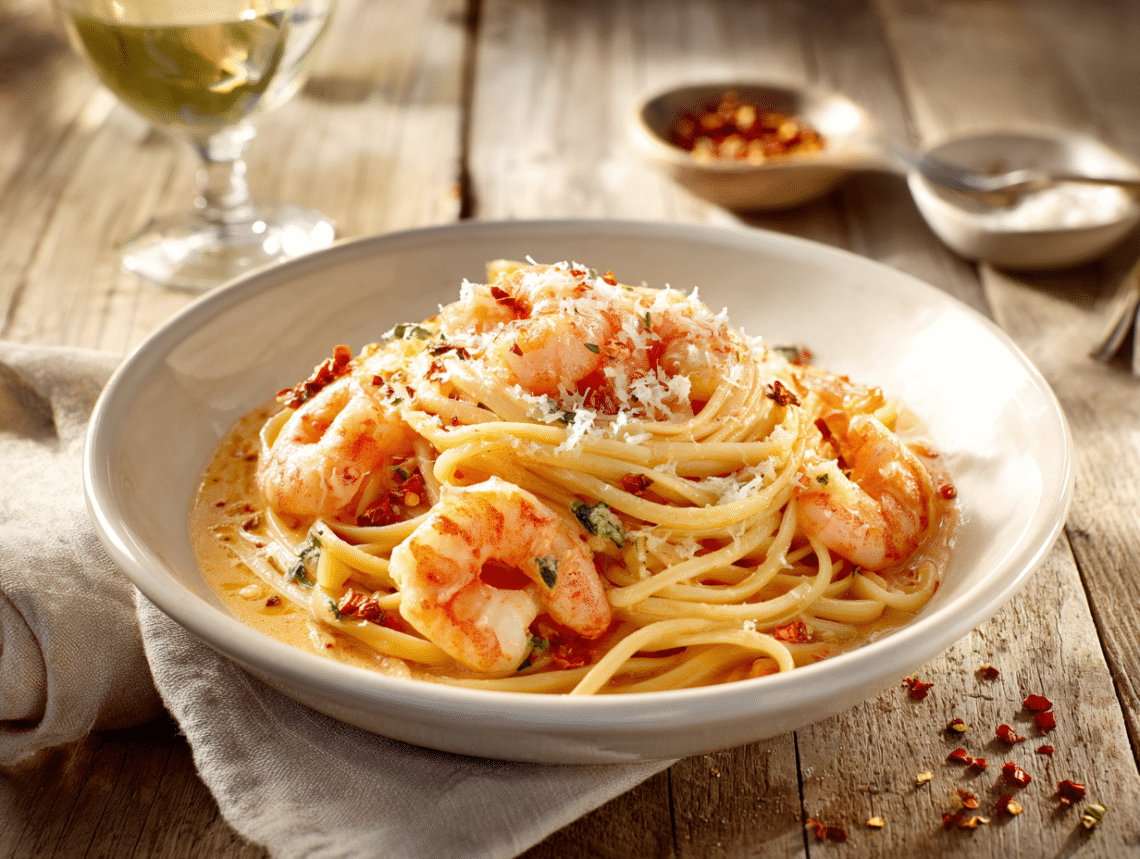
Creamy Shrimp Linguine With Pesto Gouda Cheese

Equipment
- Large pot (6-quart or larger)
- Medium sauté pan (10-inch / 25cm)
- Colander
- Tongs or pasta fork
- Chef’s knife and cutting board
- Large bowl (for thawing shrimp)
Ingredients
- 12 ounces linguine
- 10 medium shrimp about 5 oz, peeled and deveined
- 2 tablespoons olive oil
- 1 clove garlic minced
- 1 small tomato about 3 oz, diced
- 1 teaspoon crushed red pepper flakes adjust to taste
- ½ teaspoon salt plus more for pasta water
- ½ teaspoon freshly ground black pepper
- ⅓ cup dry white wine
- ¼ cup pesto Gouda cheese shredded
Instructions
- If your shrimp are still frozen, fill a bowl with water and place the bag in the water to get the shrimp to defrost faster.
- Fill a large pot with 4-6 quarts (4-6 litres) of water and bring to a boil over high heat. Season generously with salt — the water should taste like the sea. Measure out your linguine and set it aside so it’s ready to throw in the pot when the water is at a roiling boil.
- Chop your garlic clove finely and dice up your tomato.
- Wait for your water to be close to boiling, then in a medium saute pan, heat about a tablespoon of olive oil over medium-high heat. Once hot, add in your garlic and saute for about 30 seconds and then turn your heat down to medium and add in your diced tomato. Saute for about a minute, then throw in your shrimp.
- Your water should be boiling and ready for your pasta by this time. Place it in the water and occasionally stir so it doesn’t clump together.
- While your pasta is cooking, watch your shrimp so they don’t overcook. Be sure to stir your shrimp and tomatoes around, so they cook evenly. Once they turn pink (about 4 minutes in), season with salt, pepper, and red pepper flakes (if you like a bit of heat), turn your heat down to low to finish cooking, so they finish when your pasta finishes.
- Pour the white wine into the shrimp pan and let it simmer for 1-2 minutes until reduced by about half. Meanwhile, reserve ½ cup of pasta water, then drain the linguine and transfer it to a serving bowl. Spoon the shrimp and white wine tomato sauce over the pasta, tossing gently to combine. If the sauce feels tight, add a splash of the reserved pasta water. Top with the shredded pesto Gouda cheese and serve immediately.
Nutrition
Your questions, answered
Can I use pre-cooked shrimp to save time?
You can, but the results are noticeably different. Pre-cooked shrimp only need 60–90 seconds in the pan to warm through — any longer and they turn rubbery. Add them right after the wine has reduced, just to heat, then pull the pan off the heat immediately.
What can I substitute if I can’t find pesto Gouda?
A smoked Gouda works as the closest swap and keeps a similar melting quality, though you’ll lose the basil note. Regular Gouda or a mild provolone will also melt smoothly, but the flavor will be more neutral — add a small pinch of dried basil to the sauce to compensate.
Do I need to use wine, or is there a non-alcoholic substitute?
Chicken broth with a small squeeze of lemon juice is the most reliable swap — use the same one-third cup volume. The lemon adds the acidity the wine would normally provide, and the broth keeps the sauce from tasting thin.
Can I make this for more people without it getting complicated?
Yes — the recipe scales up cleanly. The main adjustment when doubling is to cook the shrimp in two separate batches so the pan doesn’t get crowded. Everything else, including the pasta water and the cheese, just doubles straight across.
My family doesn’t like spicy food — can I leave out the red pepper flakes?
Absolutely, just omit them. The dish is complete without them — the garlic, wine, and pesto Gouda carry enough flavor on their own. If some people at the table want heat, set the flakes out as a table condiment instead.
More recipes to try
- Creamy Fettuccine Alfredo
- Authentic Roman Carbonara
- Authentic Spanish Seafood Paella
- Fresh Lemon-Herb Crab Salad