










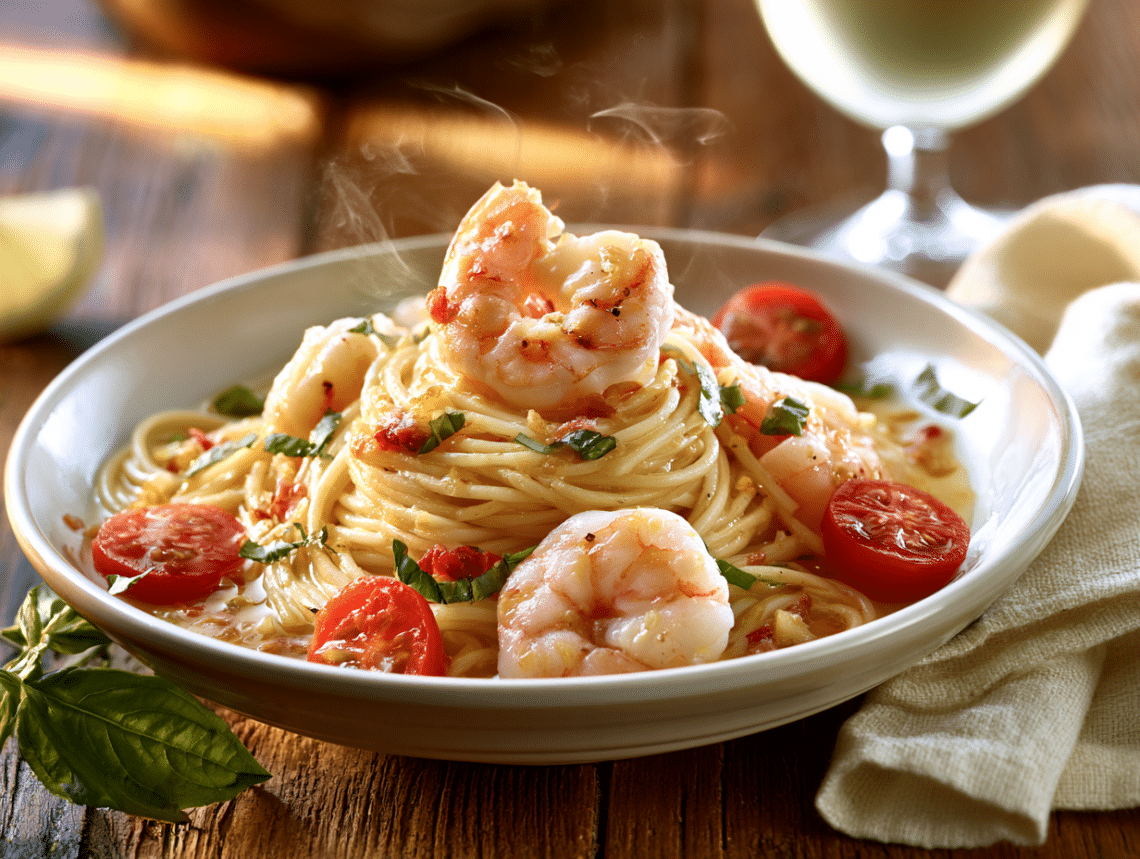
This is a one-pan shrimp pasta built around garlic, white wine, and lemon — ready in about 25 minutes from the time you start boiling water. The honest reason to make it on a weeknight: shrimp cook in under 5 minutes, the sauce comes together in the same skillet, and the whole thing lands on the table faster than most takeout. No special skills required.
Before you start
The two things that actually matter here are shrimp size and garlic heat. Use large shrimp (21–25 count) — smaller shrimp overcook before the sauce has time to develop any flavour, and you’ll end up with rubbery little curls. On the garlic: it goes into a hot pan and needs only 30–60 seconds before the liquid goes in. Watch it closely. Burnt garlic turns bitter and there’s no fixing it once it’s in the sauce — you’d have to start the base over. Keep the heat at medium, not medium-high, and have the wine and lemon juice measured and ready to pour the moment the garlic smells fragrant.
Troubleshooting
- The sauce looks greasy and broken: This usually means the pasta water wasn’t added. Starchy pasta water is what binds the oil and wine into a cohesive sauce. Add a splash — two tablespoons at a time — and toss vigorously until it comes together.
- The shrimp are tough and chewy: They were overcooked. Shrimp are done the moment they turn pink and curl into a C-shape. An O-shape means they’ve gone too far. Pull them off the heat a few seconds early — residual heat in the pan finishes the job.
- The pasta is clumping together after draining: Don’t rinse it. Rinsing removes the surface starch that helps the sauce cling. If it’s sticking, toss it straight into the skillet with the sauce immediately after draining.
- The sauce tastes flat or sharp: Flat usually means it needs salt — season in layers, not just at the end. Sharp and acidic means the wine didn’t reduce long enough; let it simmer a full 2–3 minutes before adding the shrimp. The teaspoon of sugar also helps balance the acidity from the lemon and tomatoes.
- There’s too much liquid pooling at the bottom of the bowl: The tomatoes released water as they cooked. Next time, add them with the shrimp rather than earlier, so they soften without breaking down completely. Skip the garnish of extra tomatoes on top — not worth the extra dish.
Storage and reheating
Store leftovers in an airtight container in the fridge and eat them within 2 days. Shrimp toughens noticeably after that, and the texture won’t improve. Don’t freeze this dish — the shrimp turn rubbery once thawed and reheated, and the sauce separates. To reheat, put the pasta in a skillet over medium-low heat with a tablespoon of olive oil or a small splash of water. Stir gently and pull it off the heat as soon as it’s warmed through — another minute past that and the shrimp will overcook a second time. The microwave works in a pinch but heats unevenly, which makes it easy to accidentally blast the shrimp; if you use it, go in 30-second bursts at 50% power.
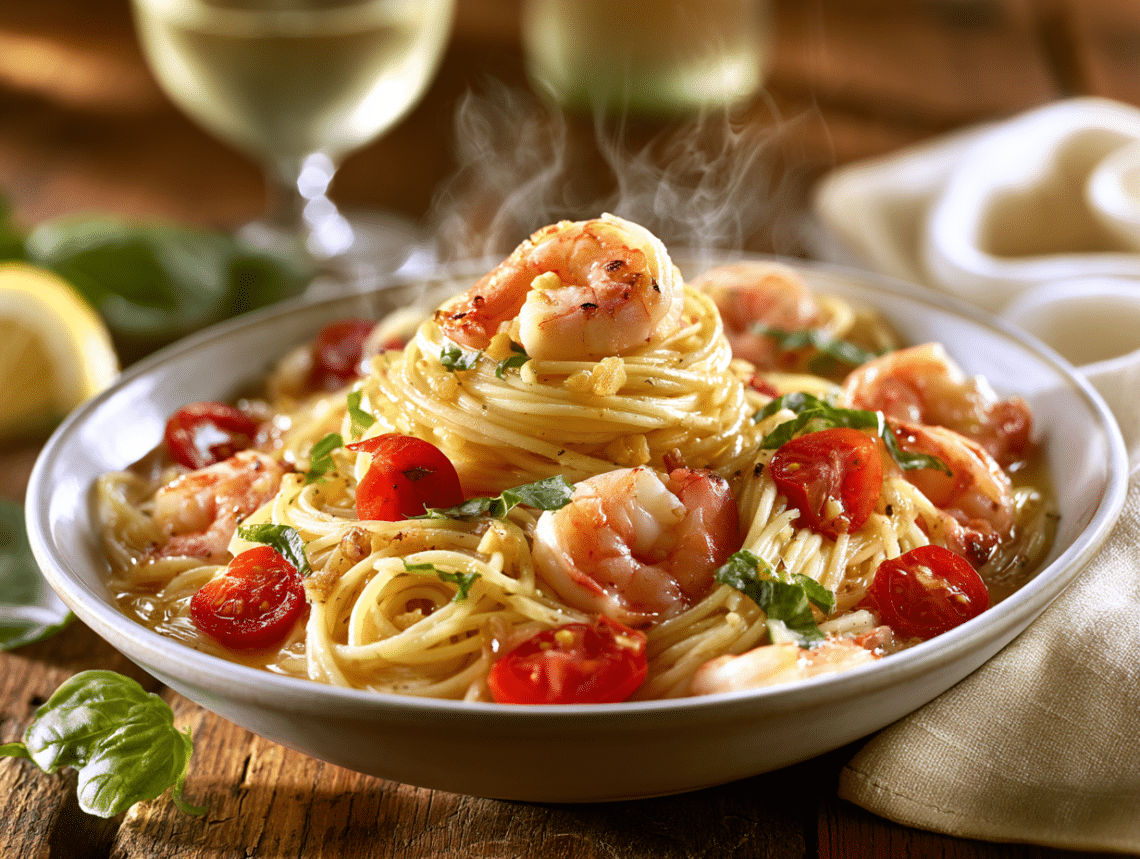
Easy Shrimp Scampi Pasta with White Wine & Garlic

Ingredients
- 16 oz spaghetti
- 2 lbs large shrimp peeled and deveined (21–25 count)
- 1 packet Amazing Taste seafood seasoning or 1 tbsp Old Bay seasoning
- 1 medium onion diced (about 1 cup)
- 8-10 cloves garlic minced (about 3 tbsp)
- 2 tbsp fresh basil chopped (6–8 leaves), plus extra for garnish
- ¼ cup extra-virgin olive oil
- ⅓ cup dry white wine such as Pinot Grigio or Sauvignon Blanc
- 2 tbsp fresh lemon juice about 1 lemon
- 1 cup grape tomatoes halved
- 1 tsp granulated sugar
- 1 pinch salt to taste; for pasta water and seasoning
- 1 pinch freshly ground black pepper to taste
Instructions
- Bring a large pot of generously salted water to a boil. Cook spaghetti according to package directions until al dente. Reserve 1 cup (240ml) of pasta water, then drain and set aside.
- Heat olive oil in a 12-inch skillet over medium heat. Add diced onion and cook, stirring occasionally, for 3–4 minutes until softened and translucent. Add garlic and seafood seasoning, then cook for 30–60 seconds until fragrant — be careful not to burn the garlic.
- Pour in the white wine, lemon juice, and sugar. Stir to combine and let the sauce simmer for 2–3 minutes to cook off the alcohol and reduce slightly. Taste and adjust seasoning with salt and pepper.
- Add the shrimp and grape tomatoes to the pan, arranging the shrimp in a single layer. Cook for 2–3 minutes per side until the shrimp are pink, curled into a C-shape, and no longer translucent in the centre. Do not overcook — shrimp continue cooking from residual heat.
- Add the drained spaghetti directly to the skillet and toss to coat in the sauce. If the pasta seems dry, add a splash of the reserved pasta water to loosen. Stir in the fresh basil, then divide among 4 bowls and serve immediately with extra basil and a squeeze of lemon if desired.
Nutrition
Frequently asked questions
Can I use frozen shrimp?
Yes — frozen shrimp work well here, as long as they’re fully thawed and patted dry before they go into the pan. Excess moisture will steam the shrimp instead of searing them and will water down the sauce, so take a minute to press them between paper towels.
What if I don’t want to cook with wine?
Replace it with an equal amount of low-sodium chicken broth plus an extra teaspoon of lemon juice. The sauce won’t have quite the same depth, but it still works. Dry vermouth is the closest swap if you have it — use the same quantity.
How do I know when the pasta is actually al dente?
Pull a strand out about 2 minutes before the package says it’s done and bite through it — al dente means it’s tender but still has a very slight firmness at the centre, with no raw, chalky core. It will finish cooking briefly in the hot skillet with the sauce, so erring slightly underdone at the drain stage is better than overdone.
Try these next
- Authentic Roman Carbonara
- Creamy Fettuccine Alfredo
- Elegant Chicken Marsala with Mushrooms and Marsala Wine
- Authentic Spanish Seafood Paella