

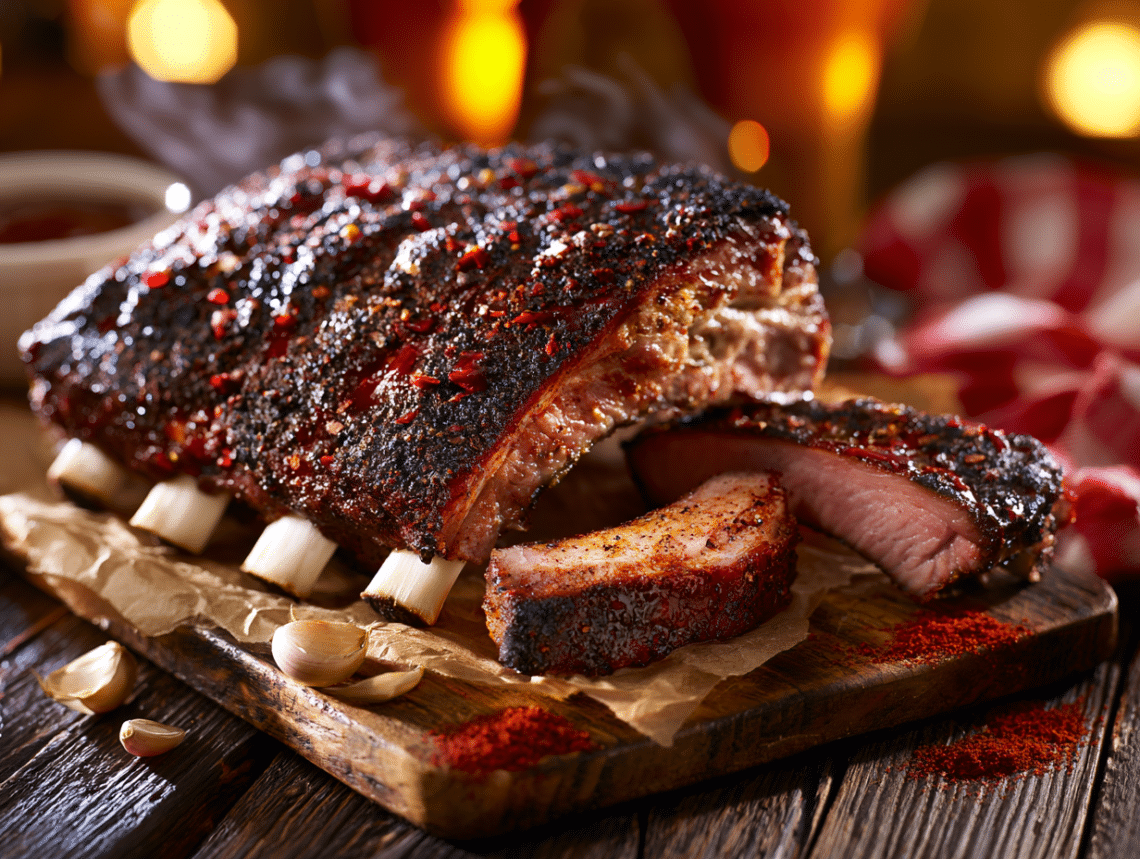
These oven-baked baby back ribs use a six-spice dry rub and a long, low bake at 250°F to break down the connective tissue until the meat pulls cleanly from the bone. There’s no grill, no smoker, and no special equipment beyond a sheet pan and foil. The honest reason to make this on a weekend: most of the time is hands-off, and the result is genuinely better than what most home ovens usually produce.
Ingredient notes
- Hot vs. smoked paprika: The recipe calls for hot/smoked paprika. Regular sweet paprika works fine — the rub won’t have quite the same depth, but it won’t be flat either. A pinch of extra cayenne compensates for the missing heat.
- Dry mustard: This is just ground mustard seed, sold in the spice aisle. If you only have prepared yellow mustard, skip it entirely rather than substituting — wet mustard throws off the rub texture and can prevent bark formation.
- Chili powder: Standard American chili powder (a blend, not pure ground chiles) is what this recipe is built around. Ancho chili powder is a good swap and adds a mild fruitiness without changing the heat level much.
- Barbecue sauce: Any bottle works. A thicker sauce clings better and caramelizes more reliably in the final 30 minutes. Thin, vinegar-forward sauces can run off the meat before they set.
- Brown sugar: Light or dark both work. Dark brown sugar has more molasses and produces a slightly deeper, more bitter bark — worth using if you have it.
Why this recipe works
Two things actually drive the result here. First, the overnight rest after applying the dry rub: salt draws moisture to the surface, which then dissolves the sugar and spices and gets reabsorbed into the meat. By the time the ribs go into the oven, the seasoning is in the meat, not just on it. Second, the temperature — 250°F is low enough that the collagen in the rib meat converts to gelatin slowly, which is what creates that slippery, tender texture rather than dry, stringy pork. Rushing this with higher heat tightens the muscle fibers before the collagen has time to break down, and you end up with ribs that are cooked through but still tough.
What can go wrong
- Membrane left on: If you skip removing the thin membrane from the bone side, the rub can’t penetrate that surface and the finished ribs will have a chewy, papery layer that doesn’t eat well. Slide a butter knife under one corner, grip with a paper towel for traction, and pull it off in one piece.
- Uneven rack thickness: Baby back racks vary. A thinner rack may be done closer to 3 hours; a thick one may need the full 4. Use an instant-read thermometer rather than relying on time alone — you’re looking for 195–203°F internal.
- Sauce applied too early: Brushing barbecue sauce on before the last 30 minutes means the sugars in the sauce burn before the meat is tender. Wait until the ribs are nearly done, then sauce and return to the oven.
- Foil seal not tight enough: If you’re using the foil-wrap method for the first two hours, a loose seal lets steam escape and slows the collagen breakdown. Crimp the edges firmly — skip the garnish, not worth the extra dish — and make sure there are no gaps.
- Skipping the rest: Cutting into the ribs straight from the oven causes the juices to run out immediately. Ten minutes of resting lets them redistribute, and the meat holds together better when you slice between the bones.
Leftovers and make-ahead
Leftover ribs keep well in an airtight container in the fridge for up to 4 days, and the flavor actually improves overnight as the sauce soaks further into the meat. For longer storage, wrap individual racks or portions tightly in foil, then place in a freezer bag — they’ll hold for up to 3 months. To reheat from the fridge, wrap in foil with a small splash of water or apple juice and warm at 275°F for 20–25 minutes; this prevents the meat from drying out. From frozen, thaw overnight in the fridge before reheating the same way. The dry rub can be applied up to 24 hours ahead and the ribs refrigerated uncovered, which gives the salt more time to work into the meat before baking.
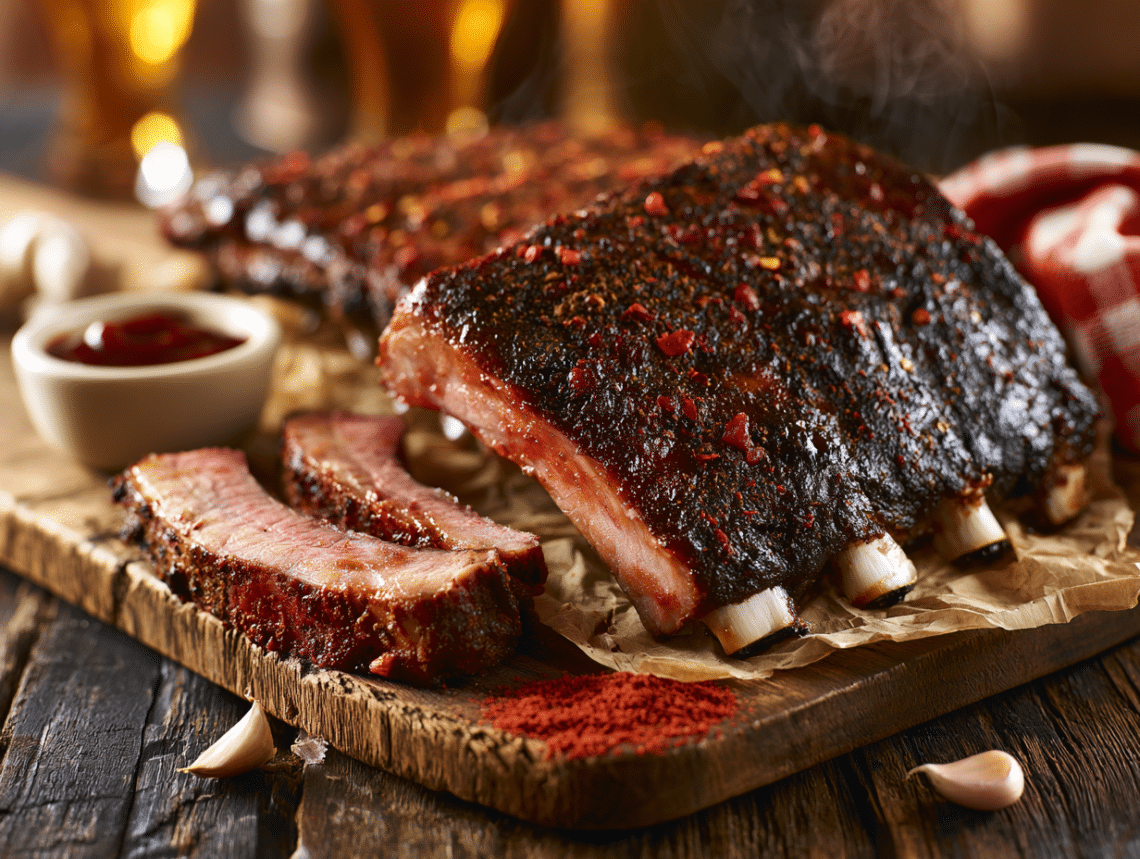
Spicy Baby Back Ribs Recipe (Oven-Baked, Fall-Off-the-Bone)

Equipment
- Large rimmed sheet pan (18x13 inch / 46x33cm)
- Aluminium foil
- Small mixing bowl
- Basting brush
- Sharp paring knife or butter knife (for membrane removal)
- Instant-read thermometer
Ingredients
- 6 pounds baby back ribs
- ¼ cup hot/smoked paprika
- 1 tablespoon kosher salt adjust to taste
- ½ cup brown sugar
- ¼ cup chili powder
- 6 cloves garlic minced
- 2 tablespoons ground cumin
- 1 tablespoon dry mustard
- 1 teaspoon cayenne pepper
- 1½ cups barbecue sauce plus extra for serving
Instructions
- Using your fingers, pull and remove those thin papery skins on each baby back ribs.
- In a medium bowl, combine the chili powder, minced garlic, paprika, salt, cayenne, dry mustard, brown sugar, and cumin. Mix until evenly blended.
- Rub the spice mixture generously over both sides of each rack of ribs. Place the rubbed racks on a sheet pan, cover tightly with plastic wrap or aluminium foil, and refrigerate for at least 8 hours or overnight.
- After that, preheat the oven to 250°F / 120°C (130°C fan-forced).
- Line a large rimmed sheet pan with aluminium foil for easy cleanup. Place the ribs meat side up in a single layer on the prepared pan.
- Bake for 3½ to 4 hours, or until the internal temperature reaches 195-203°F / 90-95°C and the meat pulls back from the bone ends by about ½ inch (1cm).
- When the ribs are nearly tender (after about 3 to 3½ hours), remove the pan from the oven. Brush the tops of the ribs generously with barbecue sauce. Return to the oven and bake for a final 20-30 minutes until the sauce is sticky and caramelised. Let the ribs rest for 10 minutes, then slice between the bones and serve with extra barbecue sauce on the side.
Notes
- Storage: Refrigerate leftover ribs in an airtight container for up to 4 days. Freeze wrapped tightly in foil and then in a freezer bag for up to 3 months.
- Make-ahead: Apply the dry rub up to 24 hours in advance and refrigerate uncovered — the longer the rub sits, the deeper the flavour penetrates.
- Substitution: Swap cayenne for smoked chipotle powder for a smokier, less sharp heat. Use maple syrup in place of brown sugar for a slightly different caramel note.
- Reheating: Wrap ribs in foil with a splash of apple juice and reheat at 275°F / 135°C for 20-25 minutes until warmed through.
- Pro tip: For extra-tender ribs, wrap the racks tightly in foil after the first 2 hours of baking. This steams the meat and accelerates collagen breakdown, then unwrap for the final hour to let the bark set.
- For a gluten-free version, use certified gluten-free barbecue sauce.
- Dairy-Free.
- Gluten-Free when prepared with certified gluten-free barbecue sauce.
Nutrition
Frequently asked questions
Can I use spare ribs instead of baby back ribs?
Yes, but add 30–60 minutes to the bake time. Spare ribs are larger and have more connective tissue, so they need longer at 250°F to reach the same tender result — aim for the same internal temperature range of 195–203°F.
Do I have to marinate the ribs overnight, or can I cook them right away?
You can bake them immediately, but the seasoning will sit on the surface rather than penetrating the meat. Even 2–4 hours in the fridge makes a noticeable difference; overnight is better if you have the time.
My ribs are done but there’s no bark — what happened?
Bark needs dry surface heat to form, so excess moisture is usually the cause. Make sure the ribs are uncovered for at least the final hour of baking, and pat them dry before applying the rub if they came out of the package wet.
How spicy are these? Can I tone it down for kids?
With the full amount of cayenne, these have a noticeable slow burn — not fiery, but present. To make them milder, reduce the cayenne to ¼ teaspoon or leave it out entirely; the rub still has plenty of flavor from the paprika, cumin, and chili powder.
Can I make these without a rack — just flat on the pan?
Yes, and that’s actually how this recipe is written. Place the ribs meat side up directly on a foil-lined sheet pan; no rack needed. The foil makes cleanup easy and the low temperature means the bottom won’t scorch.
What if I don’t have smoked paprika — can I use regular paprika?
Regular sweet paprika works as a straight swap by volume. You’ll lose some of the smoky undertone, but the rub will still be well-seasoned; a small pinch of extra cayenne or a half-teaspoon of cumin can help fill the gap.
Try these next
- Fiery Jamaican Jerk Chicken
- Smoky Homemade Chili Seasoning Blend
- Sizzling Street-Style Grilled Chicken Tacos
- Classic Mexican Guacamole