
















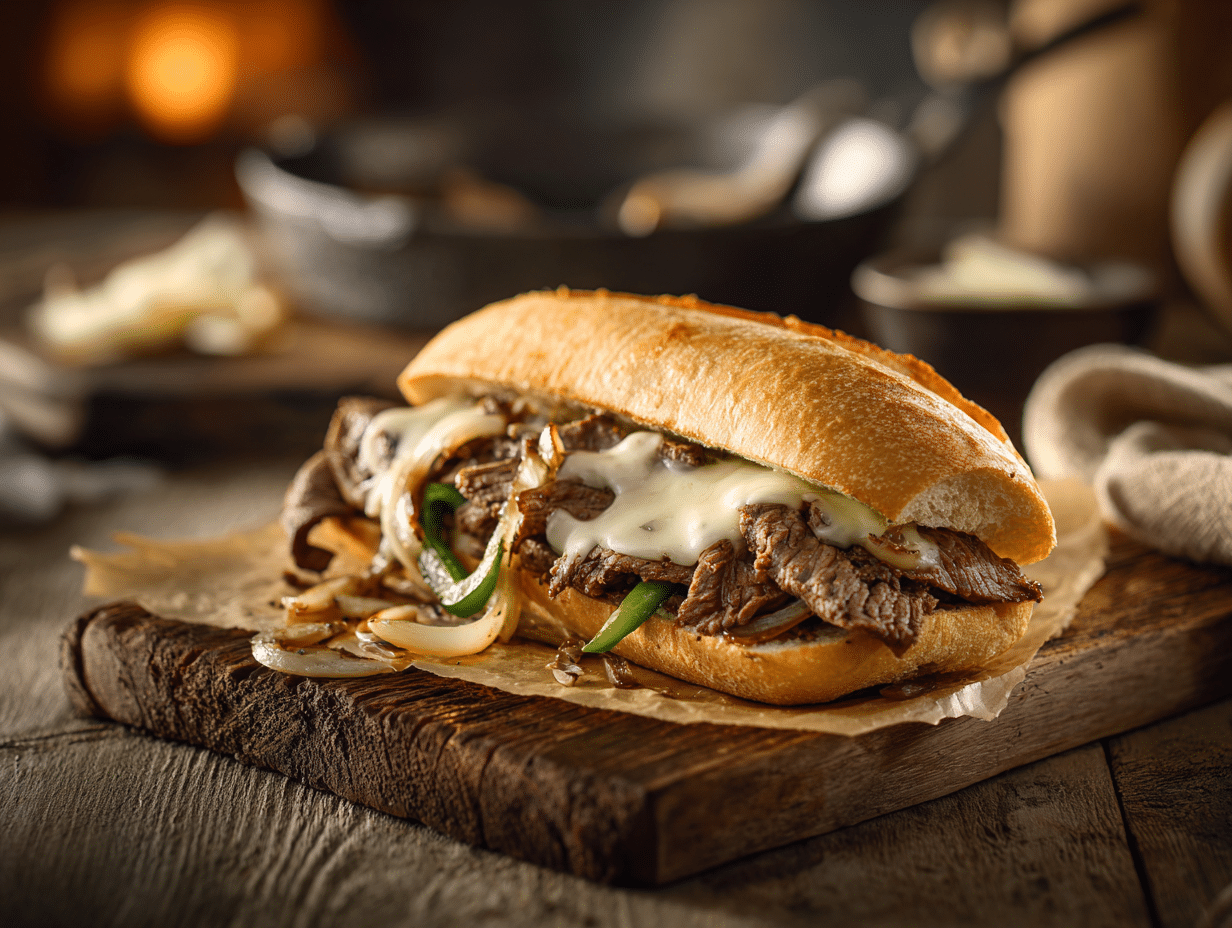
This is a straightforward Philly cheesesteak you can make on a weeknight with a cast iron skillet and about 45 minutes. Ribeye, caramelized onions, provolone, and a soft hoagie roll — no shortcuts, no specialty equipment. If you’ve never made one before, the steps are simpler than they look.
What makes this version work
Two things matter most here. First, the freeze-and-slice step: putting the ribeye in the freezer for 30 minutes firms it up just enough that you can cut it into genuinely thin slices with a regular chef’s knife. Thick slices turn chewy and don’t meld with the cheese the same way. Second, cooking the beef in batches. It feels fussy, but a crowded pan steams the meat instead of browning it — and that browned, slightly crisped edge is what gives the filling its flavor. Both steps take almost no extra effort and make a real difference in the final sandwich.
About the ingredients
- Ribeye steak: This is the right cut for this sandwich — the fat marbling keeps it tender at high heat. Leaner cuts like sirloin dry out quickly when sliced thin and cooked fast.
- Hoagie rolls: Amoroso rolls are the Philadelphia standard, but they’re hard to find outside the region. Look for soft sub rolls with a slight chew — a baguette is too hard and will tear up the roof of your mouth. Avoid anything too soft or it’ll collapse under the filling.
- Provolone vs. other cheeses: Provolone melts smoothly and has a mild tang that works well here. American cheese melts even faster and gives a creamier result. Skip Cheez Whiz unless you specifically want it — it’s a valid choice but adds a processed flavor that not everyone enjoys.
- Green bell pepper: Optional but worth including if you have one on hand. It adds a little texture and cuts through the richness of the beef.
Leftovers and make-ahead
The beef and onion filling keeps well in an airtight container in the fridge for up to 3 days. Store it separately from the rolls — assembled sandwiches go soggy fast. To reheat, warm the filling in a skillet over medium heat for 3 to 4 minutes, then add the cheese and cover for the last minute so it melts properly. You can also microwave the filling in 30-second bursts, but the skillet gives better results. The filling freezes fine for up to 2 months; thaw overnight in the fridge before reheating. Don’t freeze the rolls.
If something goes sideways
- The beef is tough and chewy: It was likely sliced too thick or cooked too long. Thin slices — close to paper-thin — cook in just a few minutes. Pull the meat off the heat as soon as it’s no longer pink.
- The onions are burning before they caramelize: The heat is too high. Drop it to medium and add a small splash of water to the pan to loosen any stuck bits. Proper caramelization takes the full 7 to 9 minutes — rushing it gives you bitter, scorched onions instead of sweet ones.
- The cheese isn’t melting evenly: Make sure the beef mixture is still hot when you lay the cheese slices on top, and use a lid or a piece of foil to trap the steam. Cold filling won’t melt the cheese through in one minute.
- The roll is falling apart: It’s either too soft for the amount of filling, or the filling was too wet. Drain any excess liquid from the pan before scooping into the roll, and don’t overfill — generous is fine, but piled-high is a structural problem. Lightly toasting the roll first helps it hold up.
- The sandwich tastes flat: Season the beef in the pan, not just before cooking. Taste the filling before it goes into the roll and add a pinch more salt if needed — under-seasoned beef is the most common reason a cheesesteak disappoints.
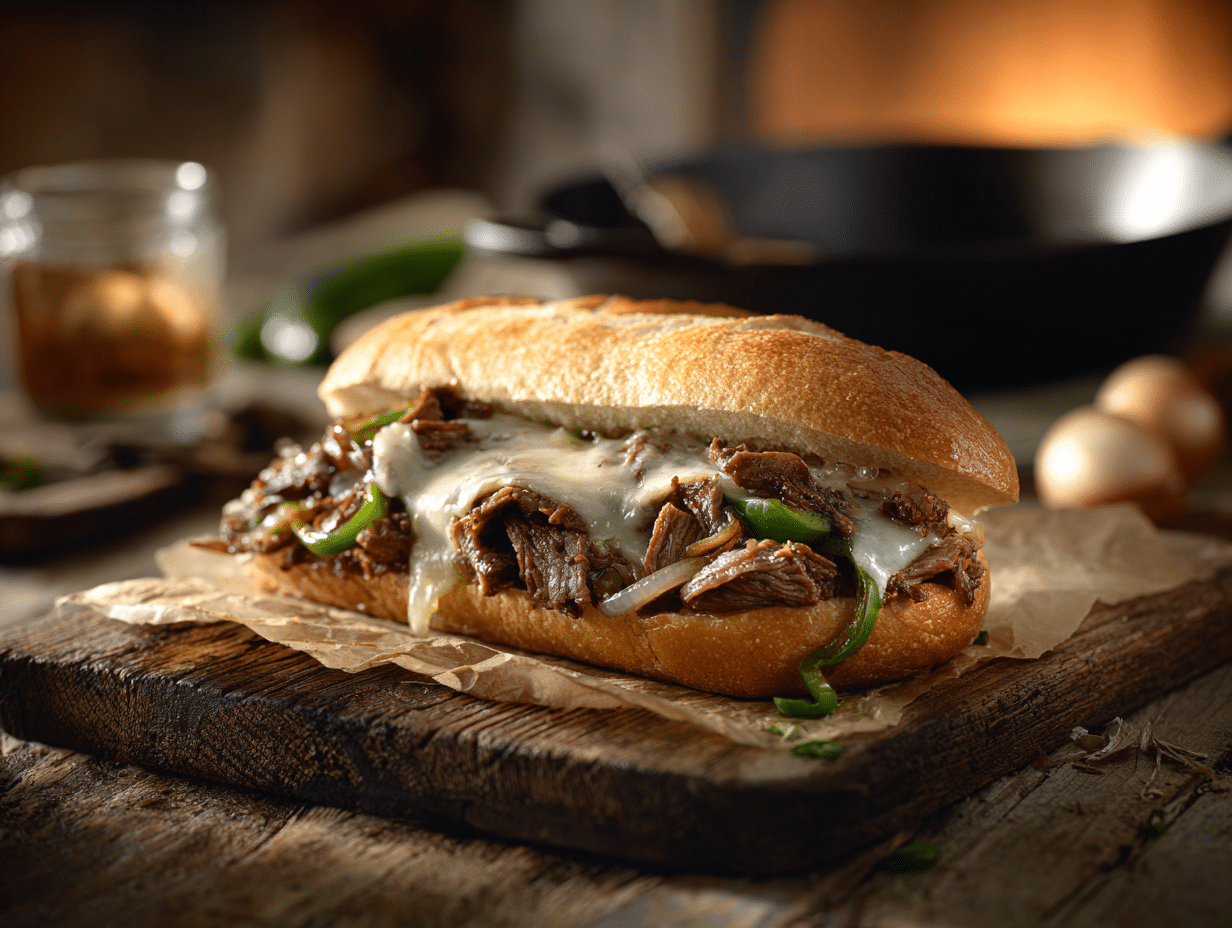
Classic Philly Cheese Steak Sandwich

Equipment
- Cast iron skillet or heavy-bottomed pan
- Chef's Knife
- Cutting board
- Tongs or spatula
- Aluminum foil (optional for keeping sandwiches warm)
Ingredients
- 1 pound ribeye steak thinly sliced against the grain; freeze for 30 minutes for easier slicing
- 1 tablespoon vegetable oil for sautéing
- 1 tablespoon unsalted butter
- 1 large yellow onion sliced thinly
- 1 medium green bell pepper optional, sliced thinly for traditional variation
- 4 pieces hoagie rolls preferably Amoroso-style or other soft sub rolls
- 8 slices provolone cheese or American cheese, depending on preference
- ½ teaspoon kosher salt to taste
- ¼ teaspoon freshly ground black pepper to taste
Instructions
- Preheat a cast iron skillet over medium-high heat (about 375°F / 190°C). Add the vegetable oil and butter until melted and shimmering.
- Add sliced onions (and bell peppers, if using) and sauté for 7–9 minutes until caramelized and golden brown. Stir occasionally to prevent burning. Remove and set aside.
- In the same skillet, add the thinly sliced ribeye in batches to avoid overcrowding. Season with salt and black pepper. Cook for 4–6 minutes, stirring occasionally, until browned with slightly crisped edges.
- Return the onions and peppers to the pan and mix with the beef until fully combined and heated through, 2–3 minutes.
- Place two slices of provolone cheese over each portion of beef mixture while still in the pan. Cover and let melt for about 1 minute.
- Split hoagie rolls without cutting all the way through. Lightly toast them in a dry pan or oven at 350°F (175°C) for 4–5 minutes, if desired.
- Using a spatula, scoop generous portions of the cheesy beef mixture into each roll. Serve hot.
Notes
- For a leaner cut, sirloin may be substituted though ribeye offers the juiciest result.
- For a mushroom twist, add sautéed cremini or button mushrooms.
- Don't over-toast the rolls—they should remain soft but with a slight crunch at the edges.
Nutrition
Common questions
Can I use a different cut of beef if I can’t find ribeye?
You can use shaved beef from the grocery store as a practical substitute — it’s already sliced thin and works well in a hot skillet. Sirloin is another option, but it’s leaner and can turn chewy if overcooked, so watch the timing closely.
Do I need a cast iron skillet, or will a regular pan work?
A regular heavy-bottomed stainless steel or nonstick pan will work fine. Cast iron holds heat well and gives the beef a better sear, but it’s not a requirement — just make sure your pan is fully preheated before the meat goes in.
How do I know when the onions are actually caramelized and not just cooked?
Caramelized onions are deep golden brown, soft, and noticeably sweet-smelling — not just translucent. If yours look pale and limp after 4 minutes, they’re softened but not caramelized yet; keep going and stir every minute or two.
Can I make this without the green bell pepper?
Yes — the pepper is optional and the sandwich is complete without it. Leave it out if you prefer, or swap it for thinly sliced mushrooms, which cook in about the same time and add a savory depth to the filling.
If you liked this one
- Authentic New York-Style Bagels Made Simple at Home
- Sizzling Street-Style Grilled Chicken Tacos with Bold Flavors
- Creamy New England Clam Chowder Straight from the Coast
- Street Food Magic: Authentic Chicken Shawarma Delight