


















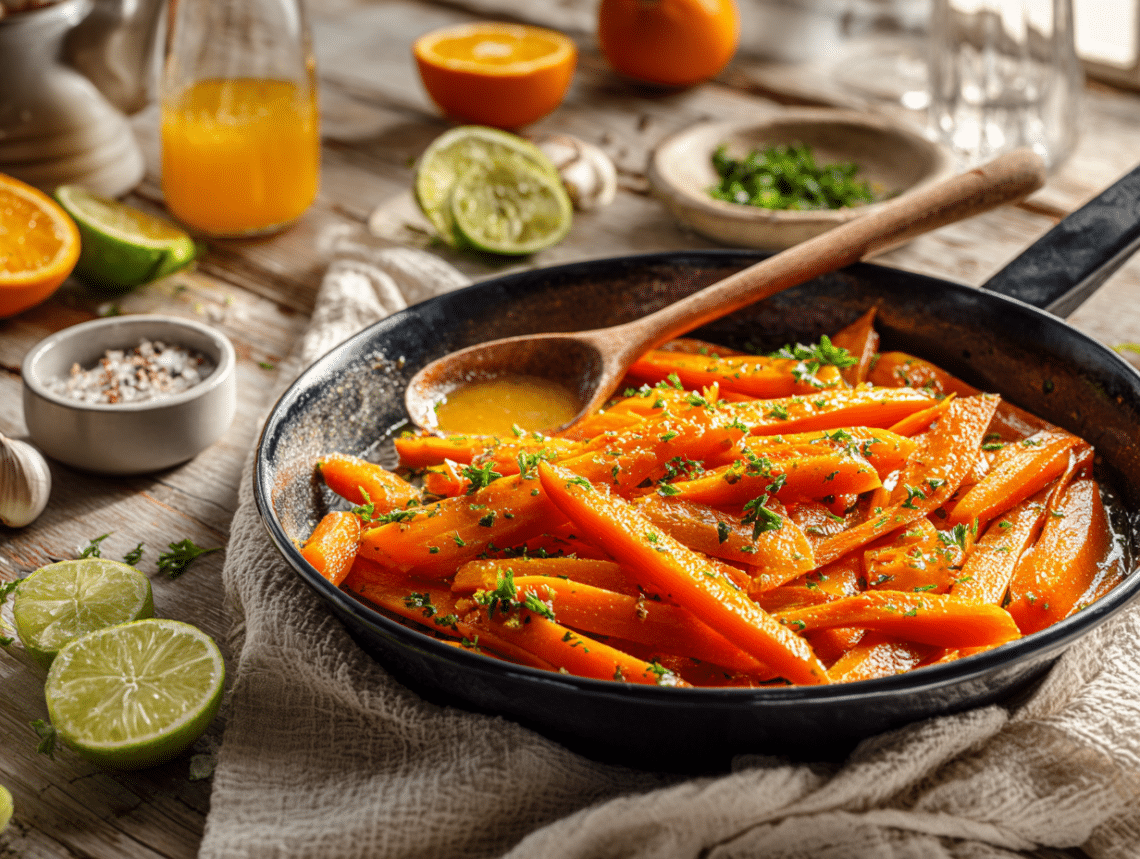
These simmered citrus carrots cook in fresh orange juice, garlic, and olive oil until the liquid reduces into a light glaze that coats each slice. The whole thing takes 30 minutes and uses one pan. It’s the kind of side dish that fits a weeknight just as easily as a dinner party.
Why this recipe works
The key move here is cooking the carrots directly in the orange juice rather than steaming or roasting them first. The carrots absorb the citrus flavor as they soften, so the taste goes all the way through, not just on the surface. Then you remove the lid and let the liquid reduce — that’s what turns thin, watery juice into a glaze that actually clings. The lime juice and cilantro go in off the heat at the very end, which keeps them bright and sharp instead of dull and cooked-out. Those two steps — the reduction and the off-heat finish — are what separate this from a basic boiled carrot.
Mistakes to avoid
- Cutting slices too thick. Rounds thicker than ¼ inch take significantly longer to cook through, and by the time the center is tender the glaze has either over-reduced or you’ve had to add so much extra water that the flavor is diluted. Keep slices thin and consistent.
- Cranking the heat during the reduction. High heat at the end scorches the sugars in the orange juice fast. Medium heat gives you control — the glaze should bubble gently, not spit.
- Adding too much water when the pan looks dry. A splash is fine if the carrots are still hard, but if they’re nearly done, let it ride. Extra water late in cooking washes out the concentrated flavor you’ve been building.
- Skipping the taste-and-adjust step. Orange juice varies a lot in sweetness and acidity depending on the fruit. What works with one batch of oranges might need a pinch more salt or a touch more sugar with another. Always taste before serving.
- Letting the dish sit too long before serving. The glaze tightens as it cools and the carrots continue to soften slightly from residual heat. Serve within 5–10 minutes of finishing, or reheat gently with a tablespoon of water to loosen the glaze.
Substitutions that actually work
- Cilantro: Flat-leaf parsley is the most neutral swap and works well. Fresh dill is a good second choice — it pairs naturally with both citrus and carrots. Skip the garnish entirely if neither is on hand; the dish holds up fine without it and honestly one fewer thing to chop is not worth worrying about.
- Orange juice: Tangerine juice makes the glaze a little sweeter and deeper in color. Blood orange works the same way. Grapefruit juice is sharper and more bitter — cut the sugar to ½ teaspoon if you go that route.
- Sugar: One teaspoon of honey is a direct swap and adds a slightly rounder sweetness that works well with orange.
- Baby carrots: Halve them lengthwise so they cook evenly. Add 3–5 minutes to the simmering time since they’re thicker than thin rounds.
Leftovers and make-ahead
Leftovers keep well in an airtight container in the fridge for up to 4 days. The carrots continue to absorb the glaze as they sit, so the flavor actually improves overnight — which makes this a genuinely useful dish to prep a day ahead for a gathering. Reheat in a skillet over low heat with a tablespoon of water or orange juice to loosen the glaze; 3–4 minutes is enough. You can also microwave them covered on medium power for 90 seconds, stirring once halfway through. Freezing is not recommended — the texture turns soft and watery after thawing. If you’re prepping ahead, hold off on adding the cilantro until just before serving so it stays fresh.
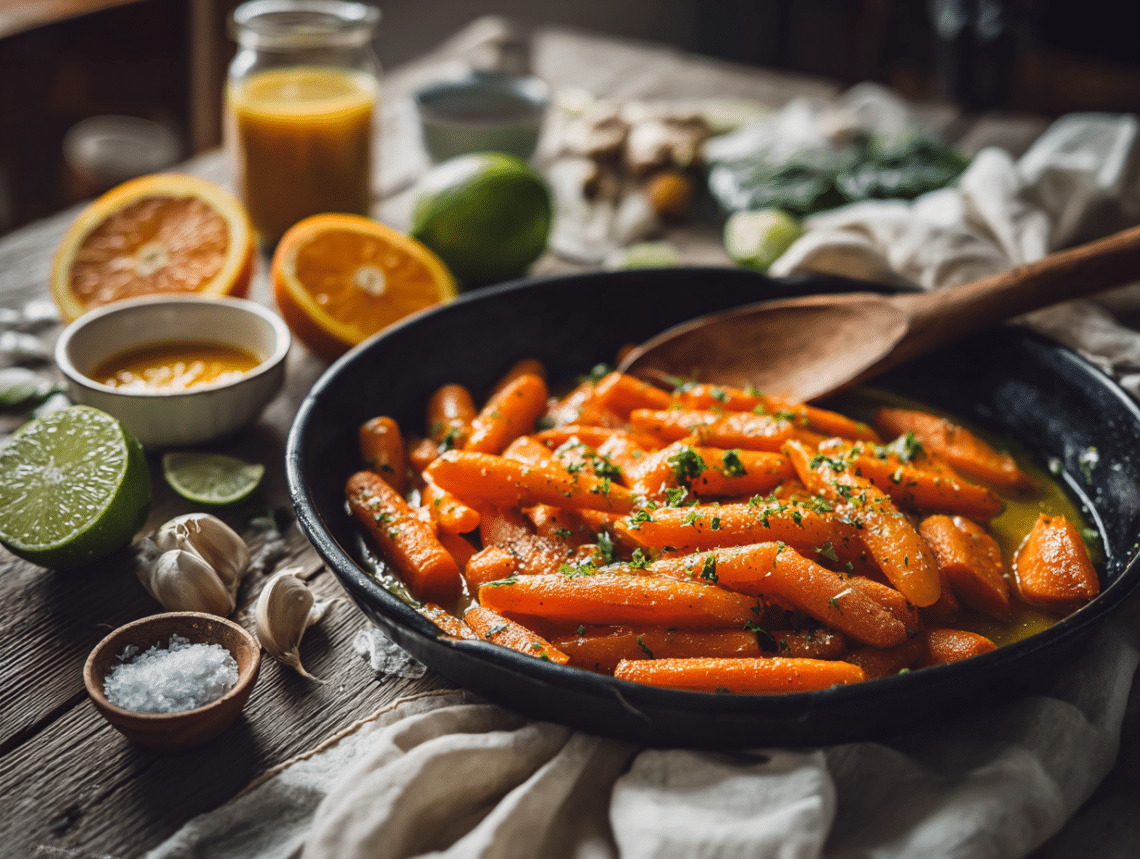
Simmered Citrus Carrots

Ingredients
- 1 tablespoon grated orange zest
- 1 teaspoon minced garlic
- 2 tablespoons extra virgin olive oil
- salt to taste
- ground black pepper to taste
- 1 teaspoon sugar to taste
- 1 cup orange juice fresh orange juice (about 3 large oranges)
- 1 cup water
- 1 ½ pound carrots (about 8 medium), thinly sliced
- 2 teaspoons lemon or lime juice
- 2 tablespoons cilantro chopped
Instructions
- Place the carrots, orange zest, garlic, olive oil, salt, pepper, sugar, orange juice, and water in a large skillet or frying pan. Set over medium heat and bring to a boil. Reduce the heat to low, cover, and simmer for 12–15 minutes, or until the carrots are just tender when pierced with a fork.
- Check the liquid level occasionally. If the pan dries out before the carrots are tender, add water 2 tablespoons at a time. Once the carrots are cooked, remove the lid and let the liquid reduce over medium heat for 2–3 minutes until the pan is nearly dry and the remaining glaze coats the carrots. Thinner slices will cook faster, so start checking at 10 minutes.
- Remove from the heat. Gently stir in the lemon or lime juice and chopped cilantro. Taste and adjust salt or sugar if needed. Serve immediately.
Nutrition
Your questions, answered
Can I use store-bought orange juice instead of fresh?
Yes, store-bought works, but the flavor will be flatter. Fresh juice has more brightness and natural variation that makes the glaze more interesting — if you have 3 large oranges, it’s worth squeezing them.
How do I know when the glaze is ready?
The pan should look nearly dry and the carrots should be shiny and coated, not sitting in liquid. If you drag a spatula across the bottom of the pan and it leaves a clear path for a second or two before liquid fills back in, you’re there.
Can I make this ahead and reheat it for a dinner party?
Yes — it reheats well and the flavor is actually better the next day. Reheat gently in a skillet with a splash of water or orange juice, and stir in fresh cilantro right before you bring it to the table.
My carrots are tender but there’s still a lot of liquid in the pan. What do I do?
Remove the lid and turn the heat up to medium, then let it reduce uncovered — it usually takes just 2–3 minutes. Watch it closely at this stage because the sugars in the juice can go from glaze to burnt quickly.
Is this recipe vegan and gluten-free?
Yes to both. Every ingredient in the recipe — carrots, orange juice, olive oil, garlic, citrus, cilantro, salt, pepper, and sugar — is naturally vegan and gluten-free. No substitutions needed.
More recipes to try
- Caramelized Brussels Sprouts with Balsamic Glaze and Crispy Shallots
- Street Food Magic: Authentic Chicken Shawarma Delight
- Fresh Vegetable Spring Rolls: A Vibrant Vietnamese Delight
- Crispy Roasted Brussels Sprouts Transformed with Balsamic Glaze