





































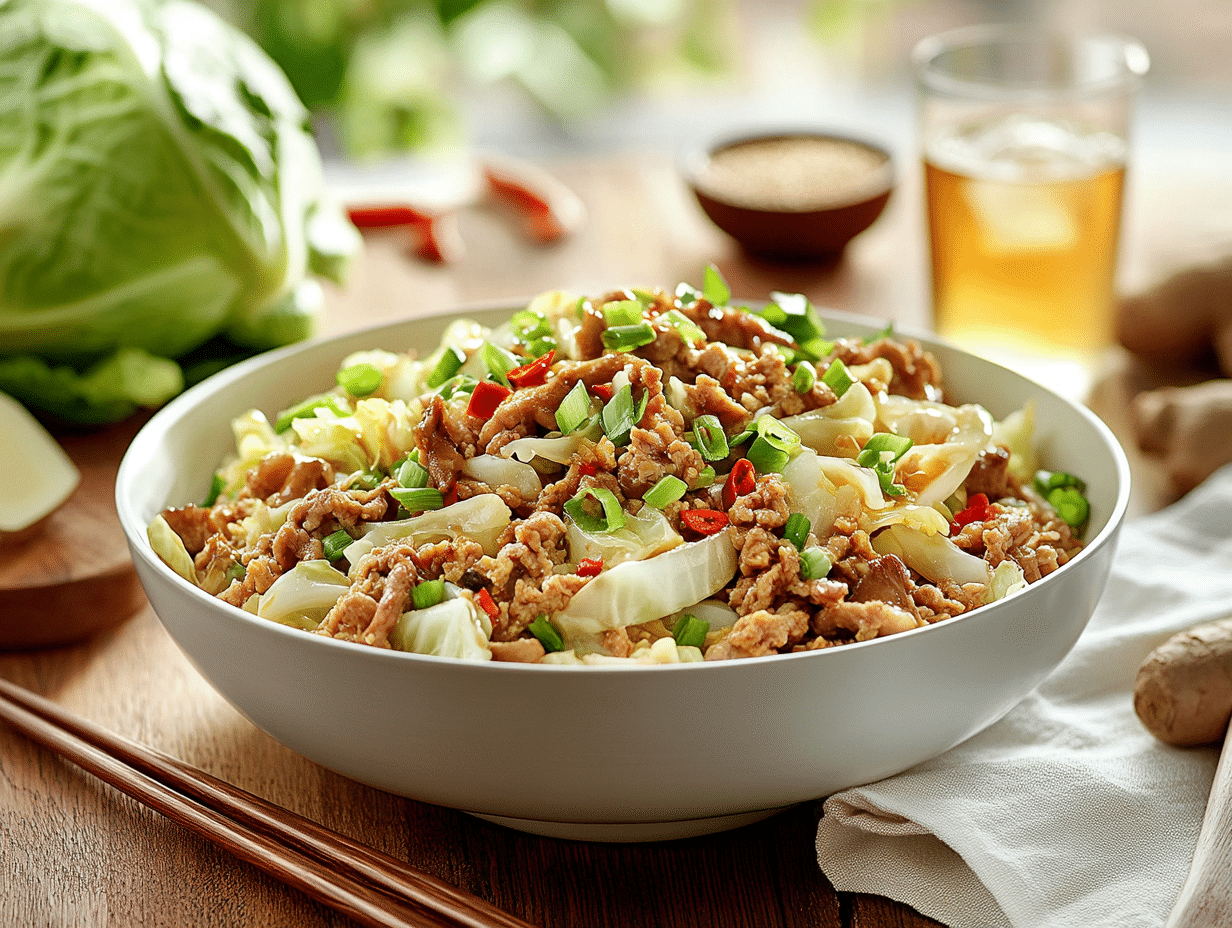
This is a quick ground pork and savoy cabbage stir-fry seasoned with soy sauce, hoisin, garlic, ginger, and shiitake mushrooms. It comes together in about 50 minutes and makes four solid servings. The honest reason to make it: it’s genuinely fast, uses cheap ingredients, and reheats well — which puts it ahead of most weeknight options.
Before you start
Two things actually matter here. First, get the pan properly hot before anything goes in. Sesame oil has a lower smoke point than neutral oils, so watch it closely — you want it shimmering, not smoking. A hot pan means the pork browns and gets a little crispy rather than steaming in its own liquid, and that browning is where most of the flavor comes from. Second, slice the cabbage thin and evenly. Thick, uneven pieces cook at different rates and you’ll end up with some parts mushy while others are still raw. A sharp knife and a few extra minutes of prep here make the whole dish more consistent.
Smart swaps
- Savoy cabbage: Green cabbage works fine and is easier to find. Napa cabbage is also a good call — it’s more tender and cooks a couple of minutes faster. Avoid red cabbage here; it turns an unappetizing color and has a tougher texture.
- Shiitake mushrooms: These are the unusual one. If you can’t find fresh shiitake, dried shiitake rehydrated in warm water for 20 minutes works well — the soaking liquid is flavorful, so add a splash of it to the pan with the soy sauce. Cremini mushrooms are a milder substitute but still fine.
- Hoisin sauce: If you’re out, a small amount of oyster sauce plus a tiny pinch of sugar gets you close. Skip it entirely rather than using a large amount of something that doesn’t fit — the dish holds up without it.
- Soy sauce: Tamari is a straight swap for gluten-free. Coconut aminos works too but is noticeably sweeter, so reduce the hoisin slightly.
What can go wrong
- Pork clumps together and steams instead of browning: This usually means the pan wasn’t hot enough, or the pork was added straight from the fridge. Let it sit at room temperature for 10 minutes before cooking, and resist stirring too early — let it sit undisturbed for a minute or two before breaking it up.
- Cabbage releases too much water and makes the sauce watery: This happens if the cabbage is wet when it goes in. Dry it thoroughly after washing, and don’t crowd the pan. If it does get watery, turn the heat up and let it cook uncovered for an extra minute or two to drive off the liquid.
- Garlic and ginger burn before the pork goes in: Thirty seconds is the maximum for aromatics at high heat. Have the pork ready to go in immediately — don’t walk away at this step.
- Dish tastes flat or underseasoned: Ground pork varies a lot in fat content depending on the brand. Leaner pork absorbs less sauce. Taste before serving and add a small splash of soy sauce if needed. A few drops of rice vinegar can also brighten the whole thing if it tastes dull.
- Spring onion garnish wilts and goes soggy: Skip the garnish — not worth the extra dish. The stir-fry is complete without it, and sliced spring onions sitting on hot food just go limp before anyone eats them.
Make-ahead notes
This stir-fry holds up better than most. Cook it fully, let it cool, and refrigerate in an airtight container for up to 4 days. The flavors actually deepen overnight, so making it the day before a busy evening is a genuinely good idea. To reheat, use a skillet over medium heat with a small splash of water to loosen it — about 3 to 4 minutes, stirring occasionally. The microwave works in a pinch (2 minutes, covered, stirring halfway) but the pork loses a little of its texture. For freezing, portion it into individual containers and freeze for up to 2 months. Thaw overnight in the fridge before reheating. The cabbage softens further after freezing, so expect a slightly different texture — still tasty, just less crisp. If you’re planning to freeze it, slightly undercook the cabbage in the first place.
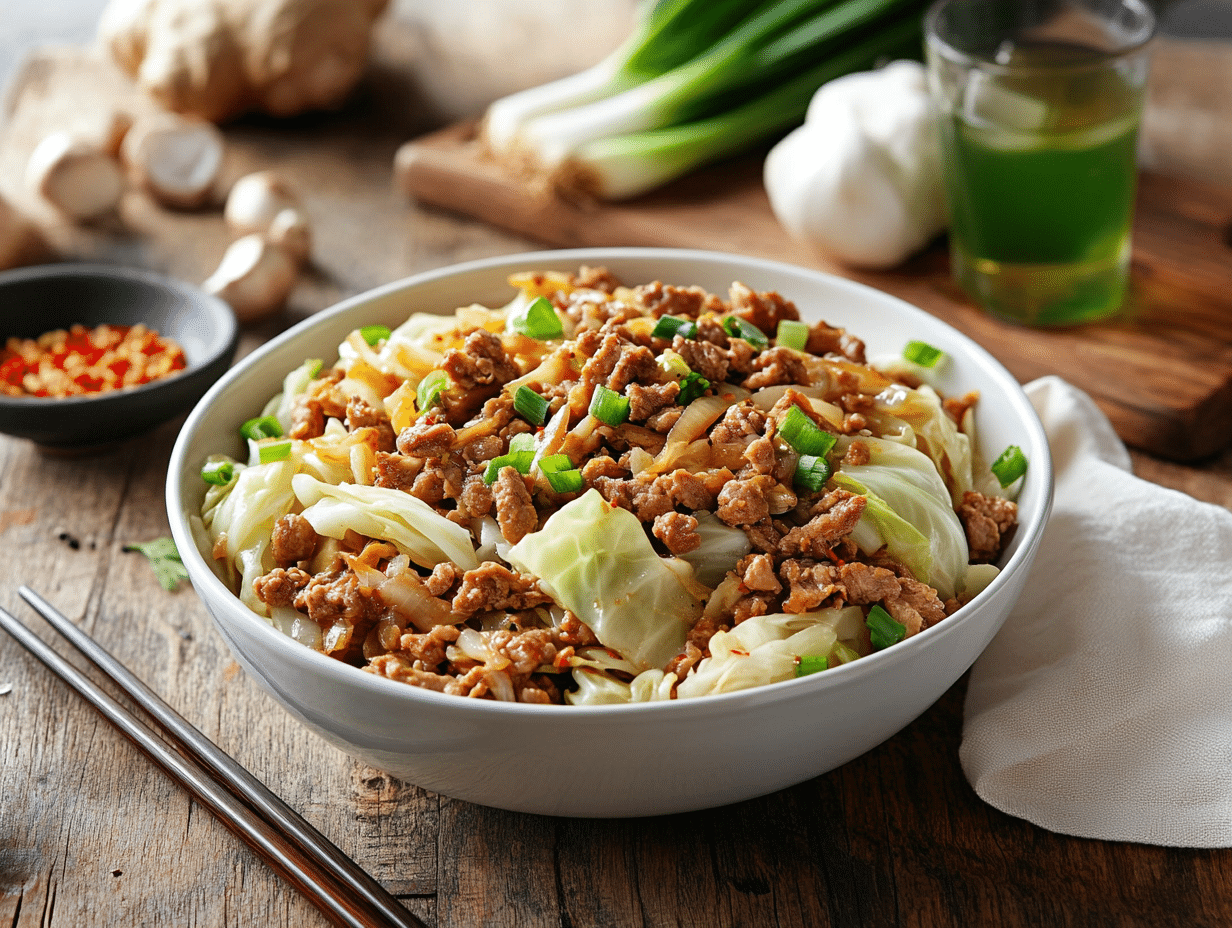
Sautéed Pork Mince & Cabbage Stir-Fry

Ingredients
- 500 g ground pork preferably organic or free-range
- 1 large savoy cabbage sliced finely
- 1 cup shiitake mushrooms sliced
- 2 tablespoons sesame oil toasted for a rich aroma
- 3 cloves garlic minced
- 2 inches ginger grated
- 2 tablespoons soy sauce or tamari for a gluten-free option
- 1 tablespoon hoisin sauce adds sweetness
- 1 teaspoon chili flakes optional, for heat
- 1 bunch spring onions sliced thinly for garnish
Instructions
- Begin by heating a large skillet or wok over medium-high heat. Add the sesame oil and wait till it shimmers, a sign that it’s ready to infuse flavors. Sauté the garlic and ginger for about 30 seconds until aromatic.
- Add the ground pork to the skillet, breaking it up with a wooden spoon. Cook for 6-8 minutes, stirring often, until browned and crispy.
- Incorporate the shiitake mushrooms, cooking for an additional 3-4 minutes until they have softened and released their earthy aroma.
- Add the savoy cabbage, tossing it through the pork and mushrooms. Pour in the soy sauce, hoisin sauce, and chili flakes, stirring to evenly coat and allowing it to cook for 5-7 minutes or until the cabbage is tender yet vibrant.
- Taste and adjust the seasonings if necessary, adding extra soy sauce or chili flakes according to preference.
- Transfer to a serving bowl and garnish generously with sliced spring onions.
Notes
Nutrition
Frequently asked questions
Can I use regular ground pork from the grocery store, or does it need to be a specific type?
Regular ground pork from any grocery store works perfectly well. The recipe notes organic or free-range as a preference, but standard ground pork produces a great result. The main thing to look at is fat content — around 80/20 lean-to-fat gives you the best browning and flavor.
Do I need a wok, or will a regular skillet work?
A large regular skillet works fine. The key is that it’s large enough to avoid crowding — a 12-inch skillet handles this recipe comfortably. A wok gives you slightly better heat distribution at high temperatures, but it’s not required.
How do I know when the cabbage is done without it going mushy?
The cabbage is ready when it’s wilted and tender but still has a little resistance when you press a piece with a spoon — usually 5 to 7 minutes as the recipe states. Pull it off the heat on the earlier side if you’re reheating later, since it will soften more during reheating.
What should I serve this with to make it a full meal?
Steamed jasmine rice is the most straightforward option and soaks up the sauce well. Cooked noodles — rice noodles or egg noodles — also work. If you want to keep it lower-carb, it’s filling enough on its own or alongside a simple cucumber salad.
Can I double the recipe for a crowd without changing anything?
You can double the ingredients, but don’t try to cook it all in one pan at once. Cook the pork in two batches so it browns properly rather than steaming, then combine everything when you add the cabbage. Trying to fit a double batch into one pan at the pork stage is the most common reason a doubled stir-fry turns out disappointing.
Try these next
- Quick and Delicious Homemade Chinese Fried Rice
- Authentic Japanese Chicken Teriyaki
- Fresh Vegetable Spring Rolls: A Vibrant Vietnamese Delight
- Homemade Pork Tamales: A Delicious Mexican Culinary Tradition