



























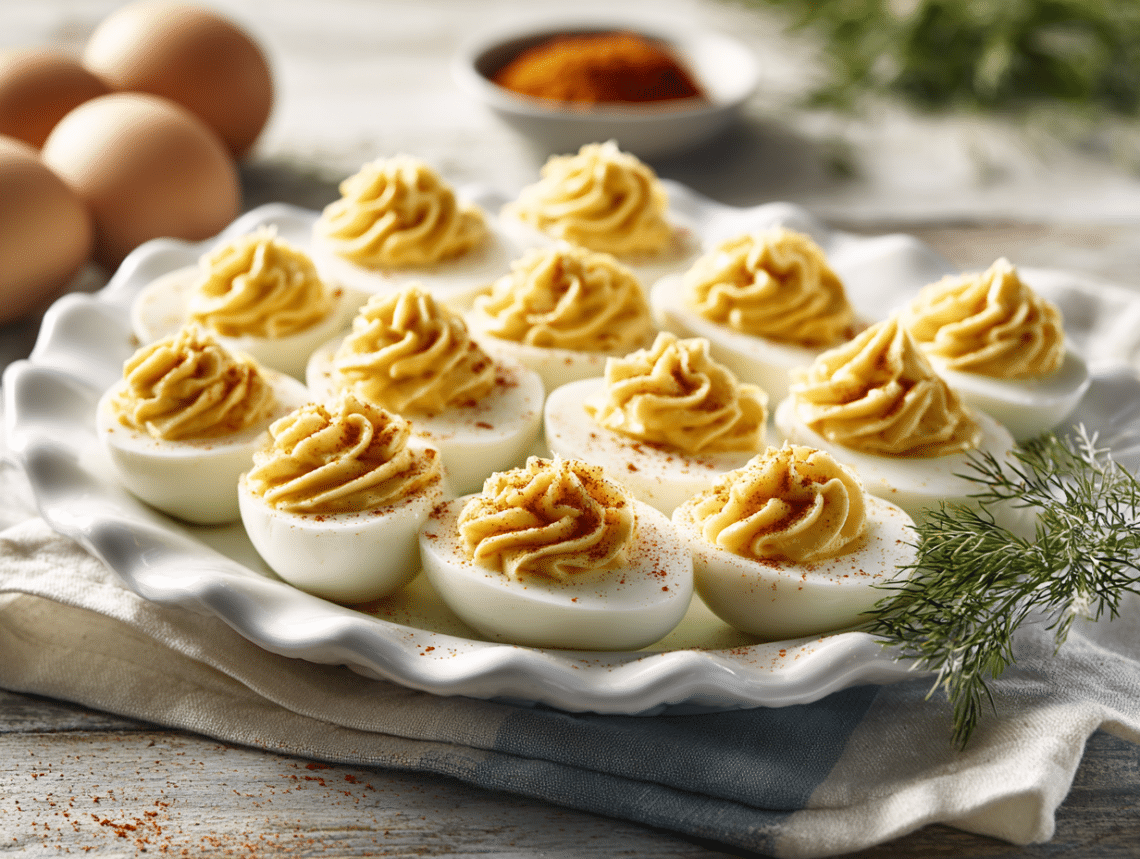
These deviled eggs use spicy brown mustard instead of yellow and add a small amount of Worcestershire sauce to the yolk filling. The result is a filling with more depth and a slightly savory edge that plain mustard versions don’t have. Six ingredients, 33 minutes, and they hold up well on a platter — which makes them a reliable choice whenever you need to feed more than a few people.
Why this recipe works
Two things actually matter here. First, the ratio of mayonnaise to yolks — half a cup for 12 eggs — is deliberately generous. That amount of fat keeps the filling smooth enough to pipe cleanly and prevents it from drying out as the eggs sit on a platter. Second, chilling the peeled eggs before cutting them is not optional busywork. Cold egg whites hold their shape when you slice them, so you get clean halves instead of torn, ragged ones. Both steps pay off especially when you’re making a double or triple batch and don’t have time to babysit each egg.
Mistakes to avoid
- Skipping the ice bath: Without it, the yolks keep cooking from residual heat and can turn greenish-gray around the edges. Get the eggs into ice water within a minute of the timer going off.
- Overmixing after adding Worcestershire: Worcestershire is thin and acidic. Stir it in last and mix just until combined — overworking the filling at this stage can make it loose and harder to pipe neatly, especially if you’re making a large batch.
- Cutting eggs straight from the peel: Room-temperature whites compress and tear under the knife. Even 10 minutes in the fridge makes a real difference. If you’re making multiple dozens, peel them all first, then refrigerate the whole batch before cutting.
- Filling the piping bag too full: A zip-top bag crammed to the top is hard to control and tends to burst at the seam. Fill it halfway, work through that, then refill. Skip the garnish — not worth the extra dish — unless you’re serving these at something where presentation actually matters to the crowd.
- Assembling too far in advance: Filled eggs left uncovered in the fridge for more than a few hours develop a dry skin on the filling. If you need to get ahead, store the whites and filling separately and pipe them an hour or two before serving.
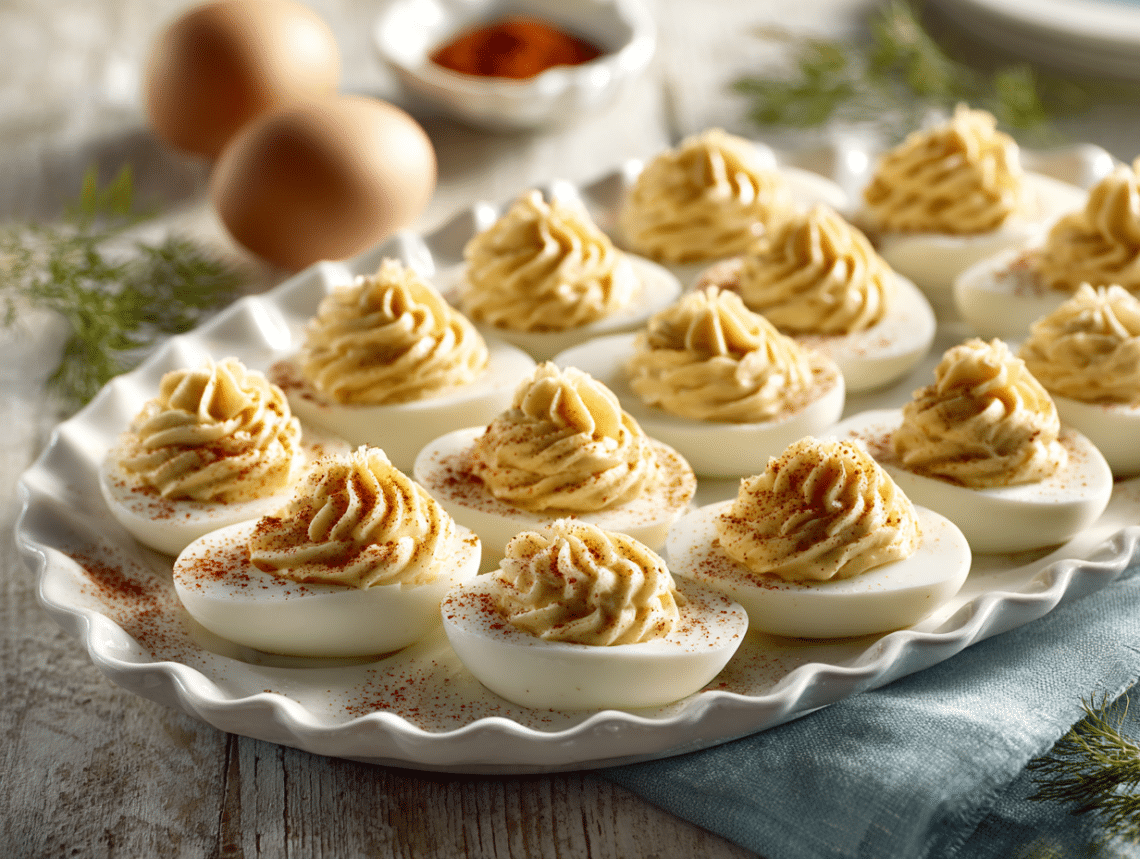
Classic Deviled Eggs with Spicy Brown Mustard

Equipment
- Tongs
- Potato masher
Ingredients
- 12 large eggs
- ½ cup mayonnaise
- 1 tablespoon Worcestershire sauce
- ½ teaspoon black pepper freshly ground, adjust to taste
- ½ tablespoon spicy brown mustard 1½ teaspoons
- ¼ pinch salt or to taste
- 1 pinch paprika for garnish (optional)
Instructions
- Place 12 eggs in a single layer in a large pot and cover with cold water by 1 inch (2.5cm). Set the heat to high and cover the pot with a lid.
- Once the water reaches a rolling boil, reduce the heat to low and simmer for 8 minutes.
- After 8 minutes, turn off the heat and remove the pot from the burner. Let the eggs sit in the hot water for 10 minutes, then transfer them to an ice bath for 5 minutes to stop cooking and make peeling easier.
- Using tongs, transfer the eggs to a bowl of ice water and let them cool for 5 minutes. Gently crack each egg on a hard surface, roll it to crackle the shell all over, then peel under cool running water. Tip: eggs that are 1–2 weeks old peel much more easily than fresh eggs.
- Once all eggs are peeled, rinse them under cool water and place them on a plate. Refrigerate for 15–20 minutes until fully chilled — cold eggs are much easier to cut cleanly without tearing the whites.
- Cut each egg in half.
- Remove the yolks by gently pressing your thumb into the pocket where the yolk resides. The yolk should pop out easily. Place all of the yolks in a mixing bowl.
- Add the mayonnaise to the yolks. Mash with a fork or potato masher until no large lumps remain, then stir vigorously with a spatula until the mixture is smooth and creamy. For an ultra-smooth filling, press the mixture through a fine-mesh sieve.
- Add the remaining ingredients and mix. Note: You may want to add half of the pepper and Worcestershire sauce to suit your taste.
- Spoon the yolk mixture into a zip-top bag and push it toward one corner. Twist the top of the bag to compress the filling, then snip about ½ inch (1cm) off the corner to create a piping tip.
- Lay out the egg white halves on a deviled egg platter or plate. Pipe the filling into each cavity by squeezing the bag gently while moving the tip in small circles to create an even, attractive swirl. Repeat for each egg half.
- Optional: Sprinkle the top of the eggs with paprika or chipotle or chilli powder. You could also top it with black olives or jalapeños.
Nutrition
Your questions, answered
Can I make these the night before?
Yes, but keep the components separate. Store the piped filling in a sealed zip-top bag and the egg white halves in an airtight container, then pipe and serve within an hour or two of your event. Assembled eggs left overnight develop a dry film on the filling and the whites can weep.
How many eggs should I make for a party of 20?
Plan on 2 to 3 halves per person as an appetizer, so 40 to 60 halves — that’s 20 to 30 eggs. This recipe doubles and triples cleanly; the only thing to watch is pot size, since eggs need to sit in a single layer to cook evenly.
Can I use a different mustard if I don’t have spicy brown?
Dijon is the closest substitute and works well. Yellow mustard will give you a milder, sharper tang without the slight graininess that spicy brown adds, so the flavor will be noticeably different but still good.
My filling is too runny — how do I fix it?
The most common cause is warm yolks or slightly too much Worcestershire. Refrigerate the filling for 15 to 20 minutes and it will firm up considerably. If it’s still too loose after chilling, mash in one extra yolk.
How long can filled deviled eggs sit out safely?
No more than two hours at room temperature, per standard food safety guidelines. If your gathering runs long, keep a second tray in the fridge and swap it out halfway through.
Do I need a piping bag or special tip?
No. A zip-top bag with a small corner snipped off works fine and means one less thing to wash. For a large batch, use a quart-size bag rather than a sandwich bag — it’s sturdier and easier to control.
More recipes to try
- Classic Mexican Guacamole
- Fresh Vegetable Spring Rolls
- Traditional Homemade Eggnog
- Homemade Classic Cranberry Sauce