



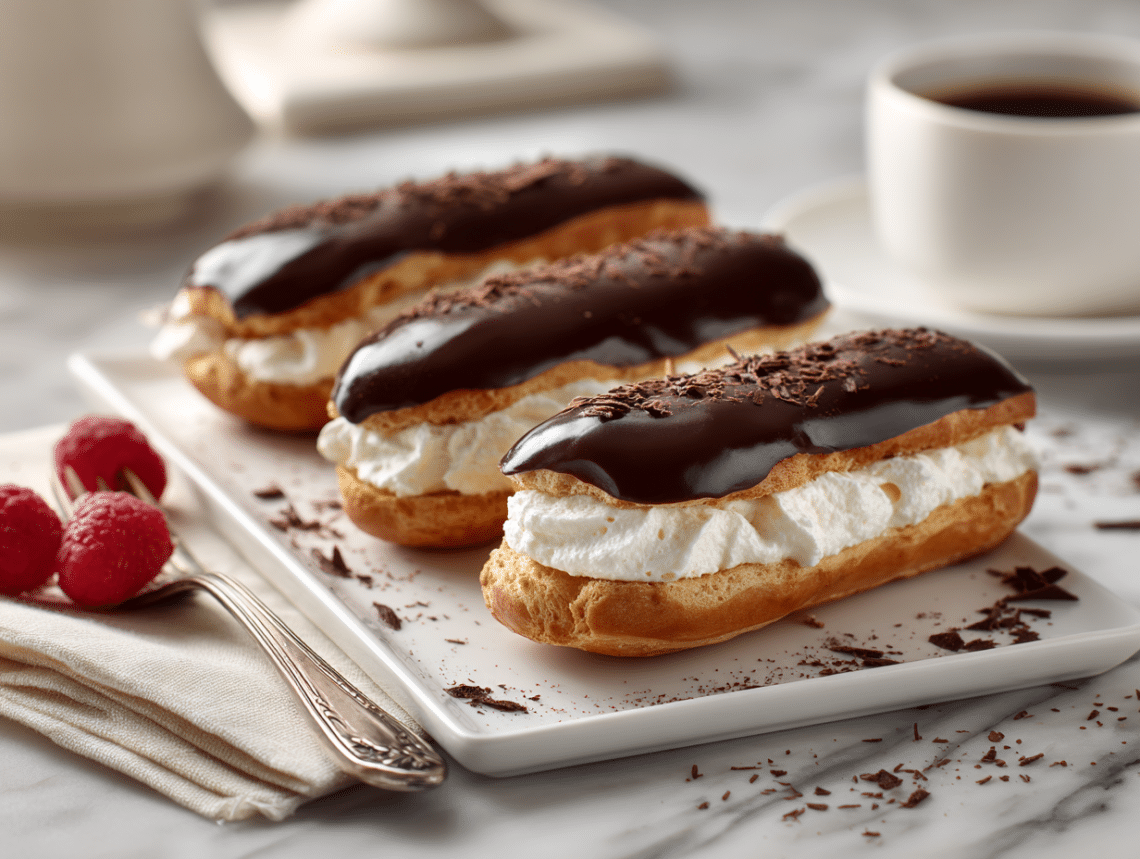
These eclairs are made with a classic choux pastry — cooked on the stovetop, piped, and baked until the shells are crisp and hollow — then filled with whipped cream and finished with a dark chocolate glaze. The whole thing takes about an hour, and the shells can be made ahead and stored, which makes this far more practical than it looks. If you’ve been putting off trying choux, this is a good place to start.
Why this recipe works
Two things make choux work. First, cooking the flour directly in the hot butter-water mixture on the stovetop gelatinizes the starch before any egg goes in — that’s what gives the shells enough structure to puff without collapsing. Second, the temperature drop before adding eggs matters: if the dough is too hot when you start, the eggs scramble instead of incorporating smoothly. Letting it cool to around 60°C / 140°F for five minutes before you add the first egg keeps the dough emulsifying properly, which is what produces that smooth, glossy finish and the hollow interior you need for filling.
Common problems and fixes
- Shells collapse after coming out of the oven: This usually means they weren’t fully dry inside. The two-temperature bake — high heat first, then lower — is designed to handle this, but if your oven runs cool, the shells may need an extra 3–5 minutes at the lower temperature. They should feel noticeably light and sound hollow when tapped before you pull them.
- Chocolate glaze sets dull or streaky: The chocolate was probably too cool when you dipped. It should be warm and fluid — around 45–50°C / 113–122°F. If it’s thickened up while you’re working, set the bowl back over the warm water for 30 seconds and stir.
- Cream leaks out after filling: The cream was under-whipped. It needs to be at stiff peaks — firm enough to hold its shape when piped under pressure. Soft or medium peaks will squeeze out through the piping holes once the eclair is handled.
- Dough too stiff to pipe smoothly: You may have stopped adding eggs too early. The ribbon test is the reliable check — lift a spoon of dough and it should fall in a slow, thick V-shape. If it breaks off in a clump, add the remaining egg a little at a time until it reaches that consistency.
- Piped fingers spread flat instead of holding their shape: The dough is too warm or too wet. Make sure it’s cooled adequately before piping, and don’t skip smoothing down the peaks with a damp finger — pointed tips brown faster and can burn before the rest of the shell is done.
Substitutions that actually work
- Dark chocolate (50–70% cocoa): Stay within that cocoa range for the glaze. Below 50% and the glaze will be too sweet and won’t set as cleanly; above 70% and it can turn grainy when melted without added fat. Skip adding cream to thin it — skip the ganache route entirely here, the straight melted chocolate sets with a better snap and holds up longer on a filled eclair.
- Heavy whipping cream: This needs to be full-fat cream (at least 35% fat) to whip to stiff peaks. Lower-fat alternatives won’t hold their structure inside the shell. If you want a more stable filling that holds for longer — useful if you’re filling eclairs several hours ahead — a pastry cream made with egg yolks, milk, and cornstarch is the traditional choice and keeps better than whipped cream once refrigerated.
- Unsalted butter: Salted butter works fine here. The recipe already adds a pinch of salt separately, so just leave that out if you switch.
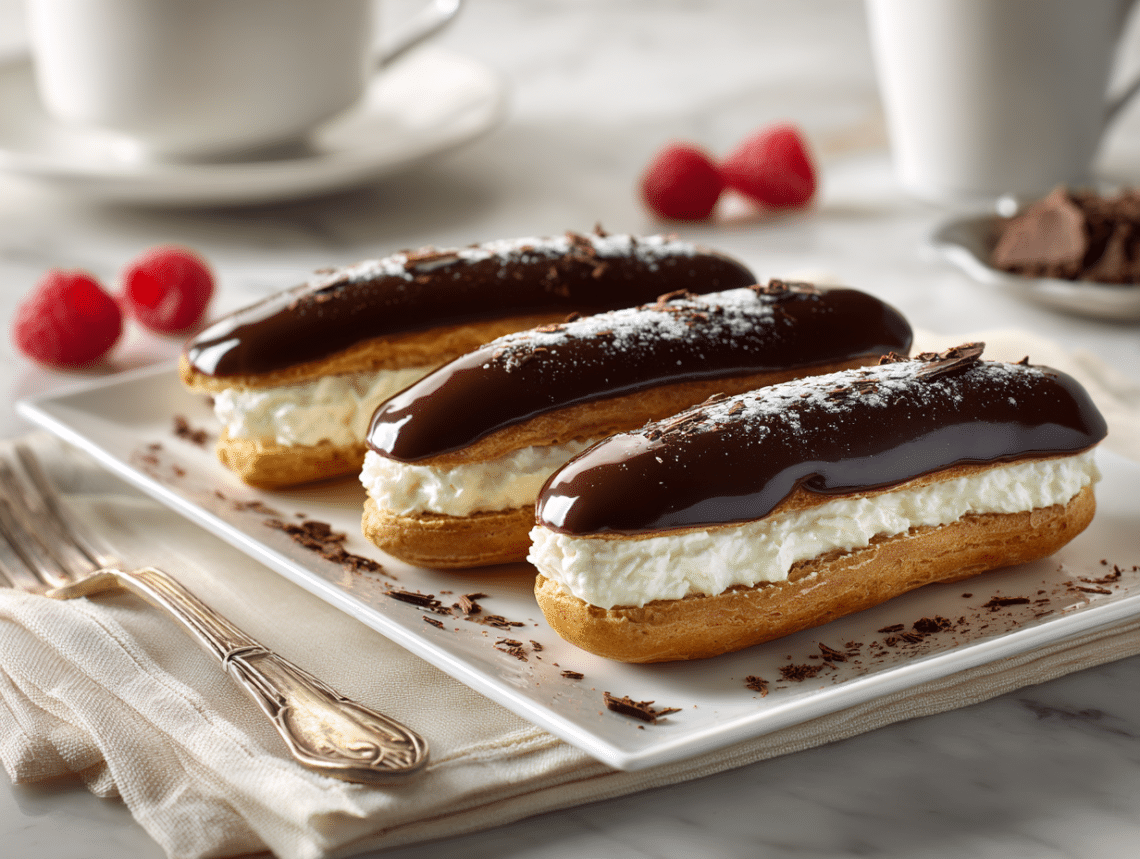
Homemade Chocolate Eclairs (Classic French Recipe)

Ingredients
Eclair Ingredients
- ¾ cup water
- 14 tablespoons unsalted butter cut into cubes
- 1⅔ cups plain (all-purpose) flour sifted
- 8 large eggs at room temperature
- 1 teaspoon granulated sugar
- 1 pinch salt
Chocolate and Cream Ingredients
- 10.5 ounces dark chocolate 50–70% cocoa, roughly chopped
- 1¼ cups heavy whipping cream whipped to stiff peaks
Instructions
Eclair Instructions
- Preheat the oven to 210°C / 410°F (190°C fan-forced).
- Add 200ml water, the cubed butter, salt, and sugar to a large heavy-bottomed saucepan. Place over medium heat and stir until the butter has fully melted. Increase the heat and bring the mixture to a rolling boil.
- Remove the pan from the heat and immediately add all of the sifted flour at once. Beat vigorously with a wooden spoon until the mixture forms a smooth ball that pulls away from the sides of the pan. Return to low heat and cook for 1–2 minutes, stirring constantly, to dry out the dough slightly. Transfer the dough to a large mixing bowl and let it cool for 5 minutes until it is warm but not hot (around 60°C / 140°F).
- Add the eggs one at a time, beating thoroughly after each addition until fully incorporated before adding the next. The dough will look lumpy and separated after each egg — keep beating until it comes back together. After all eggs are incorporated, the dough should be smooth, glossy, and fall off a lifted spoon in a thick V-shaped ribbon. You may not need all 8 eggs, so check the consistency after the 7th.
- Transfer the choux dough to a piping bag fitted with a 1.5cm plain round tip. Pipe 10–12cm (4-inch) long fingers onto a baking tray lined with parchment paper, leaving 5cm (2 inches) between each. Wet your finger and smooth down any peaks on the piped dough.
- Bake at 210°C / 410°F (190°C fan-forced) for 15 minutes until puffed and lightly golden. Without opening the oven door, reduce the temperature to 180°C / 350°F (160°C fan-forced) and bake for a further 10–12 minutes until deep golden brown and the shells feel light and hollow when tapped. Pierce the base of each eclair with a skewer to release steam and place on a wire rack to cool completely.
Chocolate and Cream Instructions
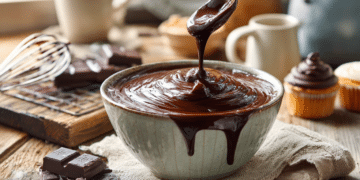
- Place the chopped dark chocolate in a heatproof bowl set over a pan of gently simmering water (bain-marie), making sure the bowl does not touch the water. Stir occasionally until fully melted and smooth. Alternatively, melt in the microwave in 20-second bursts, stirring between each.
- Whip the heavy cream to stiff peaks. Using a piping bag fitted with a small round tip, pierce the base of each cooled eclair shell in two places and pipe the whipped cream generously into each shell until it feels heavy and full.
- Dip the top of each filled eclair into the melted chocolate, letting the excess drip off. Alternatively, spread the chocolate glaze on top with an offset spatula or the back of a spoon. Place on a wire rack and allow the chocolate to set for 10–15 minutes before serving.
Nutrition
Common questions
Can I make the eclair shells ahead of time?
Yes — baked, unfilled shells keep well at room temperature in an airtight container for up to 24 hours, or freeze well for up to a month. To refresh shells that have softened, place them in a 180°C / 350°F oven for 5 minutes, then cool completely before filling. Fill them as close to serving as possible, since whipped cream softens the shell within a few hours.
Why do I need to pierce the shells after baking?
Piercing the base with a skewer lets trapped steam escape as the shells cool, which prevents the interior from going soggy. If steam stays inside, it condenses and the shell loses its crispness before you’ve even filled it.
How far in advance can I fill and glaze the eclairs?
Filled and glazed eclairs are best eaten within 2–3 hours of assembly if using whipped cream. After that, the cream starts to weep and the shell softens noticeably. If you need to get further ahead, fill and glaze them the morning of a gathering and refrigerate uncovered — they’ll hold reasonably well for up to 4 hours.
My choux dough looks curdled after I add an egg — is it ruined?
No, keep going. The dough separates and looks broken after each egg addition — that’s normal. Beat firmly with a wooden spoon or a hand mixer and it will come back together into a smooth paste before you add the next egg. It takes a minute or two of beating each time.
Can I use a zip-lock bag instead of a piping bag?
It works in a pinch, but the results are less consistent. Choux dough is thick and puts real pressure on the seams of a zip-lock bag, so use a sturdy one and don’t overfill it. A proper piping bag with a 1.5cm round tip gives you more control over the shape and length of each eclair, which affects how evenly they bake.
If you liked this one
- French chocolate mousse
- silky dark chocolate mousse
- zesty French lemon cake
- dark chocolate brownies with espresso and sea salt