

















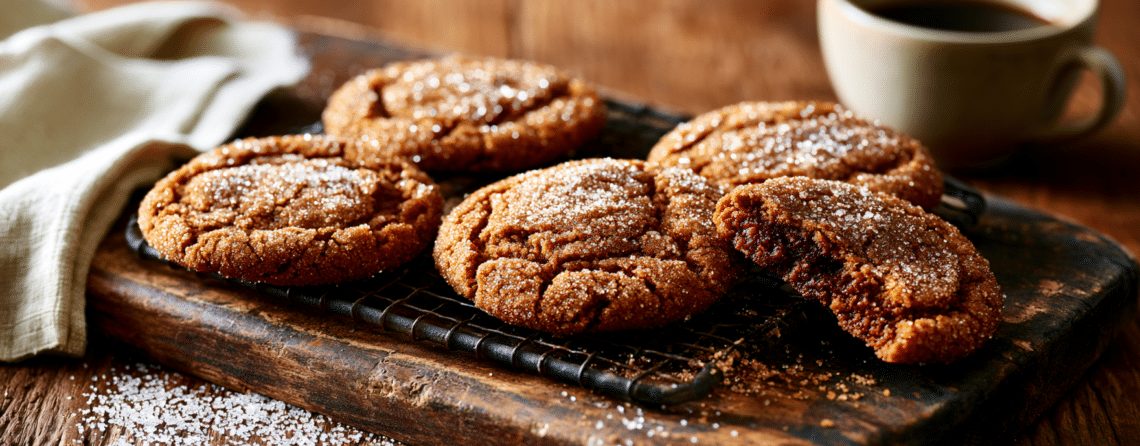
These are soft, chewy molasses cookies with crackled, sugar-coated tops — the kind that stay good for days without turning into hockey pucks. The whole batch comes together in one bowl in about 30 minutes, and you probably already have everything you need in the pantry.
The short version of why this works
Two things actually matter here. First, creaming the butter and brown sugar for a full 3–4 minutes isn’t busywork — it builds the structure that keeps the centers soft while the edges set. Cut that short and the cookies spread too thin and lose their chew. Second, pulling them out when the tops are crackled but the centers still look slightly underdone is the move. They firm up on the hot pan during that 5-minute rest, and if you wait until they look fully done in the oven, they’ll be dry by the time they cool. Dark brown sugar is worth using over light here — the extra molasses in it deepens the flavor without adding another ingredient.
If something goes sideways
- Cookies spread into flat puddles: The butter was probably too warm. Softened means it holds a fingerprint but isn’t greasy or shiny. If your kitchen is warm, chill the portioned dough balls for 15 minutes before baking.
- Cookies come out hard and dry: They were overbaked. Molasses cookies look underdone when they’re actually done — trust the crackled top and set edges, not the center. Also check that your baking soda isn’t old; stale leavener causes dense, tough cookies.
- Dough is too sticky to roll into balls: Refrigerate it for 20–30 minutes. Molasses dough softens quickly at room temperature, especially in a warm kitchen. Cold dough rolls cleanly and holds its shape better going into the oven.
- The sugar coating disappears during baking: You need a generous roll — more than feels necessary. Press each ball firmly into the granulated sugar so it actually sticks before placing it on the sheet.
- Cookies taste flat or one-dimensional: Check your spice quantities and make sure you used unsulphured molasses, not blackstrap. Blackstrap is much more bitter and will throw off the whole balance of the recipe.
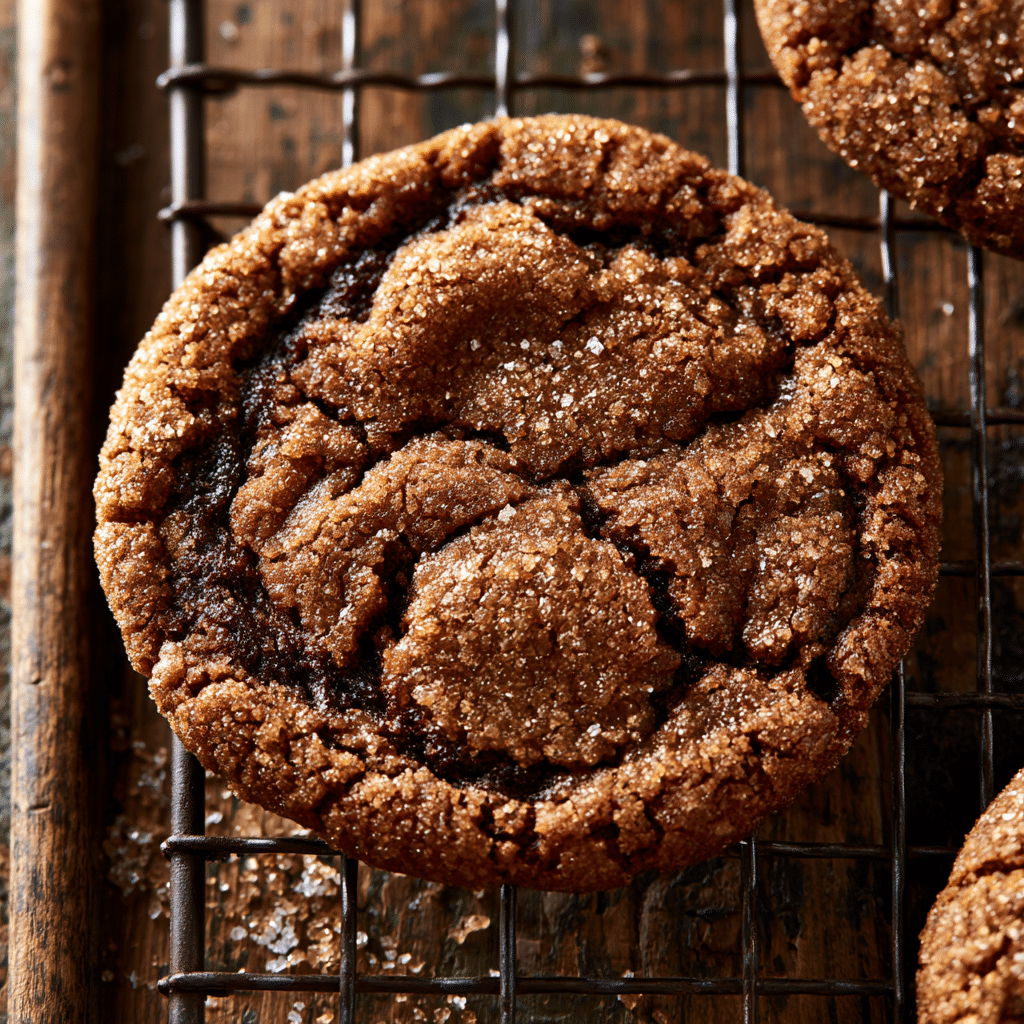
Chewy Molasses Cookies (Crackled Sugar Tops)

Equipment
- Stand mixer or hand mixer with paddle attachment
- 2 large baking sheets
- Parchment paper
- Medium mixing bowl
- Large mixing bowl
- Small ice cream scoop or tablespoon measure
- Wire cooling rack
Ingredients
- 2 cups all-purpose flour preferably unbleached, 250g
- 1 teaspoon baking soda
- ½ teaspoon ground ginger
- ½ teaspoon ground cinnamon
- ¼ teaspoon ground cloves
- ¼ teaspoon salt
- ¾ cup unsalted butter softened, 1½ sticks / 170g
- 1 cup dark brown sugar packed, 200g
- 1 large egg room temperature
- ¼ cup molasses unsulphured, 60ml / 85g
- ¼ cup granulated sugar for rolling, 50g
Instructions
- Preheat your oven to 375°F / 190°C (170°C fan-forced). Line two large baking sheets with parchment paper and set aside.
- In a medium bowl, whisk together the flour, baking soda, ginger, cinnamon, cloves, and salt. This ensures an even distribution of spices throughout the cookies.2 cups all-purpose flour, 1 teaspoon baking soda, 1/2 teaspoon ground ginger, 1/2 teaspoon ground cinnamon, 1/4 teaspoon ground cloves, 1/4 teaspoon salt
- In a large bowl, cream together the softened butter and dark brown sugar until light and fluffy. Use a paddle attachment if using an electric mixer. This should take about 3-4 minutes on medium speed.3/4 cup unsalted butter, 1 cup dark brown sugar
- Add the egg and molasses to the butter-sugar mixture, beating well until fully combined and smooth.1 large egg, 1/4 cup molasses
- Gradually add the dry ingredients to the wet ingredients, mixing on low speed just until combined. Avoid over-mixing to ensure tender cookies.2 cups all-purpose flour, 1 teaspoon baking soda, 1/2 teaspoon ground ginger, 1/2 teaspoon ground cinnamon, 1/4 teaspoon ground cloves, 1/4 teaspoon salt
- Using a tablespoon or small ice cream scoop, portion the dough into 1½-inch (4cm) balls, approximately 1 tablespoon of dough each. Roll each ball in granulated sugar to coat evenly.1/4 cup granulated sugar
- Place the sugar-coated dough balls onto the prepared baking sheets, spacing them about 2 inches apart to allow for spreading.
- Bake in the preheated oven for 10-12 minutes or until the edges are set and the tops are crackled. Let the cookies cool on the baking sheets for 5 minutes before transferring them to a wire rack to cool completely.
Notes
Nutrition
Frequently asked questions
Can I make the dough ahead of time?
Yes — the dough keeps in the fridge for up to 3 days, tightly covered. Roll the balls and coat them in sugar right before baking, not before storing, so the coating stays crisp.
Can I freeze these cookies?
Baked cookies freeze well for up to 2 months in an airtight container. You can also freeze uncoated dough balls and roll them in sugar straight from frozen — just add 1–2 minutes to the bake time.
What’s the difference between unsulphured and regular molasses, and does it matter?
Unsulphured molasses has a cleaner, sweeter flavor because it’s made from mature sugarcane without chemical processing. Sulphured molasses has a harsher, slightly chemical edge that comes through in baked goods — skip it if you have the choice.
My cookies didn’t crackle on top. What went wrong?
The crackle comes from the baking soda reacting quickly in a hot oven — if your oven runs cool or the soda is old, you won’t get it. Make sure the oven is fully preheated before the first sheet goes in, and test your baking soda if it’s been open for more than 6 months.
Can I use salted butter instead of unsalted?
You can, but leave out the added salt in the dry ingredients. The cookies will still taste good — skip the extra salt entirely rather than adding it on top of salted butter, which tips the balance.
What to cook next
- Classic Soft Sugar Cookies
- Melt-in-Your-Mouth Scottish Shortbread Cookies
- Slow-Cooked Spiced Apple Butter
- Fluffy Cinnamoroll Milk Bread Cinnamon Rolls