


















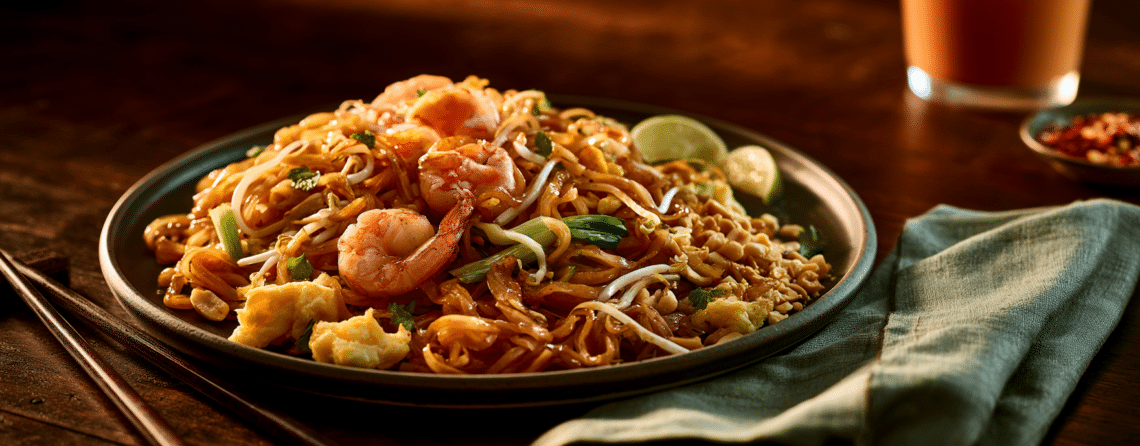
This is a shrimp pad thai made from scratch — rice noodles, a simple four-ingredient sauce, and a hot wok. It takes about 40 minutes start to finish, and the ingredients are mostly pantry staples once you track down tamarind paste. If your household has people who pick apart their food, this one is easy to customize at the table without cooking multiple meals.
Before you start
The single most important thing is soaking your noodles correctly. They go into warm — not boiling — water for 30 minutes, then drain. Boiling water makes them mushy before they even hit the wok, and mushy noodles won’t absorb the sauce properly. The second thing that matters: have everything prepped and within arm’s reach before you turn on the heat. The actual cooking happens fast — under 15 minutes — and a wok over high heat won’t wait while you mince garlic. Measure out the sauce, chop the shallots, and beat the eggs before anything goes on the stove.
Substitutions that actually work
- Tamarind paste: This is the ingredient most people skip, and it’s the one you shouldn’t. That said, if you genuinely can’t find it, use 1 tablespoon of fresh lime juice plus a small splash of Worcestershire sauce. It won’t be identical, but it gets you in the right direction. Avoid tamarind concentrate — it’s much stronger and will throw off the balance.
- Palm sugar: Brown sugar works fine as a straight swap. Light brown sugar is closer in flavor than dark.
- Shrimp: Firm tofu (pressed and cubed) or thinly sliced chicken breast both work well. Cook the tofu until golden before adding aromatics, and cook chicken through before setting aside, same as the shrimp.
- Fish sauce: For a fish-free version, use soy sauce or tamari in the same quantity. The flavor shifts slightly but the dish still works — and tamari keeps it gluten-free.
If something goes sideways
- Noodles are clumping together in the wok: Add a small splash of water — a tablespoon or two — and toss quickly. The steam loosens them without making the sauce watery.
- The sauce tastes too salty: Add a little more palm sugar or brown sugar, a teaspoon at a time. A squeeze of lime at the end also helps balance it without adding more sweetness.
- The eggs are rubbery: They were overcooked before the noodles went in. Next time, pull them off the heat while they still look slightly underdone — they’ll finish cooking when everything gets tossed together.
- The noodles are sticking to the wok: Your wok wasn’t hot enough before the oil went in, or the oil wasn’t hot enough before the noodles went in. Make sure the oil shimmers before adding anything.
- The dish tastes flat overall: Taste before serving and adjust — a few extra drops of fish sauce for salt, a squeeze of lime for brightness, or a pinch more sugar. The sauce balance can shift depending on your specific brands of fish sauce and tamarind.
Leftovers and make-ahead
Leftover pad thai keeps in the fridge for up to 3 days in an airtight container. Skip the cilantro and lime garnish before storing — add those fresh when you serve. To reheat, use a skillet over medium heat with a tablespoon of water and toss until warmed through; the microwave works in a pinch but tends to make the noodles uneven in texture. The sauce can be mixed and stored in the fridge for up to a week, which makes weeknight cooking faster. The noodles can also be soaked ahead of time — drain them, toss with a tiny bit of oil to prevent sticking, and refrigerate for up to 24 hours. Freezing the finished dish isn’t recommended; the noodles turn soft and the texture doesn’t recover well.
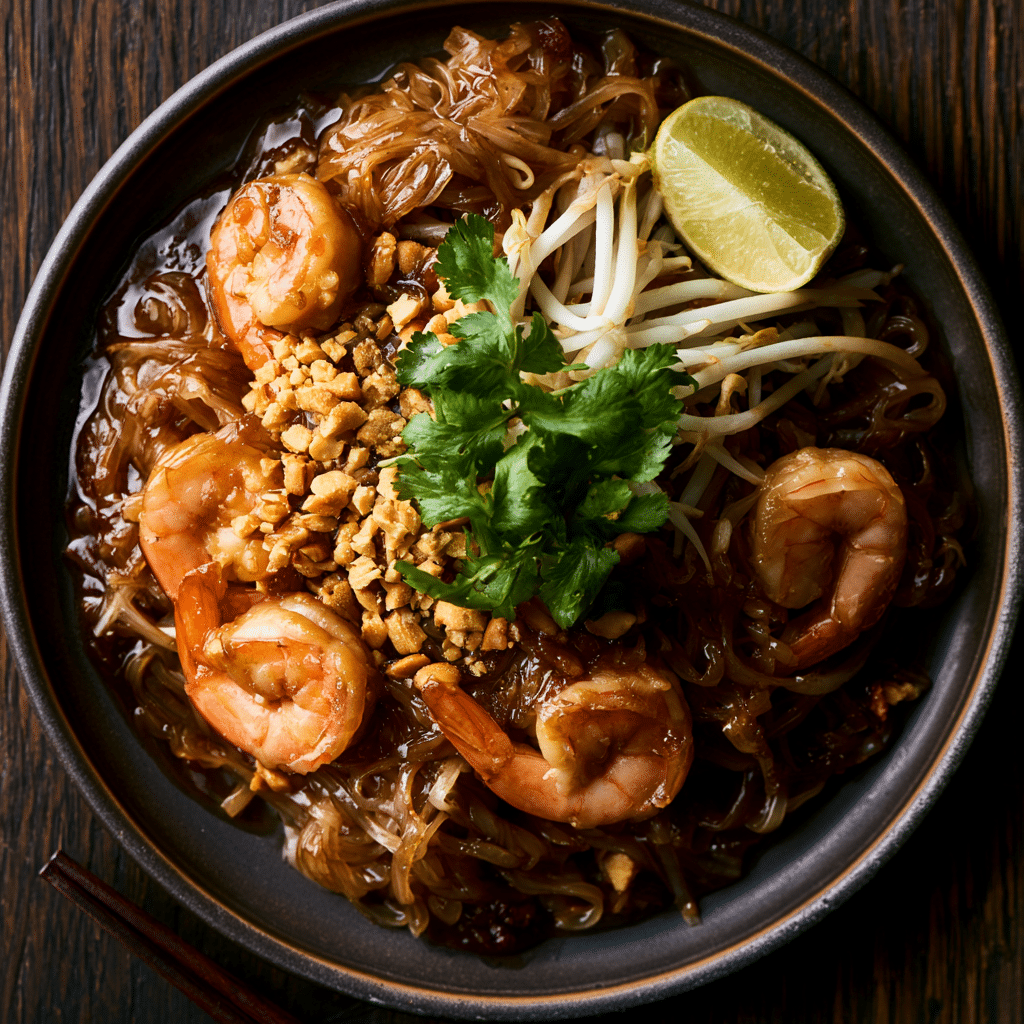
Authentic Pad Thai Recipe (Ready in 40 Minutes)

Equipment
- 14-inch flat-bottomed wok or 12-inch skillet
- Medium mixing bowl
- Whisk
- Long-handled tongs
- Sharp chef’s knife
- Cutting board
- Large bowl (for soaking noodles)
Ingredients
For the Pad Thai
- 8 oz dried flat rice noodles 225g, soaked in warm water for 30 minutes, then drained
- 2 tbsp vegetable oil or neutral oil like grapeseed
- 3 cloves garlic minced
- 2 medium shallots finely sliced
- 8 oz medium shrimp 225g, 31/40 count, peeled and deveined
- 2 large eggs lightly beaten
- 1 cup bean sprouts 100g, fresh
- 4 scallions green onions, cut into 1-inch (2.5cm) sections
- ¼ cup roasted peanuts 35g, roughly chopped
- 1 medium lime cut into wedges for serving
- ¼ cup fresh cilantro leaves for garnish
For the Pad Thai Sauce
- 3 tbsp fish sauce preferably Red Boat or Squid brand for authenticity
- 1 ½ tbsp tamarind paste not concentrate, for brighter tang
- 2 tbsp palm sugar 25g, grated or finely chopped; light brown sugar works in a pinch
- 1 tbsp rice vinegar unseasoned
Instructions
- In a bowl, whisk together the fish sauce, tamarind paste, palm sugar, and rice vinegar until the sugar dissolves completely. Taste for a balance of sweet, sour, and salty.3 tbsp fish sauce, 1 1/2 tbsp tamarind paste, 2 tbsp palm sugar, 1 tbsp rice vinegar
- Heat 1 tablespoon of oil in a wok over high heat until the oil just begins to shimmer and a wisp of smoke appears. Sauté garlic and shallots for about 30 seconds, until fragrant and lightly golden.2 tbsp vegetable oil, 3 cloves garlic, 2 medium shallots
- Add shrimp to the wok and stir-fry until pink and opaque, about 2–3 minutes. Remove them and set aside.8 oz medium shrimp
- Add the remaining 1 tablespoon of oil to the wok. Push any residue to the sides, pour in the beaten eggs, and gently scramble until just set but still slightly moist, about 30 seconds. Break into small pieces with your spatula.2 tbsp vegetable oil, 2 large eggs
- Add the drained noodles to the wok and pour in the Pad Thai sauce. Using tongs, toss and fold continuously for 2–3 minutes until the noodles have absorbed the sauce and the edges begin to lightly caramelise. If noodles stick, add a splash of water (1–2 tablespoons) to loosen.8 oz dried flat rice noodles
- Add bean sprouts, scallions, and cooked shrimp. Toss just until heated through, about 30–60 seconds.1 cup bean sprouts, 4 scallions, 8 oz medium shrimp
- Plate immediately. Sprinkle with chopped peanuts and cilantro. Garnish with lime wedges. Serve hot.1/4 cup roasted peanuts, 1/4 cup fresh cilantro leaves, 1 medium lime
Notes
Nutrition
FAQ
Can I make this less spicy for kids?
Yes — this recipe has no added chili, so it’s already mild as written. If your family wants heat, serve chili flakes or sriracha on the side so everyone can adjust their own bowl.
Do I need a wok, or can I use a regular pan?
A large stainless steel or cast iron skillet works fine. The key is high heat and not overcrowding the pan — if your pan is small, cook in two batches rather than piling everything in at once.
Where do I find tamarind paste?
Most Asian grocery stores carry it, and it’s increasingly available in the international aisle of larger supermarkets. Online is reliable if you’re having trouble locally — a jar lasts a long time in the fridge and is worth having on hand.
What to cook next
- Quick and Delicious Homemade Chinese Fried Rice
- Fresh Vegetable Spring Rolls
- Authentic Japanese Chicken Teriyaki
- Crispy Golden Dosa







Taste great! Brought tamarind pulp and then turned it into the paste.