




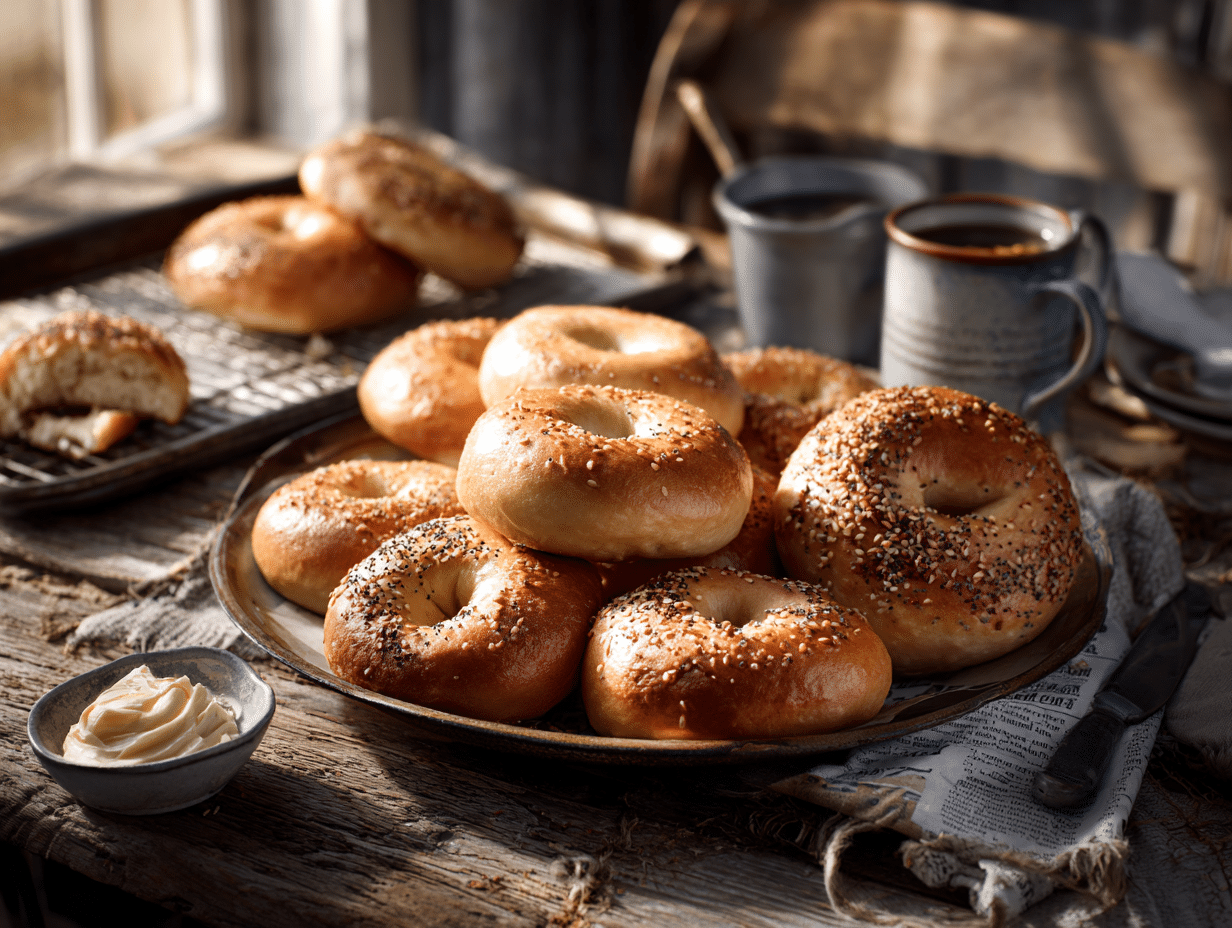
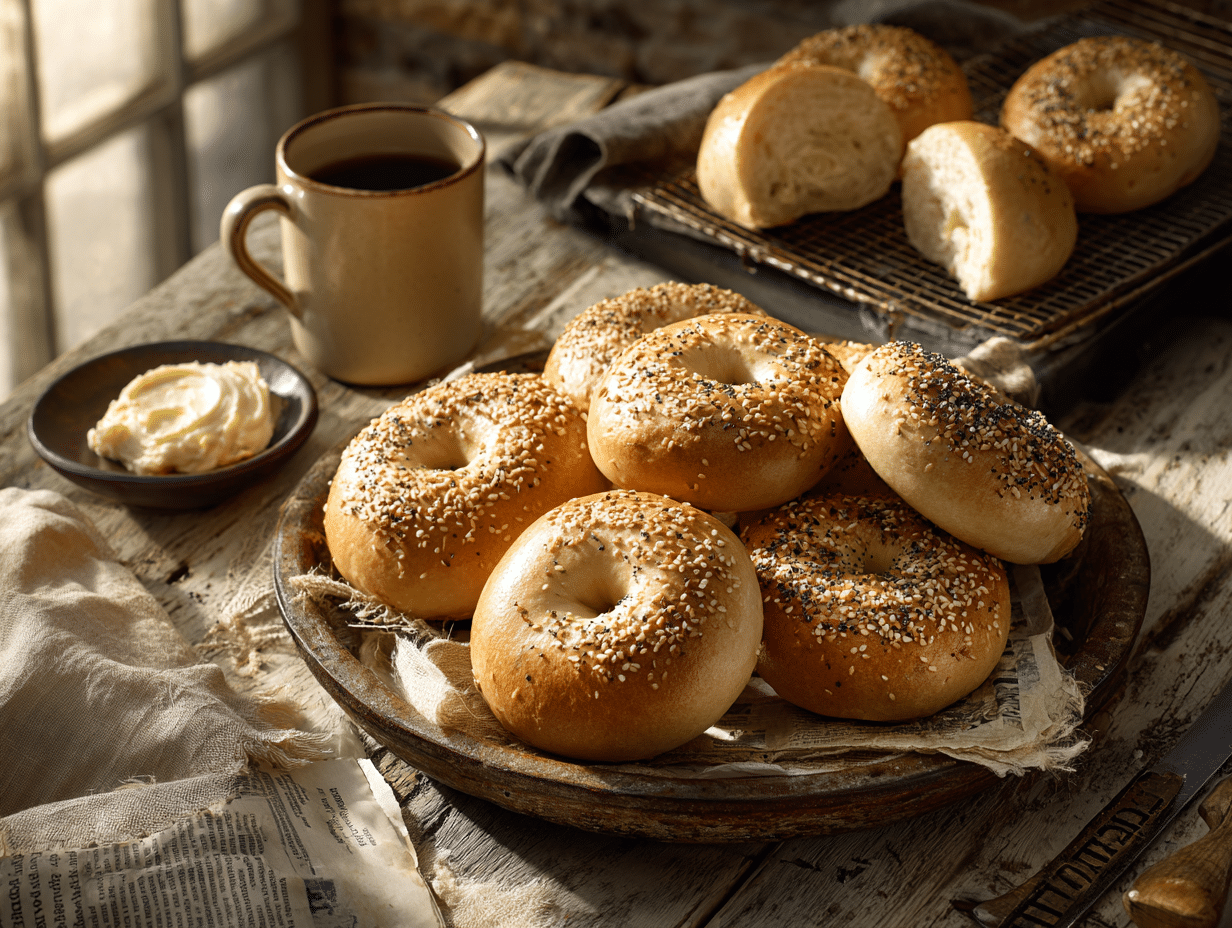
These bagels have the chewy, dense crumb and glossy crust that make a real bagel worth the effort — not the soft, bready rings you get from the grocery store. The boiling step and barley malt syrup are what get you there, and neither is hard to pull off at home. If you have a free morning and a big pot of water, you can make eight bagels that will actually impress people.
Shopping notes
- Bread flour: Higher gluten content than all-purpose flour is what gives bagels their chew. Don’t substitute all-purpose here — the texture won’t be the same.
- Barley malt syrup: This is the ingredient most people don’t have on hand. It goes into both the dough and the boiling water and gives bagels their slightly toasty, earthy flavor and deep golden color. Find it at natural food stores, some grocery stores near the honey, or online. Honey works as a swap in a pinch, but the flavor will be milder and the color lighter.
- Active dry yeast: Check the expiration date before you start. Old yeast is the most common reason bagel dough doesn’t rise.
Before you start
Two things make or break this recipe. First, the dough should be stiff — stiffer than pizza dough, stiffer than sandwich bread. If it feels soft or tacky, knead in a little more flour. A slack dough won’t hold its shape during boiling and you’ll end up with flat, dense rounds. Second, don’t skip or rush the boiling step. Thirty seconds to one minute per side in the malt-and-baking-soda water is what sets the crust and creates that signature chew. Skipping it just gives you baked rolls with a hole.
If something goes sideways
- The hole closes up during boiling or baking: You didn’t stretch it wide enough. The hole should be about 2 inches across after shaping — it will shrink as the dough puffs. Next time, stretch more aggressively than feels right.
- Bagels are coming out pale and dull instead of golden: Make sure you’re using barley malt syrup (or honey) in the boiling water, not just plain water. Also check that your oven is fully preheated before the bagels go in.
- The crust is tough and leathery rather than chewy: They were boiled too long. Keep it to 30–60 seconds per side — longer boiling overdevelops the crust.
- Toppings are falling off after baking: Press seeds firmly into the egg-washed surface before baking. Skip the egg wash and the toppings won’t stick at all — the egg wash is doing real work here, not just adding shine.
- Dough didn’t rise at all: The yeast didn’t activate. Either the water was too hot (above 115°F kills yeast) or the yeast was expired. Start over with fresh yeast and water around 105°F.
Leftovers and make-ahead
Bagels are best the day they’re baked, but they keep well at room temperature in a sealed bag for up to 2 days — slice them before storing so they’re easier to toast straight from the bag. For longer storage, freeze them: slice first, wrap individually in plastic wrap, and freeze for up to 3 months. Toast straight from frozen at a medium setting; no need to thaw. If you want to spread the work out, shape the bagels after the first rise, place them on a parchment-lined tray, cover tightly with plastic wrap, and refrigerate overnight. Pull them out the next morning, let them sit at room temperature for 20 minutes, then boil and bake as usual — the slow cold proof actually improves the flavor.
New York-Style Bagels

Equipment
- Mixing bowl
- Stand mixer with dough hook (optional)
- Large pot for boiling
- Slotted spoon
- Baking sheet
- Parchment paper
Ingredients
For the Bagel Dough:
- 1 ½ cups warm water at 100–110°F for ideal yeast activation
- 2 ¼ teaspoons active dry yeast fresh and not expired
- 4 cups bread flour preferably King Arthur brand for higher gluten content
- 1 ½ tablespoons granulated sugar
- 1 tablespoon barley malt syrup or substitute with honey
- 1 ½ teaspoons kosher salt
For the Boiling Water Bath:
- 2 tablespoons barley malt syrup or honey for the water bath
- 1 tablespoon baking soda
For the Toppings (Optional):
- 1 large egg beaten with 1 tbsp water for egg wash
- 2 tablespoons sesame seeds optional topping
- 2 tablespoons poppy seeds optional topping
Instructions
- In a large mixing bowl, combine warm water and active dry yeast. Let it sit for 5–10 minutes until frothy and bubbly — a sign that the yeast is alive and active.
- Add sugar, barley malt syrup, and salt to the yeast mixture and stir gently to combine. Then gradually add the bread flour, stirring until a shaggy dough forms.
- Using floured hands or a dough hook on a stand mixer, knead the dough for about 10 minutes until it becomes smooth, stiff, and elastic. If kneading by hand, use the heel of your palm and stretch-motion folding technique.
- Place the dough in a lightly oiled bowl, cover with a damp cloth, and let rest in a warm place for 1 hour or until doubled in size.
- Divide the dough into 8 equal pieces, about 3.5 oz each. Shape each piece into a smooth ball. Poke a hole in the center of each with your finger and gently stretch into a bagel shape, about 2 inches in diameter.
- Place shaped bagels on a parchment-lined baking sheet, cover, and allow them to rise for another 30 minutes.
- Preheat your oven to 425°F (218°C). Bring a large pot of water to a boil and add the barley malt syrup and baking soda. Carefully lower bagels into the water (2–3 at a time) and boil for 45 seconds per side. Use a slotted spoon to remove and place them back onto the parchment-lined sheets.
- Brush each boiled bagel with egg wash and sprinkle with your desired toppings: sesame, poppy, or everything seasoning.
- Bake the bagels for 20–25 minutes, flipping the tray halfway through. They should be deeply golden and sound hollow when tapped underneath.
- Let the bagels cool on a wire rack for at least 30 minutes before slicing or serving.
Notes
- For a slightly airier texture, allow shaped bagels to cold-proof in the fridge overnight and boil directly from chilled.
- Try topping with za’atar for a Middle Eastern flair, or add cinnamon and raisins directly into the dough for a sweet variation.
Nutrition
Common questions
Can I use all-purpose flour instead of bread flour?
You can, but the bagels will be noticeably softer and less chewy — more like a dinner roll in a bagel shape. Bread flour’s higher gluten content is what creates the dense, springy texture that makes a bagel a bagel.
Do I really need to boil them, or can I just bake them?
You need to boil them. Boiling sets the outer crust before the bagel goes in the oven, which is what gives it that firm, chewy exterior instead of a soft bread crust. Skipping this step is the single biggest shortcut that changes the result.
Can kids help make these, and are there fun topping options beyond sesame and poppy seeds?
Yes — shaping the bagels is a great job for kids, and the topping step is easy for little hands. Beyond sesame and poppy seeds, try everything bagel seasoning, coarse salt, or a cinnamon-sugar mix pressed on right after the egg wash for a sweeter version that goes over well with younger eaters.
Try these next
- Rustic Sourdough Focaccia with Rosemary and Sea Salt
- Handmade Flour Tortillas Fresh from Your Home Kitchen
- Fluffy Buttermilk Pancakes: A Classic American Breakfast
- Ultimate Banana Bread: A Classic Recipe with Professional Flair