
























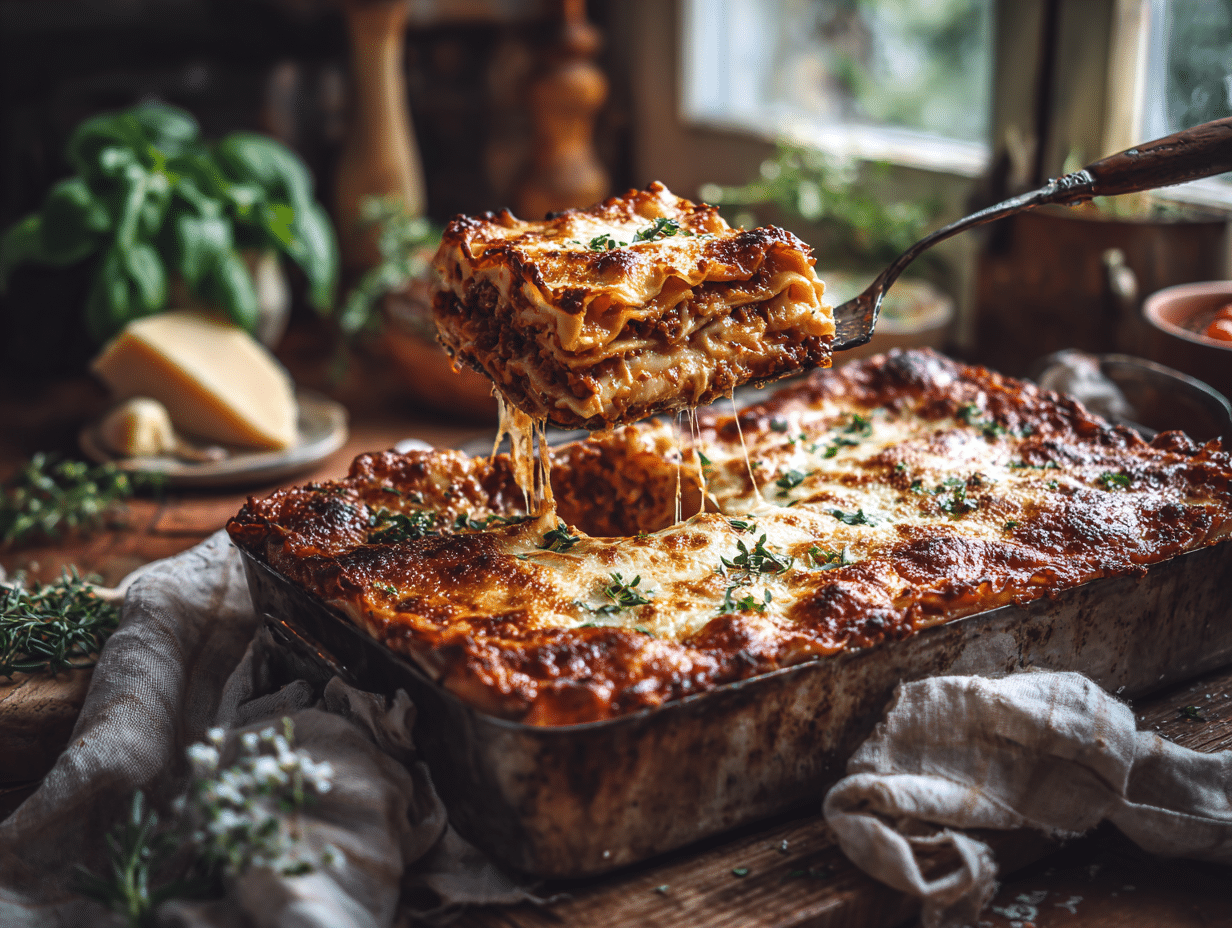
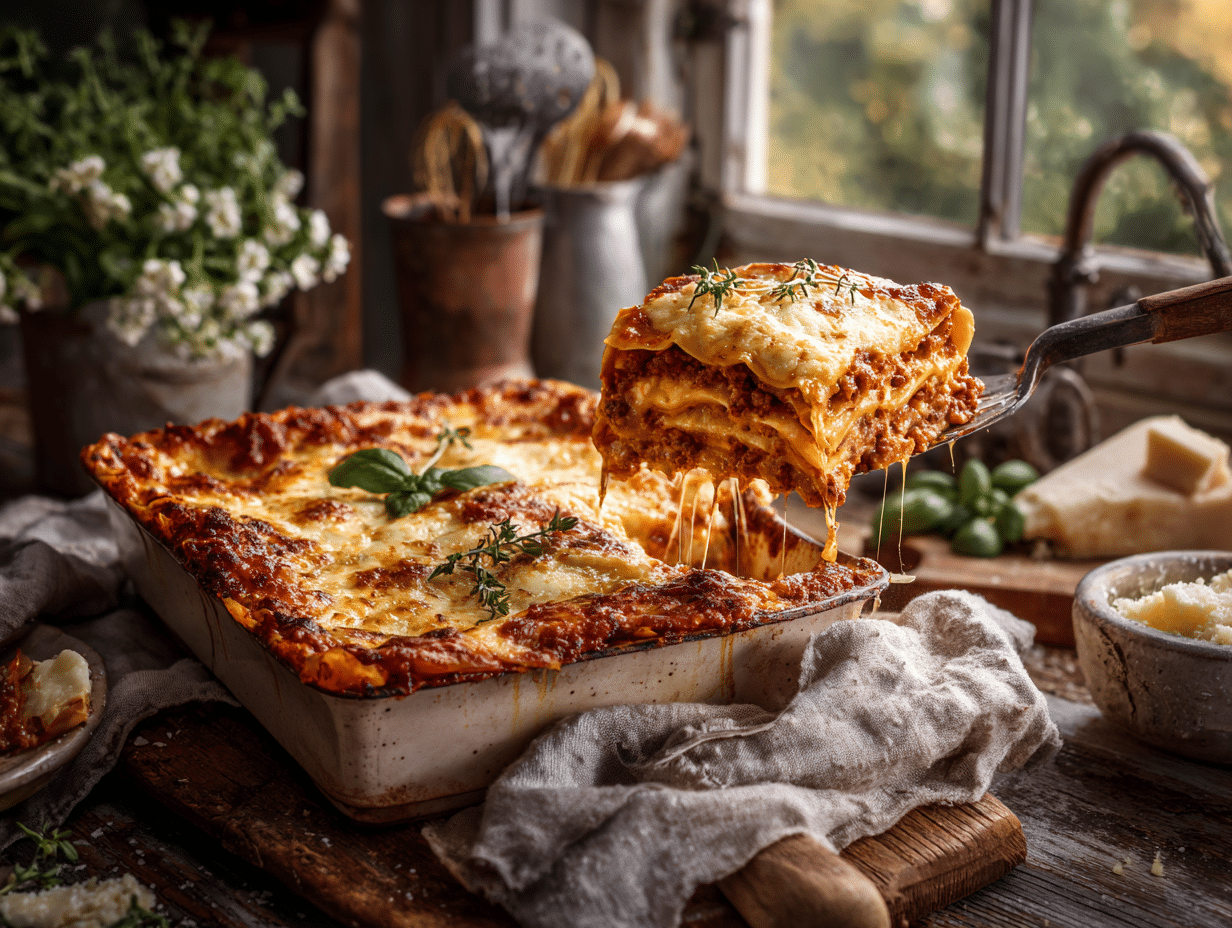
This lasagna uses a béchamel sauce instead of ricotta, which is how the dish is traditionally made in Bologna — and it makes a real difference in texture. You get clean, cohesive layers that hold together when you slice it, rather than a watery, crumbly filling. It takes about two and a quarter hours start to finish, but most of that time is hands-off simmering and baking.
What makes this version work
Two things matter most here. First, the 30-minute simmer on the meat sauce isn’t optional — it’s what drives off excess liquid and concentrates the flavor, so your finished lasagna doesn’t pool water on the plate. Second, the béchamel needs to be thick enough before it goes in. Pull it off the heat when it coats the back of a spoon and holds a line when you drag your finger through it. Too thin and it disappears into the other layers; too thick and it turns gluey. Get those two things right and the rest of the assembly is straightforward.
What can go wrong
- Noodles sticking together after boiling: If you’re using regular (not oven-ready) noodles, toss them with a small drizzle of olive oil after draining and lay them flat on a baking sheet. Stacking them wet is how you end up with one giant pasta clump.
- Watery lasagna: This usually means the meat sauce wasn’t reduced enough, or the béchamel was too thin. Both sauces should look noticeably thicker than you think they need to be before assembly — they loosen up in the oven.
- Burnt top, cold center: If the cheese is browning too fast, tent the pan loosely with foil. The lasagna needs the full bake time to heat through all the layers — pulling it early because the top looks done is the most common mistake.
- Layers sliding apart when you serve it: Let the lasagna rest for at least 15 minutes out of the oven before cutting. Slicing it hot means the layers haven’t set — skip the garnish and just wait, it’s not worth the mess.
- Bland sauce: Taste the meat sauce before assembly and adjust salt. San Marzano tomatoes vary in sweetness and acidity by brand, so the seasoning in the recipe card is a starting point, not a guarantee.
Leftovers and make-ahead
Lasagna keeps well in the fridge for up to 4 days, tightly covered. Individual slices reheat best in a 350°F oven for about 20 minutes — microwaving works but softens the texture considerably. For make-ahead, you can assemble the entire unbaked lasagna up to 24 hours in advance, cover it tightly with plastic wrap, and refrigerate it; add 10–15 minutes to the bake time since it’s going in cold. To freeze, bake it first, cool completely, then cut into portions and wrap individually. Frozen portions keep for up to 3 months and reheat from frozen at 375°F for about 45 minutes covered, then 10 minutes uncovered to refresh the top.
Classic Homemade Lasagna

Equipment
- large saucepan
- 9x13 inch baking dish
- Large Pot
- Wooden spoon
- Whisk
Ingredients
For the Meat Sauce:
- 1 tablespoon olive oil extra virgin
- 1 pound ground beef 80/20 lean
- ½ pound Italian sausage mild, casings removed
- 1 cup yellow onion finely chopped
- 3 cloves garlic minced
- 28 ounces crushed tomatoes San Marzano recommended
- 6 ounces tomato paste double concentrated
- 1 teaspoon dried oregano
- ½ teaspoon kosher salt or to taste
- ¼ teaspoon ground black pepper
For the Béchamel Sauce:
- 4 tablespoons unsalted butter
- ¼ cup all-purpose flour
- 3 cups whole milk warmed
- ¼ teaspoon nutmeg freshly grated
For the Assembly:
- 12 sheets lasagna noodles boiled until al dente or use oven-ready
- 2 cups shredded mozzarella whole milk
- 1 cup freshly grated Parmesan cheese
Instructions
- In a large saucepan over medium heat, heat olive oil. Add ground beef and sausage. Cook until browned and crumbly, about 8 minutes. Drain excess fat.
- Add chopped onions and garlic to the meat, cooking until fragrant and translucent, about 5 minutes.
- Stir in crushed tomatoes, tomato paste, oregano, salt, and pepper. Reduce heat to low and simmer for 30 minutes, stirring occasionally. Sauce should reduce slightly and develop deep aroma.
- In a separate saucepan, melt butter over medium heat. Whisk in flour and cook for 1-2 minutes to form a roux. Slowly pour in warm milk while whisking continuously. Cook until thickened to the consistency of heavy cream, about 6-8 minutes. Add nutmeg, then remove from heat.
- Preheat oven to 375°F (190°C). Boil noodles if not using oven-ready. Drain and keep slightly undercooked to allow for baking.
- Spread a thin layer of meat sauce at the bottom of a 9x13-inch baking dish. Layer noodles, béchamel, meat sauce, mozzarella, and Parmesan. Repeat for 3 layers, ending with béchamel and cheese on top.
- Cover with foil and bake for 25 minutes. Uncover and bake an additional 20 minutes until bubbling and golden brown. Let rest for 15 minutes before serving.
Notes
- For a twist, add sautéed spinach or mushrooms between layers.
- Use fresh pasta sheets for an ultra-luxurious texture.
- For a gluten-free option, substitute cooked eggplant slices or gluten-free pasta.
Nutrition
Your questions, answered
Can I use oven-ready lasagna noodles instead of boiling them?
Yes, oven-ready noodles work fine in this recipe. Just make sure your sauces aren’t too thick — the noodles absorb moisture as they bake, so if the sauces are on the dry side, the noodles won’t soften properly.
Can I substitute the Italian sausage with something else?
You can use all ground beef if that’s what you have. The sausage adds a mild fennel and spice note that the beef alone won’t replicate, so if you skip it, consider adding a pinch of fennel seed to the sauce.
Do I have to use San Marzano tomatoes?
No, any good-quality crushed tomatoes will work. San Marzanos tend to be sweeter and less acidic, so if you use a sharper brand, taste the sauce partway through simmering and add a small pinch of sugar if it tastes too tart.
How do I know when the lasagna is fully cooked through?
Insert a thin knife or skewer into the center and hold it there for five seconds — it should feel hot when you pull it out and touch it to your wrist. The edges will also be visibly bubbling and the top should be golden brown.
My béchamel has lumps. Can I fix it?
Yes — pour it through a fine mesh strainer and whisk it again over low heat. Lumps almost always come from adding cold milk too fast; next time, add the warm milk in a slow, steady stream while whisking constantly.
What to cook next
- Authentic Roman Carbonara
- Creamy Fettuccine Alfredo
- Elegant Chicken Marsala with Mushrooms and Marsala Wine
- Crispy Italian Almond Biscotti