





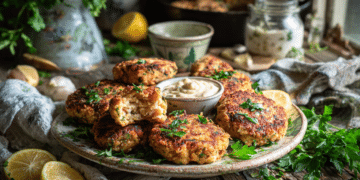
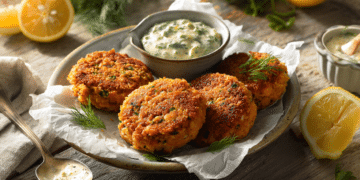
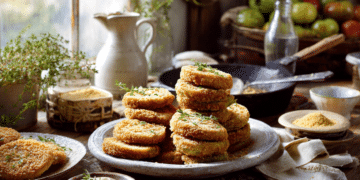
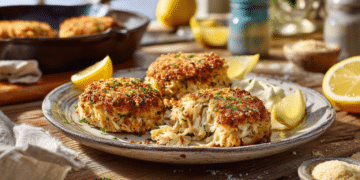









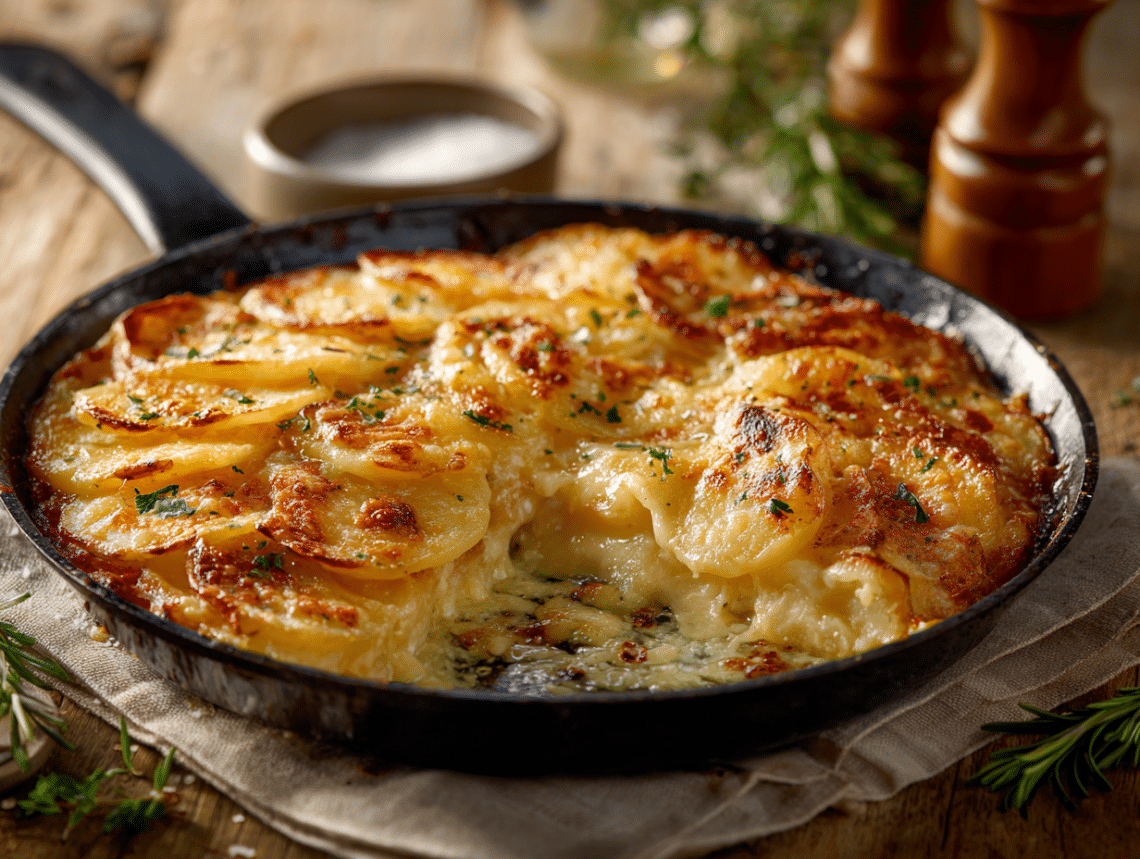
This skillet gratin skips the oven, the béchamel, and the baking dish entirely. Four medium potatoes, one pan, 35 minutes — and you get crispy-edged potatoes with melted sharp cheddar on top. It works on a weeknight because there is genuinely nothing fussy about it.
Before you start
Two things determine whether this comes out right. First, your potato slices need to be a consistent ¼ inch (6mm) thick — not close to that, actually that. A mandoline is the fastest way to guarantee it; a sharp knife and patience work too. Uneven slices mean some turn to mush while others stay raw in the middle, and there is no fixing that once the lid goes on. Second, resist the urge to stir during the uncovered browning phase. The crust forms because the potatoes sit still against the hot buttered pan — moving them around just steams off the moisture you need to drive away. Give them the full 2–3 minutes undisturbed before you flip.
Substitutions that actually work
- Potatoes: Yukon Golds hold their shape better than russets and give a creamier interior. Russets work but can fall apart when you flip — handle them more gently.
- Sharp cheddar: Gruyère melts cleanly and pairs well with the rosemary. Monterey Jack is milder but melts beautifully if that is what you have. Avoid pre-shredded bags — the anti-caking coating makes the cheese clump rather than melt smoothly.
- Dried rosemary: Dried thyme is a straightforward swap at the same quantity. Fresh rosemary works at about 1 tablespoon finely chopped, but chop it fine — whole fresh needles stay tough.
- Butter: A mix of butter and a neutral oil (half and half) raises the smoke point slightly if your burner runs hot.
Make-ahead notes
Leftovers keep in the fridge for up to 3 days in an airtight container. Reheat them in a dry non-stick skillet over medium heat for 5–6 minutes — this brings the edges back to crispy far better than a microwave, which just makes them soft and a little watery. Freezing is not recommended; the potato texture turns grainy after thawing. If you want to get ahead, you can slice the potatoes and onion up to 24 hours in advance and store them submerged in cold water in the fridge, then drain and pat completely dry before cooking — any surface moisture will cause the butter to spatter and slow browning.
Mistakes to avoid
- Using a pan that is too small: A 10-inch skillet forces the potatoes into thick layers that steam rather than brown. Stick with 12 inches so the slices spread out and the moisture can escape.
- Adding the cheese while the pan is still on the heat: The residual heat from the pan off the burner is enough to melt the cheddar in 2–3 minutes. Leaving it on the heat overcooks the cheese and it turns grainy and greasy instead of gooey.
- Skipping the dry on the potato slices: If you soaked them ahead of time (see make-ahead notes) and skip patting them dry, the excess water hits the hot butter and drops the pan temperature sharply — you lose the browning window.
- Crowding with too much parsley: Skip the garnish — not worth the extra dish. The cheese and rosemary carry the flavour on their own, and a handful of parsley does not change how this tastes.
- Flipping individual slices one by one: Work in sections with a wide spatula. Trying to flip single slices breaks them apart and cools the pan. Flip 3–4 sections quickly and get the lid back off so browning continues.
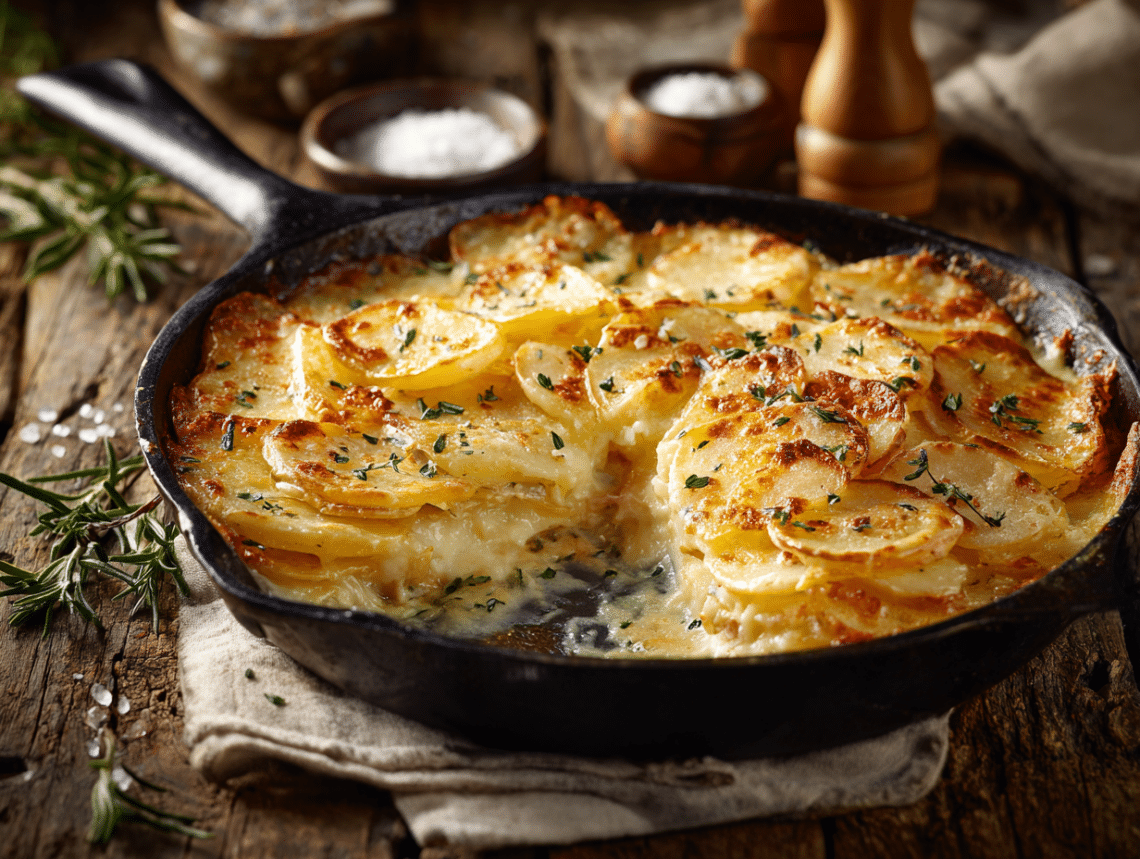
Cheese and Onion Potatoes Gratin (Skillet Method)

Ingredients
- ¼ cup butter
- 4 medium potatoes sliced about 1/4-inch (6mm) thick
- ½ medium onion thinly sliced
- 1 teaspoon dried rosemary chopped
- ¼ teaspoon black pepper freshly ground, or to taste
- ½ cup sharp cheddar cheese shredded
- ⅓ cup fresh parsley minced
- 1 pinch salt to taste
Instructions
- In a 12-inch non-stick skillet, melt the butter (55g) over medium-high heat until foaming.
- Add the sliced potatoes, onion, rosemary, salt, and pepper. Toss to coat evenly in the butter. Then cover with a lid, reduce heat to medium, and cook for 10–12 minutes, stirring occasionally, until the potatoes are fork-tender.
- Remove the lid, increase heat to medium-high, and cook undisturbed for 2–3 minutes to develop a golden crust on the bottom.
- Flip sections gently and continue cooking for another 3–5 minutes until browned and crispy on the edges.
- Remove the skillet from the heat and immediately scatter the shredded cheddar evenly over the potatoes. Cover with the lid and let stand for 2–3 minutes until the cheese is fully melted.
- Sprinkle with the minced fresh parsley and serve straight from the skillet.
Nutrition
Common questions
Can I use a stainless steel or cast iron skillet instead of non-stick?
Yes, but you need to be more careful about sticking during the covered cooking phase. Cast iron works well once it is properly preheated and buttered — just watch the heat, as cast iron holds more of it and can scorch the bottom before the potatoes are tender through.
What type of potato works best here?
Yukon Golds are the most reliable choice — they hold their shape when flipped and have a naturally buttery interior. Russets are fine but softer and more likely to break apart, so flip them in larger sections and handle gently.
Do I need to peel the potatoes?
No. The skins are thin enough that they soften during the covered cooking phase and are not noticeable in the finished dish. Leaving them on saves time and a step.
My potatoes are sticking to the pan during the browning phase — what went wrong?
Usually this means the heat is too high or the butter has burned off. If they are sticking, add a small knob of butter around the edge of the pan and give it 30 seconds before trying to flip. A properly heated non-stick pan with enough butter should release cleanly.
Can I double the recipe to serve 8?
Not in one pan — overcrowding kills the browning. Cook two separate batches in two skillets at the same time, or keep the first batch warm in a low oven (200°F / 95°C) on a baking sheet while the second batch finishes.
What can I serve this with besides steak?
It works alongside roast chicken, pan-seared salmon, or a simple green salad if you want to keep it vegetarian. The flavours are straightforward enough that it does not compete with much.
What to cook next
- Caramelized Brussels Sprouts with Balsamic Glaze
- Hearty Shepherd’s Pie
- Elegant Chicken Marsala with Mushrooms
- Crispy Roasted Brussels Sprouts with Balsamic Glaze