

























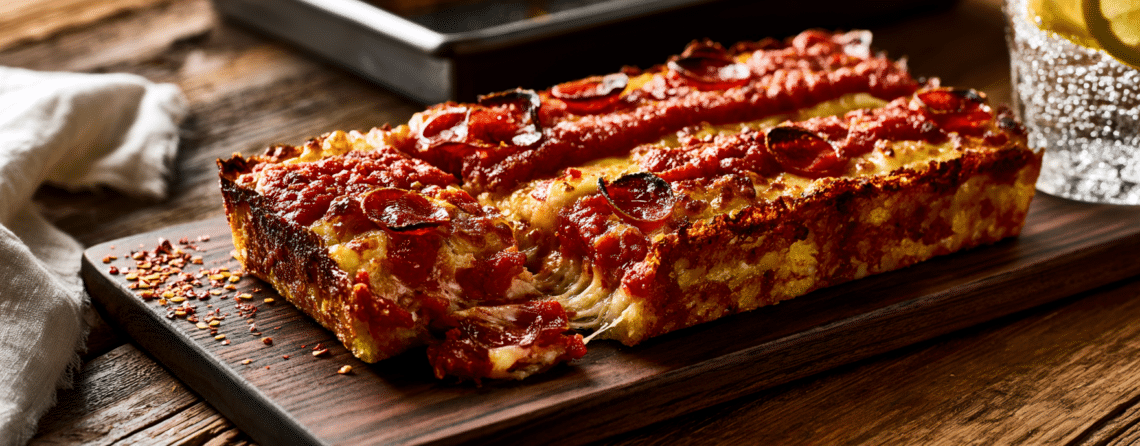
Detroit-style pizza has a thick, focaccia-like crust, cheese pressed all the way to the edges so it caramelizes against the pan, and sauce spooned on top rather than underneath. This version uses a straightforward homemade dough, brick cheese, mozzarella, and pepperoni — no special equipment beyond a rectangular baking pan. It takes about two hours start to finish, most of that hands-off rise time.
The short version of why this works
Two things make this pizza what it is. First, the cheese goes all the way to the edges of the pan — not just scattered in the middle. When brick cheese makes direct contact with the oiled pan sides, it fries and caramelizes into a crispy, slightly greasy border that you can’t get any other way. Second, the sauce goes on last, on top of the cheese. This keeps the crust from getting soggy during the bake, since there’s no wet layer sitting between the dough and the heat. Both steps feel counterintuitive if you’ve only made traditional pizza, but they’re not optional — they’re the whole point.
About the ingredients
- Brick cheese: This is the traditional choice and genuinely hard to replace. It melts smoothly, has a mild tang, and crisps up at the edges better than most other cheeses. Look for it at Midwest grocery chains or order it online. If you truly can’t find it, a mix of low-moisture mozzarella and a small amount of white cheddar gets you closer than mozzarella alone.
- Pepperoni size: Large-format pepperoni (sometimes labeled “cup and char” or “roni cups”) curls into small grease-holding cups in the oven. Standard deli-sliced pepperoni lies flat and crisps less dramatically. Either works, but the larger slices are worth seeking out if your store carries them.
- Pizza sauce: Jarred sauce is fine here — skip the garnish of fresh basil on top, not worth the extra prep for a pizza this hearty.
Mistakes to avoid
- Not oiling the pan generously enough: A thin coat of oil isn’t enough. You want a visible layer on the bottom and up the sides. This is what creates the crispy undercarriage and prevents sticking when you unmold the pizza.
- Rushing the dough into a cold pan: If your kitchen is cold, the dough may tighten up when you stretch it into the pan and spring back toward the center. Let it rest uncovered in the pan for 10 minutes before pressing it fully to the edges.
- Spreading the sauce too thick: The sauce sits on top of the cheese, so if you apply it heavily it can pool and make the surface wet. Three thin stripes or a few spoonfuls spread lightly is enough — the cheese underneath carries most of the flavor.
- Cutting the pizza in the pan: A metal cutter dragged across your baking pan will scratch it. Transfer the pizza to a cutting board first, then slice.
- Pulling the pizza too early: The edges should be visibly dark — deep golden to light brown. If they look pale, give it another 2 minutes. Underbaked edges are soft instead of crispy, and that’s the whole texture you’re going for.
Keeping and reheating
Leftover pizza keeps well in the fridge for up to 3 days — store it in an airtight container or wrap slices tightly in foil. To reheat, put slices directly into a dry skillet over medium heat, cover with a lid, and warm for 4 to 5 minutes. This crisps the bottom back up without drying out the top. The microwave works in a pinch but softens the crust. For longer storage, freeze individual slices wrapped in foil and then placed in a zip-top bag; they’ll keep for up to 2 months. Reheat from frozen in a 375°F oven for about 12 minutes, directly on the rack.
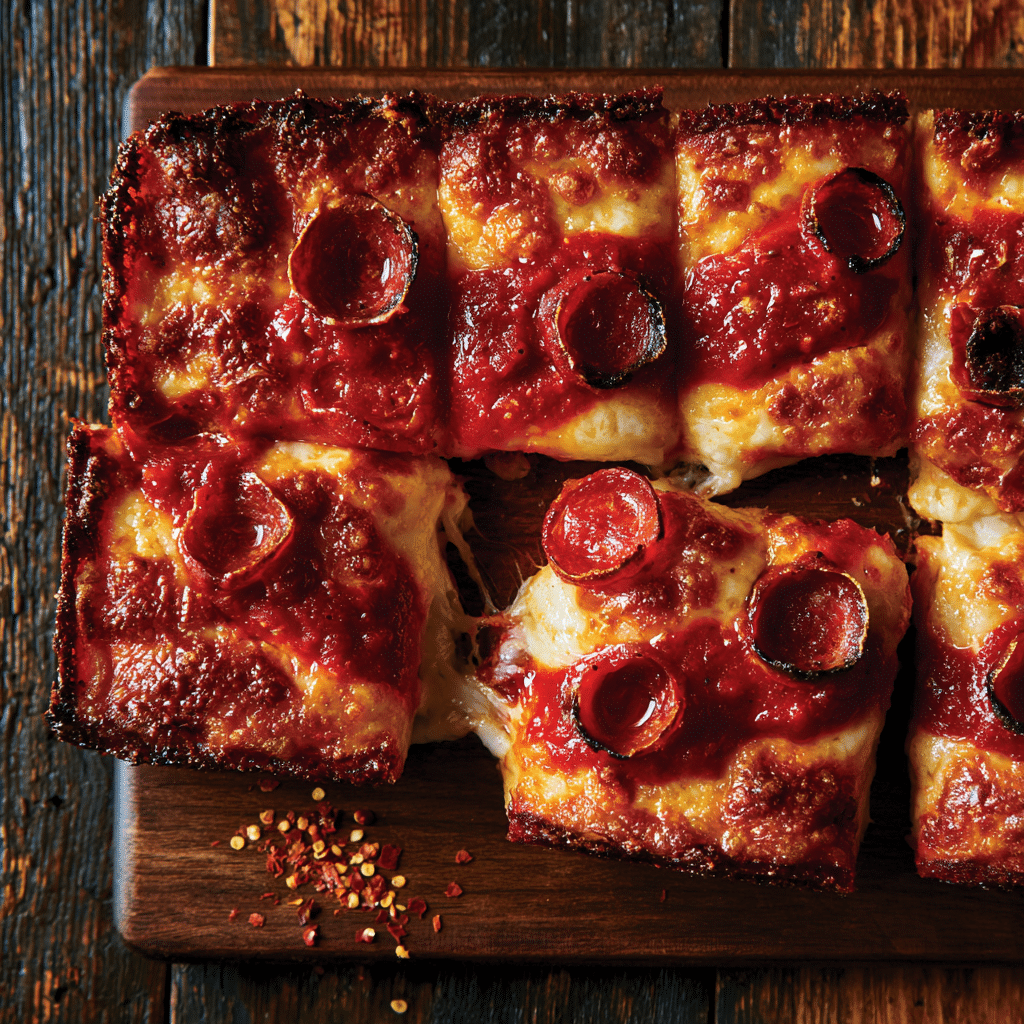
Detroit-Style Pepperoni Pizza (Crispy Cheese Edges)

Equipment
- 10×14 inch (25x36cm) rectangular steel baking pan or Detroit-style pizza pan
- Large mixing bowl
- Stand mixer with dough hook (optional — hand kneading works)
- Plastic wrap (or damp kitchen towel)
- Cutting board
- Pizza wheel or sharp chef’s knife
Ingredients
Pizza Dough
- 2 ¼ teaspoons active dry yeast 7g
- 1 ½ cups warm water 355ml, 105-110°F / 40-43°C
- 1 tablespoon granulated sugar 12g
- 3 ¾ cups all-purpose flour 470g, plus extra for dusting
- 1 teaspoon salt 5g
- 2 tablespoons olive oil 30ml
Assembly
- 2 tablespoons olive oil 30ml, for greasing the pan
- 8 oz brick cheese 225g, cut into ½-inch (1cm) cubes
- 4 oz mozzarella cheese 115g, shredded, low-moisture whole milk
- 1 cup pizza sauce 240ml / 8oz
- 20 slices pepperoni about 2 oz / 55g, preferably large cup-and-char style
Instructions
Make the Dough
- In a large bowl, dissolve the yeast and sugar in warm water and let it sit for 5 minutes until foamy.2 1/4 teaspoons active dry yeast, 1 1/2 cups warm water, 1 tablespoon granulated sugar
- Add the flour, salt, and olive oil to the yeast mixture and mix until a shaggy dough forms.3 3/4 cups all-purpose flour, 1 teaspoon salt, 2 tablespoons olive oil
- Knead the dough on a floured surface for about 8-10 minutes until smooth and elastic. If using a stand mixer, knead with a dough hook for 6-7 minutes.
- Place the dough in a lightly oiled bowl, cover it with plastic wrap, and let it rise in a warm place for 1 hour or until doubled in size.
Assemble the Pizza
- Preheat your oven to 450°F / 230°C (210°C fan-forced). Generously grease a 10×14 inch (25x36cm) rectangular steel baking pan with about 2 tablespoons of olive oil, coating the bottom and sides.2 tablespoons olive oil
- Gently stretch the risen dough to fit the pan, pressing it all the way into the corners and up the sides slightly. If the dough springs back, let it rest for 5 minutes and try again.
- Scatter the cubed brick cheese evenly over the entire surface of the dough, making sure cheese cubes sit right against the pan edges — this direct contact with the oiled pan walls is what creates the signature caramelized cheese crust.8 oz brick cheese
- Scatter the shredded mozzarella evenly over the brick cheese layer. Then spoon the pizza sauce in two or three racing stripes lengthwise down the pizza — do not spread it edge to edge.4 oz mozzarella cheese, 1 cup pizza sauce
- Evenly distribute the pepperoni slices over the top, ensuring balance and coverage.20 slices pepperoni
Bake the Pizza
- Place the pizza in the oven and bake for 18-20 minutes or until the cheese has become golden and crispy on the edges while the crust is cooked through.
- Let the pizza rest in the pan for 3-5 minutes — this allows the cheese crust to firm up so it releases cleanly. Run a thin spatula around the edges, then transfer to a cutting board. Slice into squares and serve hot.
Notes
Nutrition
FAQ
Can I use a regular 9×13 baking dish instead of a dedicated pizza pan?
Yes, a standard 9×13 metal baking dish works well for this recipe. Avoid glass or ceramic — they don’t conduct heat the same way and you’ll get a softer, paler edge rather than the crispy crust you’re after.
Can I make the dough the night before?
Yes, and it actually improves the flavor. After mixing, place the dough in a lightly oiled bowl, cover it tightly, and refrigerate overnight instead of doing the room-temperature rise. Pull it out about 30 minutes before you plan to stretch it so it relaxes enough to work with.
What if I can’t find brick cheese anywhere near me?
Use a combination of low-moisture mozzarella and mild white cheddar in roughly a 3-to-1 ratio. The cheddar adds a bit of the sharpness and browning quality that brick cheese provides, which plain mozzarella alone won’t give you.
My cheese edges didn’t crisp up — what went wrong?
The most common cause is not enough oil on the pan sides, or cheese that didn’t quite reach the edge of the pan. Make sure the oil coats the sides of the pan, not just the bottom, and press the cubed brick cheese firmly into the corners and along the perimeter before adding the mozzarella.
More recipes to try
- Rustic Sourdough Focaccia with Rosemary and Sea Salt
- Authentic Roman Carbonara
- Authentic New York-Style Bagels Made Simple at Home
- Sizzling Street-Style Grilled Chicken Tacos with Bold Flavors