























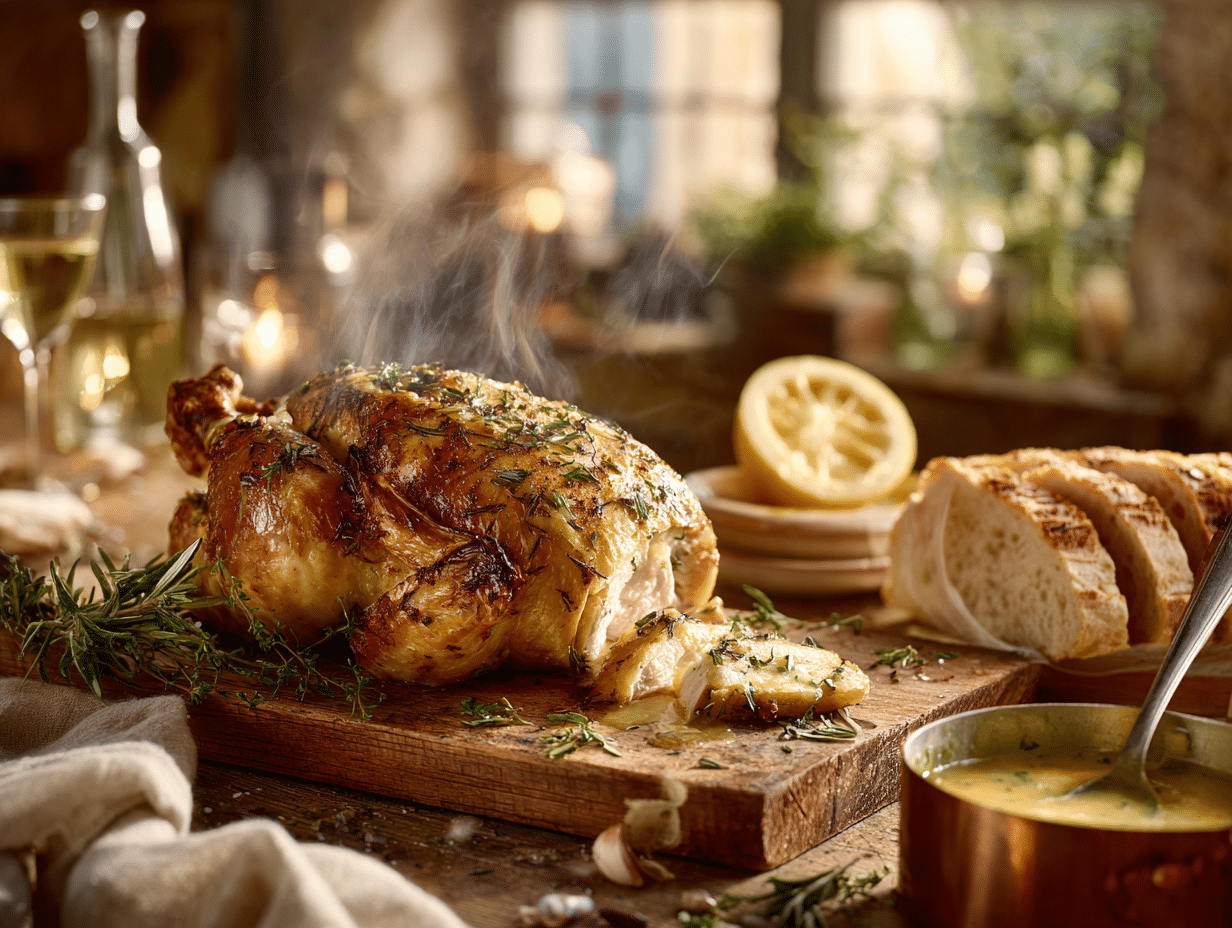
This is a whole roasted chicken with garlic herb butter pushed under the skin and a quick pan sauce made from the drippings. It takes about 25 minutes of hands-on work, and the result is juicy meat, genuinely crispy skin, and a sauce that tastes like you did a lot more than you actually did. If you need one reliable chicken recipe that works for a weeknight or a dinner with guests, this is a good one to have.
Why this recipe works
Two things make the difference here. First, the herb butter goes under the skin directly onto the meat, not just on top of it. Fat and aromatics sitting on bare flesh season the chicken all the way through as it roasts — butter on top of skin mostly just slides off into the pan. Second, the pan sauce is built from the drippings that are already in the roasting pan, so nothing is wasted and the sauce tastes like the chicken it came from. Cold butter whisked in at the end thickens it without flour and keeps it from breaking, as long as you pull it off the heat before it boils.
Shopping notes
- Chicken size matters: The recipe is written for a 4 lb bird. A significantly larger chicken (5+ lbs) will need more time in the oven — check the thigh temperature rather than relying on the clock.
- Fresh herbs vs. dried: Fresh rosemary and thyme are worth buying here because they go directly under the skin. Dried herbs can turn gritty and slightly bitter in that position. If you only have dried, mix them into softened butter and use it only on the outside.
- Unsalted butter: Both the herb butter and the pan sauce call for unsalted. The recipe already includes kosher salt, so salted butter can make the finished dish too salty, especially in the reduced sauce.
- Chicken stock: Low-sodium store-bought stock works fine. Regular sodium stock combined with the salty drippings can make the sauce sharp — taste before you finish with the butter.
Mistakes to avoid
- Skipping the pat-dry step: Surface moisture is the enemy of crispy skin. Paper towels before seasoning is not optional — wet skin steams instead of browns.
- Pulling the chicken straight from the fridge: A very cold bird takes longer to cook through and often results in overcooked breast meat by the time the thighs are done. Let it sit at room temperature for 20–30 minutes before it goes in the oven.
- Boiling the sauce after adding the butter: Once you whisk in the cold butter, keep the heat low. A full boil will break the emulsion and leave you with greasy liquid. If it does break, pull the pan off the heat and whisk in another small piece of cold butter.
- Carving before resting: Cutting into the chicken immediately after it comes out of the oven loses a significant amount of juice onto the cutting board. The 15-minute rest in the recipe is not padding — skip the garnish instead if you’re short on time, not the rest.
- Under-seasoning the cavity: The lemon and thyme stuffed inside do perfume the meat, but they don’t season it. If the inside of the cavity is unseasoned, the innermost meat can taste flat. A light pinch of salt inside before stuffing fixes this.
Keeping and reheating
Leftover chicken keeps in the fridge for up to 4 days in an airtight container. Store the sauce separately — it will solidify when cold but loosens back up with gentle heat. To reheat, place carved pieces in a baking dish, add a splash of chicken stock or water, cover tightly with foil, and warm in a 325°F oven for about 15 minutes. This keeps the meat from drying out far better than a microwave does. For the sauce, warm it slowly in a small saucepan over low heat, whisking as it comes up to temperature. The whole chicken (on the bone) can be frozen for up to 2 months, though the skin loses its texture after freezing and thawing.
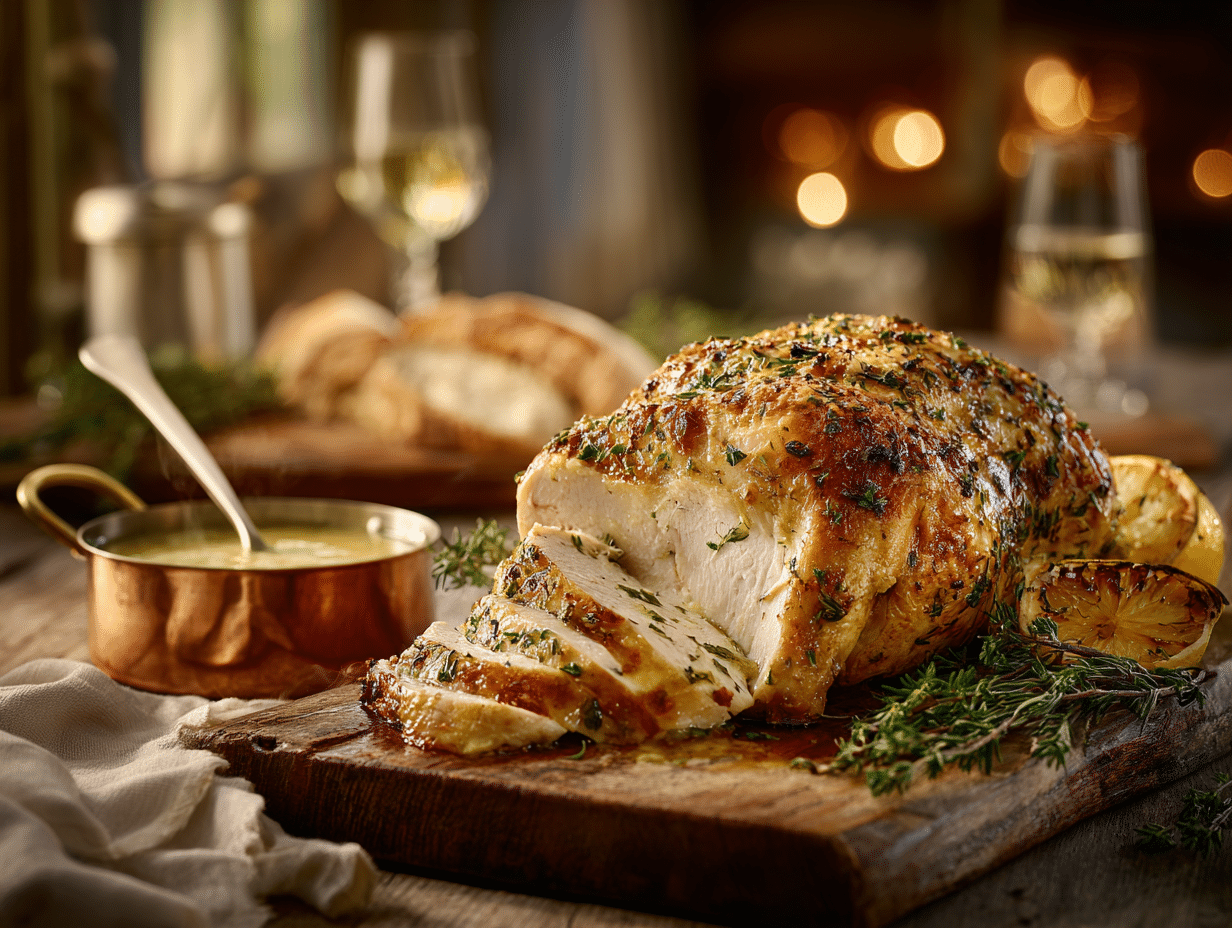
Garlic Herb Roasted Chicken with Lemon Butter Sauce

Equipment
- Roasting pan
- Meat thermometer
- Knife and cutting board
- Mixing bowl
- Small Saucepan
Ingredients
For the Chicken:
- 1 whole chicken (about 4 lbs) free-range or organic preferred
- 4 tablespoons unsalted butter softened
- 1 tablespoon fresh rosemary chopped
- 1 tablespoon fresh thyme leaves only
- 1 teaspoon lemon zest from 1 organic lemon
- 6 cloves garlic minced
- 2 teaspoons kosher salt
- 1 teaspoon black pepper freshly cracked
- 1 whole lemon halved
- 4 sprigs fresh thyme for stuffing
For the Lemon Butter Sauce:
- 1 cup chicken stock
- 2 tablespoons fresh lemon juice
- 2 tablespoons unsalted butter cold
Instructions
- Preheat oven to 425°F (220°C). Pat the chicken dry with paper towels and place it breast side up on a rack in a roasting pan.
- In a small bowl, mix softened butter, rosemary, thyme, lemon zest, minced garlic, salt, and pepper into a herb butter paste.
- Carefully loosen the skin over the chicken breasts and thighs, and spread half the herb butter under the skin. Rub the remaining butter all over the outside. Stuff the cavity with halved lemon and fresh thyme sprigs.
- Roast the chicken uncovered for 1 hour and 20 minutes, or until the internal temperature at the thickest part of the thigh reaches 165°F (74°C). Baste twice during roasting for extra crisp skin.
- Remove chicken and rest for 15 minutes, loosely tented with foil to retain moisture.
- To make the sauce, pour pan drippings into a small saucepan. Add chicken stock and lemon juice, and simmer for 5-7 minutes. Whisk in cold butter pieces until silky and emulsified. Do not boil once butter is added.
- Carve the rested chicken and serve with a generous spoon of lemon butter sauce drizzled over the top.
Notes
- For a richer crust, air-dry your seasoned chicken uncovered in the fridge for up to 8 hours before roasting.
- Substitute rosemary and thyme with tarragon or sage for seasonal variation.
- Making the herb butter a day ahead enhances flavor depth.
Nutrition
FAQ
Can I make the herb butter ahead of time?
Yes — you can make it up to 2 days in advance and keep it wrapped in the fridge. Take it out 20 minutes before you need it so it softens enough to spread easily under the skin without tearing it.
What if I don’t have a roasting rack?
You can set the chicken directly in the roasting pan, but the bottom skin will steam rather than crisp. A simple fix is to lay a few thick slices of onion or halved garlic heads under the bird — they lift it off the pan floor and add flavor to the drippings at the same time.
How do I know the chicken is actually done without a thermometer?
A meat thermometer is the only reliable method — the thigh should read 165°F at the thickest point, not touching bone. If you don’t have one, pierce the thigh at its thickest part; the juices should run completely clear with no pink, but this is less accurate and worth the few dollars a basic thermometer costs.
If you liked this one
- Elegant Chicken Marsala with Mushrooms and Marsala Wine
- Zesty French Lemon Cake: A Taste of Provence Sunshine
- Authentic French Bread: A Crispy Homemade Classic
- Caramelized Brussels Sprouts with Balsamic Glaze and Crispy Shallots