











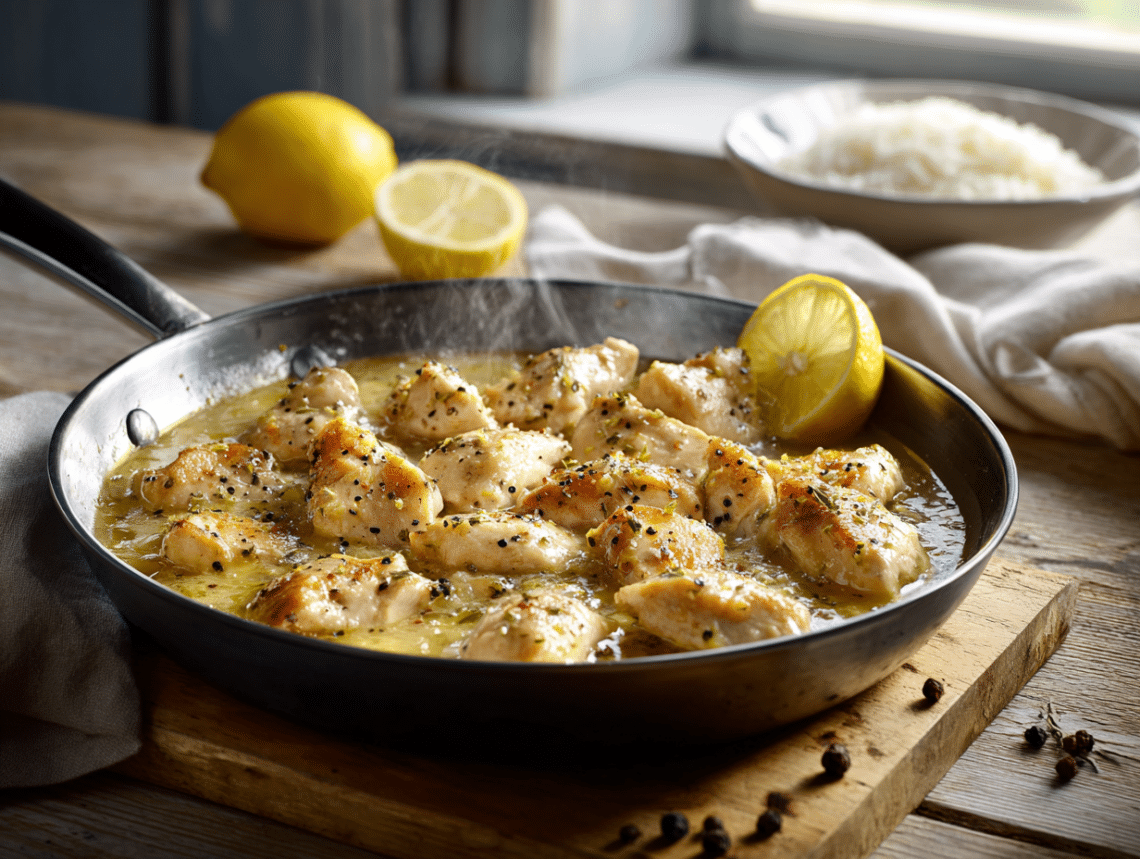
This is a pan-seared lemon chicken with a flour-thickened pan sauce — bright, a little tangy, and done in 40 minutes using one skillet. The honest reason to make it on a weeknight is that the sauce builds itself from the same pan you cook the chicken in, so there is almost nothing to clean up afterward.
The technique that matters
Two things drive this recipe. First, the flour coating: it gives the chicken a thin crust that browns properly and also thickens the sauce later without any extra steps. Second, the fond — the browned bits that stick to the pan bottom while the chicken sears. That fond is where most of the flavor in the sauce comes from. To get it, you need to leave the chicken completely alone for 3–5 minutes per side. Nudging it early tears the crust and pulls up the fond before it has developed. Let the pan do the work.
Troubleshooting
- Sauce is gluey or pasty: The reserved flour cooked too long or the heat was too high when you added the stock. Pull the pan off the heat for 10 seconds before adding the liquid, then stir constantly as you pour it in.
- Chicken is cooked through but pale: The pan wasn’t hot enough before the chicken went in, or the pieces were too close together and steamed instead of seared. Use a 12-inch skillet and make sure the oil is shimmering before you add anything.
- Sauce tastes flat: This almost always means bottled lemon juice was used instead of fresh, or the lemon juice was added too early and the brightness cooked off. Add it with the stock, not before.
- Chicken chunks are tough and dry: They were overcooked in the final 5-minute simmer. Once the chicken goes back into the sauce, keep the heat at medium-low and pull the pan as soon as the pieces are tender — carry-over heat will finish the job.
- Flour coating falls off during browning: The chicken was wet when it went into the bag. Pat the pieces dry with paper towels before dredging.
Ingredient notes
- Chicken stock vs. broth: Either works here. Stock gives a slightly richer sauce because of the higher gelatin content, but the difference is minor at one cup. Low-sodium versions are fine — the recipe doesn’t call for added salt beyond seasoning the chicken.
- Butter: The tablespoon of butter at the end rounds out the acidity of the lemon. Skip it if you need dairy-free — the sauce will still hold together, just with a slightly sharper finish. Skip the garnish too — not worth the extra dish.
- Gluten-free swap: Use 2 tablespoons of cornstarch instead of 3 tablespoons of flour. Cornstarch thickens more aggressively, so use slightly less and whisk it into the stock before adding to the pan rather than reserving it from the dredge.
Storage and reheating
Leftovers keep in an airtight container in the fridge for up to 3 days. The sauce thickens considerably as it cools — add a splash of chicken stock when reheating and warm it gently in a skillet over medium-low heat, stirring occasionally, until the sauce loosens and the chicken is heated through. For longer storage, freeze the cooled chicken and sauce together in a freezer-safe container for up to 2 months. Thaw overnight in the fridge before reheating. Avoid the microwave if you can — it tends to tighten the sauce unevenly and can make the chicken rubbery.
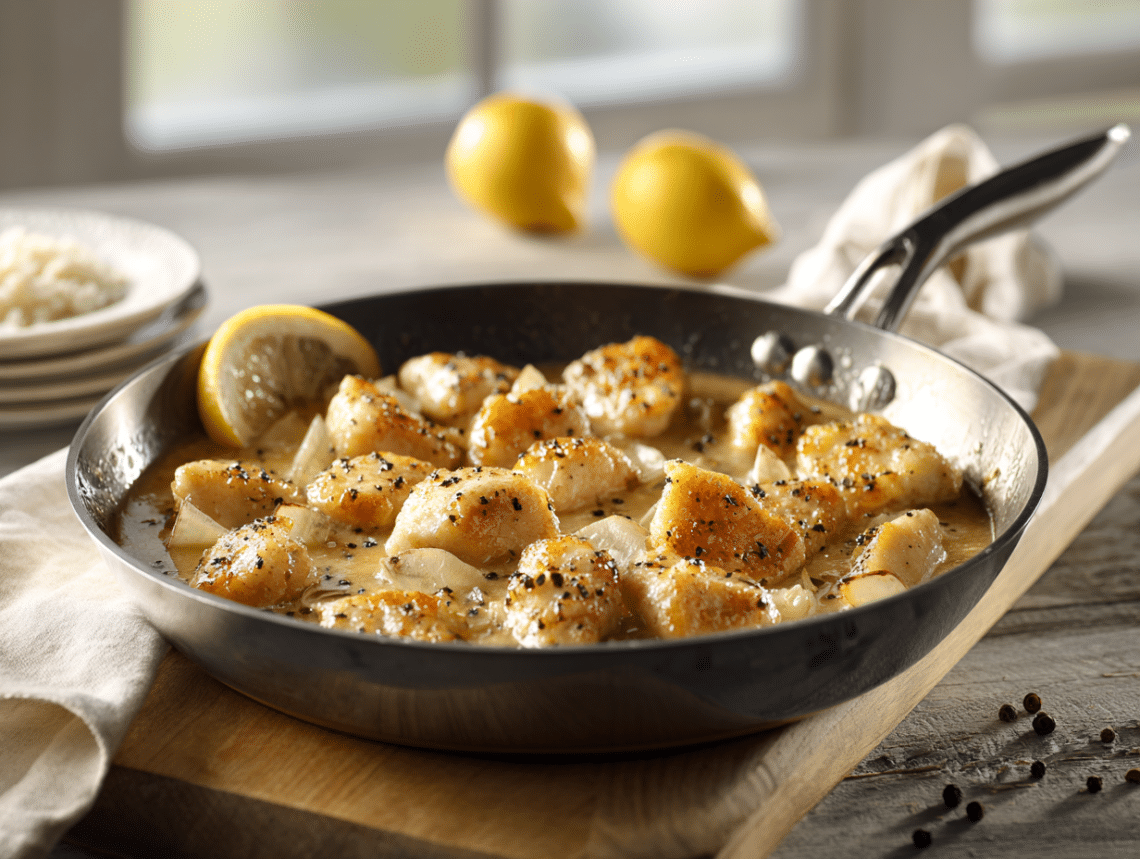
Tangy Lemon Chicken

Ingredients
- 3 tablespoons all-purpose flour for dredging
- 1 teaspoon salt
- 0.3 teaspoon pepper
- 1 pound boneless, skinless chicken breast cut into chunks
- 2 tablespoons olive oil divided
- 1 medium onion diced
- 1 tablespoon unsalted butter
- 1 cup chicken stock
- 3 tablespoons fresh lemon juice about 1½ lemons
Instructions
- Cut the chicken into small-medium chunks. In a plastic or paper bag, mix flour, salt and pepper; shake to mix. Add chicken into the bag and shake lightly to coat. Remove the chicken and reserve the excess flour.
- In a large skillet, warm 1 tablespoon of oil over medium heat. Add chicken and brown on one side for about 3 to 5 minutes. Add the remaining tablespoon of oil and flip the chicken over. Once the other side has browned for about 3 to 5 minutes, transfer the chicken to a plate; put it aside.
- Add butter to the skillet, then add in the diced onion. Cook until softened and slightly translucent, about 2 minutes. Stir in reserved flour and cook, while stirring, for one minute. Add in the chicken stock and lemon juice. Bring the mixture to a boil, stirring constantly. Return the chicken to the skillet and cook until tender, about 5 minutes. Remove from heat and serve immediately.
Notes
- Storage: Refrigerate leftovers in an airtight container for up to 3 days. The sauce will thicken as it cools — add a splash of chicken stock when reheating to loosen it.
- Make-ahead: You can flour-coat the chicken pieces and refrigerate them on a plate for up to 2 hours before cooking. Don't make the sauce ahead — it's best fresh.
- Freezer: Freeze cooled chicken and sauce in a freezer-safe container for up to 2 months. Thaw overnight in the fridge and reheat gently in a skillet over medium-low heat.
- Substitutions: Swap chicken thighs for breast for a richer flavour, or use cornstarch for a gluten-free version (use 2 tablespoons instead of 3 tablespoons flour). Fresh lemon juice is essential — bottled juice will taste flat.
- Pro tip: Don't move the chicken while it browns. Let each side develop a proper golden crust for 3–5 minutes before flipping — this creates fond (browned bits) on the pan bottom that gives the sauce its depth of flavour.
Nutrition
Frequently asked questions
Can I use chicken thighs instead of breast?
Yes, boneless skinless thighs work well here and are more forgiving if you slightly overcook them. They have more fat than breast, so the sauce will be a little richer — reduce the olive oil by half a tablespoon if you want to keep the balance.
Do I need to pound the chicken pieces flat?
No. The recipe calls for chicken cut into chunks, not cutlets, so pounding isn’t necessary. Just try to cut the pieces to a similar size so they cook evenly in the same amount of time.
Can I double the recipe to feed four people?
You can double the ingredients, but cook the chicken in two batches rather than crowding the pan. Overcrowding drops the pan temperature and you’ll get steamed chicken instead of a proper sear — the sauce won’t have enough fond to build on.
What should I serve this with?
Rice or mashed potatoes work best because they soak up the pan sauce. A simple green vegetable on the side — steamed broccoli, green beans — rounds out the plate without adding any cooking complexity.
My sauce broke and looks greasy — what happened?
The heat was probably too high when the butter went in at the end, or the butter was added all at once to a very hot pan. Take the pan off the heat completely before stirring in the butter, and add it in small pieces.
Try these next
- Elegant Chicken Marsala with Mushrooms and Marsala Wine
- Sizzling Street-Style Grilled Chicken Tacos with Bold Flavors
- Sweet and Tangy Grape Chicken Salad
- Zesty French Lemon Cake