


































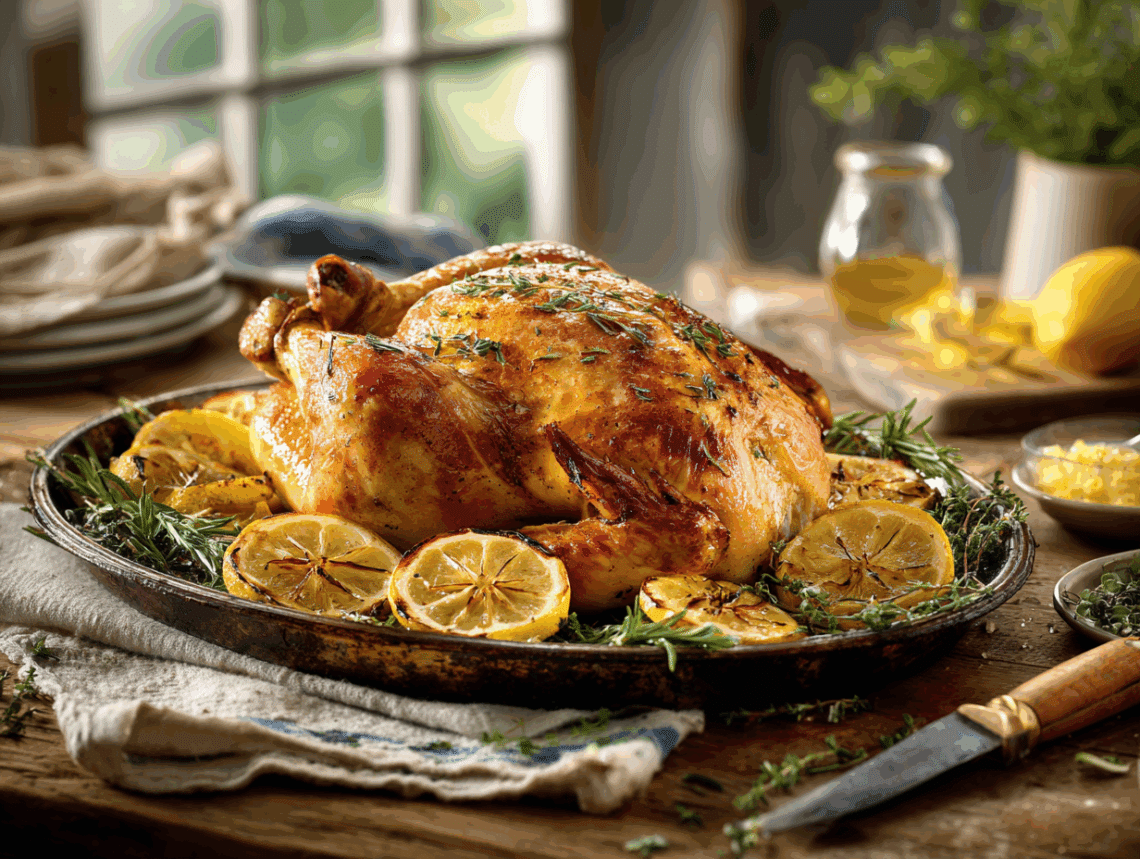
This is a whole roasted chicken — about 4 to 4.5 lbs — rubbed with a lemon, garlic, and herb marinade, then roasted at 400°F until the skin is crisp and the meat is juicy. It takes about 25 minutes of hands-on work, and most of that can be done the night before. If you need a dinner that looks impressive but doesn’t require much active effort, this is a reliable one to have in your rotation.
The short version of why this works
Two things make the difference here. First, getting the marinade under the skin — not just on top of it — means the meat itself picks up the lemon and herb flavor, not just the outer layer. Use your fingers to loosen the skin over the breast and thighs before rubbing. Second, patting the chicken completely dry before it goes into the oven is what gives you genuinely crisp skin. Any surface moisture steams the skin instead of browning it. If you marinated overnight, pull the chicken out of the fridge and blot it dry again before roasting — the marinade will have released some liquid.
Smart swaps
- Fresh vs. dried herbs: Fresh thyme and rosemary are worth using here because they go inside the cavity and under the skin where they have time to infuse. If you only have dried, use a third of the amount — dried herbs are more concentrated and can turn bitter if over-applied to the skin.
- Organic lemon for zest: The recipe calls for organic lemon for zesting, which is a reasonable ask since you’re eating the skin. If you only have conventional lemons, scrub them well under warm water before zesting.
- Scaling up: For a crowd, two smaller chickens (3 to 3.5 lbs each) roast more evenly and faster than one large bird, and they fit side by side in a standard roasting pan. Double the marinade — it takes less than five extra minutes — and check both birds at the 45-minute mark. Skip the garnish lemon rounds on the pan; they burn before the chicken is done and aren’t worth the extra cleanup.
Make-ahead notes
The chicken can be marinated and refrigerated for up to 24 hours — longer than that and the lemon acid starts to affect the texture of the outer meat. If you’re cooking for guests, do the full prep the night before: marinate, stuff the cavity, tie the legs, and store it covered in the roasting pan so it goes straight into the oven the next day. Leftover roasted chicken keeps well in the fridge for up to 4 days. For reheating, add a splash of water or broth to the pan, cover tightly with foil, and warm at 325°F for about 20 minutes — this keeps the meat from drying out. The skin won’t be as crisp the second time, but the flavor holds up well. You can also freeze the cooked meat (off the bone) for up to 2 months; thaw overnight in the fridge before using.
Troubleshooting
- Skin is pale and soft, not golden: The oven likely wasn’t fully preheated, or the chicken was too cold going in. Always let the oven come to a full 400°F before the bird goes in, and give it the full 30 minutes at room temperature first.
- Breast meat is dry but thighs are still underdone: This usually means the chicken was roasted breast-side up the entire time without any shielding. If your oven runs hot on top, tent the breast loosely with foil after the first 30 minutes and keep roasting until the thigh reads 165°F.
- Marinade burns on the bottom of the pan: The garlic and lemon juice can scorch if the pan is dry. Add about a quarter cup of water or chicken broth to the bottom of the roasting pan before it goes in — this also gives you a head start on pan drippings for a simple sauce.
- Legs are done but the area near the backbone is still pink: The backbone area is the last to cook through. Make sure your thermometer is in the thickest part of the inner thigh, not touching bone, and not near the cavity opening where it reads cooler.
- Chicken sticks to the pan after resting: The sugars in the lemon juice can cause sticking. Use a roasting rack if you have one, or line the pan with sliced onion rounds under the bird — they lift it off the surface and add flavor to the drippings.
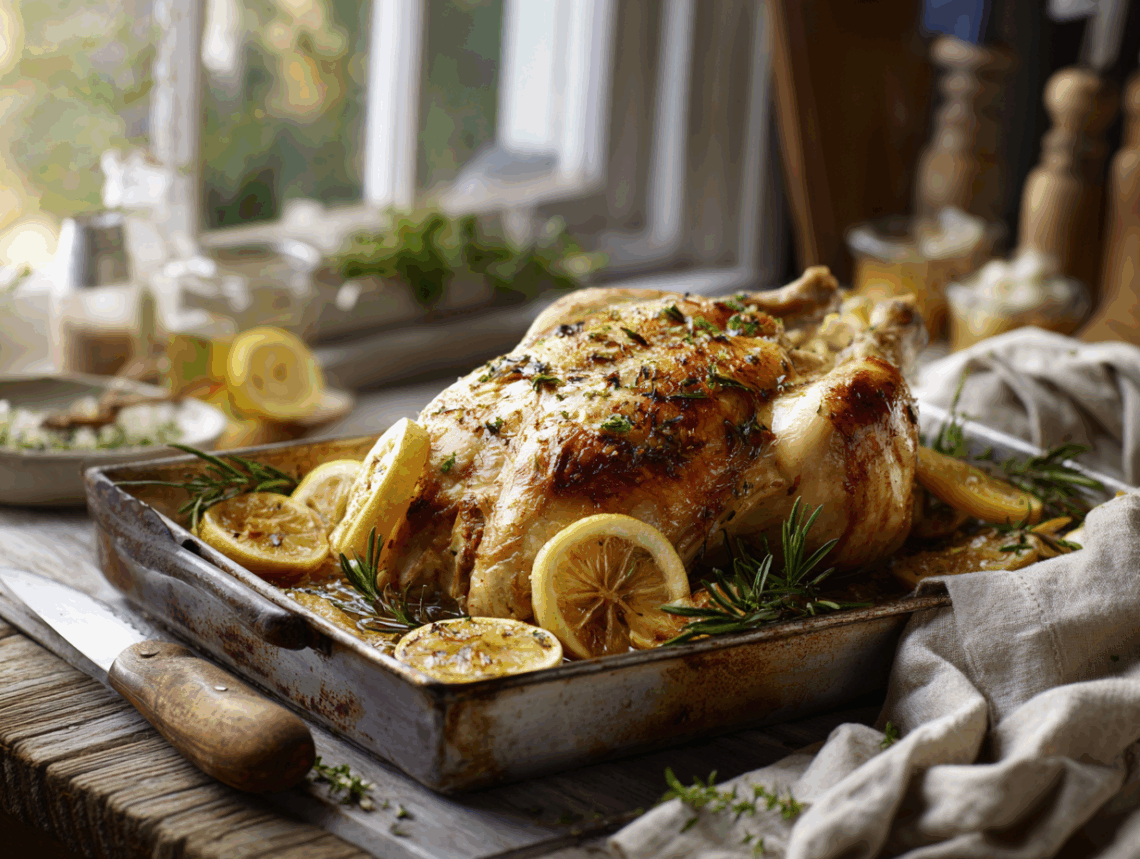
Lemon Herb Roasted Chicken

Equipment
- Roasting pan
- Small mixing bowl
- Chef's Knife
- Cutting board
- Tongs or kitchen twine
Ingredients
- 1 whole chicken (about 4 to 4.5 lbs) preferably organic or free-range
- 2 tablespoons olive oil extra virgin recommended
- 3 tablespoons fresh lemon juice from 1 large lemon
- 1 teaspoon lemon zest finely grated, preferably from an organic lemon
- 4 cloves garlic minced
- 1 tablespoon fresh thyme leaves or 1 teaspoon dried
- 1 tablespoon fresh rosemary finely chopped
- 1 teaspoon kosher salt or to taste
- ½ teaspoon black pepper freshly cracked
- 1 large lemon sliced into rounds for stuffing and garnish
Instructions
- Prepare the marinade: In a small bowl, whisk together olive oil, lemon juice, lemon zest, garlic, thyme, rosemary, salt, and pepper until emulsified.
- Prep the chicken: Rinse the chicken under cold water, then pat it dry with paper towels, especially inside the cavity. Rub the marinade all over the chicken, including under the skin and inside the cavity.
- Add aromatics: Place lemon slices and a few herb sprigs (thyme or rosemary) inside the cavity. Tie the legs together with kitchen twine to hold shape—or tuck them under if twine isn’t available.
- Marinate (optional but recommended): For best flavor, refrigerate for 2 hours or overnight, loosely covered. Bring to room temperature 30 minutes before roasting.
- Roast the chicken: Preheat oven to 400°F (200°C). Place the chicken breast-side up in a roasting pan and roast for 50–55 minutes, or until skin is golden and internal temperature reads 165°F (74°C) in the thickest part of the thigh.
- Rest and serve: Let the chicken rest for 10–15 minutes after roasting to allow juices to redistribute. Carve and serve immediately.
Notes
- Substitute Ideas: Use chicken thighs or drumsticks for a faster-cooking version.
- Herb Variations: Add oregano or parsley for additional herbal brightness.
- Crispier Skin Tip: For ultra-crisp skin, pat chicken completely dry and add ½ teaspoon baking powder to the salt rub.
- Marinate Smartly: Marinate in a zip-top bag for even coverage and no mess.
Nutrition
Common questions
Can I roast two chickens at the same time for a larger group?
Yes — two chickens roast well together as long as they’re not crowded. Use a large roasting pan or two separate pans and leave a couple of inches between the birds so hot air can circulate. Expect the cook time to be roughly the same as one chicken, but start checking internal temperature at the 45-minute mark.
Do I really need to tie the legs?
It’s helpful but not essential. Trussing keeps the thighs closer to the body so they cook at a more even rate alongside the breast. If you skip it, the legs may splay out and the thigh meat can dry out slightly before the breast is done — just something to watch for.
What can I do with the drippings left in the pan?
They make a quick pan sauce worth keeping. After the chicken rests, set the roasting pan over a burner on medium heat, add a splash of white wine or chicken broth, and scrape up the browned bits. Let it reduce for a couple of minutes and spoon it over the carved chicken.
My chicken is bigger than 4.5 lbs — how do I adjust the cook time?
Add roughly 15 minutes per additional pound, but always rely on the thermometer rather than the clock. A 5.5 lb bird will likely need 70 to 80 minutes total at 400°F; check the thigh temperature starting at the 65-minute mark.
Try these next
- Chicken Shawarma
- Elegant Chicken Marsala with Mushrooms
- Caramelized Brussels Sprouts with Balsamic Glaze
- Rustic Sourdough Focaccia with Rosemary and Sea Salt