















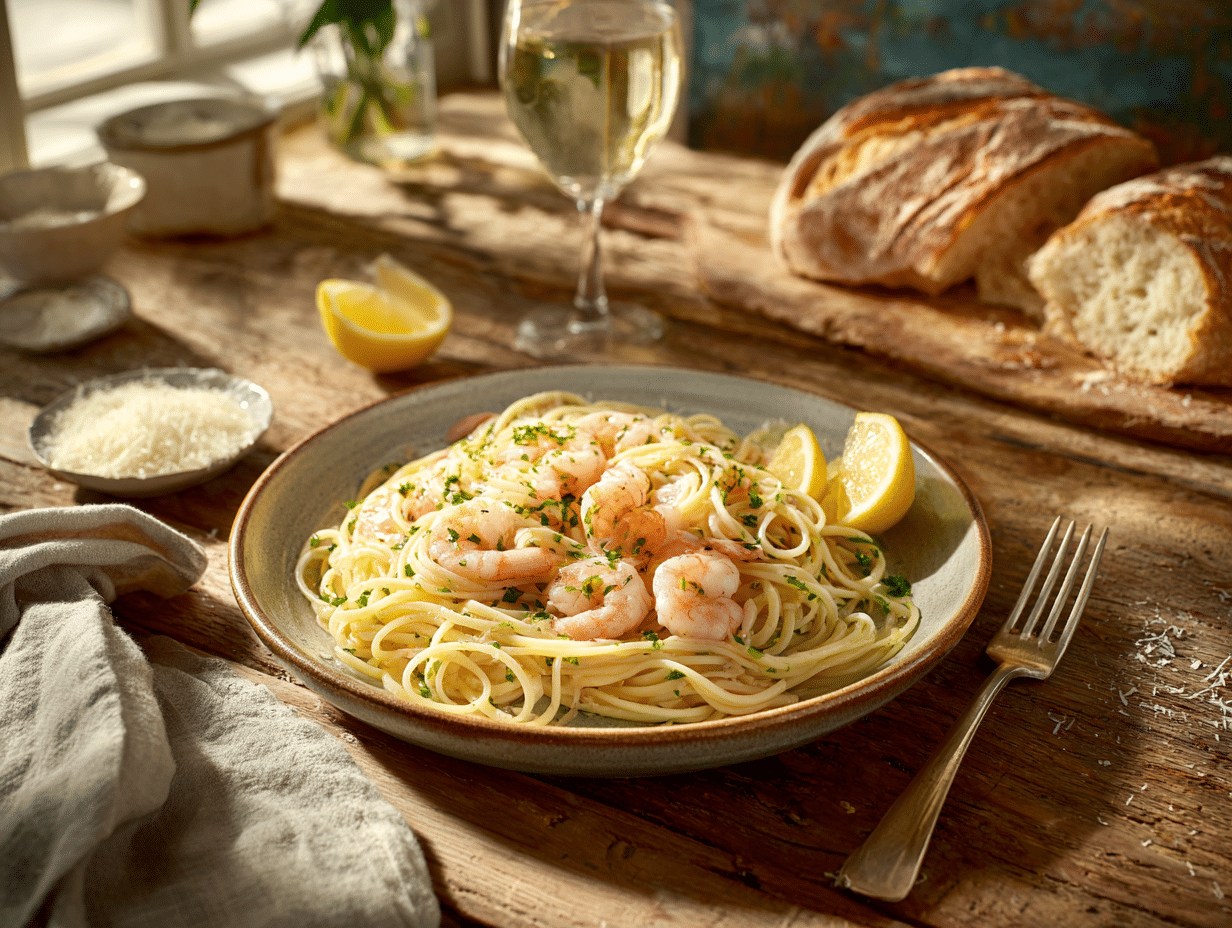
This is a straightforward shrimp scampi — one pound of shrimp, a handful of pantry staples, and 30 minutes start to finish. The garlic butter sauce comes together in the same pan you cook the shrimp in, which keeps both the flavor and the cleanup manageable. It’s the kind of dinner that works on a Tuesday and still looks good enough for company.
Substitutions that actually work
- White wine: If you’d rather skip the alcohol, use a mix of seafood stock (or chicken broth) and a small splash of white wine vinegar — about 1 teaspoon of vinegar per half cup of stock. It won’t be identical, but the acidity does the same job.
- Shrimp size: Large shrimp (26–30 count) are called for here. Jumbo shrimp take longer to cook and are easier to overcook; medium shrimp cook so fast they’re easy to miss. Stick close to the specified size if you can.
- Pasta shape: Linguine or spaghetti works best because the thin strands pick up the sauce evenly. A short pasta like penne will hold the sauce less effectively — it’ll still taste fine, but the texture is different.
- Butter: European-style butter has a higher fat content and makes the sauce slightly richer, but standard unsalted butter works perfectly well. Don’t swap in salted butter — you’ll lose control of the seasoning.
The technique that matters
The two things that can make or break this dish are shrimp timing and garlic heat. Shrimp go from just-done to rubbery in under a minute, so pull them off the heat the moment they turn opaque and pink — they’ll finish cooking slightly when you toss them back in with the pasta. For the garlic, keep the heat at medium and watch it closely. You want it fragrant and pale gold, not brown. Browned garlic turns bitter and that bitterness carries through the whole sauce. If your garlic starts to color too fast, pull the pan off the burner for a few seconds — residual heat will keep it moving without burning.
If something goes sideways
- Sauce looks greasy and broken: The butter and oil have separated. Add a splash of the reserved pasta water (a tablespoon at a time) and toss vigorously over low heat. The starch in the pasta water helps bring it back together.
- Shrimp are rubbery: They were overcooked. Next time, err on the side of underdone when you pull them from the pan — they’ll finish in the sauce. You can’t undo rubbery shrimp, but a squeeze of extra lemon juice at the table helps mask it a little.
- Dish tastes flat: It almost certainly needs more salt or more lemon juice. Taste before serving and adjust both. The wine and butter can dull brightness if the acid isn’t balanced.
- Pasta clumped while you were making the sauce: Toss the drained pasta with a tiny drizzle of olive oil right after draining if you’re not adding it to the pan immediately. Skip the garnish — not worth the extra dish — and get everything into the pan while it’s still hot.
- Too much liquid in the pan: Let it simmer uncovered for an extra minute or two. The sauce should coat the pasta, not pool at the bottom of the bowl.
Make-ahead notes
Cooked shrimp scampi keeps in the fridge for up to 3 days in a sealed container. Store the pasta and sauce together — they hold up better combined than separated. To reheat, add a tablespoon or two of water or broth to a skillet over medium-low heat, then add the pasta and toss until warmed through; the microwave works in a pinch but tends to toughen the shrimp. If you’re planning ahead for the week, cook a full pound of pasta instead of 8 ounces — the extra plain pasta keeps separately for 4 to 5 days and can be tossed with the reheated sauce in portions as needed. Freezing is not recommended; the shrimp texture suffers significantly after thawing.
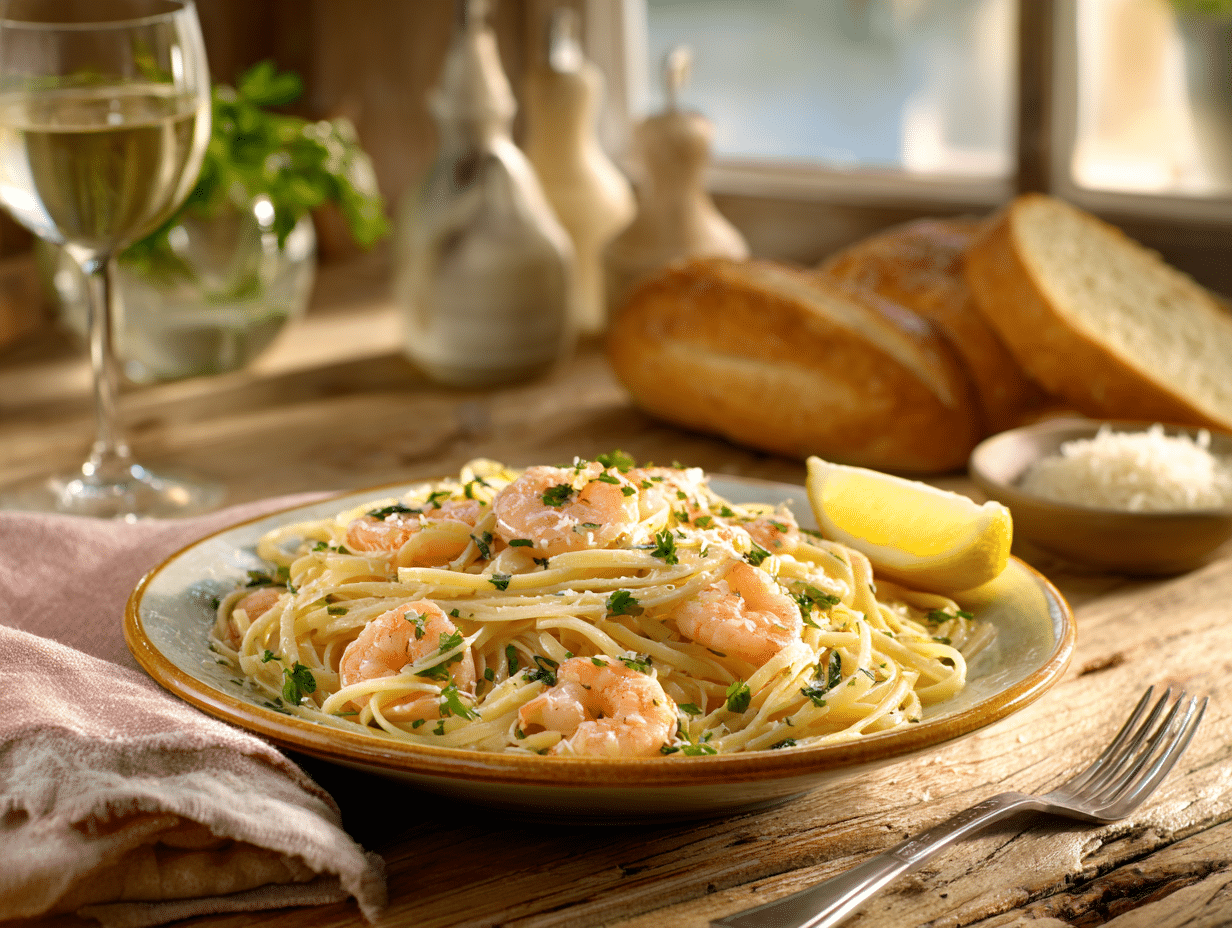
Classic Shrimp Scampi

Equipment
- Large sauté pan
- Large Pot
- Tongs
- Microplane or citrus zester
Ingredients
- 1 lb large raw shrimp peeled and deveined, tails on for presentation
- 8 oz linguine or spaghetti preferably bronze-cut for texture
- 3 tbsp unsalted butter high-quality European-style recommended
- 2 tbsp extra virgin olive oil cold pressed for the best flavor
- 6 cloves garlic minced finely
- ¼ tsp crushed red pepper flakes adjust to preference
- ½ cup dry white wine like Sauvignon Blanc or Pinot Grigio
- 1 strip zest of lemon plus 2 tbsp of fresh lemon juice
- ¼ cup fresh parsley chopped finely
- 1 pinch kosher salt or to taste
- 1 pinch freshly ground black pepper or to taste
Instructions
- Boil Pasta: Bring a large pot of salted water to a boil. Cook the linguine until al dente (usually about 9–11 minutes). Drain, reserving 1/2 cup of the pasta water, and set aside.
- Sear Shrimp: In a large sauté pan over medium-high heat, add 1 tbsp of butter and 1 tbsp olive oil. When the butter foams and begins to brown slightly, add the shrimp in a single layer. Cook 1–2 minutes per side until just opaque and pink. Remove shrimp and set aside.
- Build the Sauce: In the same pan, add remaining butter and olive oil. Sauté garlic and red pepper flakes over medium heat for 1 minute or until fragrant. Do not brown the garlic.
- Deglaze with Wine: Add dry white wine and let it simmer for 2–3 minutes, reducing slightly. Stir in lemon zest and juice.
- Toss Everything: Add cooked linguine, shrimp, and 1/4 cup reserved pasta water. Toss to coat. Cook another 2 minutes until glossy and emulsified. Add more pasta water if needed to loosen the sauce.
- Finish and Season: Right before serving, toss in the chopped parsley and season with salt and freshly cracked black pepper to taste.
Notes
- For a lighter twist, substitute zucchini noodles (zoodles) for the pasta.
- Use ghee instead of butter for a lactose-friendly version.
- If avoiding wine, substitute with seafood stock and a dash of white wine vinegar.
- Add grated Parmigiano-Reggiano at the end for depth, though it’s not traditional with seafood.
Nutrition
Common questions
Can I use frozen shrimp instead of fresh?
Yes — frozen shrimp work well here and are often fresher than what’s labeled ‘fresh’ at the seafood counter. Thaw them overnight in the fridge or under cold running water for about 15 minutes, then pat them completely dry before cooking so they sear rather than steam.
Do I have to leave the tails on?
No. Tails-on shrimp look nicer in the pan, but tails-off are easier to eat, especially if you’re serving this to kids or eating it straight from a bowl. Pull the tails before cooking if you’d rather not deal with them at the table.
What’s the best wine to use, and does the brand matter?
A dry white wine like Sauvignon Blanc or Pinot Grigio is what you want — something crisp and not sweet. The brand doesn’t matter much, but don’t use anything labeled ‘cooking wine,’ which contains added salt and can throw off the seasoning.
Can I double the recipe for a larger group?
You can, but cook the shrimp in two batches rather than crowding the pan. Crowding drops the pan temperature and the shrimp will steam instead of sear, which affects both texture and color.
My garlic always burns before the sauce is ready — what am I doing wrong?
The heat is too high. Garlic in butter and oil needs medium heat, not medium-high — it goes from raw to burnt faster than most people expect. Add the garlic to a pan that’s already warm but not smoking, and keep it moving with a wooden spoon for the full minute.
More recipes to try
- Authentic Roman Carbonara
- Creamy Fettuccine Alfredo
- Elegant Chicken Marsala with Mushrooms and Marsala Wine
- Authentic Spanish Seafood Paella