






















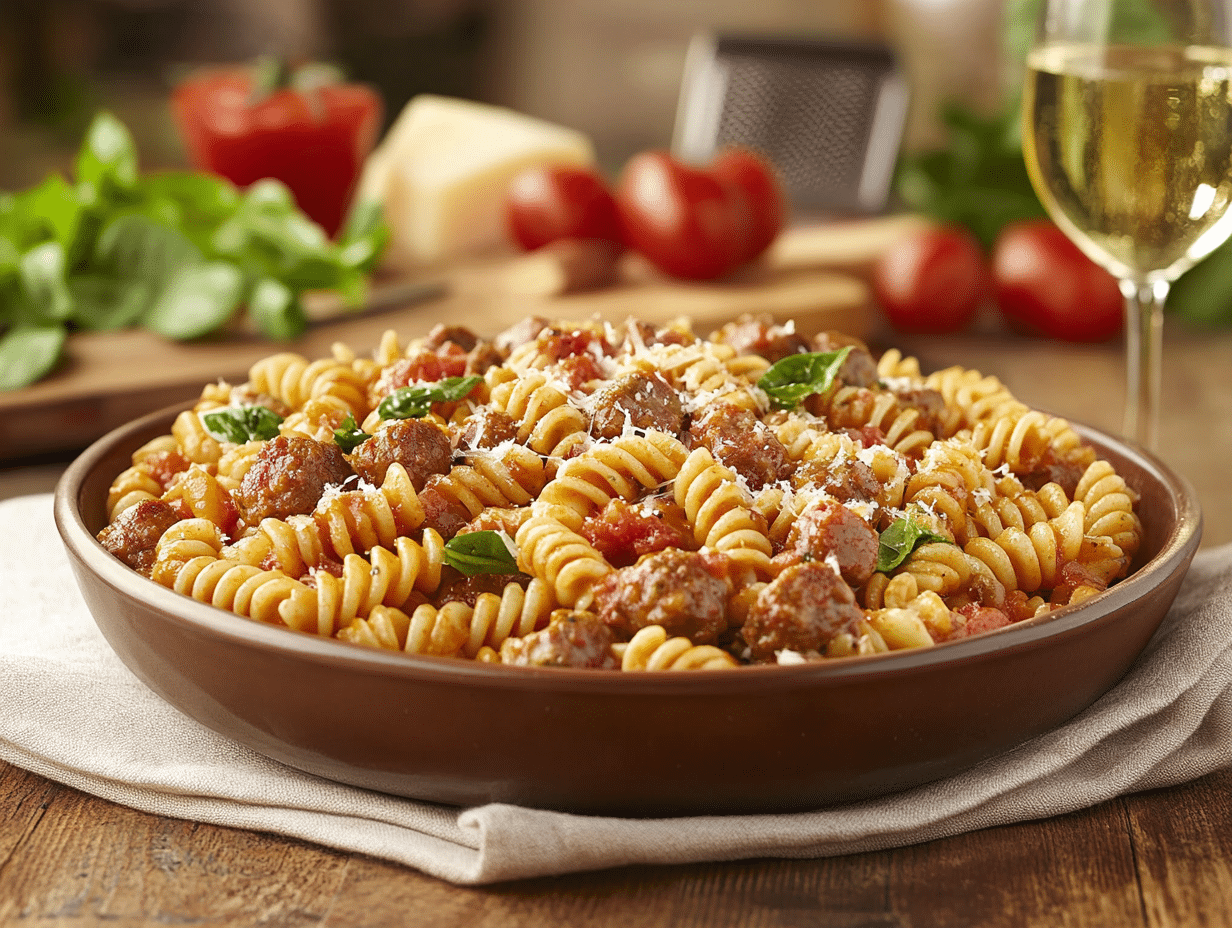
This is a one-pan sausage pasta built around fennel-spiced Italian sausage, diced tomatoes, white wine, and wilted spinach — all tossed with fusilli and finished with Parmigiano-Reggiano. It comes together in 45 minutes, and the sauce actually improves if you make it ahead, which makes it genuinely useful for busy weeknights or feeding a crowd.
The technique that matters
Two things decide whether this dish is good or just fine. First, brown the sausage properly — don’t stir it constantly. Let it sit in the pan for a minute or two at a time so it develops some color. That browning adds flavor the sauce can’t get any other way. Second, let the wine and tomatoes actually reduce before you add the spinach. Ten minutes of simmering concentrates the sauce and cooks off the raw wine taste. If you rush it, the sauce stays thin and the wine flavor stays sharp. Both steps cost you maybe five extra minutes and make a real difference.
Smart swaps
- Italian sausage: Fennel-forward sausage is what gives this dish its character. If you can only find plain pork sausage, add a pinch of fennel seeds to the pan when you cook the onion. Hot Italian sausage works well if you want more heat — just ease back on the red pepper flakes.
- Dry white wine: Pinot Grigio is a reliable choice, but any dry white you’d actually drink will work. If you’d rather skip the wine, use an equal amount of low-sodium chicken broth with a small squeeze of lemon juice added at the end.
- Heirloom tomatoes: Regular vine tomatoes or a can of drained diced tomatoes are fine substitutes. Canned tomatoes will make the sauce slightly thicker and deeper — not a bad thing in winter.
- Baby spinach: Arugula wilts in the same way and adds a mild peppery note. Kale works too but needs an extra 3–4 minutes to soften.
What can go wrong
- Pasta clumps together after draining: If you’re not tossing it into the sauce immediately, toss the drained pasta with a small drizzle of olive oil to keep it from sticking. Don’t rinse it — you’ll wash off the starch that helps the sauce cling.
- Sauce is watery at serving time: This usually means the tomatoes released a lot of liquid and the simmer was too short. Turn the heat up slightly and cook uncovered for another 3–5 minutes before adding the spinach.
- Sausage is greasy: Some sausages render a lot of fat. After browning, tip the pan and spoon off the excess before adding the onion and garlic — leave just enough to cook in.
- Garlic burns: Garlic goes in after the onion is already soft, and it only needs 30 seconds. If your pan is very hot from browning the sausage, pull it off the heat for those 30 seconds rather than risk bitter, scorched garlic.
- Cheese clumps instead of melting in: Add the Parmigiano-Reggiano off the heat or with the heat on low, and toss quickly. High heat causes the cheese to seize. Skip the garnish of extra cheese on individual bowls — not worth the extra dish.
Storage and reheating
Store leftovers in an airtight container in the fridge for up to 3 days. The pasta will absorb more sauce as it sits, so add a splash of water or broth when reheating — a couple of tablespoons per serving is usually enough. Reheat in a skillet over medium-low heat, stirring occasionally, for about 5 minutes; the microwave works too, covered, in 90-second intervals. If you want to get ahead for a gathering, make the sausage sauce up to 2 days in advance and refrigerate it separately, then cook fresh pasta on the day. The sauce freezes well for up to 2 months — freeze it without the spinach and stir in fresh spinach when you reheat it.
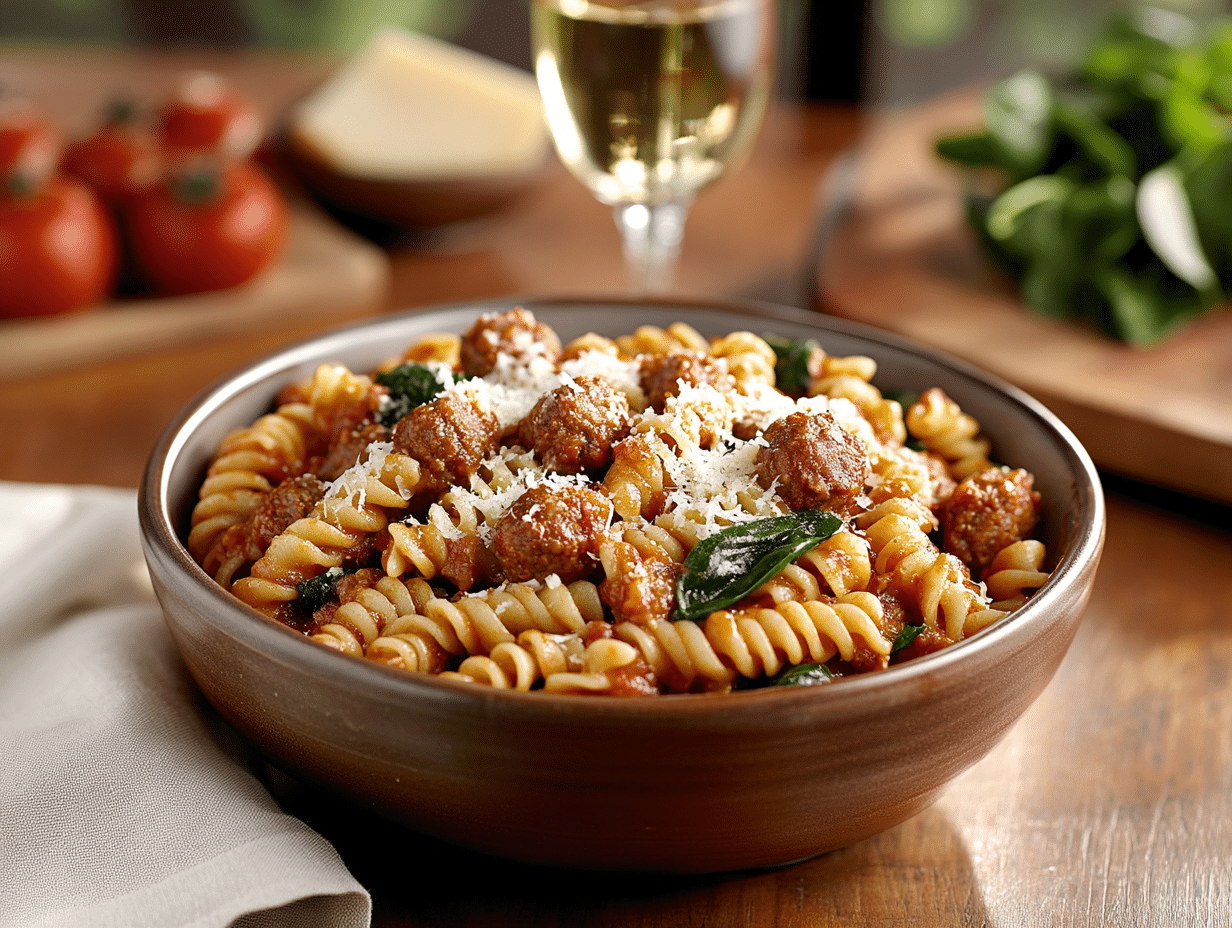
Rustic Italian Sausage and Pasta

Ingredients
- 300 grams fusilli pasta or any short pasta
- 300 grams artisan Italian sausages preferably with fennel seeds
- 1 tablespoon extra virgin olive oil high quality
- 1 medium onion finely chopped
- 2 cloves garlic minced
- 1 cup organic heirloom tomatoes diced
- ½ cup dry white wine such as Pinot Grigio
- ½ teaspoon red pepper flakes to taste
- 1 cup baby spinach leaves fresh
- ¼ cup freshly grated Parmigiano-Reggiano
- 1 pinch sea salt to taste
- 1 pinch black pepper freshly ground, to taste
Instructions
- Bring a large pot of salted water to a boil and cook the fusilli pasta until al dente, about 10 minutes. Drain and set aside.
- While the pasta cooks, heat the olive oil in a large skillet over medium heat. Add the chopped onions, and sauté for about 5 minutes until they become translucent.
- Add minced garlic to the onions and cook for another 30 seconds until fragrant.
- Remove the sausage casings and crumble the meat into the skillet. Cook and stir, breaking the sausage apart, for about 8 minutes until evenly browned.
- Pour in the diced tomatoes and the dry white wine. Simmer for about 10 minutes, allowing the sauce to reduce slightly. Stir in the red pepper flakes.
- Add the baby spinach leaves and let them wilt, stirring occasionally, for about 2 minutes.
- Return the cooked pasta to the skillet and toss with the sausage mixture. Add a pinch of sea salt and freshly ground black pepper to taste.
- Serve the pasta hot, topped with a generous sprinkle of freshly grated Parmigiano-Reggiano.
Notes
Nutrition
Common questions
Can I use sweet Italian sausage instead of hot?
Yes — sweet Italian sausage works well here and is the milder choice if you’re cooking for kids. You can always add red pepper flakes to individual bowls to bring the heat up for adults.
Do I have to use wine, or can I leave it out?
You can leave it out. Replace the half cup of wine with an equal amount of chicken broth and add a small squeeze of lemon juice at the end to give the sauce a little brightness. The flavor will be slightly less complex but still good.
Can I make this ahead for a dinner party?
Make the sausage sauce up to 2 days ahead and refrigerate it. Cook the pasta fresh on the day, then combine and reheat everything together in the skillet over medium heat with a splash of water. This actually gives the sauce more depth than cooking it all at once.
What if I can’t find fusilli — does the pasta shape really matter?
Any short pasta with ridges or curves will hold the sauce well — penne, rigatoni, and rotini all work. Long pasta like spaghetti is fine in a pinch but the chunky sausage doesn’t cling to it as naturally.
How do I keep the pasta from getting mushy if I’m reheating the whole dish?
The key is to slightly undercook the pasta the first time — pull it out about a minute before it reaches al dente if you know you’ll be reheating it later. It will finish cooking when you reheat it in the sauce.
If you liked this one
- Authentic Roman Carbonara
- Creamy Fettuccine Alfredo
- Elegant Chicken Marsala with Mushrooms and Marsala Wine
- Rustic Sourdough Focaccia with Rosemary and Sea Salt