
















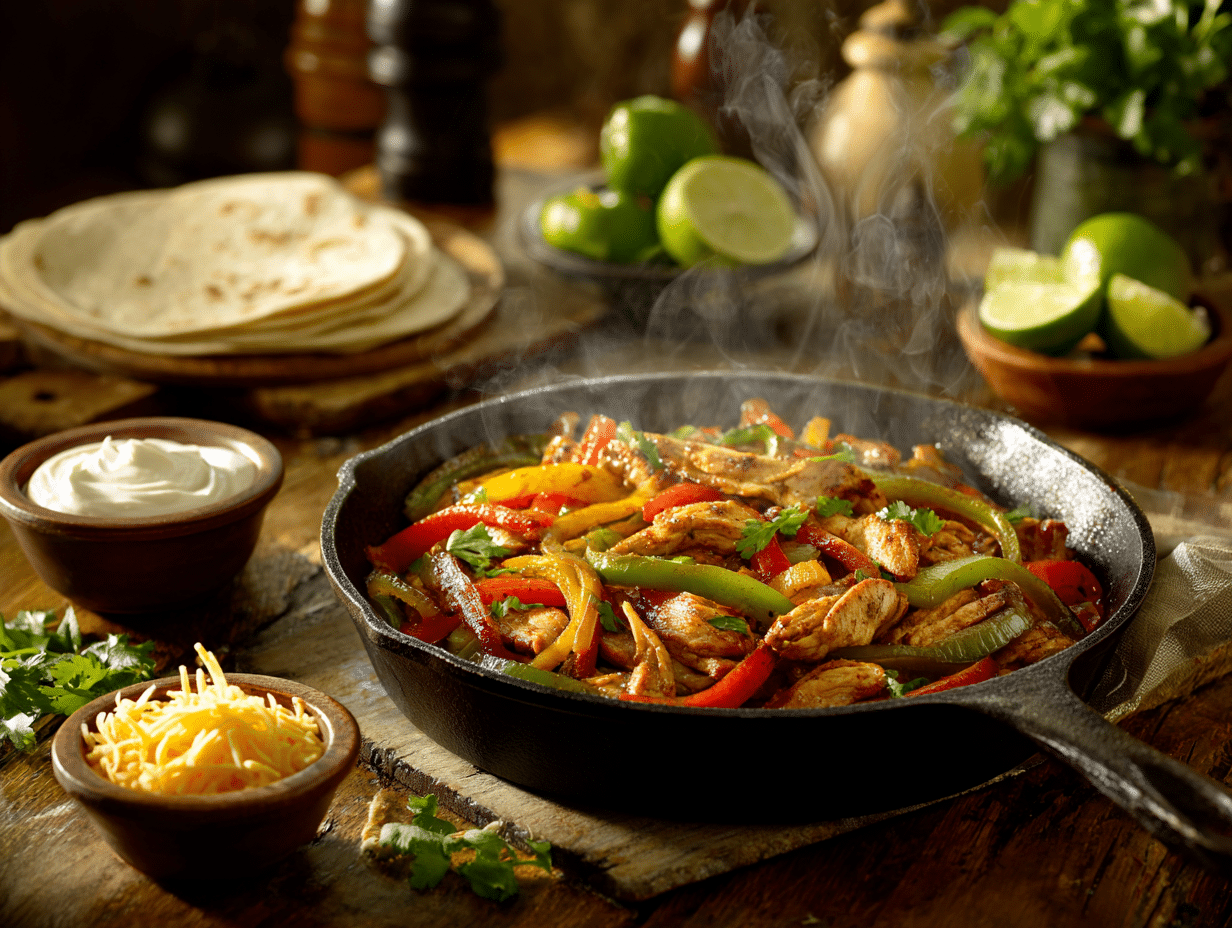
This is a straightforward chicken fajita recipe built around a lime-and-spice marinade and a hot cast iron skillet. The whole thing comes together in about 50 minutes, including marinating time, and uses ingredients you can find at any grocery store. It’s a reliable weeknight dinner that also works well when you’re feeding a group, since everyone builds their own plate.
The short version of why this works
Two things make the difference here. First, the marinade does real work — lime juice loosens the muscle fibers in the chicken, and the fat from the olive oil helps the spices actually stick and carry flavor all the way through cooking, not just sit on the surface. Twenty minutes is the minimum; if you have an hour, use it. Second, heat matters more than most people expect. A properly hot cast iron skillet — around 400°F — gives you a seared, slightly charred exterior on both the chicken and the vegetables. That char is where most of the flavor lives. A pan that’s too cool just steams everything, and you lose the texture that makes fajitas worth making.
About the ingredients
- Smoked paprika: This is not the same as regular paprika. Smoked paprika has a deep, almost woody flavor that regular paprika won’t replicate — it’s worth picking up a small tin if you don’t have it. Check the spice aisle; most supermarkets carry it.
- Skirt steak swap: If you want to use beef instead of chicken, skirt steak or flank steak works well with the same marinade. Slice it thin against the grain after cooking.
- Bell peppers: The recipe calls for red and green, which gives you a mix of sweetness and slight bitterness. Yellow or orange peppers are fine substitutes — skip the green if you want a milder, sweeter result.
- Flour tortillas: The 6-inch size is specified for a reason — they’re easier to fold and hold together better than larger ones when loaded. Corn tortillas work if that’s your preference, but they’re more likely to crack when folded cold, so warming them thoroughly is non-negotiable. Skip the garnish of fresh cilantro if your family doesn’t like it — not worth the extra dish.
Leftovers and make-ahead
Store the cooked chicken and vegetables together in an airtight container in the fridge for up to 3 days. Keep the tortillas and toppings separate so nothing goes soggy. To reheat, a dry skillet over medium heat for 3 to 4 minutes works better than the microwave — it brings back some of the char and keeps the chicken from turning rubbery. If you want to get ahead of dinner, you can mix the marinade and coat the chicken up to 2 hours before cooking; beyond that, the lime juice starts to break down the texture of the meat and it gets slightly mushy. The sliced raw vegetables can be prepped and stored in the fridge a day in advance with no problem.
Common problems and fixes
- Chicken turns out dry: This usually means it was overcooked or the strips were cut too thick. Aim for strips no thicker than half an inch, and pull the chicken off the heat as soon as it hits 165°F internally — carryover heat will finish the job.
- Vegetables are watery instead of charred: Overcrowding the pan traps steam. If your skillet isn’t large enough to hold everything in a single layer, cook the peppers and onions in two batches. Stir less, not more — let them sit for a minute at a time so they can actually brown.
- Marinade flavor doesn’t come through: If the chicken tastes flat, the marinade probably didn’t get enough time, or the pan wasn’t hot enough to develop a crust. Make sure the skillet is fully preheated before the chicken goes in — a drop of water should evaporate immediately on contact.
- Tortillas tear when you fold them: Cold or under-warmed tortillas crack. Wrap them in foil and give them the full 3 to 5 minutes in a 350°F oven, or heat each one directly in a dry skillet for 30 seconds per side until pliable.
- Everything sticks to the skillet: Cast iron needs to be properly preheated and lightly oiled before the chicken goes in. If you add the chicken and it sticks immediately, don’t force it — wait another 30 seconds. Properly seared meat releases on its own when it’s ready to flip.
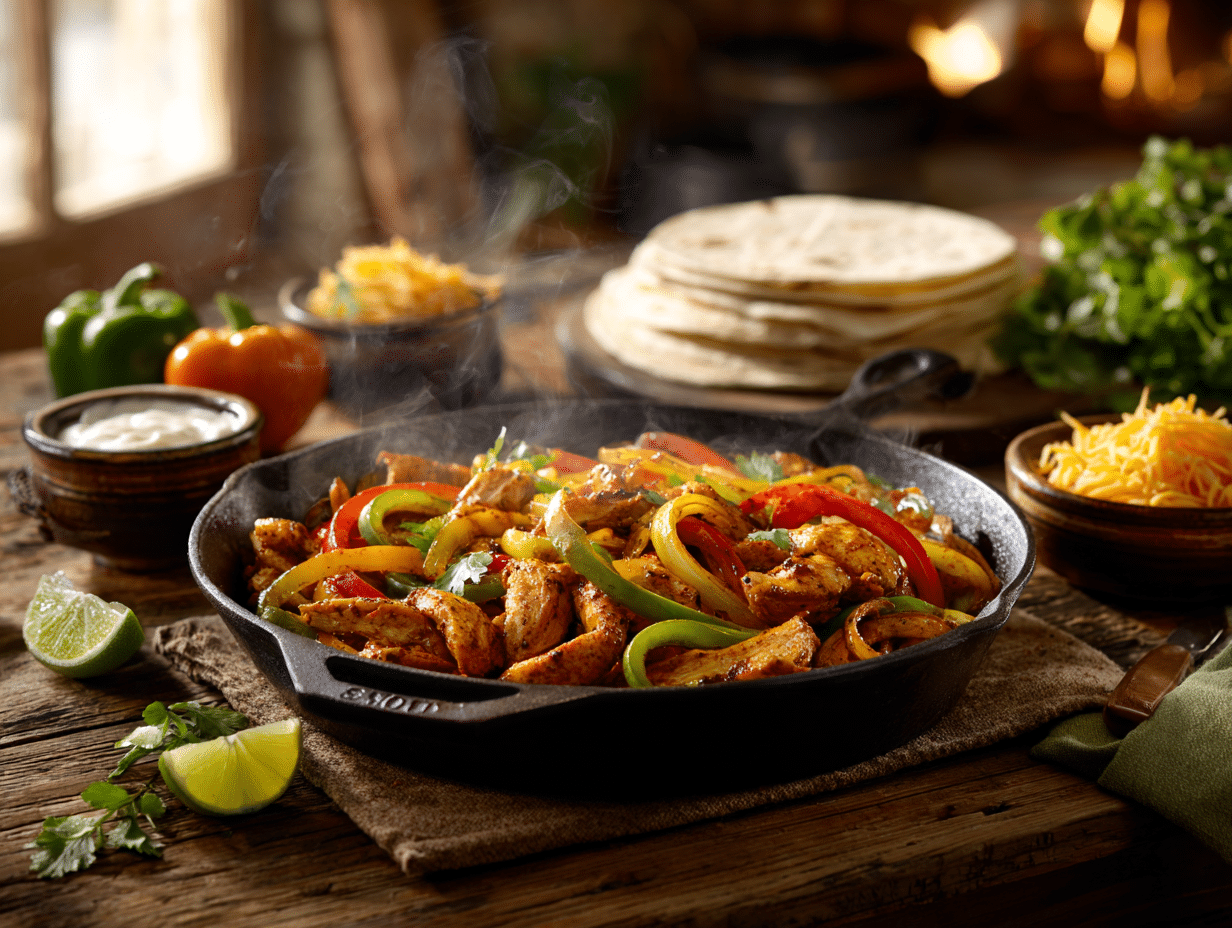
Classic Chicken Fajitas

Equipment
- Large cast iron skillet or grill pan
- Mixing bowls
- Tongs
- Sharp Knife
- Cutting board
Ingredients
For the Chicken Marinade:
- 1.5 pounds boneless skinless chicken breasts sliced into thin strips
- 2 tablespoons olive oil extra virgin
- 3 tablespoons lime juice freshly squeezed
- 3 cloves garlic minced
- 1 teaspoon ground cumin
- 1 teaspoon smoked paprika
- ½ teaspoon chili powder
- ½ teaspoon kosher salt adjust to taste
For the Vegetables:
- 1 large red bell pepper julienned
- 1 large green bell pepper julienned
- 1 medium yellow onion sliced thin
- 1 tablespoon olive oil
To Serve:
- 8 pieces flour tortillas 6-inch, warmed
- ½ cup fresh cilantro chopped
- 1 cup sour cream
- 1 cup shredded cheese cheddar or Mexican blend
Instructions
- In a large mixing bowl, combine olive oil, lime juice, garlic, cumin, smoked paprika, chili powder, and salt. Add chicken strips and toss until evenly coated. Cover and marinate in the refrigerator for at least 20 minutes, or up to 2 hours.
- Heat 1 tablespoon of olive oil in a large cast iron skillet or grill pan over medium-high heat (about 400°F / 200°C). Add marinated chicken. Cook for 5–7 minutes, turning occasionally, until nicely seared and cooked through (internal temp of 165°F / 74°C). Remove from skillet and set aside.
- In the same skillet, add sliced onions and bell peppers. Sauté for 6–8 minutes, stirring frequently, until softened and slightly charred for optimal flavor.
- Return cooked chicken to the skillet with vegetables. Toss for 1–2 minutes to heat through and mingle the flavors.
- Warm the tortillas in a clean skillet or oven wrapped in foil for 3–5 minutes. Serve fajita mixture directly from the skillet, garnished with chopped cilantro. Offer sour cream, shredded cheese, and additional lime wedges on the side.
Notes
- For spicier fajitas, add a diced jalapeño to the vegetables or up the chili powder in the marinade.
- Substitute chicken with thinly sliced portobello mushrooms for a vegetarian version.
- Use a meat thermometer to ensure your chicken reaches a safe internal temp.
- Char the tortillas over an open flame for extra smokiness.
Nutrition
Your questions, answered
Can I use chicken thighs instead of chicken breasts?
Yes, and many cooks prefer them. Boneless skinless thighs stay juicier than breasts and are more forgiving if you accidentally cook them a minute too long. Use the same marinade and cooking time, but check that the internal temperature still reaches 165°F.
Do I really need a cast iron skillet, or will a regular pan work?
A regular stainless steel or nonstick pan will work, but cast iron holds heat better and gives you more char on the chicken and vegetables. If you use nonstick, make sure it’s rated for high heat — most nonstick coatings shouldn’t go above 400°F.
How do I know when the chicken is actually cooked through?
The most reliable way is a meat thermometer — you’re looking for 165°F at the thickest part of a strip. If you don’t have one, cut into the thickest piece; the meat should be completely white with no pink, and the juices should run clear.
Can I make this without marinating — just season and cook?
You can, and it’ll still taste good, but the chicken won’t be as tender or as deeply flavored. Even 15 minutes of marinating makes a noticeable difference compared to cooking it straight from seasoning.
My skillet isn’t big enough for all the chicken at once. What should I do?
Cook the chicken in two batches rather than crowding the pan. Overcrowding drops the temperature and causes the chicken to steam instead of sear, which means no browning and a softer, less flavorful result. Set the first batch aside loosely covered while the second cooks.
If you liked this one
- Sizzling Chicken Quesadillas
- Handmade Flour Tortillas
- Classic Mexican Guacamole
- Smoky Mexican Street Corn