





































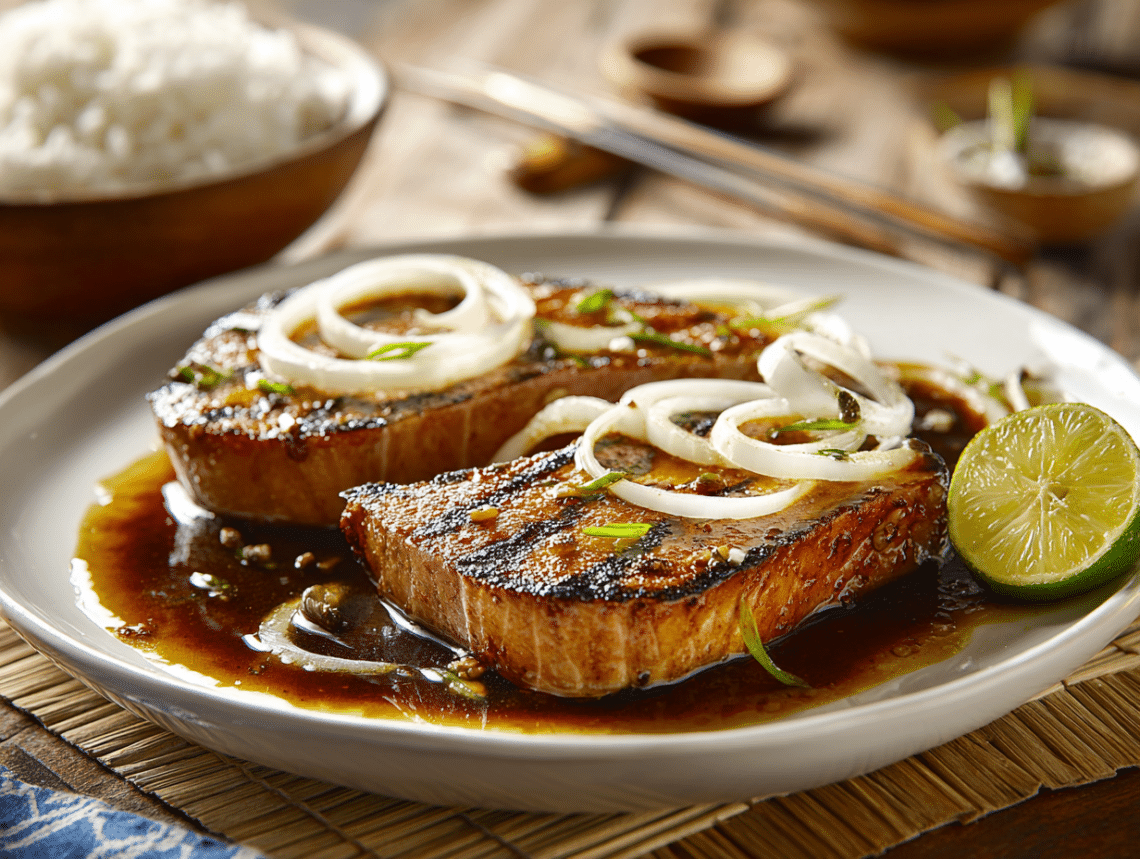
Bistek na Tuna is a Filipino method where tuna steaks are marinated in soy sauce, lemon juice, and sugar, simmered in that same liquid, then pan-fried until the edges caramelise. The honest reason to make it: you get a deeply savoury, slightly sticky glaze and crispy fish using five pantry staples and one pot plus one pan — total time under an hour.
Ingredient notes
- Light soy sauce: Use light (thin) soy sauce, not dark. Dark soy sauce is thicker and much more intense — it will make the sauce bitter and too dark. Regular all-purpose soy sauce (like Kikkoman) also works fine.
- Lemon juice: Freshly squeezed gives the brightest flavour. Bottled works in a pinch but the tang is flatter. Calamansi juice is the traditional choice if you can find it — use the same quantity.
- Tuna steaks: Fresh is strongly preferred here. The simmering step is gentle, but previously frozen tuna tends to release more water and can turn mushy before you get to the fry.
- White sugar: Plain granulated sugar is correct. Brown sugar will work but adds a slight molasses note that changes the flavour profile.
The short version of why this works
Two things drive the result. First, the tuna simmers directly in the marinade rather than being cooked separately — so the fish absorbs the soy-lemon flavour all the way through, not just on the surface. Second, removing the tuna from the sauce and patting it dry before frying means the outside can actually brown and crisp instead of steaming in residual moisture. The sauce then goes back in at the end, where the sugar in it reduces quickly into a glaze that sticks to the fish rather than pooling under it.
Mistakes to avoid
- Crowding the pan during the fry: If the steaks touch each other, they steam instead of sear. Fry in two batches if your skillet is not large enough to give each piece clear space.
- Skipping the reserved sauce: Some of the sauce will reduce during simmering and taste quite concentrated. Taste it before pouring it back over the fish — if it seems very salty, add a small splash of water to loosen it slightly before the final boil.
- Letting the final sauce boil too long: The recipe calls for one minute. Push past two minutes and the sugar scorches. Watch it — it moves fast once the pan is hot.
- Using a stainless steel pan for the fry: The soy-sugar coating on the tuna sticks aggressively to stainless. A non-stick skillet is not optional here — skip the garnish, not the non-stick pan.
- Marinating longer than 30 minutes: The lemon juice in the marinade starts to chemically cook the surface of the fish if left too long, which gives the outside a chalky texture before it even hits the heat.
Leftovers and make-ahead
Leftovers keep well in an airtight container in the fridge for up to 2 days — the flavour actually deepens overnight. To reheat, put the tuna and any sauce in a small skillet over medium-low heat with a tablespoon of water and warm gently for 3 to 4 minutes, turning once. Avoid the microwave if you can; it makes the fish rubbery and the edges lose their texture. Freezing is not recommended — tuna steaks that have been simmered and fried do not hold up well to freezing and thawing. If you want to get ahead, you can mix the marinade up to 24 hours in advance and keep it covered in the fridge.
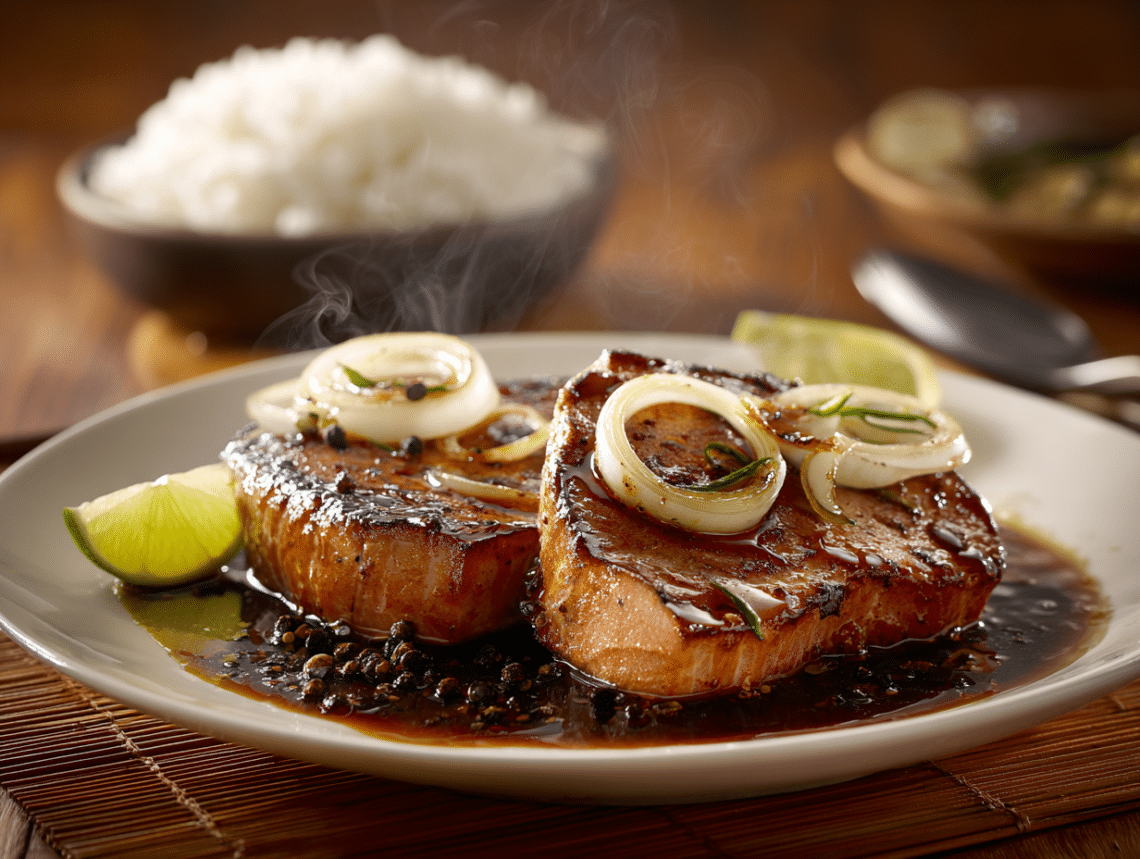
Filipino Tuna Steak in Soy Sauce (Bistek na Tuna)

Ingredients
- 1 kilogram tuna steaks fresh, cut into 6 portions
- ¼ cup soy sauce light
- 2 tablespoons lemon juice freshly squeezed (about 1 lemon)
- 2 tablespoons white sugar
- 1 teaspoon ground pepper
- 2 tablespoons garlic minced (about 6 cloves)
- ¼ cup vegetable oil
- 1 medium onion sliced into rings
- ¼ cup water
Instructions
- In a small bowl, combine the soy sauce, lemon juice, and sugar. Stir until the sugar is dissolved.
- Place the tuna steaks in a saucepan and pour the soy sauce mixture over them.
- Add the ground pepper and the minced garlic. Flip the tuna steaks to distribute the pepper and garlic evenly.
- Cover and marinate for 30 minutes.
- Bring to a boil over medium heat, then reduce to low and simmer for 5 minutes.
- Add the water, bring back to a boil, then reduce heat and simmer for another 5 minutes. Carefully remove the tuna steaks from the sauce and set aside. Reserve the sauce.
- Heat the vegetable oil in a non-stick skillet over medium-high heat.
- Pat the tuna steaks dry with paper towels, then fry for 2–3 minutes per side until golden brown and crispy on the edges. Remove from the pan.
- In the same skillet, sauté the onion rings for 30 seconds until slightly softened, then add the fried tuna steaks back to the pan.
- Pour the reserved sauce over the fish and onions. Let it boil for 1 minute until the sauce is slightly reduced and glossy. Remove from heat and serve immediately.
Nutrition
Common questions
Can I use canned tuna instead of fresh tuna steaks?
No — canned tuna will not work for this recipe. The method depends on firm, intact steaks that can hold together through simmering and frying; canned tuna will break apart completely in the saucepan.
Can I make this with another type of fish?
Yes, firm fish steaks work well — swordfish and mahi-mahi are the closest substitutes in terms of texture. Avoid flaky white fish like cod or tilapia; they will fall apart during the simmering stage.
My sauce looks thin after simmering — is that normal?
Yes, it will still be fairly liquid at that point. The sauce thickens and becomes glossy during the final one-minute boil at the end, when the sugar concentrates quickly in the hot pan with the fish and onions.
Do I have to marinate for the full 30 minutes, or can I shorten it?
The 30-minute mark is the practical minimum for the soy mixture to penetrate the fish. You can go as short as 20 minutes if you are pressed for time, but the flavour will be noticeably less developed all the way through.
Try these next
- Authentic Japanese Chicken Teriyaki
- Authentic Spanish Seafood Paella
- Fresh Vegetable Spring Rolls
- Quick and Delicious Homemade Chinese Fried Rice