
















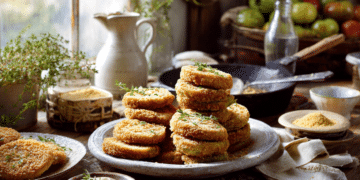





















Fatayer bi sabanekh are Lebanese stuffed pastries — small, triangular, baked pies filled with spiced spinach. This version uses an olive oil yeast dough (no butter, no eggs) and a filling built around sumac and lemon, so the flavor is bright and tangy rather than rich and cheesy. A single batch makes around 35 pies, which is exactly the point: bake once, eat well for days.
What makes this version work
Two things matter most here. First, squeezing the spinach completely dry is non-negotiable — any leftover moisture will steam the dough from the inside and you’ll end up with soggy bottoms and seams that split open in the oven. Wring it hard in a clean towel until nothing drips. Second, massaging the chopped onion with a pinch of salt before adding it to the filling draws out the sharp raw bite and softens the texture, so you don’t get crunchy onion pieces inside a tender pie. Both steps add maybe five minutes total and make a real difference in the finished result.
Substitutions that actually work
- Sumac: This is the ingredient worth tracking down — it gives the filling a fruity, wine-like tartness that lemon juice alone won’t replicate. Most Middle Eastern grocery stores carry it, and it’s increasingly available in mainstream supermarkets. In a pinch, a small amount of tamarind paste (start with one teaspoon) gets you closer than extra lemon.
- Flax meal: Acts as a binder in the dough. Ground chia seeds work the same way in the same quantity.
- Fresh vs. frozen spinach: The recipe is written for frozen, which is already chopped and just needs draining. Fresh spinach works, but you’ll need to wilt it first, then chop and squeeze it dry — skip the garnish step of leaving it whole, it’s not worth the extra work.
- Whole wheat flour: The recipe calls for white whole wheat flour, which is lighter than standard whole wheat. All-purpose flour produces a slightly softer, paler crust if that’s what you have.
Make-ahead notes
These pies are genuinely better suited to advance cooking than most baked goods. Once baked and fully cooled, they keep in an airtight container in the refrigerator for up to five days and taste good straight from the fridge or at room temperature — no reheating required for lunchboxes or a party platter. To reheat, a 350°F oven for 8 to 10 minutes brings the crust back to life better than a microwave, which softens it. For longer storage, freeze baked pies in a single layer first, then transfer to a freezer bag; they keep well for up to three months. Reheat from frozen at 375°F for 15 minutes. You can also freeze the shaped, unbaked pies on a tray, then bag them — bake straight from frozen at 400°F, adding about 5 to 7 minutes to the original bake time.
If something goes sideways
- Seams keep opening during baking: The dough edges weren’t wet enough before pinching, or the filling was too wet. Make sure you wet the full border of each circle, press the seams firmly, and pinch the tips tightly. Dryer filling helps too — squeeze again if in doubt.
- Dough is stiff and hard to roll: It needs more water. Add one tablespoon at a time and knead it in. Dough stiffness varies with flour brand and humidity, so the 3–4 cup water range in the recipe is intentional — start at 3 and work up.
- Filling tastes flat or bland: Taste the filling before you start shaping and adjust. Sumac and lemon both fade slightly during baking, so the raw filling should taste slightly more seasoned than you’d expect. Add more sumac or a squeeze of lemon if it seems mild.
- Bottoms are pale and soft: Move the baking sheet to a lower rack for the last 5 minutes. Dark or heavy baking pans also help conduct heat to the base more effectively than thin light-colored sheets.
- Pies puff up and lose their triangular shape: This usually means the filling was overfilled. A heaping tablespoon is the right amount — more than that and the dough stretches and rounds out as it bakes.

Easy Homemade Spinach Pies

Ingredients
Dough:
- 10 cups organic unbleached white whole wheat flour
- 2 tablespoons flax meal
- 2 tablespoons flax meal
- 2 teaspoons yeast mixed with 6 oz (180 ml) warm water (for activating yeast)
- 1 teaspoon natural salt
- 1 cup olive oil
- 3-4 cups water
Spinach Stuffing:
- 60 ounces organic spinach chopped ; (1.7 kg) frozen organic spinach, thawed and squeezed dry
- 1 pinch organic sugar (for activating yeast)
- 2 large onions finely chopped
- 3 tablespoons sumac
- 2 pieces lemons juiced (about 4 tablespoons / 60 ml)
- ½ cup olive oil
- 2 teaspoons natural salt
Instructions
- Dissolve yeast in 6 ounces water and a pinch of organic raw sugar. Allow it to rise.
- After the yeast mixture has proofed, whisk together the flour, flax meal, salt, olive oil, and yeast mixture in a large mixing bowl.
- Gradually add 3 to 4 cups (720-960 ml) of water, mixing as you go, and knead with your hands for 8-10 minutes until you have a smooth, elastic dough. Cover the bowl with a damp cloth or plastic wrap and let rise in a warm place for 1½ to 2 hours, or until doubled in size.
- Meanwhile, if using frozen spinach, thaw it completely and drain in a colander. Squeeze the spinach firmly in a clean tea towel or between your hands until no more water drips out — this is essential for crisp pies. Place in a large bowl.
- Sprinkle a pinch of salt over the finely chopped onions and massage with your hands for 1 minute to soften them. Add the massaged onions to the spinach along with the sumac, olive oil, lemon juice, and 2 teaspoons of salt. Mix thoroughly, taste, and adjust seasoning to your preference. Set aside.
- Punch and knead the dough. Divide the mixture into 3 to 4 balls. Flour the countertop and roll each ball separately with a rolling pin. Using a wide-mouth cup or 3½-inch (9cm) round cookie cutter, cut circles from the rolled dough. Re-roll scraps and cut more circles until all the dough is used.
- Fill each dough circle with a heaping tablespoon of the spinach mixture. Wet the outer border of each circle using your finger. Close each one by folding each side to the centre to form a triangle. Seams should be pressed down, and ends should be pressed together. Place on a parchment-lined baking sheet.
- Preheat the oven to 400°F / 200°C (205°C fan-forced). Bake the pies for about 15-20 minutes or until the top is golden brown.
Nutrition
FAQ
Can I use fresh spinach instead of frozen?
Yes, but you’ll need to cook it down first. Wilt the fresh spinach in a dry pan or with a splash of water, then let it cool, chop it, and squeeze out as much liquid as possible before mixing the filling. Fresh spinach has a lot of water, so this step is important.
What is sumac and where do I find it?
Sumac is a ground spice made from dried red berries — it tastes tangy and slightly fruity, similar to lemon but with more depth. You’ll find it at Middle Eastern grocery stores, many well-stocked supermarkets, or online.
Can I make the dough the night before?
Yes. After mixing, cover the dough tightly and refrigerate it overnight instead of letting it rise at room temperature. Take it out about 30 minutes before you want to roll it so it relaxes and becomes easier to work with.
How do I know when the pies are done?
The tops should be golden brown and the bottoms should feel firm when you lift one with a spatula. If the tops are browning but the bottoms still look pale, move the tray to a lower rack for a few more minutes.
Can I make these smaller or larger?
Yes — the size of your circle cutter determines the final size. Smaller circles (around 2.5 inches) make good party-sized bites but need slightly less filling and a minute or two less baking time. Larger circles work too; just watch the bake time and don’t overfill.
Do I need to serve these warm?
No — these are just as good at room temperature, which is part of what makes them practical. In Lebanon, fatayer are commonly served at room temperature as part of a spread, and the flavor actually holds up well once cooled.
Try these next
- Pistachio Baklava
- Rustic Sourdough Focaccia with Rosemary and Sea Salt
- Fresh Vegetable Spring Rolls
- Street Food Magic Crispy Potato Samosas