









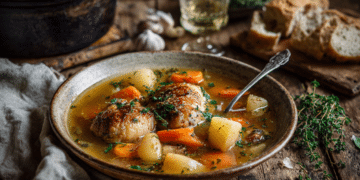


















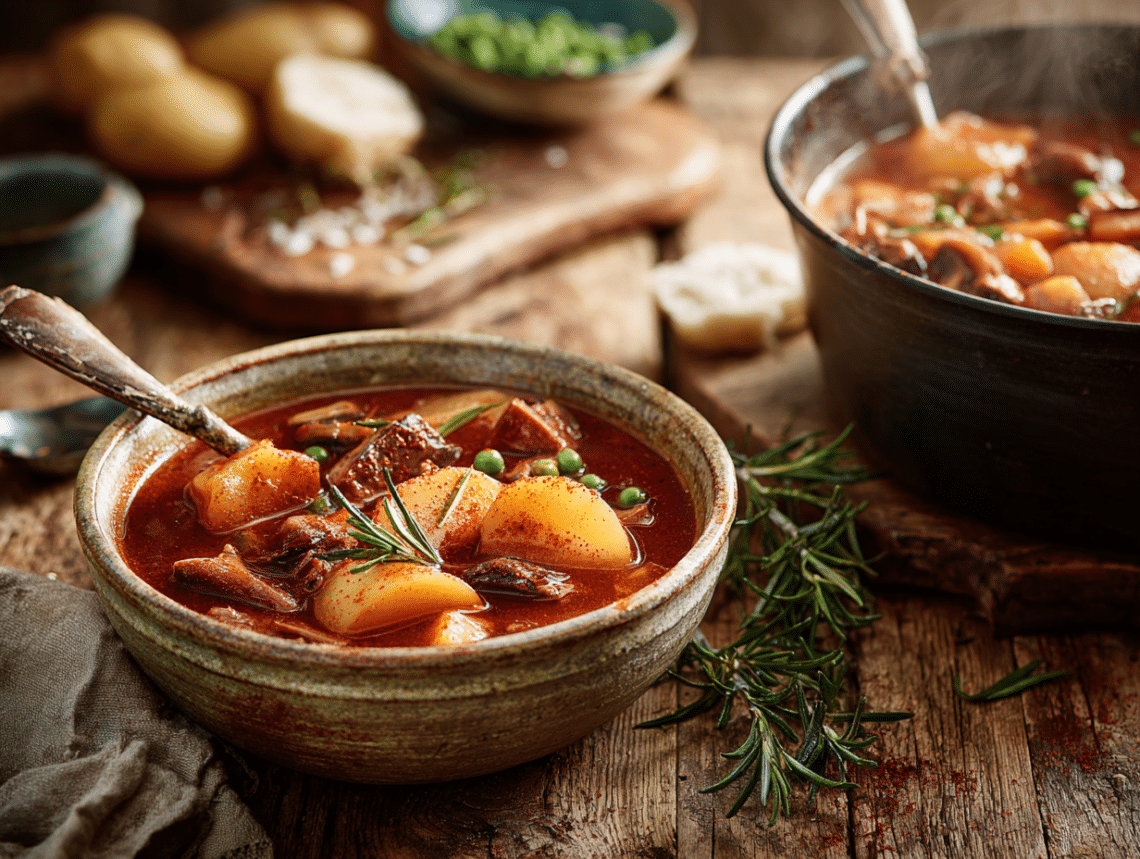
This is a thick, filling vegetable stew built around gold potatoes, portobello mushrooms, and a short list of pantry spices. It takes about an hour start to finish and makes six servings, so it earns its place as a Sunday cook-once, eat-all-week meal. The broth gets its body from a blending trick — no cream, no flour needed.
The short version of why this works
Two things make this stew work. First, the mushrooms are cooked long enough — 8 to 10 minutes — to drive off their moisture and concentrate their flavor. Pull them early and they stay spongy and bland; give them the full time and they taste almost meaty. Second, blending one-third of the finished stew and stirring it back in thickens the broth without any added starch or fat. The gold potatoes break down just enough during blending to give the liquid a creamy texture. Both steps are simple, but skipping either one will leave you with a thin, flat-tasting pot of vegetables.
Mistakes to avoid
- Starting with a cold pot. Let the pot come up to temperature over medium heat before adding the onion, celery, and carrots. A cold start means the vegetables steam instead of soften, and the base flavor never develops properly.
- Adding the rosemary too early. Fresh rosemary added at the start of a long simmer turns bitter. The recipe adds it after the boil — follow that timing.
- Blending too much of the stew. One-third is the right amount. Blend more and you lose the chunky texture that makes this feel like a stew rather than a purée. Use a ladle to measure roughly — it doesn’t need to be exact, but stay close.
- Not stirring the tomato paste in fully. Clumps that don’t dissolve will taste sharp and concentrated in the finished stew. Stir for a full minute after adding it, scraping the bottom of the pot.
- Skipping the rest before serving. Five to ten minutes off the heat with the lid on lets the peas finish gently and gives the flavors a chance to settle. Serving it the moment the blended portion goes back in often means it tastes slightly sharp — a short rest rounds it out.
Ingredient notes
- Portobello mushrooms: Cremini mushrooms work as a direct swap and are usually cheaper. Avoid button mushrooms — they don’t have enough depth here.
- Marjoram: This is the one spice that might not be in your pantry. If you don’t have it, dried thyme is a reasonable substitute at the same amount. Skip the garnish of fresh herbs on top — not worth the extra dish.
- Gold potatoes: Russets will fall apart too much during blending and make the stew gluey. Stick with gold (Yukon Gold) or another waxy variety.
- Tomato paste: A full one-third cup sounds like a lot, but it’s what gives the broth its body and color. Don’t reduce it.
Make-ahead notes
This stew keeps well in the fridge for up to 5 days in a sealed container — the flavor actually improves by day two as the spices settle in. Reheat on the stovetop over medium-low, adding a splash of water or broth if it has thickened too much. It also freezes cleanly for up to 3 months; let it cool completely before portioning into freezer-safe containers. Thaw overnight in the fridge and reheat the same way. The peas can turn slightly grainy after freezing — still fine to eat, but if that bothers you, stir in a handful of fresh or thawed peas during reheating.
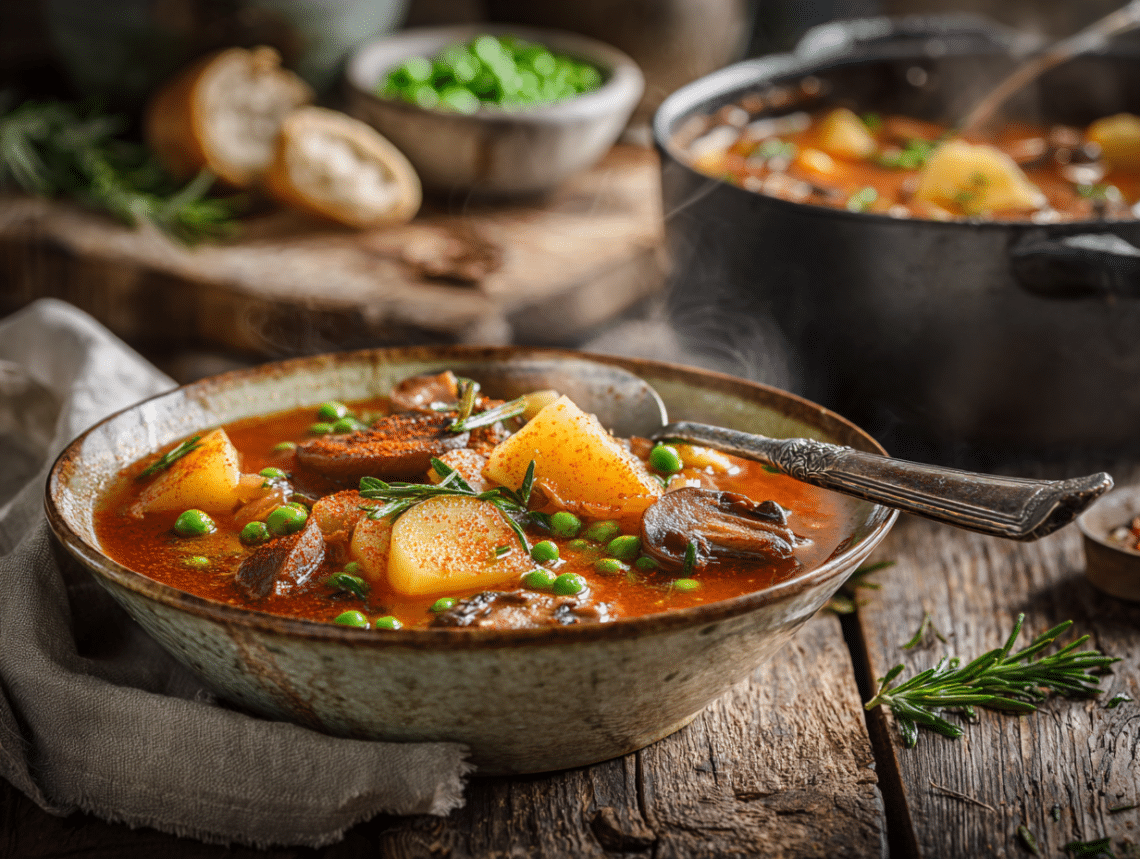
Vegetarian Stew

Ingredients
- 4 medium carrots diced
- 3 sticks celery diced
- 1 medium yellow onion diced
- 6 cloves garlic minced
- ½ pound portobello mushrooms sliced
- ⅓ cup tomato paste
- 1 ½ pound gold potatoes cut into 3/4 inch pieces
- 4 cups water
- 1 ½ cups vegetable broth
- 1 ½ cups peas (thaw first if using frozen)
- 3 sprigs rosemary fresh ; leaves stripped and finely minced (about 1 tablespoon)
- 1 tablespoon dried parsley
- ½ tablespoon smoked paprika
- ½ teaspoon oregano dried
- ½ tablespoon marjoram
- 1 pinch salt to taste
- 1 pinch freshly ground black pepper to taste
Instructions
- In a large pot or Dutch oven over medium heat, add 1 tablespoon of water (or olive oil for richer flavour). Add the onion, celery, and carrots, and sauté for 5 minutes, stirring occasionally, until the vegetables begin to soften.
- Stir in mushrooms and garlic. Cook for 8-10 minutes while stirring frequently.
- Add the diced potatoes, water, vegetable broth, tomato paste, dried parsley, smoked paprika, oregano and marjoram. Stir well to dissolve the tomato paste. Bring to a boil, then reduce the heat to a simmer. Stir in the fresh rosemary, cover, and cook for 10 minutes.
- Once the potatoes are tender, add peas and stir to combine. Let it cook for another 10 minutes.
- Carefully transfer about one-third of the stew to a blender. Remove the centre cap from the blender lid and cover with a clean kitchen towel to allow steam to escape. Blend until smooth, then pour back into the pot and stir well to combine.
- Taste and season with salt and black pepper as needed. Ladle into bowls and serve warm with crusty bread if desired.
Nutrition
Common questions
Can I use an immersion blender instead of a regular blender?
Yes — an immersion blender works well here. Submerge it fully before turning it on to avoid splashing hot liquid, and blend in short pulses until about a third of the stew looks smooth. Stop before the whole pot is puréed; you want chunks remaining.
My stew looks watery before blending — is something wrong?
No, that’s normal at that stage. The blending step is what thickens it, so don’t add flour or cornstarch beforehand. Make sure the potatoes are fully tender before you blend — undercooked potatoes won’t break down properly and the broth will stay thin.
Can I make this without mushrooms?
You can, but the stew will lose a significant amount of its savory depth. If mushrooms aren’t an option, diced zucchini or a cup of cooked lentils stirred in at the end are the closest substitutes for adding substance.
Do I need to peel the gold potatoes?
No — gold potato skins are thin and soft enough to leave on. Leaving the skins on saves time and adds a small amount of texture to the finished stew.
More recipes to try
- Sweet Corn Chowder
- Fresh Vegetable Spring Rolls
- Rustic Sourdough Focaccia with Rosemary and Sea Salt
- Hearty Shepherd’s Pie