




































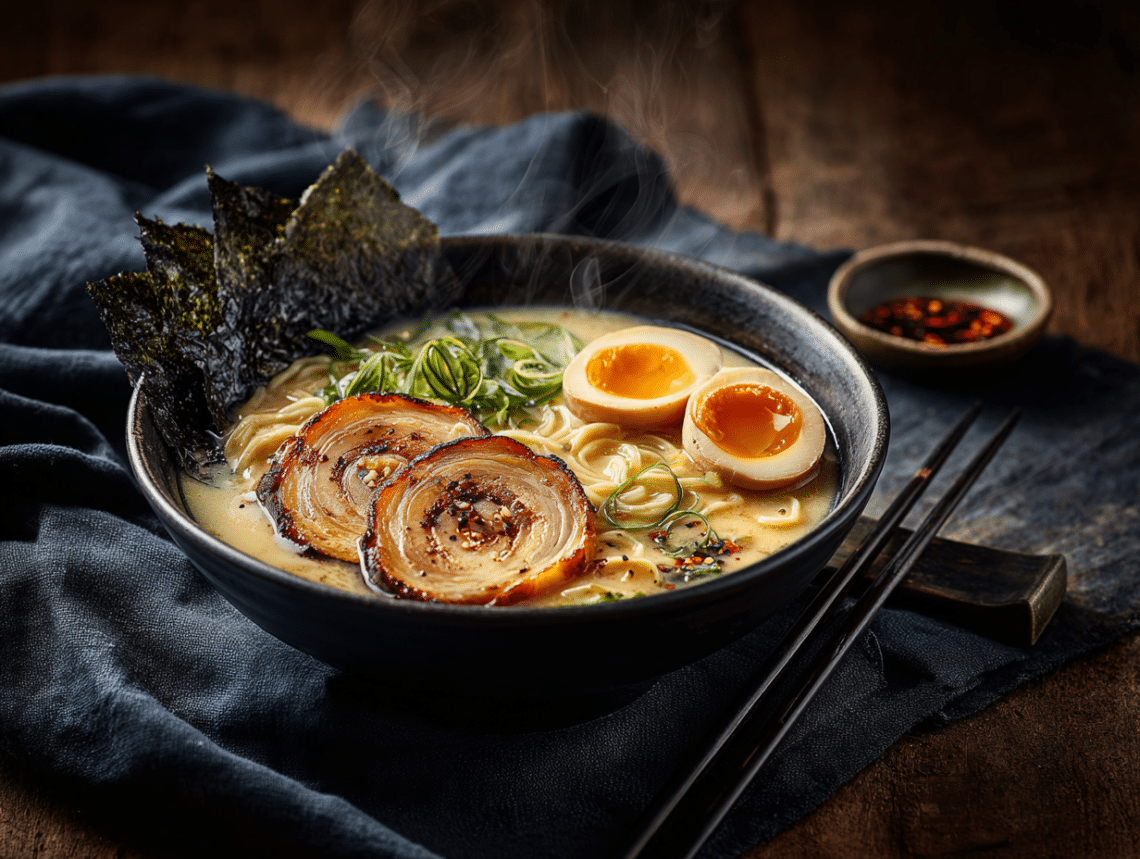
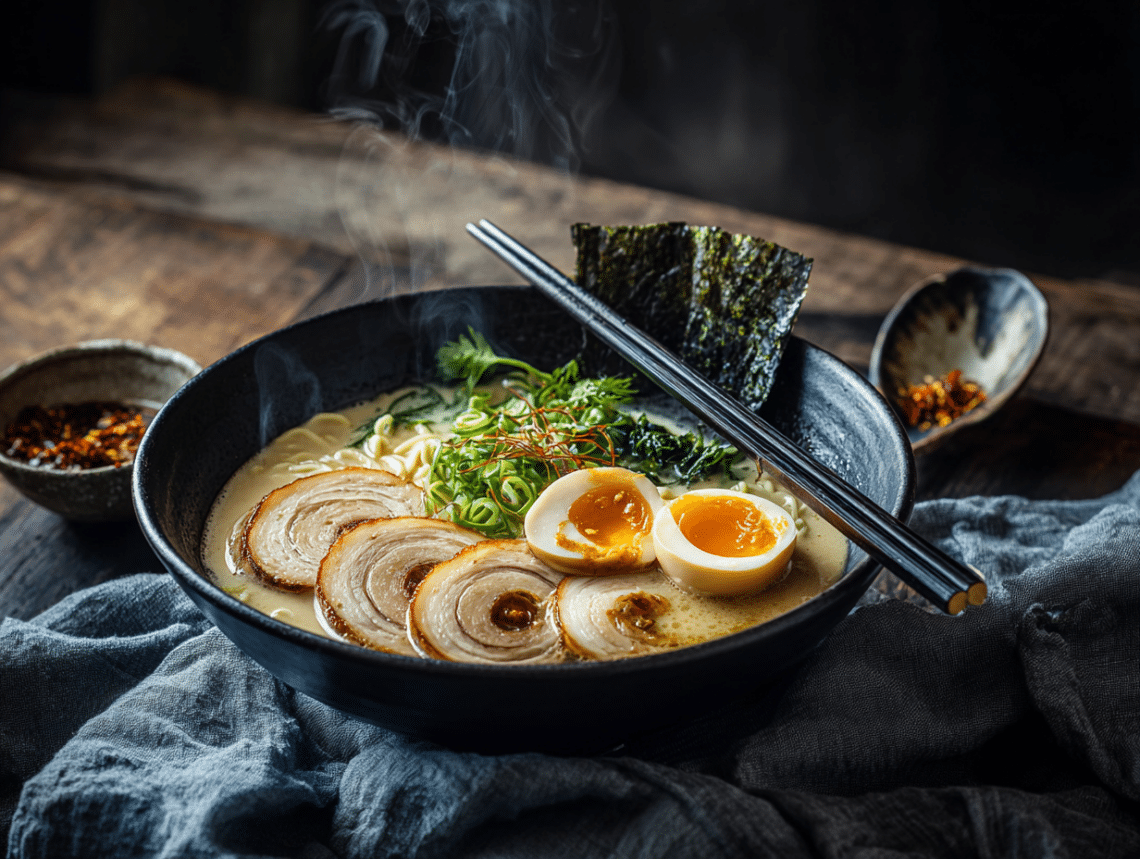
This is a pork ramen with three components — oven-braised chashu belly, a tahini-sesame broth built from chicken stock, and sake-soy marinated soft-boiled eggs. The honest reason to make it: the oven does most of the work over 3–4 hours, the hands-on time is about 15 minutes, and the braising liquid from the pork folds straight into the broth so nothing goes to waste.
Ingredient notes
- Sake: Used in both the chashu brine and the egg marinade. A dry sherry works as a substitute in a pinch, though the flavour will be slightly different. Avoid cooking sake with added salt if you can — the dish is already sodium-heavy.
- Mirin: Adds sweetness and gloss. Look for hon mirin (real mirin) rather than mirin-style seasoning, which contains less alcohol and more corn syrup. Most large grocery stores carry it in the Asian foods aisle.
- Tahini: This is what makes the broth creamy without dairy. Standard supermarket tahini works fine — no need to buy anything fancy.
- Lard: Used to start the broth. If you don’t have it, a neutral oil like vegetable or sunflower works, though you’ll lose a small amount of depth.
- Fresh ramen noodles: Worth seeking out at an Asian grocery if you can. Dried ramen noodles or fresh udon are both reasonable backups.
The short version of why this works
Two things carry this recipe. First, the pork belly braises low and slow at 275°F in its own soy-sake-mirin liquid, which keeps the meat from drying out and produces a deeply flavoured braising liquid as a byproduct. That liquid — just two tablespoons of it — goes into the broth at the end and does more for the flavour than any single spice could. Second, the tahini is stirred in off-boil rather than cooked for a long time, which keeps it from turning bitter and gives the broth a smooth, slightly nutty body that holds up against the richness of the pork.
What can go wrong
- The pork unrolls in the oven: This usually means the twine wasn’t tied tightly enough or the intervals were too far apart. Tie at every 5cm and pull the twine firm before knotting — it should feel snug, not just looped.
- The egg whites turn rubbery during marinating: This happens when eggs sit in the soy marinade for much longer than overnight. Aim for 3–4 hours at minimum, but pull them out after 12 hours at the most. The whites will keep absorbing salt even in the fridge.
- The tahini clumps when added to the broth: Add it while the broth is at a simmer, not a rolling boil, and whisk it in steadily rather than dumping it all at once. If it seizes, a quick blitz with an immersion blender will smooth it out.
- The broth tastes flat: This is almost always because the ginger didn’t get enough colour in the pan at the start. Give it a full two minutes over medium-high heat until it’s golden and fragrant before adding the stock.
- The noodles soak up all the broth before everyone sits down: Cook and drain the noodles, then add them to individual bowls right before serving — never let them sit in the broth while you plate everything else. Skip the garnish of nori strips if you’re feeding kids who won’t eat it anyway; not worth the extra prep.
Leftovers and make-ahead
The chashu and the eggs are both better made ahead — the pork slices keep in the fridge for up to 4 days in their braising liquid, which also stops them drying out, and the eggs are at their best after a full overnight soak. Store broth separately in the fridge for up to 3 days, or freeze it for up to 2 months in a sealed container. Reheat the broth gently on the stovetop over medium heat — don’t boil it hard or the tahini can separate. The pork reheats well in a dry pan over medium heat for about 2 minutes per side, or you can add slices directly to the hot broth for 1–2 minutes. Cook fresh noodles to order each time; leftover cooked noodles clump and don’t reheat well.
Pork Ramen Recipe with Chashu Belly & Ramen Eggs

Equipment
- Large ovenproof braising dish with lid
- Large stockpot (at least 4 litres)
- Kitchen twine
- Fine mesh strainer
- Instant-read thermometer
- Saucepan (for boiling eggs)
- Sharp carving knife
Ingredients
Broth Ingredients
- 1 litre chicken stock
- 1 litre water
- 1 tablespoon lard
- 1 tablespoon fresh ginger grated (about a 2cm / 1-inch piece)
- 2 tablespoons tahini
- 1 tablespoon sesame oil
- 1 tablespoon mirin
- 2 tablespoons pork fat finely minced from chashu
- 2 tablespoons chashu marinade once cooked
Chashu Pork Belly Ingredients
- 2 cups pork belly skin on
- ½ cup soy sauce
- 1 cup mirin
- ½ cup white sugar
- 1 cup sake
- 1 cup water
- 4 cloves garlic peeled and lightly crushed
- 1 medium onion skin on, cut in half
- 1 piece fresh ginger 5cm (2-inch), finely sliced
- 6 stalks spring onions finely chopped
Marinated Soft Boiled Egg Ingredients
- 2 large eggs
- 1 cup soy sauce
- 1 cup mirin
- ¼ cup sake
- ¼ cup water
To Serve Ingredients
- 2 portions fresh ramen noodles approximately 150g / 5oz each — or fresh udon noodles
- 1 tablespoon spring onions finely chopped
- 2 sheets nori cut into strips
Instructions
Chashu Pork Belly Instructions
- Preheat the oven to 275°F / 135°C (120°C fan-forced).
- Roll up your pork belly lengthwise on a cutting board, with the skin facing out.
- Using twine, tightly secure the pork belly at 5-centimetre intervals. Place pork belly in a deep ovenproof braising dish or Dutch oven (at least 25cm / 10-inch) that fits the rolled pork snugly.
- In a large pot over high heat, add 1 cup of water, soy sauce, sake, mirin, sugar, scallions, garlic, ginger, and heat until boiling. Pour liquid over your pork and cover with tinfoil or a lid. Cook pork for 3 to 4 hours, occasionally turning to baste it.
- When ready to serve, remove the pork belly from the oven and reserve the liquid.
- Cut your pork belly into round slices.
- Strain the leftover liquid and add 2 tablespoons to your broth.
Broth Instructions
- Heat the sesame oil and lard in a large stockpot over medium-high heat. Add the grated ginger and fry until browned and caramelised, about 2 minutes.
- Add your chicken stock and water, then bring to a vigorous simmer.
- Stir in your mirin and tahini and simmer for about 30 minutes while you start on the other toppings.
- Add the 2 tablespoons of chashu pork liquid once it is done cooking.
Ajitsuke Tamago Instructions
- Soft boil one egg per person. Carefully peel eggs and set them aside in a bowl that fits them all.
- Mix the water, sake, soy sauce, and mirin in a bowl and pour the mixture over your peeled eggs. To stop your eggs from floating, place a double layer of paper towel over the eggs.
- It will absorb some of the liquid, don’t worry. Let the eggs marinate for 3 to 4 hours or overnight.
Noodles Instructions
- Just before serving your ramen, boil your noodles as per the packet’s instructions – generally about 3 minutes.
Assembly Instructions
- Place your cooked noodles in a large bowl, add enough broth per bowl to cover your noodles generously.
- Add your sliced Chashu pork belly, egg (cut in half), spring onion and any other toppings of your choice.
- Serve immediately while piping hot. Ramen is best enjoyed straight away as the noodles will continue absorbing broth.
Nutrition
Frequently asked questions
Can I make this without sake and mirin?
You can, but the flavour will be noticeably different. For sake, use dry sherry or a splash of rice vinegar diluted with water; for mirin, mix equal parts dry sherry and a little sugar. These swaps work well enough for a weeknight version, though the real thing is worth buying if you plan to make this more than once — both bottles last a long time in the pantry.
Is this recipe spicy? Can kids eat it?
As written, there is no chilli in the recipe at all — the broth is savoury, slightly sweet, and nutty from the tahini, but not spicy. It’s a good base for families because adults can add chilli oil or togarashi to their own bowls without changing anything for younger eaters.
Can I use pork belly without the skin?
Yes, skinless pork belly works fine here. The skin adds a little extra gelatin to the braising liquid, but the difference in the final broth is minor given you’re only using two tablespoons of it.
Do I really need kitchen twine to roll the pork belly?
Yes — without it the roll opens up during the long braise and you lose the round slices that make chashu look and eat the way it should. Butcher’s twine is inexpensive and widely available; toothpicks are not a reliable substitute for a 3–4 hour cook.
If you liked this one
- Authentic Japanese Chicken Teriyaki
- Soft and Sweet Japanese Mochi
- Quick and Delicious Homemade Chinese Fried Rice
- Fresh Vegetable Spring Rolls