
















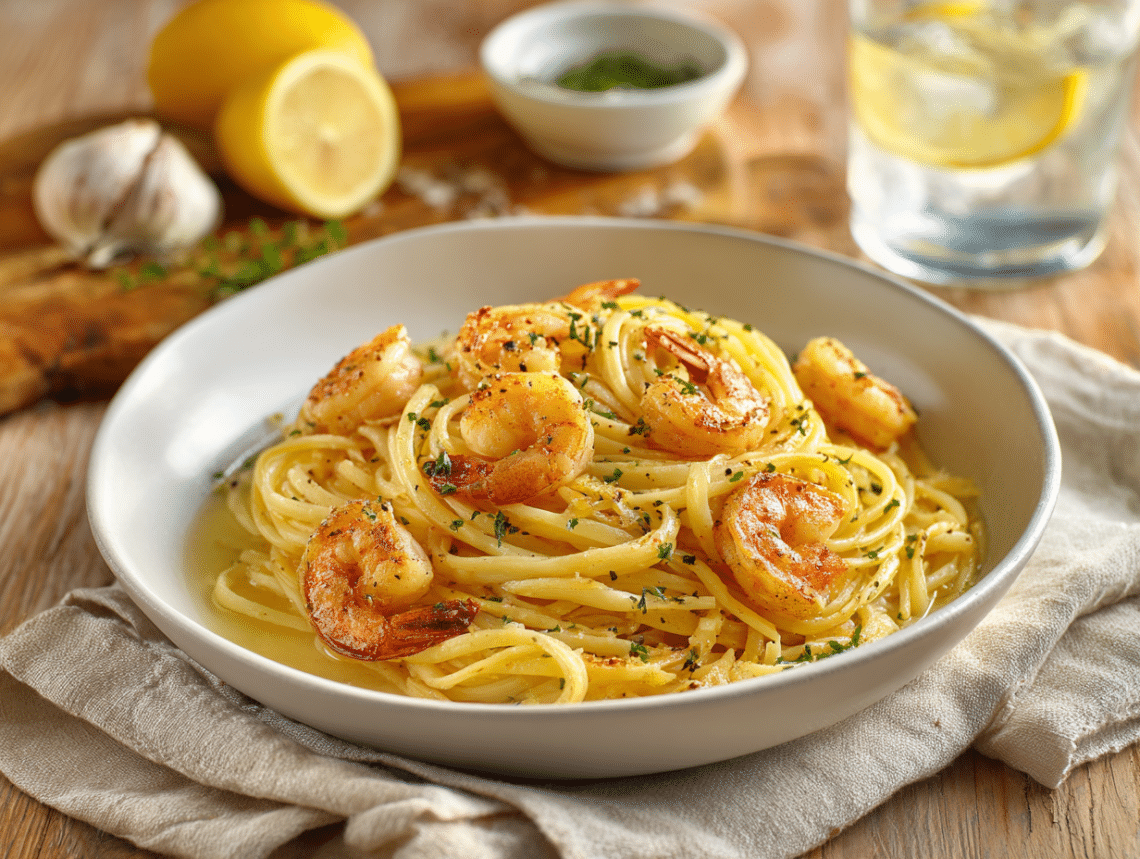
This shrimp scampi skips the wine and still delivers a bright, garlicky sauce that coats every strand of spaghetti. It comes together in about 30 minutes using calamansi (a small citrus common in Southeast Asian cooking) or plain lemon juice if that’s what you have. It’s the kind of dinner that also reheats well enough to be worth making a slightly bigger batch on purpose.
Why this recipe works
Two things do the heavy lifting here. First, reserving pasta cooking water before you drain gives you a starchy liquid that, when tossed into the hot skillet, binds the butter, oil, and citrus into a sauce that actually clings to the pasta instead of pooling at the bottom of the bowl. Second, the shrimp are cooked separately and added back at the end. This sounds like an extra step, but it’s the reason they stay tender — shrimp overcook in about 60 seconds, and finishing the sauce without them in the pan means you’re not accidentally turning them rubbery while you wait for the garlic to bloom.
Troubleshooting
- Sauce looks greasy and broken: The butter and oil separated, usually because the heat was too high when you added the pasta water. Pull the pan off the heat for 30 seconds, add a splash more pasta water, and toss vigorously — the starch helps it come back together.
- Garlic tastes bitter: It browned instead of just turning fragrant. Garlic goes from golden to burnt very fast at medium heat. If it smells sharp or looks dark, discard it, wipe the pan, and start the garlic step again over medium-low with fresh butter.
- Shrimp are rubbery: They were overcooked in Step 5 or sat in the hot pan too long after being added back. Pull them the moment they’re opaque and pink — they finish cooking from residual heat. When reheating leftovers, use low heat and stop as soon as they’re warm through.
- Pasta clumped together before you added it to the sauce: Drained spaghetti sticks quickly. Toss it with a tiny drizzle of olive oil right after draining if there’s going to be more than a minute or two before it goes into the skillet.
- Dish tastes flat despite following the recipe: Calamansi and lemon vary in acidity. Taste the sauce before adding the pasta and adjust — a little more citrus juice or an extra pinch of salt usually fixes it immediately. Skip the garnish of fresh parsley if you’re short on time; it adds color but not enough flavor to matter.
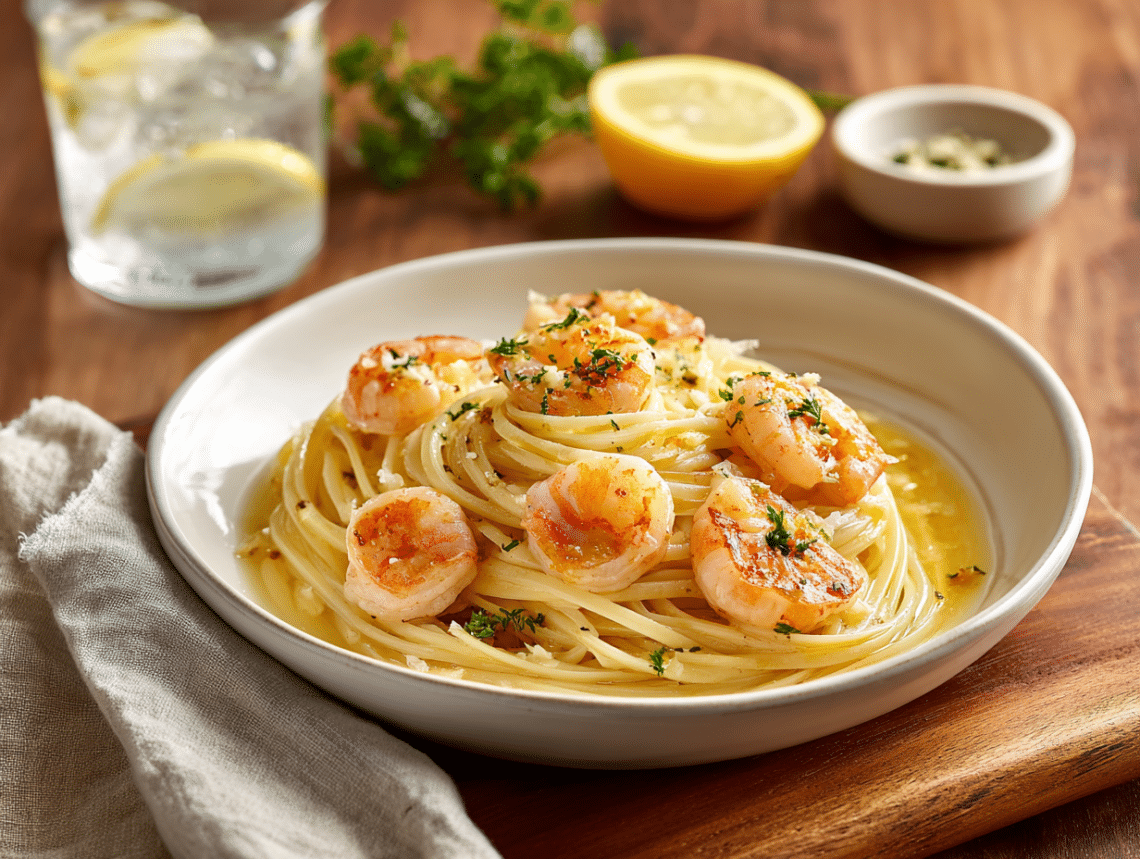
Easy Shrimp Scampi Pasta (No Wine, Ready in 30 Min)

Equipment
- 12-inch (30cm) skillet
- Large pot (for boiling pasta)
- Colander
- Tongs or pasta fork
- Citrus squeezer or reamer
Ingredients
- 1 pound shrimp peeled and deveined, tail-on optional
- 6 cloves garlic minced
- 1 tablespoon extra virgin olive oil
- 1 tablespoon unsalted butter
- 2 pieces calamansi or substitute 1 tablespoon fresh lemon juice
- ½ teaspoon salt plus more to taste
- ¼ teaspoon freshly ground black pepper
- 7 oz spaghetti
- 1 teaspoon dried oregano
- 1 tablespoon fresh parsley finely chopped, for garnish
- ½ cup reserved pasta cooking water
Instructions
- Pat the shrimp dry with paper towels. Season with salt and pepper and toss to coat evenly. Set aside.
- Bring a large pot of generously salted water to a boil. Cook the spaghetti according to package directions until al dente. Reserve ½ cup (120ml) of the starchy pasta cooking water, then drain the spaghetti and set aside.
- Heat a 12-inch skillet over medium-low heat. Add the butter and 1 tablespoon of extra virgin olive oil. Once the butter has melted and is foaming, proceed to the next step.
- Increase heat to medium. Add the seasoned shrimp in a single layer and cook for 1–2 minutes per side until pink and just cooked through. Do not overcook — they will continue cooking in residual heat. Transfer the shrimp to a plate and set aside.
- Reduce heat to medium-low. Add the minced garlic to the same skillet and sauté for 30–60 seconds, stirring constantly, until fragrant. Do not let it brown.
- Increase the heat to medium-high. Squeeze in the calamansi juice (or lemon juice) and add the dried oregano. Stir to combine.
- Add ½ tablespoon of white vinegar and stir.
- Let the sauce simmer for 1–2 minutes until slightly reduced and fragrant.
- Return the shrimp to the skillet. Add the drained spaghetti and toss everything together over medium heat. Add a splash of reserved pasta cooking water (2–3 tablespoons) to help the sauce coat the pasta evenly. Toss for 30 seconds.
- Taste and adjust salt and pepper if needed. Divide among 4 plates or bowls and garnish with freshly chopped parsley. Serve immediately.
Notes
Notes
- Storage: Refrigerate leftovers in an airtight container for up to 2 days. The pasta will absorb sauce as it sits — add a splash of olive oil or butter when reheating.
- Reheating: Warm in a skillet over medium-low heat with a tablespoon of water or butter to revive the sauce. Microwave works but may toughen the shrimp.
- Make-ahead: Peel, devein, and season the shrimp up to 12 hours ahead; store covered in the fridge. Cook the pasta and sauce fresh for the best texture.
- Substitution: No calamansi? Use the juice of 1 small lemon or 2 tablespoons fresh lime juice for similar acidity.
- Pro tip: Reserve ½ cup of starchy pasta cooking water before draining — toss it into the skillet with the shrimp sauce to create a silkier, emulsified coating that clings to every strand of spaghetti.
Nutrition
Your questions, answered
Can I use frozen shrimp?
Yes — thaw them completely in cold water first, then pat them very dry before seasoning. Wet shrimp steam instead of sear, which means you lose the slight color and texture you want from the skillet step.
What is calamansi and where do I find it?
Calamansi is a small citrus fruit, about the size of a large marble, with a flavor somewhere between lime and mandarin — tart with a slight sweetness. It’s sold fresh or bottled at most Filipino and Southeast Asian grocery stores; if you can’t find it, 1 tablespoon of fresh lemon juice works fine.
Can I use a different pasta shape?
Linguine or thin spaghetti are the closest swaps and work well. Shorter shapes like penne hold less sauce per bite, so the dish will taste a little drier — not wrong, just different.
Is there a dairy-free option?
Replace the butter with an equal amount of good olive oil. The sauce will be slightly thinner and less rich, but the garlic and citrus still carry it. Use a little extra pasta water to compensate for the body the butter would have added.
How do I scale this up if I want more servings?
Double the pasta and shrimp quantities and use a larger pot for boiling, but cook the shrimp in two batches rather than crowding the pan — a single layer is what gives you a proper sear rather than steaming. The sauce ingredients scale up proportionally.
Can I make this ahead for a dinner party?
Partially, yes. Peel, devein, and season the shrimp up to 12 hours ahead and keep them covered in the fridge. Everything else — pasta, sauce, and the shrimp cook — should be done fresh right before serving, since the pasta absorbs the sauce quickly and shrimp don’t reheat well for guests.
More recipes to try
- Creamy Fettuccine Alfredo
- Authentic Roman Carbonara
- Authentic Spanish Seafood Paella
- Fresh Lemon-Herb Crab Salad