





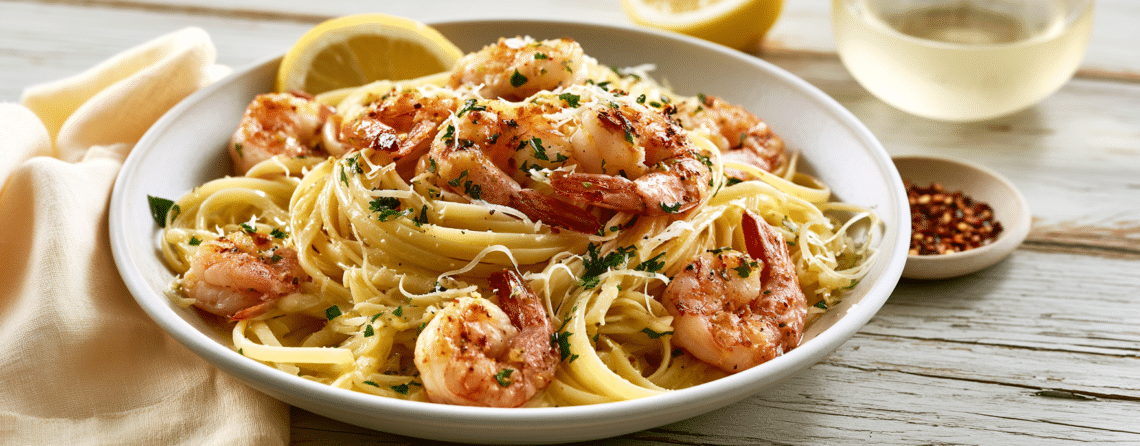
This is a garlic-butter shrimp pasta with a Parmesan-thickened white wine sauce — ready in 35 minutes, start to finish. The sauce comes together in the same pan you cook the shrimp in, so there’s very little cleanup. If you need a fast dinner that feels a bit more special than a weeknight standard, this is a reliable one.
Why this recipe works
Two things make this recipe work. First, the shrimp are pulled out of the pan before the sauce is built — that short rest keeps them from overcooking while the wine reduces, so they go back in tender rather than rubbery. Second, the reserved pasta water does real work here. It contains starch from the linguine, which helps the Parmesan melt smoothly into the sauce instead of clumping. Don’t skip saving it before you drain the pot. Those two steps — resting the shrimp, keeping the pasta water — are what separate a properly sauced dish from a greasy or gluey one.
Leftovers and make-ahead
Store leftovers in an airtight container in the fridge for up to 2 days. The pasta will absorb most of the sauce overnight, so add a splash of water or chicken broth when reheating in a skillet over low heat — it loosens everything back up without drying out the shrimp. Reheat gently and only until warm; shrimp toughen fast with too much heat. Freezing is not recommended here. The Parmesan sauce breaks when frozen and thawed, and the shrimp texture suffers. This one is best made and eaten fresh, or the next day at most.
Common problems and fixes
- Sauce is thin and watery: The wine didn’t reduce enough. Let it simmer a full 3 minutes before adding the Parmesan, and make sure the heat is high enough to see a steady bubble. Adding pasta water too generously can also thin the sauce — start with 2 tablespoons and add more only if needed.
- Parmesan clumped instead of melting: The pan was too hot when you added the cheese, or you used pre-shredded cheese with anti-caking powder. Pull the pan off the heat for 30 seconds before stirring in the Parmesan, and always grate it fresh from the block.
- Shrimp are rubbery: They cooked too long. Two minutes per side over medium-high is enough — once they’re pink and curled into a loose C shape, they’re done. A tight curl means overcooked. Skip the garnish if it means the shrimp are sitting in a hot pan while you chop parsley — not worth the extra dish.
- Garlic burned and turned bitter: The heat was too high or the garlic went in before the butter and oil were fully melted. Keep it at medium and watch it closely — one minute is all it needs before the shrimp go in.
- Pasta clumped together while waiting: Toss the drained linguine with a tiny drizzle of olive oil if it’s going to sit for more than a couple of minutes. It won’t affect the final sauce but stops the noodles from sticking into a solid mass.
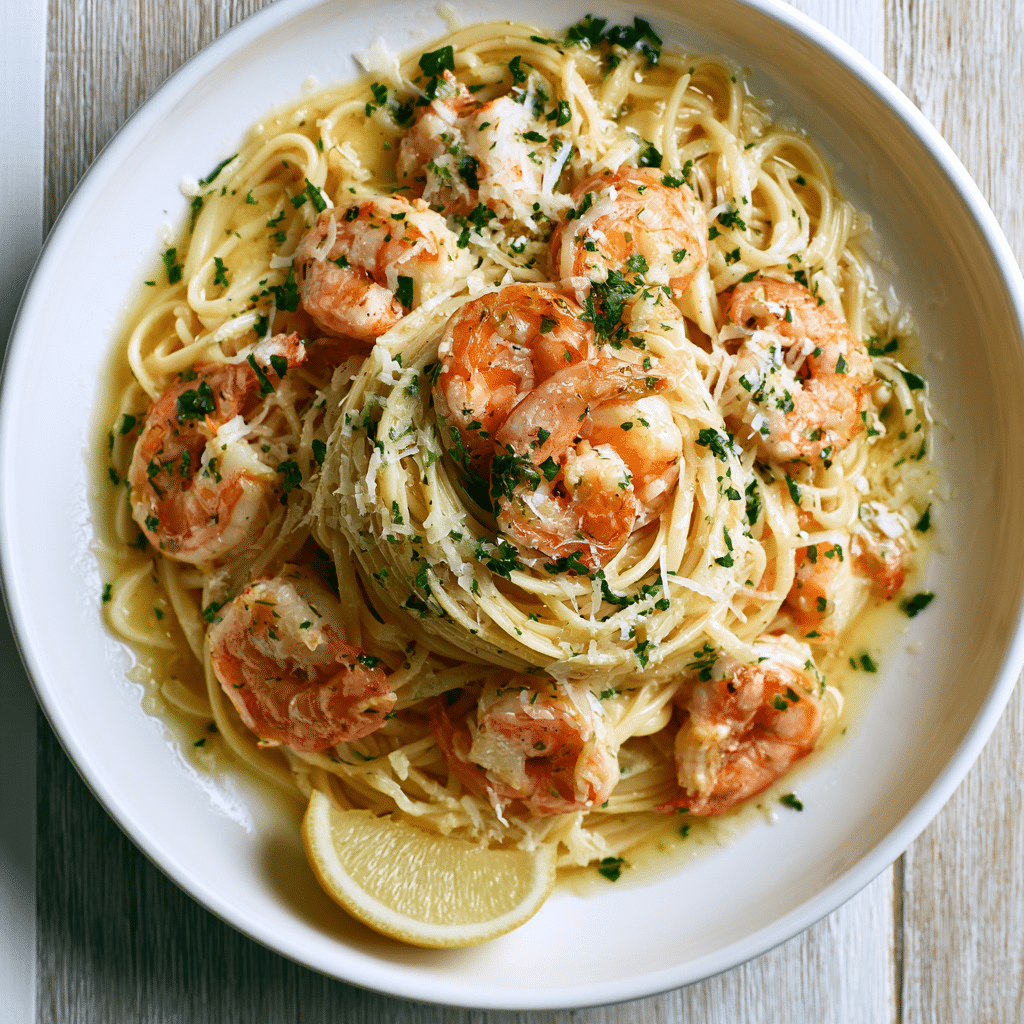
Garlic Parmesan Shrimp Scampi with Linguine

Equipment
- Large (12-inch) skillet
- Large stockpot
- Fine-mesh sieve or colander
- Microplane or box grater (for parmesan)
- Tongs
- Ladle or heatproof measuring cup (for reserving pasta water)
Ingredients
- 1 lb large shrimp peeled and deveined, tails on, 450g
- 5 cloves garlic minced
- ¼ cup unsalted butter 55g
- ¼ cup extra virgin olive oil 60ml
- ½ cup Parmesan cheese freshly grated, 50g
- ¾ cup dry white wine e.g., Sauvignon Blanc, 180ml
- 1 tablespoon lemon juice freshly squeezed, 15ml
- ¼ teaspoon red pepper flakes optional
- ¼ cup fresh parsley chopped
- 1 pinch salt to taste
- 1 pinch freshly ground black pepper to taste
- 12 oz linguine 350g, or other pasta of choice
Instructions
- Cook the linguine according to package instructions until al dente. Reserve 1/2 cup of the pasta water, then drain and set aside.12 oz linguine
- In a large skillet over medium heat, melt the butter with the olive oil. Add the garlic and sauté for about 1 minute until fragrant but not browned.1/4 cup unsalted butter, 1/4 cup extra virgin olive oil, 5 cloves garlic
- Increase the heat to medium-high and add the shrimp to the skillet. Season with salt and pepper (and red pepper flakes if using). Cook the shrimp for 2 minutes per side until they turn pink and opaque.1 lb large shrimp, 1 pinch salt, 1 pinch freshly ground black pepper, 1/4 teaspoon red pepper flakes
- Remove the shrimp from the skillet and set aside on a plate.1 lb large shrimp
- Return the skillet to medium heat. Add the white wine and lemon juice, scraping up any browned bits from the bottom of the pan with a wooden spoon.3/4 cup dry white wine, 1 tablespoon lemon juice
- Bring the liquid to a simmer and let reduce by half, about 3 minutes. Reduce the heat to low and stir in the Parmesan cheese a handful at a time, stirring constantly until melted and smooth.1/2 cup Parmesan cheese
- Return the shrimp and drained linguine to the skillet. Add the reserved pasta water a few tablespoons at a time, tossing constantly, until the sauce coats the pasta in a glossy, even layer. You may not need all of it.1 lb large shrimp, 12 oz linguine
- Sprinkle with chopped parsley before serving.1/4 cup fresh parsley
Notes
Nutrition
Frequently asked questions
Can I use frozen shrimp?
Yes — thaw them completely first and pat them dry with paper towels before they go in the pan. Wet shrimp steam instead of sear, which means less browning and a watered-down sauce.
What can I use instead of white wine?
Use chicken broth with an extra squeeze of lemon juice. It won’t have the same acidity as Sauvignon Blanc, but it gets close enough and keeps the sauce from tasting flat.
Do I have to use linguine?
No — any long pasta works fine, and short shapes like penne or rigatoni hold the sauce well too. Just cook whatever you have to al dente so it doesn’t go soft when tossed in the hot pan.
My family doesn’t eat shellfish. Can I swap the shrimp for something else?
Chicken breast cut into thin strips works well — cook it the same way, about 3 minutes per side until cooked through, then rest it while you build the sauce. The timing is only slightly longer than shrimp.
More recipes to try
- Creamy Fettuccine Alfredo
- Authentic Roman Carbonara
- Elegant Chicken Marsala with Mushrooms and Marsala Wine
- The Perfect Aperol Spritz