




















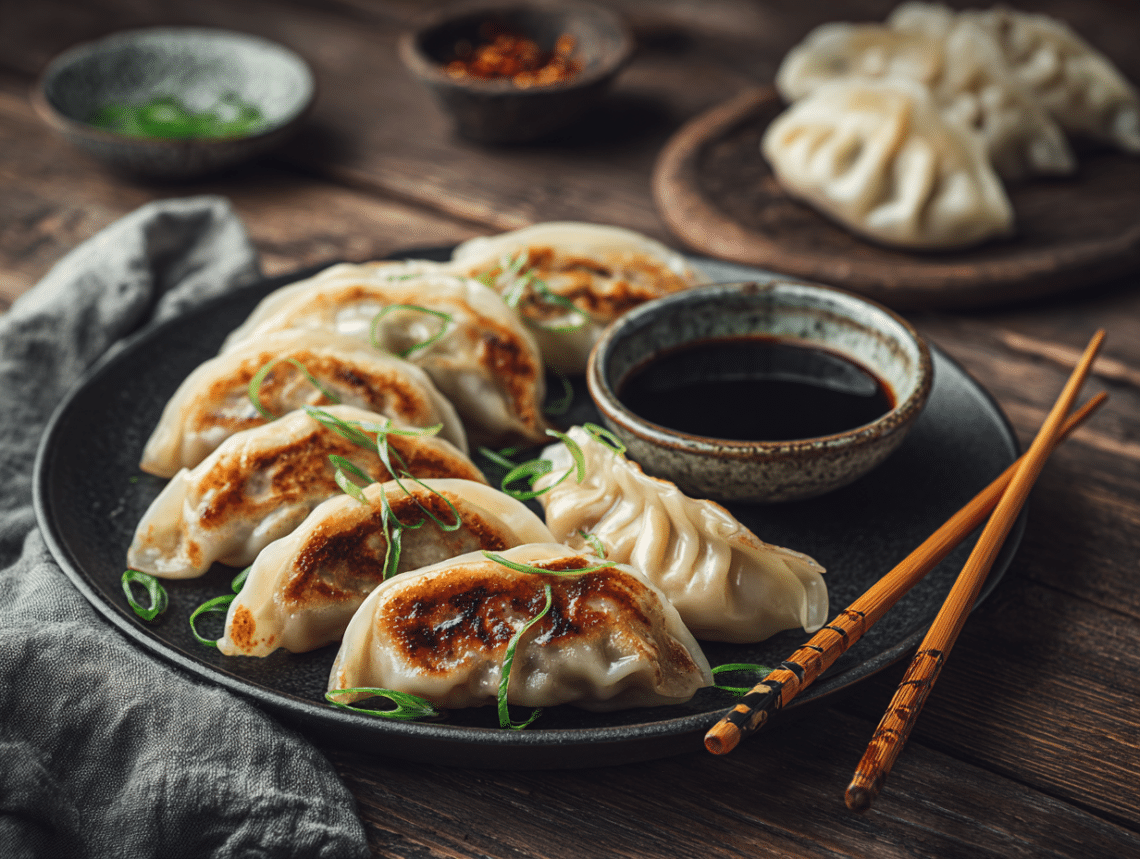
These gyoza have a crispy, golden base and a soft top — that contrast comes from pan-frying and steaming in the same pan, back to back. The filling is pork mince with Chinese cabbage, carrot, ginger, garlic, hoisin, and sesame oil, and the whole thing takes about an hour start to finish using store-bought gow gee wrappers. They work as a snack, a starter, or a light dinner alongside steamed rice.
The technique that matters
The pan-fry-then-steam method is what separates gyoza from a plain fried dumpling. You brown the base in oil first to build a crisp crust, then add water and clap the lid on — the steam finishes cooking the filling and the top of the wrapper without drying anything out. The key is letting all the water evaporate completely before you take the lid off. Pull it too early and the bottoms go soggy. Wait until you hear the sizzle return and the pan sounds dry, then give it one more minute uncovered to re-crisp the base. That last minute makes a real difference.
If something goes sideways
- Wrappers splitting during folding: The edges dried out. Keep unworked wrappers under a slightly damp paper towel while you fold the others. Even a few minutes of air exposure stiffens them enough to crack.
- Filling leaking into the pan: There was a gap in the seal. Press the pleated edge firmly between your thumb and forefinger all the way along after pleating — a light pinch isn’t enough. Any air pocket left inside will expand and force the seal open.
- Gyoza sticking and tearing when you transfer them: They need that one-minute rest in the pan off the heat before you move them. Trying to lift them while still very hot pulls the wrapper apart. A thin flexible spatula also helps.
- Filling tastes flat: Pork mince varies a lot in fat content. If yours is very lean, the filling can taste dry and bland. A small pinch of salt added to the mix, or an extra half-teaspoon of hoisin, usually fixes it.
- Bottoms browning unevenly: The pan isn’t hot enough before the gyoza go in, or it’s overcrowded. Give the oil a full minute to heat before adding the dumplings, and leave a small gap between each one.
Shopping notes
- Gow gee wrappers: Find these in the refrigerated section of Asian grocery stores, usually near tofu or fresh noodles. Most supermarkets stock them too. Round wrappers give the classic half-moon shape; square ones work fine and fold the same way. Check the use-by date — they go off quickly once opened.
- Chinese cabbage (napa/wombok): A small wedge is all you need. If you can only find a full head, the rest keeps well in the fridge for a week and works in stir-fries or slaws. Savoy cabbage is an acceptable swap in a pinch, though the texture is slightly firmer.
- Hoisin sauce: Skip the garnish of extra hoisin on the side — not worth the extra dish. The dipping sauce already covers the sweet-savoury balance.
Make-ahead notes
Assembled, uncooked gyoza keep well in the fridge for up to 24 hours — lay them in a single layer on a parchment-lined tray, cover with plastic wrap, and don’t let them touch or they’ll stick together. For longer storage, freeze them on the tray first until solid (about 2 hours), then transfer to a zip-lock bag where they’ll keep for up to 2 months. Cook from frozen using the same pan-fry-then-steam method, but add an extra 2 to 3 minutes of steaming time and make sure the water fully evaporates. Already-cooked gyoza reheat reasonably well in a dry non-stick pan over medium heat for 2 to 3 minutes — they won’t be quite as crispy as fresh, but they’re still good. The dipping sauce can be made up to 3 days ahead and kept in a sealed jar in the fridge.
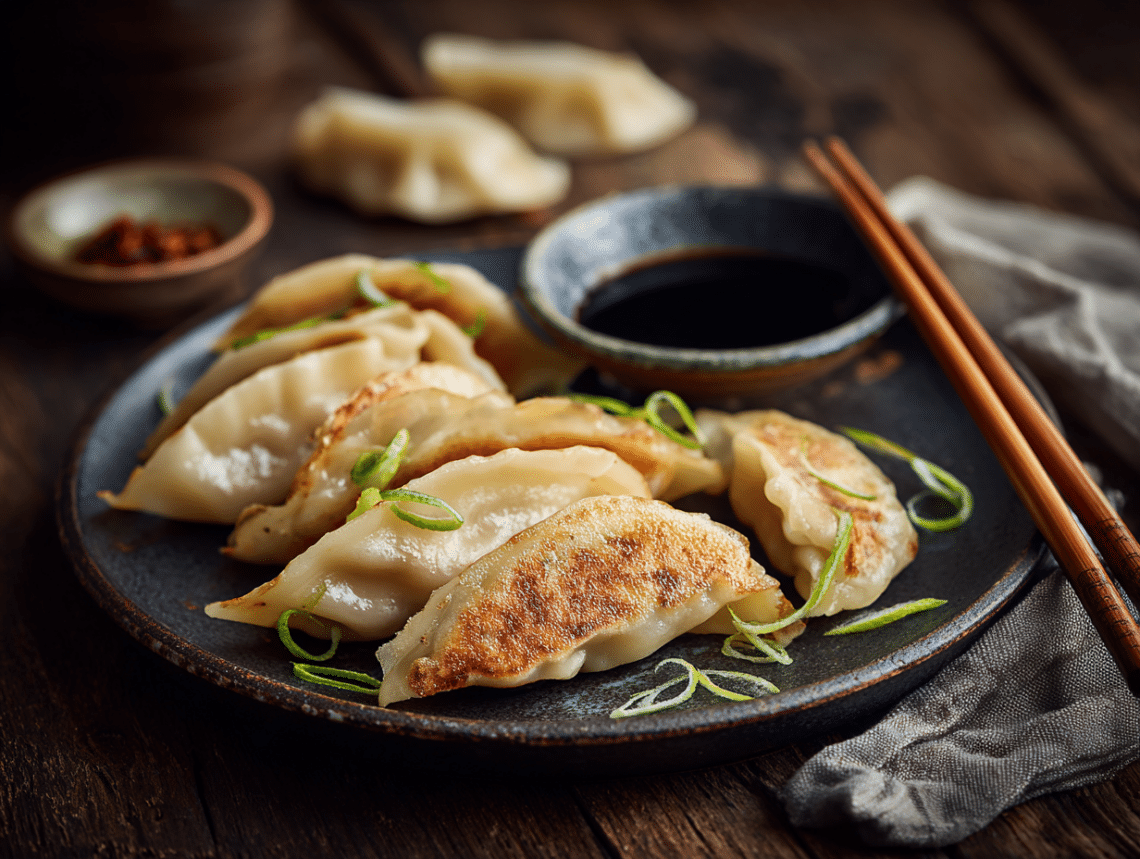
Pork and Vegetable Gyoza (Japanese Potstickers)

Ingredients
Pork and Vegetable Gyoza Ingredients
- 9 ounces pork mince
- ¾ cup Chinese cabbage thinly sliced, napa/wombok
- ½ small carrot finely grated
- 2 stalks green onions thinly sliced, white part for filling, green part for garnish
- 1 teaspoon ginger freshly grated
- 1 clove garlic crushed
- 2 teaspoons soy sauce
- 1 teaspoon hoisin sauce
- ¼ teaspoon sesame oil
- 9.7 ounces gow gee wrappers 1 packet, round or square
- 1 tablespoon vegetable oil
Dipping Sauce Ingredients
- 1 ½ tablespoons soy sauce
- 1 tablespoon rice wine vinegar
- ¼ teaspoon sesame oil
- ½ teaspoon caster sugar superfine sugar
- 1 tablespoon cold water
Instructions
Gyoza Instructions
- In a large bowl, combine the pork mince, Chinese cabbage, grated carrot, sliced white parts of the green onions, grated ginger, crushed garlic, soy sauce, hoisin sauce, and sesame oil. Mix with your hands or a fork until evenly combined — avoid over-mixing or the filling will become dense.
- Lay 6-8 gow gee wrappers on a clean work surface. Place 1 rounded teaspoon of filling in the centre of each wrapper. Brush the edges with cold water using a pastry brush. Fold each wrapper in half to form a half-moon shape, pressing out any air pockets. Starting at one end, make 5-6 small pleats along the sealed edge to create the classic gyoza shape. Press firmly to seal. Place finished gyoza on a parchment-lined tray. Repeat with remaining wrappers and filling.
- Heat half the vegetable oil in a large, non-stick frying pan over medium-high heat. Arrange half the dumplings in the pan. Cook for 1 minute on each side or until lightly browned. Add 1/2 cup cold water. Cover pan with lid. Cook for 4 to 5 minutes or until the water has fully evaporated and the wrapper pastry is translucent and cooked through. Remove from heat. Stand for 1 minute in the pan. Carefully transfer to a plate. Cover with foil to keep warm.
- Repeat with remaining oil and Gyoza.
Dipping Sauce Instructions
- In a small bowl, whisk together the soy sauce, rice wine vinegar, sesame oil, caster sugar, and cold water until the sugar dissolves. Serve alongside the hot gyoza, garnished with the sliced green parts of the green onions.
Nutrition
Your questions, answered
Can I use a different meat instead of pork mince?
Yes — chicken mince works well and is the most common substitute. It has less fat than pork, so add an extra quarter-teaspoon of sesame oil to keep the filling moist. Avoid very lean turkey mince on its own; it tends to produce a dry, dense filling.
Do I need to squeeze the moisture out of the cabbage first?
No, not for this recipe. The cabbage is thinly sliced rather than salted and drained, so it doesn’t release enough liquid to make the filling wet. If you salt it ahead of time for another reason, pat it dry before mixing.
How do I know when the gyoza are actually cooked through?
The wrapper should be fully translucent with no white or opaque patches — that’s the clearest visual sign. If you’re unsure, cut one open after the steaming stage; the pork should be cooked through with no pink remaining in the centre.
Try these next
- Authentic Japanese Chicken Teriyaki
- Quick and Delicious Homemade Chinese Fried Rice
- Fresh Vegetable Spring Rolls
- Soft and Sweet Japanese Mochi