
























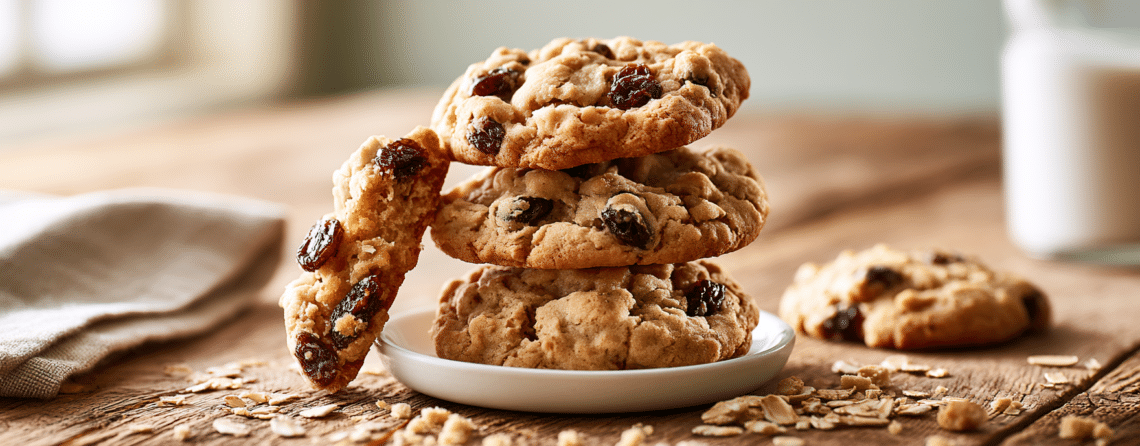
This is a straightforward oatmeal raisin cookie — chewy center, slightly crisp edges, 35 minutes start to finish, and made from ingredients most kitchens already have. The recipe makes 24 cookies, which is enough to share or freeze half for later. If you want a reliable cookie that doesn’t require special equipment or hard-to-find ingredients, this is a good one to have in your rotation.
The technique that matters
Creaming the butter and sugars properly is the step that determines your final texture. Beat them together for a full 3–4 minutes — not 30 seconds — until the mixture looks noticeably pale and fluffy. This works air into the dough, which gives the cookies lift and keeps the center soft rather than dense. The second thing that matters is knowing when to stop mixing once the flour goes in. As soon as you don’t see dry streaks, stop. Overmixing at that stage develops gluten and makes cookies tough. Fold the oats and raisins in by hand with a spatula; the dough is thick enough that a mixer isn’t needed and risks overworking it.
Troubleshooting
- Cookies spread too thin and go flat: Your butter was too warm or fully melted. It should be room temperature — soft enough to press a finger in, but not greasy or shiny. If your kitchen is hot, chill the shaped dough balls for 20 minutes before baking.
- Cookies come out hard and dry: They were overbaked. Pull them when the edges are set and golden but the centers still look underdone — they firm up as they cool on the pan. Err on the side of less time.
- Raisins are hard and chewy in a bad way: Dry raisins don’t soften much in the oven. Soak them in warm water for 10 minutes, then pat them dry before folding them in. This takes almost no extra effort and makes a real difference.
- Cookies are cakey instead of chewy: Too much flour is usually the culprit. Spoon flour into your measuring cup and level it off — don’t scoop directly with the cup, which packs in extra flour and throws off the ratio.
- Cookies stick to the pan: Parchment paper is specified in the recipe for a reason — skip it and you risk sticking and uneven browning on the bottom. Greasing the pan alone isn’t a reliable substitute here.
Smart swaps
- Old-fashioned rolled oats vs. quick oats: The recipe calls for old-fashioned rolled oats, and that’s the right call — they hold their shape and give the cookie its characteristic chew. Quick oats absorb more moisture and produce a softer, more uniform texture that some people prefer, but the cookies will be noticeably different. Instant oats are too fine; skip them entirely.
- Brown sugar: Light or dark both work. Dark brown sugar has more molasses, which adds a slightly deeper flavor and makes the cookies a touch chewier. Either is fine.
- Raisin substitutes: Dried cranberries are the most common swap and work well — they’re tarter, so the cookies taste a little less sweet overall. Chopped dried apricots or dried cherries also work. Skip the garnish of decorative oats pressed on top before baking — not worth the extra step.
- Unsalted butter: If you only have salted butter, reduce the added salt to ¼ teaspoon.
Storage and reheating
Cooled cookies keep well in an airtight container at room temperature for up to 5 days. Adding a slice of bread to the container helps keep them soft — the cookies absorb moisture from the bread. For longer storage, freeze baked cookies in a zip-top bag for up to 3 months; thaw at room temperature for about 30 minutes. You can also freeze the raw dough balls on a sheet pan, then transfer them to a bag once solid — bake straight from frozen at 350°F for 14–16 minutes, no thawing needed. Reheating a baked cookie in the microwave for 10–12 seconds brings back some of the fresh-baked softness.
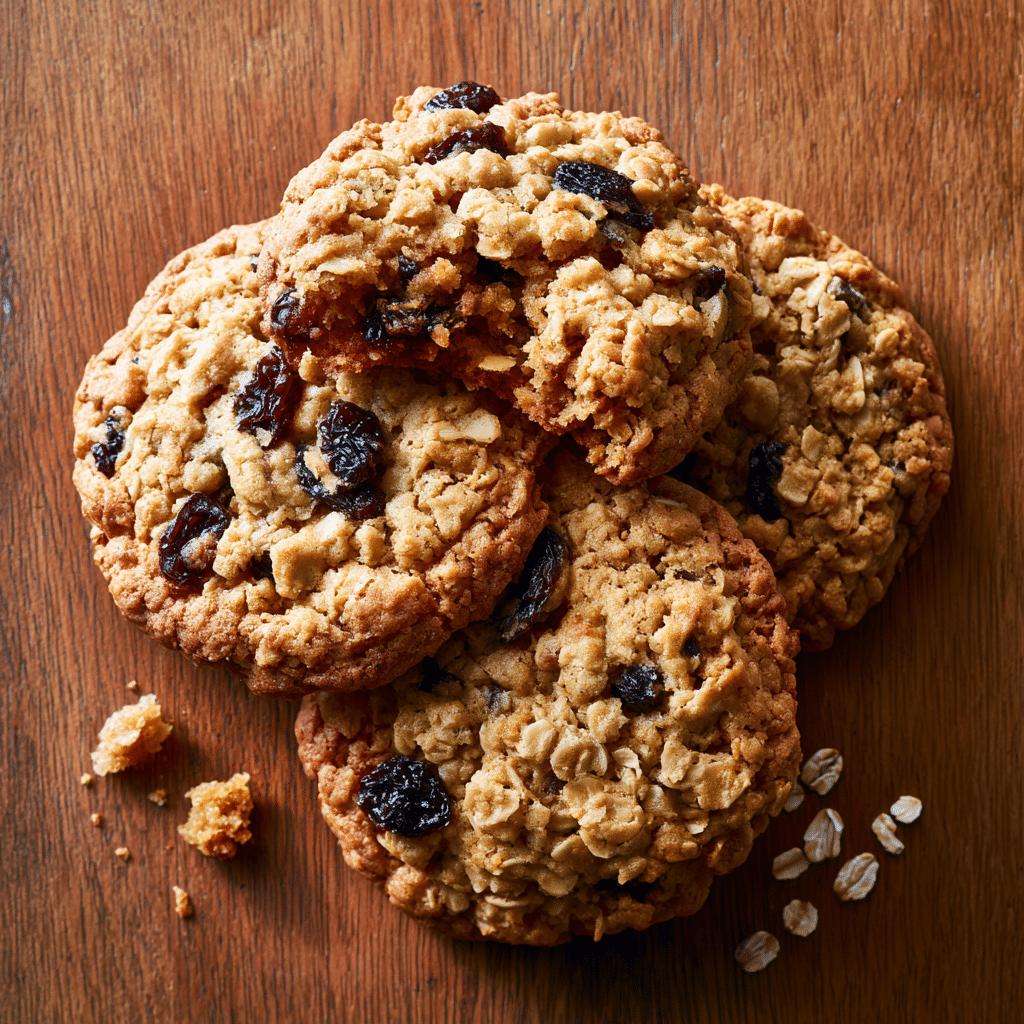
Chewy Oatmeal Raisin Cookies (Soft & Perfectly Spiced)

Equipment
- Large mixing bowl
- Electric hand mixer or stand mixer with paddle attachment
- Medium mixing bowl
- Whisk
- Silicone spatula
- 2 rimmed baking sheets
- Parchment paper
- Wire cooling rack
- Tablespoon cookie scoop
Ingredients
- 1 cup unsalted butter 2 sticks / 227g, at room temperature
- 1 cup brown sugar 200g, lightly packed
- ½ cup granulated sugar 100g
- 2 large eggs at room temperature
- 1 teaspoon vanilla extract pure
- 1 ½ cups all-purpose flour 190g
- 1 teaspoon baking soda
- 1 teaspoon ground cinnamon
- ½ teaspoon salt
- 3 cups old-fashioned rolled oats 270g
- 1 cup raisins 150g, plump and moist
Instructions
- Preheat your oven to 350°F (175°C). Line two baking sheets with parchment paper to avoid sticking and ensure even baking.
- In a large mixing bowl, cream together the unsalted butter, brown sugar, and granulated sugar until the mixture is light and fluffy. This will take about 3–4 minutes using a medium speed on an electric mixer.1 cup unsalted butter, 1 cup brown sugar, 1/2 cup granulated sugar
- Add the eggs one at a time, beating well after each addition. Mix in the vanilla extract until combined.2 large eggs, 1 teaspoon vanilla extract
- In a separate bowl, whisk together the flour, baking soda, cinnamon, and salt. Gradually add this dry mixture to the wet ingredients, mixing until just combined to prevent overworking the dough.1 1/2 cups all-purpose flour, 1 teaspoon baking soda, 1 teaspoon ground cinnamon, 1/2 teaspoon salt
- Using a silicone spatula, fold in the rolled oats and raisins until evenly distributed throughout the dough.3 cups old-fashioned rolled oats, 1 cup raisins
- Using a tablespoon cookie scoop or rounded tablespoon measure (about 30g each), portion the dough onto the prepared baking sheets, leaving about 2 inches (5cm) between each cookie to allow for spreading.
- Bake in the preheated oven for 12–15 minutes, or until the cookies are golden brown around the edges but still look slightly underdone in the centre. They will firm up as they cool.
- Cool the cookies on the baking sheet for about 5 minutes before transferring them to a wire rack to cool completely.
Notes
Nutrition
Your questions, answered
Can I use melted butter instead of softened butter?
No — melted butter will cause the cookies to spread too much and turn out greasy and flat. The butter needs to be soft but still solid so it can trap air during creaming.
Do I need to chill the dough before baking?
Not required, but helpful if your kitchen is warm or if your butter was slightly too soft. A 20–30 minute chill in the fridge will help the cookies hold their shape and spread less.
My cookies look underdone when I take them out — is that okay?
Yes, that’s exactly right. The centers should look soft and slightly underset when you pull them from the oven. They continue cooking on the hot pan during the 5-minute rest, and they firm up completely as they cool.
Can I make these without an electric mixer?
Yes, but it takes effort. Use very soft butter and a wooden spoon or sturdy spatula, and beat the butter and sugars together vigorously for several minutes until the mixture lightens in color. The result will be slightly denser but still good.
Can I double the recipe?
Yes, this recipe doubles cleanly. Just make sure you’re not crowding your baking sheets — cookies need about 2 inches between them to spread properly, so bake in batches rather than cramming them on one pan.
Why are my cookies all different sizes and some bake faster than others?
Inconsistent scooping is the most common cause. A cookie scoop (a small spring-loaded ice cream scoop) makes portioning fast and uniform, and it’s worth using if you have one. Uniform size means uniform bake time across the whole batch.
Try these next
- Classic Soft Sugar Cookies
- Melt-in-Your-Mouth Scottish Shortbread Cookies
- Indulgent Giant Chocolate Chip Cookie Cake
- Ultimate Banana Bread