












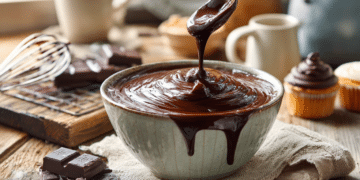



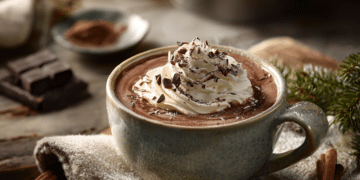







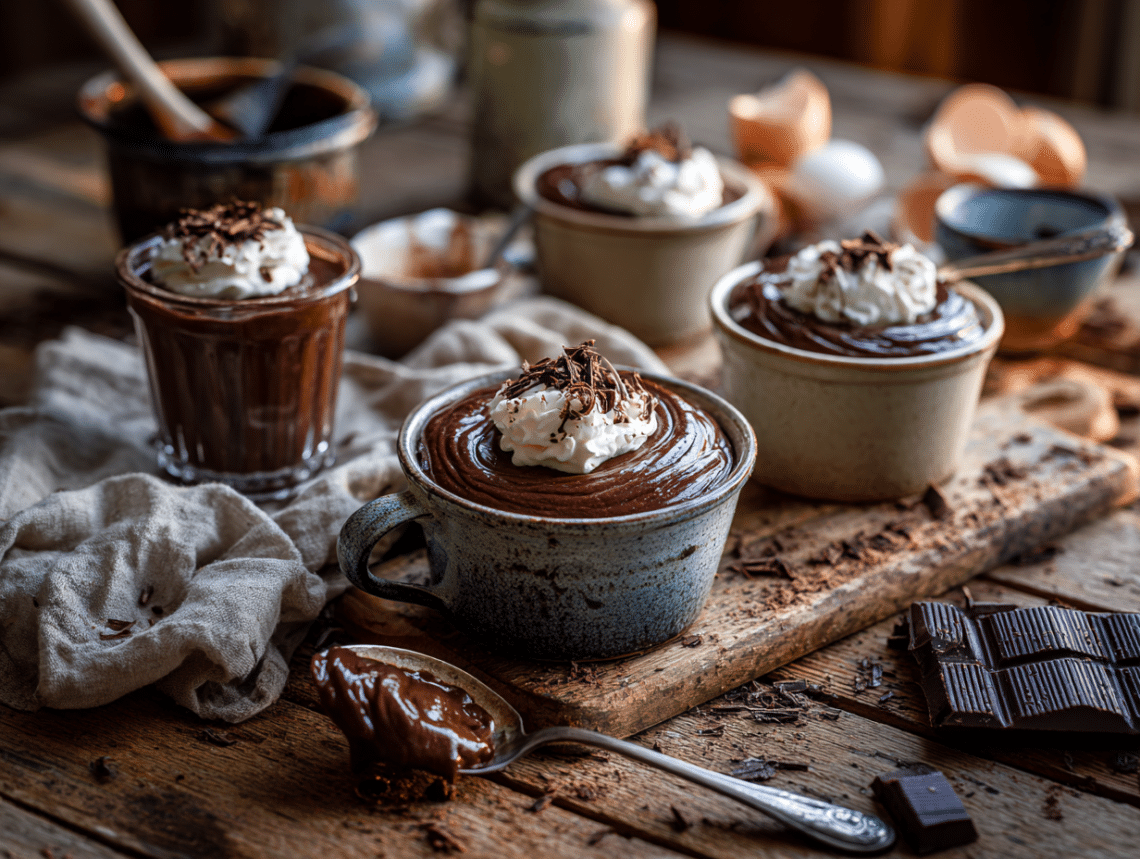
This chocolate pudding is made on the stovetop with real dark chocolate, egg yolks, whole milk, heavy cream, and butter — no box mix involved. The method takes about 25 minutes of active work and produces six individual servings that are genuinely smoother than anything from a packet. If you want a make-ahead dessert that holds well in the fridge for several days, this is a practical one to have in your rotation.
The technique that matters
Two steps define this pudding’s texture. First, you build a proper custard on the stove — whisking the egg yolk mixture into hot milk and cream, then cooking it low and slow until it thickens and just starts to bubble. That bubble is your cue to pull it off the heat immediately; another 30 seconds and the cornstarch can start to break down and thin the custard back out. Second, you finish the pudding in a food processor rather than stirring the chocolate in by hand. Pouring the hot custard over finely chopped chocolate and butter and running the machine for 30 seconds creates a fully emulsified mixture — the fat disperses evenly throughout, which is what gives the finished pudding that smooth, dense set rather than a grainy or waxy one. Neither step is difficult, but skipping or rushing either one will show up in the final texture.
If something goes sideways
- Pudding didn’t set after chilling: The custard likely didn’t reach a full bubble before you pulled it off the heat. The cornstarch needs to hit that temperature to activate fully. If your pudding is still loose after 3 hours in the fridge, you can pour it back into a saucepan, whisk in a small slurry of 1 teaspoon cornstarch mixed with 1 tablespoon cold milk, and cook it again until it bubbles — then re-blend and re-chill.
- Surface cracked or dried out in the fridge: The plastic wrap wasn’t pressed directly onto the pudding surface. Even a small air gap lets a skin form and dry. Re-press the wrap flat before returning it to the fridge — you can smooth the surface with the back of a spoon first.
- Pudding tastes grainy or waxy: The chocolate wasn’t chopped finely enough before blending, or the custard had cooled too much before it hit the chocolate. The custard needs to be hot enough to melt the chocolate on contact. If it’s already set this way, there’s no easy fix — treat it as a learning run and chop more finely next time.
- Faint eggy smell or flavor: The egg yolks were cooked too slowly at too high a heat, or the vanilla was added too early and cooked off. Both are subtle but noticeable. Keep the heat low once the custard goes back in the pan, and make sure vanilla goes in with the milk before heating rather than being omitted.
Shopping notes
- Dark chocolate (at least 60% cocoa): A baking bar works better here than chocolate chips — chips contain stabilizers that can make the blended texture slightly gluey. Brands like Ghirardelli, Lindt, or Guittard baking bars are widely available and all work well.
- Dutch-processed cocoa powder: Regular natural cocoa powder is more acidic and will give a sharper, less rounded chocolate flavor. Dutch-process is worth seeking out for this recipe — Droste and Rodelle are common supermarket options. Skip the garnish of chocolate shavings if you don’t have a good bar on hand — not worth the extra dish.
- Heavy cream: The recipe uses only ¼ cup in the custard, so a small carton covers both the pudding and the whipped cream topping. Buy one 8 oz carton and you’ll have enough for both.
Keeping and reheating
These puddings keep well in the fridge for up to 4 days with the plastic wrap pressed directly on the surface. That makes them a solid option for prepping on a Sunday and pulling out through the week — the texture actually firms up nicely by day two. For longer storage, they freeze reasonably well for up to 6 weeks: freeze them in the ramekins without the plastic wrap until solid, then wrap tightly. Thaw overnight in the fridge rather than at room temperature. Chocolate pudding isn’t great reheated — the texture turns loose and the emulsion can separate — so serve it cold or at room temperature. Add the whipped cream only right before serving, never in advance.
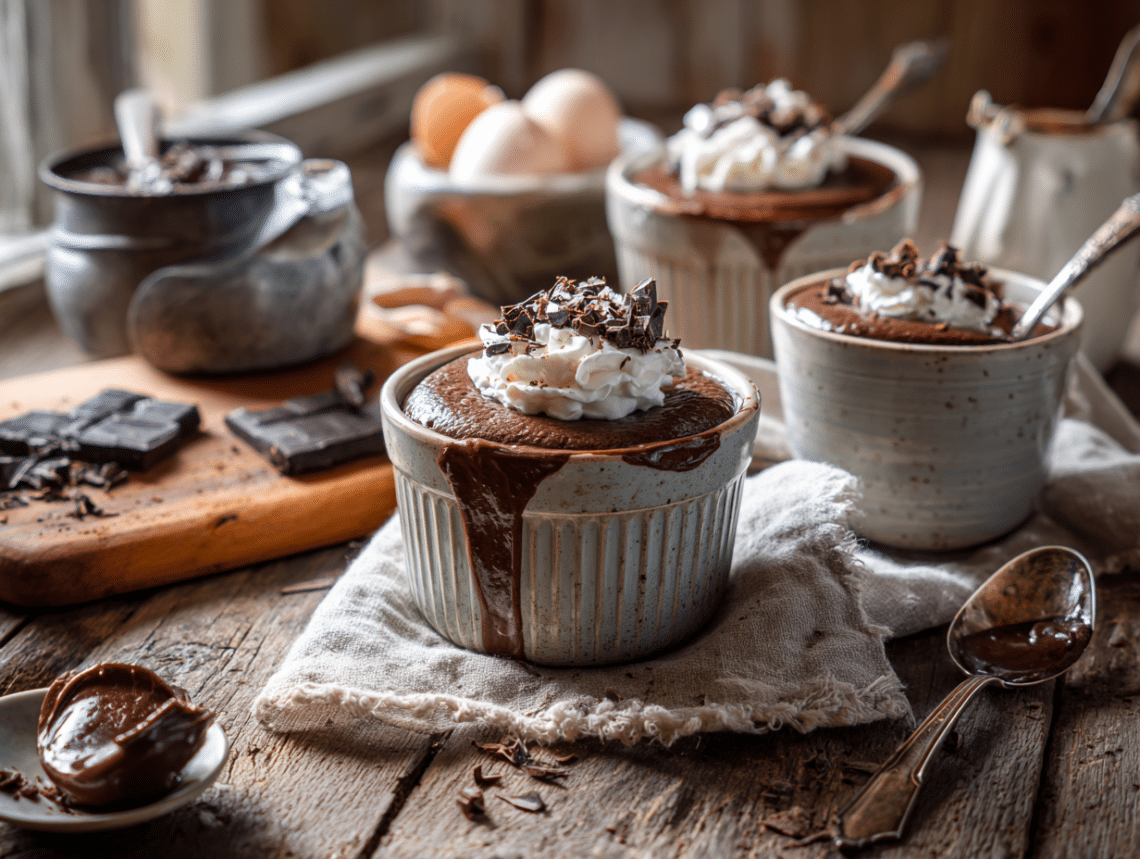
Yummiest Chocolate Pudding

Ingredients
- 3 tablespoons fine unbleached sugar
- 2 tablespoons Dutch-processed unsweetened cocoa powder
- 2 tablespoons organic cornstarch
- 1 pinch fine sea salt
- 3 large organic or local egg yolks room temperature
- 3 ounces dark chocolate at least 60% cocoa or higher
- 1 ¼ cups organic whole milk
- ¼ cup organic heavy cream
- ½ teaspoon vanilla extract
- 1 tablespoon unsalted organic butter
Instructions
- Sift the sugar, cocoa powder, cornstarch, and salt into a bowl. Place the egg yolks in a bowl, sprinkle the sugar mixture, and whisk to combine. Add a few tablespoons of milk to soften the mixture.
- In a food processor fitted with the blade attachment, pulse the chocolate until it is finely chopped.
- Over medium heat, bring the milk, heavy cream, and vanilla extract to a boil. Whisking constantly, pour the hot milk mixture over the egg mixture. Return this liquid to the saucepan, continuing to whisk constantly, and cook over low heat, stirring, until the mixture has thickened and just begun to bubble, for about 3 minutes. Whenever you start to see bubbles, it’s good!
- Immediately pour this custard into the food processor with the chocolate, add the butter, and run until smooth, for about 30 seconds.
- Transfer the cooked pudding to a measuring cup or something you can quickly pour from. Pour pudding into six 4-ounce (120ml) cups or ramekins. Press plastic wrap directly onto the surface of each pudding to prevent a skin from forming. Let cool to room temperature, then refrigerate for at least 2 hours or until fully set.
- Top each pudding with a generous dollop of freshly whipped cream and a sprinkle of chocolate shavings just before serving.
Nutrition
FAQ
Can I make this pudding without a food processor?
You can, but the texture will be less smooth. Finely chop the chocolate by hand, place it in a heatproof bowl with the butter, and pour the hot custard over it. Whisk vigorously for a full minute until the chocolate is completely melted and the mixture looks glossy and uniform. Strain it through a fine-mesh sieve before pouring into cups.
Can I use milk chocolate or semi-sweet instead of dark?
Yes, but the pudding will be noticeably sweeter and less complex. If you use milk chocolate, reduce the sugar in the custard by about half to keep it from being cloying. Semi-sweet (around 50–55% cocoa) is a reasonable middle ground that works without adjusting the sugar.
Do I have to use egg yolks, or can I leave them out?
The egg yolks are structural here — they contribute to the thick, creamy set and the richness of the finished pudding. Leaving them out gives you a thinner, more pudding-cup-style result. If you need an egg-free version, increase the cornstarch to 3 tablespoons and accept that the texture will be slightly more starchy and less custardy.
How do I know when the custard is thick enough to take off the heat?
Watch for the first full bubbles breaking the surface — not just steam, but actual slow, thick bubbles. At that point, cook for one more minute while whisking constantly, then pull it immediately. The custard will also coat the back of a spoon thickly enough that a line drawn through it holds its shape.
What to cook next
- French chocolate mousse
- silky dark chocolate mousse
- dark chocolate brownies with espresso and sea salt
- classic vanilla rice pudding