





















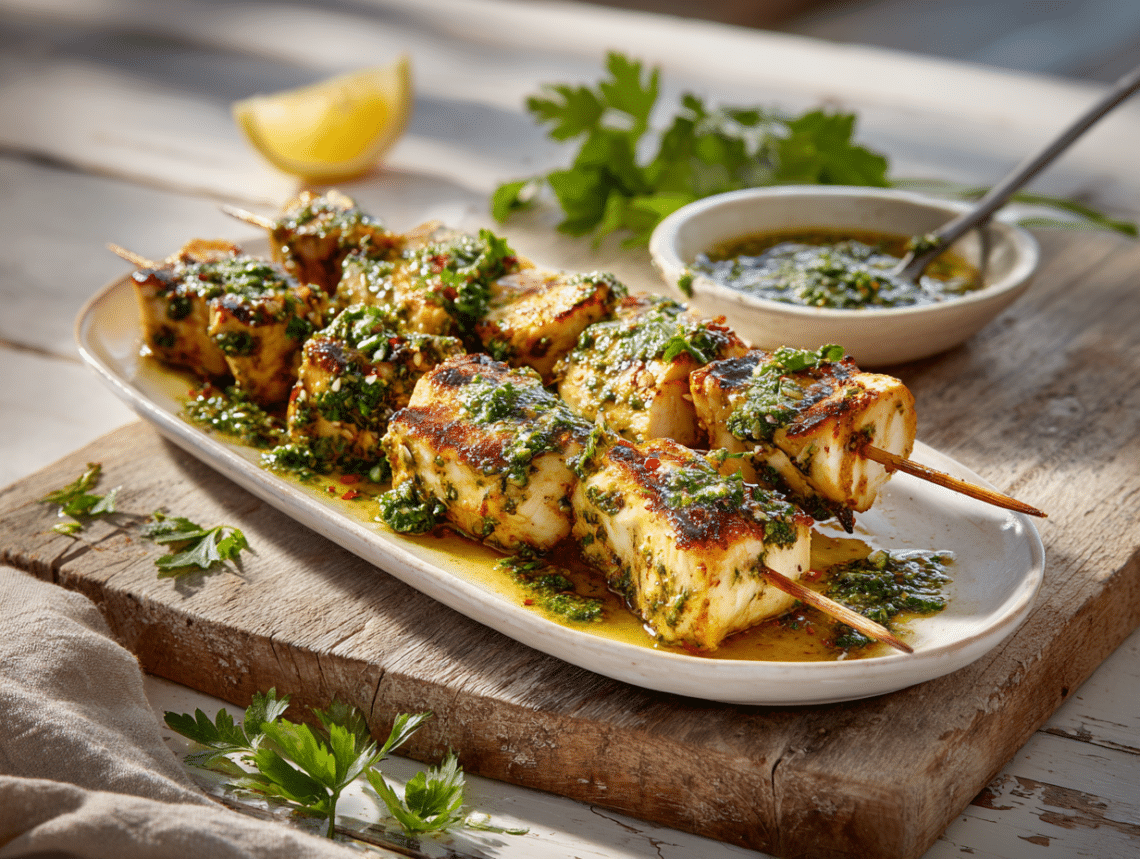
These skewers use a blended chimichurri — parsley, cilantro, basil, oregano, red wine vinegar, and olive oil — as both a basting sauce on the grill and a dipping sauce at the table. The whole thing comes together in about 32 minutes, and the sauce is the kind you’ll want to make a double batch of. It works on a gas grill, charcoal, or a grill pan indoors.
What makes this version work
Two things actually matter here. First, the chimichurri is blended smooth rather than hand-chopped, which means it clings to the chicken during grilling instead of sliding off — you get herb flavor in the char, not just on top. Second, the sauce is split before any raw chicken touches it: one portion for basting, one kept clean for the table. That’s not just food safety habit; it means the dipping sauce stays bright and fresh-tasting instead of cooked-down and muddy. Both of those choices pay off more when you’re feeding a crowd, because you can prep the sauce and skewer the chicken hours ahead without losing anything.
Ingredient notes
- Fresh herbs: All four herbs — parsley, cilantro, basil, oregano — are in the recipe because each one does something different. If cilantro is a hard no in your household, just increase the parsley to compensate. Dried oregano works in a pinch (use 1 teaspoon instead of the fresh sprig), but dried versions of the other herbs don’t blend well and will make the sauce gritty.
- Red wine vinegar: This is what gives the sauce its sharpness. Don’t swap it for white wine vinegar or apple cider vinegar — the flavor profile shifts noticeably. If the finished sauce tastes too sharp, a small extra pour of olive oil will mellow it out without dulling the herb flavor.
- Chicken breasts: Boneless, skinless thighs also work and stay juicier if the skewers sit on a warm grill longer than planned — useful when you’re cooking for a group and timing gets unpredictable. Skip the garnish of extra herb sprigs on the platter — not worth the extra prep when the sauce already looks vivid on its own.
Make-ahead notes
The chimichurri keeps well in a sealed jar in the fridge for up to 5 days — the color dulls slightly but the flavor holds. Make it the night before if you’re cooking for guests. The chicken can be cubed, seasoned, and threaded onto skewers up to 24 hours ahead; cover and refrigerate. Don’t brush the basting chimichurri onto the raw skewers until you’re ready to grill, or the vinegar will start to break down the texture of the chicken. Leftover cooked skewers reheat well in a 350°F oven for about 8 minutes, or slice the chicken off the skewers and use it cold in wraps or grain bowls the next day.
Common problems and fixes
- Chicken sticking to the grill: This usually means the grates weren’t hot enough or weren’t oiled. Preheat fully to medium-high before the skewers go on, and brush the grates with a folded paper towel dipped in oil right before cooking.
- Uneven cooking — some pieces raw, some overdone: This happens when the cubes are cut inconsistently. Aim for pieces that are as close to 1 inch as possible, and leave a small gap between each piece on the skewer so heat circulates on all sides.
- Sauce turns brown or bitter after blending: Over-blending generates heat and oxidizes the herbs fast. Blend in short pulses — 30 seconds total is enough. If you’re making a large batch, work in two rounds rather than overfilling the blender.
- Skewers burning before the chicken is done: Bamboo skewers need a full 30-minute soak in cold water. If you’re in a hurry, use metal skewers instead — they also conduct heat into the center of the chicken, which speeds up cooking slightly.
- Sauce tastes flat after refrigerating overnight: Cold mutes the acidity and herb flavor. Take the chimichurri out of the fridge 20 minutes before serving, stir it, and taste — a small splash of fresh red wine vinegar usually brings it back.
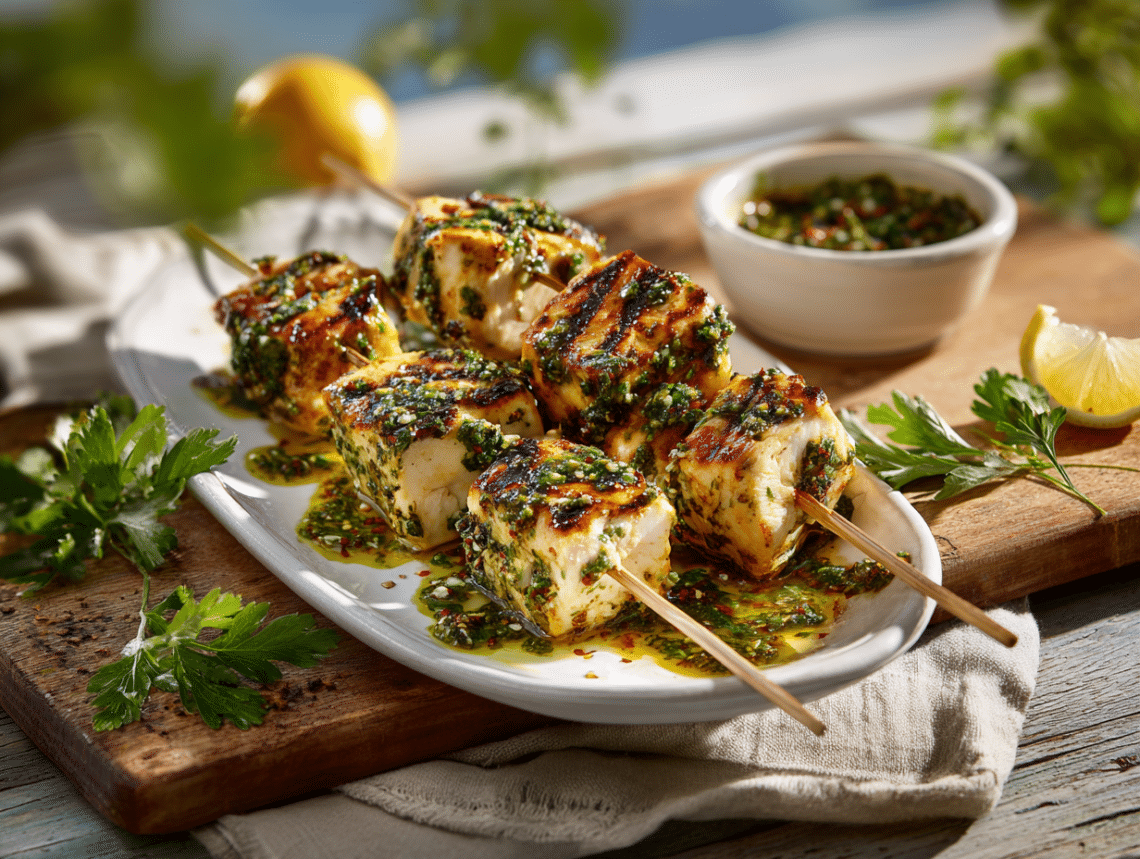
Chimichurri Chicken Skewers (Grilled & Juicy)

Ingredients
- 1 cup fresh Italian parsley loosely packed
- ¼ cup fresh cilantro loosely packed
- 6 large fresh basil leaves
- 2 sprigs fresh oregano about 1 tablespoon leaves
- ½ cup extra virgin olive oil
- ½ cup red wine vinegar
- 4 cloves garlic peeled (about 12g)
- ½ teaspoon crushed red pepper flakes optional
- 2 pounds boneless, skinless chicken breasts
- 1 teaspoon kosher salt plus more to taste
- ½ teaspoon black pepper freshly ground
Instructions
- Add the parsley, cilantro, basil, oregano, olive oil, red wine vinegar, garlic, and crushed red pepper flakes (if using) to a blender or food processor. Blend until smooth, about 30 seconds. Taste and adjust — if it tastes too sharp, add an extra splash of olive oil to mellow it out. Set aside half of the chimichurri in a separate bowl for serving (do not let it touch raw chicken).
- Cut the chicken breasts into 1-inch (2.5cm) cubes. Season all over with the kosher salt and black pepper. Thread the chicken pieces onto skewers, leaving a small gap between each piece to ensure even cooking. If using bamboo skewers, soak them in water for at least 30 minutes before threading to prevent burning.
- Preheat the grill to medium-high heat, approximately 400°F / 200°C. Brush the skewered chicken generously on all sides with chimichurri sauce from the basting portion.
- Place the skewers on the grill and cook for 4–5 minutes per side, turning occasionally, until the chicken is lightly charred and reaches an internal temperature of 165°F / 74°C. Baste with additional chimichurri halfway through grilling.
- Serve the grilled skewers immediately with the reserved (uncontaminated) chimichurri sauce on the side for dipping.
Nutrition
FAQ
Can I double or triple the recipe for a party?
Yes — this recipe scales up cleanly. The chimichurri blends in batches (do two separate blender runs rather than overfilling), and the chicken can be skewered the day before and kept covered in the fridge. The main thing to plan for is grill space: cook in batches and keep finished skewers warm in a 200°F oven on a baking sheet while the rest finish.
Can I make this without a grill?
A grill pan on the stovetop works — preheat it over medium-high for at least 3 minutes before the skewers go on. You won’t get smoky flavor, but you’ll still get char marks and the chimichurri crust. Make sure your kitchen is ventilated, because the high heat and oil will smoke.
How do I know when the chicken is actually done without a thermometer?
The most reliable sign without a thermometer is cutting into the thickest cube — the juices should run clear and the center should be white with no translucency. That said, an instant-read thermometer is the only way to be sure at 165°F / 74°C, and small cubes go from done to dry quickly, so it’s worth having one.