







































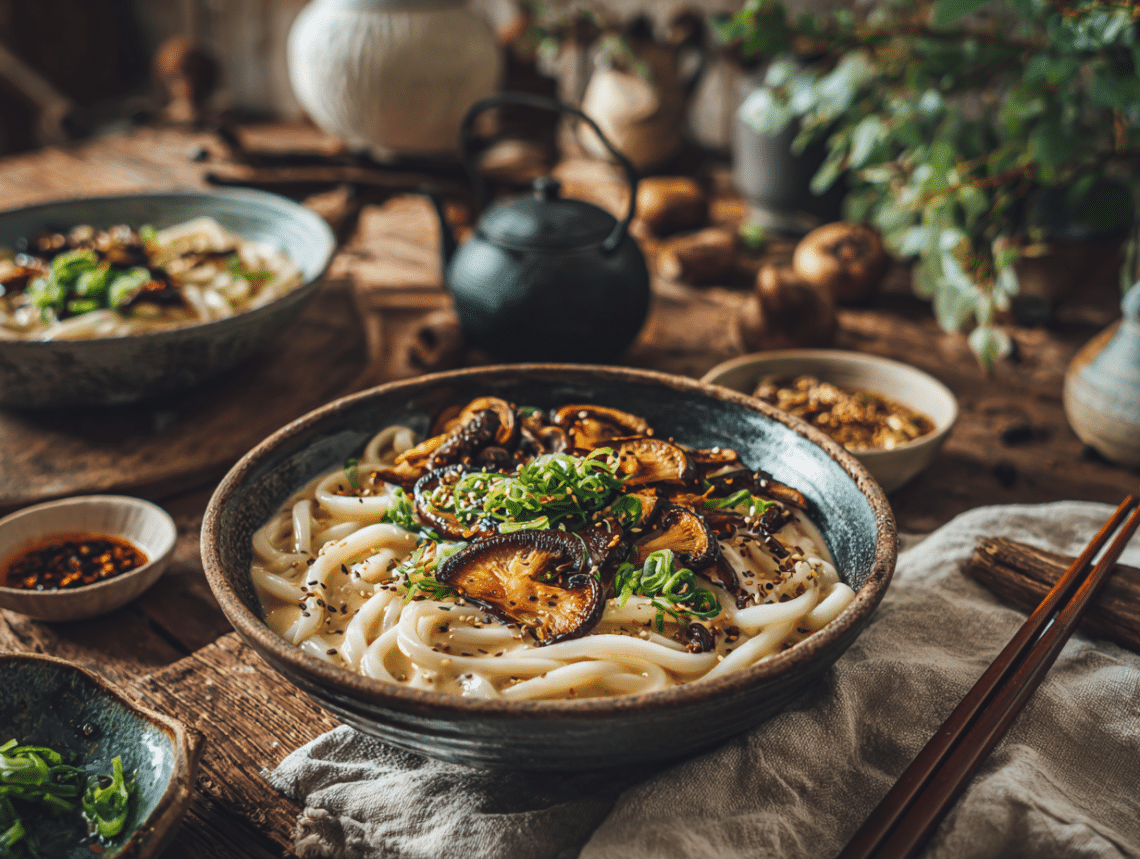
This is a creamy miso udon that comes together in one pot and one pan in about 40 minutes. The sauce is built from white miso, vegetable broth, and unsweetened soy milk — no dairy, no heavy cream — and it coats thick, chewy udon noodles in a way that feels genuinely satisfying without being heavy. If you need a fast weeknight dinner that uses mostly pantry staples, this is a reliable one.
Smart swaps
- White miso (shiro miso): This is the one ingredient worth tracking down. It’s sweeter and milder than red or yellow miso, so the sauce stays balanced rather than salty. Most grocery stores carry it near the tofu. In a pinch, yellow miso works — use a little less.
- Soy milk vs. oat milk: Both work. Soy milk gives a slightly richer result; oat milk is a touch sweeter. Avoid anything flavored or sweetened.
- Fresh or frozen udon: The recipe specifically calls for fresh or frozen — not dried. Dried udon has a completely different texture and won’t hold the sauce the same way. Fresh is ideal; frozen is nearly as good and widely available.
- Shiitake mushrooms: Cremini mushrooms are a reasonable substitute if shiitake aren’t available. They’re less earthy but still brown up nicely.
The technique that matters
The most important step is dissolving the miso paste in warm broth before it hits the pan. Miso doesn’t melt on its own — drop it directly into a hot pan with other liquids and you’ll end up with salty clumps in an otherwise bland sauce. Whisking it into warm broth first takes 30 seconds and guarantees a smooth, evenly seasoned result. The second thing worth doing carefully: don’t rush the mushrooms. Four to five minutes over medium heat, stirring regularly, gets them golden and slightly crisp at the edges. That browning adds depth that the sauce alone can’t replicate.
Mistakes to avoid
- Boiling the sauce after adding miso: High heat kills the fermented flavor and can make the sauce taste flat and overly salty. Keep it at a gentle simmer once the miso mixture goes in.
- Skipping the reserved noodle water: That starchy water is what helps the sauce cling to the noodles. If you forget to save it, the sauce may slide right off — add a tablespoon of plain water as a backup, but it won’t be quite the same.
- Overcooking the udon: Fresh and frozen udon cook fast — 2 to 3 minutes. Pull them a few seconds early if anything, since they’ll continue softening in the hot sauce.
- Adding sesame oil too early: Toasted sesame oil loses its aroma quickly over heat. Add it at the very end, off the burner, so the flavor stays sharp.
- Over-salting before tasting: Miso and soy sauce both carry significant sodium. Taste the sauce before adding any extra soy sauce or salt — skip the extra garnish of soy at the table entirely, and you won’t miss it.
Leftovers and make-ahead
Leftovers keep well in the fridge for up to 3 days in a sealed container. The noodles will absorb most of the sauce as they sit, so add a splash of vegetable broth or water when reheating — a few tablespoons is usually enough. Reheat gently in a small pan over low-medium heat, stirring until warmed through; the microwave works too, just cover the bowl and use 60-second intervals. Freezing is not recommended — udon noodles turn mushy after thawing. If you want to get ahead, you can whisk together the miso-broth-soymilk mixture and store it in the fridge for up to 2 days before cooking.
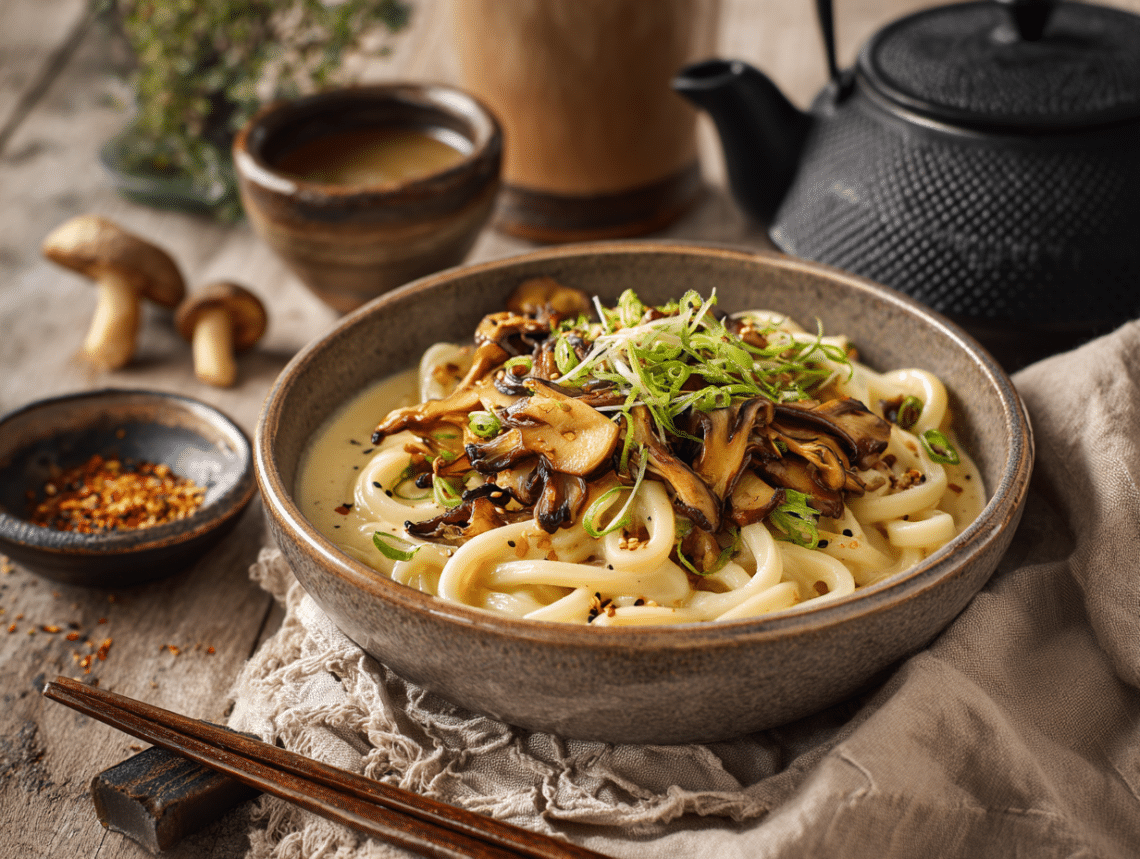
Creamy Miso Udon Noodles with Shiitake and Scallions

Equipment
- Large Pot
- Medium sauté pan
- Whisk
- Knife
- Cutting board
Ingredients
- 12 oz fresh udon noodles or frozen; avoid dried for best texture
- 1 tbsp neutral oil such as vegetable or grapeseed oil
- 1 cup shiitake mushrooms stems removed, caps thinly sliced
- 2 cloves garlic finely minced or grated
- 2 tbsp white miso paste shiro miso for the lightest sweetness and least saltiness
- 1 cup vegetable broth low-sodium, warm
- ½ cup unsweetened soy milk or oat milk for creaminess
- 1 tsp toasted sesame oil
- 2 pieces scallions sliced thinly, greens and whites separated
- ½ tsp soy sauce or tamari for gluten-free option
- 1 pinch freshly ground black pepper to taste
Instructions
- Bring a large pot of water to a boil. Add fresh or frozen udon noodles and cook according to package instructions—typically 2 to 3 minutes until tender but chewy. Drain and set aside, reserving 1/4 cup of the starchy cooking water.
- In a sauté pan, heat the neutral oil over medium heat. Add the sliced shiitake mushrooms and sauté for about 4–5 minutes, or until golden brown and soft. Stir often for even browning. Add the minced garlic and cook 30 seconds until aromatic.
- In a bowl, whisk warm vegetable broth with miso paste until smooth to avoid lumps. Add soy milk, soy sauce, and reserved noodle water. Pour this liquid mixture into the sauté pan with mushrooms. Simmer gently for 2–3 minutes over medium heat, allowing the sauce to thicken slightly.
- Add cooked udon noodles directly into the sauce and toss well to coat. Let simmer another 2 minutes until everything is hot and silky. Turn off heat and finish with toasted sesame oil, black pepper, and scallion whites.
- Serve in deep bowls garnished with scallion greens and, if you wish, a sprinkle of furikake or toasted sesame seeds for extra texture and umami.
Notes
- For a spicier version, add a drizzle of chili oil before serving.
- To make it fully plant-based broth, ensure your vegetable broth contains no bonito or dashi pieces.
- You can swap shiitake for cremini in a pinch, but shiitake adds more umami depth.
Nutrition
Common questions
Can I use red or yellow miso instead of white miso?
You can, but the sauce will taste saltier and more intense. Start with half the amount and taste as you go — white miso is specifically mild enough to let the other flavors come through without dominating.
Is this recipe actually dairy-free?
Yes, as written it contains no dairy. The creaminess comes from unsweetened soy milk or oat milk, and there’s no butter or cream involved.
Where do I find fresh or frozen udon noodles?
Most large grocery stores carry frozen udon in the Asian foods freezer section — look for individually portioned vacuum-sealed packages. Asian grocery stores almost always have both fresh and frozen options.
Can I add protein to make this more filling?
Yes — soft-boiled eggs, pan-fried tofu, or shredded rotisserie chicken all work well here. Add them at the end when you toss the noodles in the sauce so they just warm through without overcooking.
My sauce looks thin — what do I do?
Let it simmer uncovered for an extra minute or two before adding the noodles. The starchy noodle water also helps thicken it as everything comes together, so don’t skip that step.
Can I make this gluten-free?
Swap the soy sauce for tamari, which the recipe already flags as an option. Note that standard udon noodles contain wheat — look for rice-based udon or certified gluten-free udon noodles, which are available at some specialty stores and online.
Try these next
- Authentic Japanese Chicken Teriyaki
- Soft and Sweet Japanese Mochi
- Quick and Delicious Homemade Chinese Fried Rice
- Fresh Vegetable Spring Rolls