









































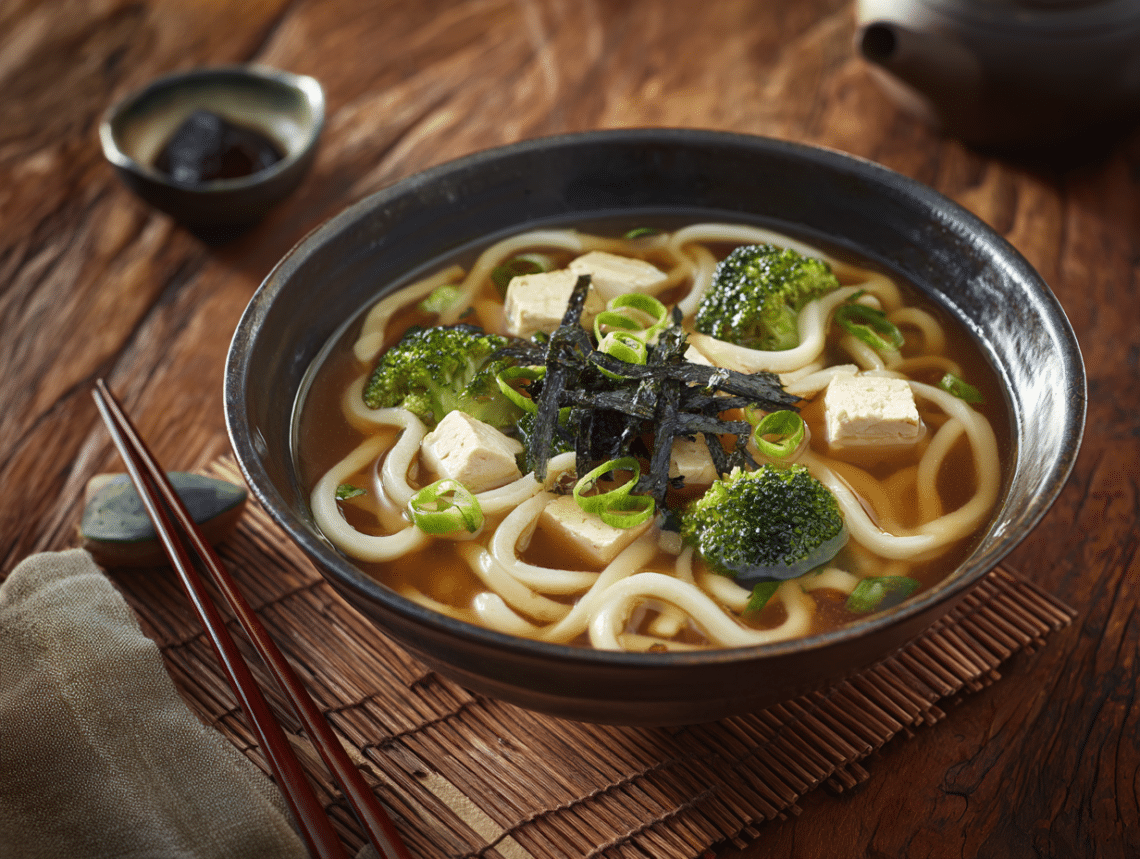
This is a vegan miso udon soup that comes together in 30 minutes and feeds four people a genuinely filling bowl — not a small starter, but a proper dinner. The broth is built from white or yellow miso, fresh ginger, garlic, and rice vinegar, with broccoli and firm tofu added off the heat so nothing overcooks. It scales up easily, which makes it a solid choice when you need to feed more people without adding much work.
The short version of why this works
Two things matter here. First, the miso is never boiled — it gets whisked into a ladleful of warm broth separately, then stirred back into the pot. Boiling miso dulls its flavour and kills its beneficial bacteria, so keeping the heat gentle after that point is not optional. Second, the tofu goes in after the heat is off. Firm tofu doesn’t need cooking, it just needs warming through, and a minute or two of residual heat does that without turning the cubes rubbery. Both steps take no extra time — they just require doing things in the right order.
About the ingredients
- Miso paste: Use white (shiro) or yellow (shinshu) miso. White miso is mild and slightly sweet — a good default if you’re unsure. Yellow sits in the middle: a bit earthier, still approachable. Red miso is much stronger and saltier; it will work, but start with one tablespoon and taste before adding more.
- Udon noodles: Fresh udon (usually sold vacuum-packed in the refrigerated section) cooks in about 2 minutes. Dried udon takes 8–10 minutes. Check your packet — the difference matters or you’ll end up with mush.
- Firm tofu: Press it for at least 10 minutes before cutting. A quick press means the cubes hold their shape better in the broth.
- Nori: Skip the garnish — not worth the extra dish. The soup is complete without it.
- Tamari swap: If you need this to be gluten-free, use tamari in place of soy sauce. Most udon noodles contain wheat, so also look for rice-based or certified gluten-free udon.
Storage and reheating
Store leftovers in an airtight container in the fridge for up to 3 days. The noodles will absorb broth as they sit, so the soup thickens considerably overnight — add a splash of vegetable broth or water when reheating. Warm it on the stovetop over low heat; don’t let it boil or the miso flavour flattens. The tofu holds up fine in the fridge, but if you’re planning ahead for a crowd, you can make the broth up to 2 days in advance and cook the noodles and broccoli fresh when you’re ready to serve — that gives you the best texture. This soup doesn’t freeze well; the noodles turn mushy and the tofu becomes spongy after thawing.
What can go wrong
- Broth tastes flat or thin: Miso varies a lot by brand. If the soup tastes underseasoned after adding the dissolved miso, whisk another half tablespoon into a small amount of broth and stir it in. Add the extra soy sauce last — it’s easier to add salt than to fix an oversalted pot.
- Noodles clump together: This happens most often with fresh udon if you add them all at once to a pot that isn’t at a steady simmer. Separate them gently with tongs as soon as they hit the broth. For a large batch, cook the noodles in a separate pot of boiling water, drain them, and divide them into bowls before ladling the hot broth over the top.
- Broccoli turns grey and soft: It only needs 3–4 minutes in the simmering broth. If your florets are large, cut them smaller rather than cooking longer. Pull the pot off the heat the moment the broccoli is bright green and just tender.
- Soup is too salty: Vegetable broths vary widely in sodium. If yours is already salty, hold back on the soy sauce until you’ve tasted the finished broth, and use a lower-sodium miso if you have one available.
- Tofu falls apart in the bowl: This usually means it wasn’t pressed long enough, or it was stirred too aggressively after going in. Add the cubes gently and let them sit undisturbed for the full 1–2 minutes before ladling.
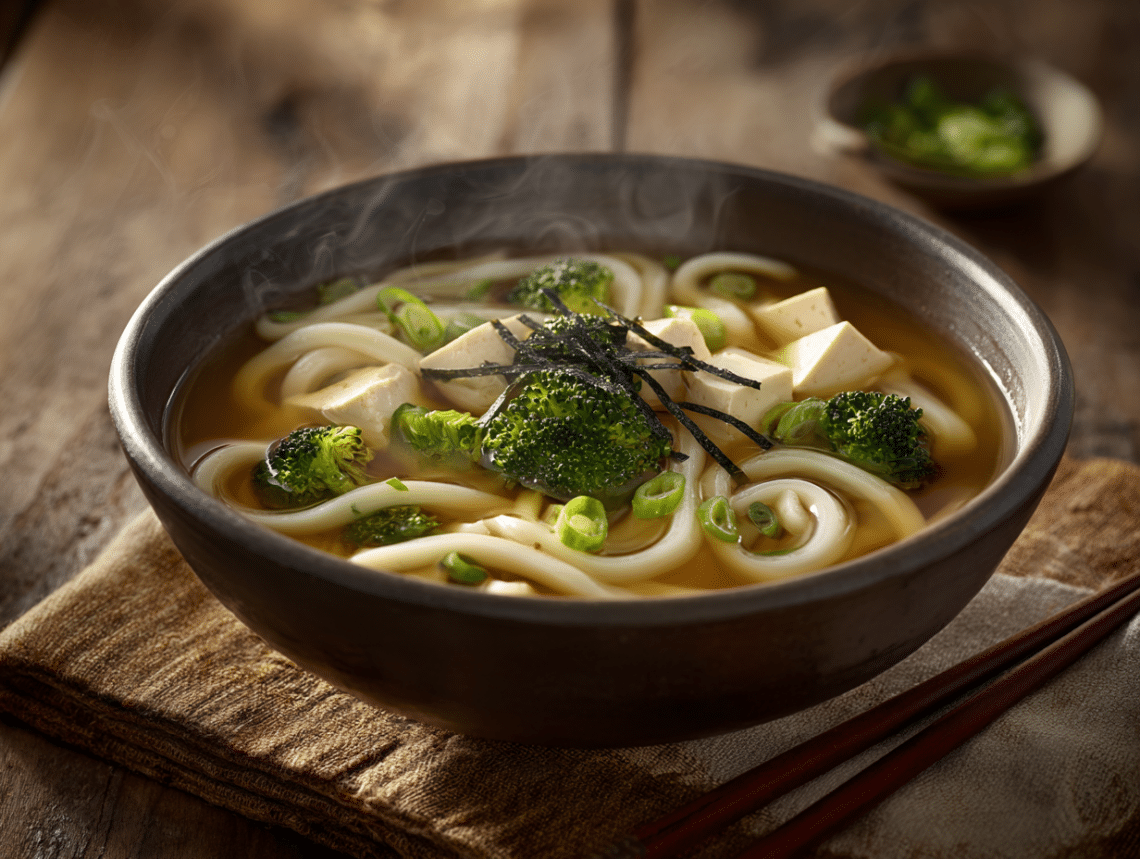
Miso Soup With Udon Noodles

Ingredients
- 5 cups vegetable broth
- 2-3 tablespoons white or yellow miso paste
- 1 tablespoon freshly grated ginger
- 2 cloves garlic finely minced
- 3 tablespoons rice vinegar
- 10-12 ounces udon noodles fresh or dried
- 1 head broccoli cut into florets, stalk peeled and thinly sliced
- 2 teaspoons soy sauce use tamari for gluten-free
- 6 ounces firm tofu drained, pressed, cut into ½-inch cubes
- ½ cup sliced green onions white and dark green parts
- 1 sheet nori thinly sliced (optional)
Instructions
- In a large pot, bring the vegetable broth to a gentle boil. Reduce heat to low. Ladle about ½ cup of warm broth into a small bowl, add the miso paste, and whisk until fully dissolved. Pour the miso mixture back into the pot along with the ginger, garlic, and rice vinegar. Simmer gently (do not boil vigorously) for about 10 minutes. Taste and stir in more miso if you want a stronger flavour.
- Add the udon noodles to the simmering soup. Cook for 2 minutes if using fresh udon, or 8–10 minutes if using dried, checking the packet instructions. Add the chopped broccoli florets during the last 3–4 minutes of cooking, until the noodles are al dente and the broccoli is tender-crisp and bright green.
- Turn off the heat and stir in the soy sauce, tofu cubes, and sliced green onions. Let the soup sit for 1–2 minutes so the tofu warms through. Ladle into bowls and top with extra green onions and strips of sliced nori.
Nutrition
FAQ
Can I double this recipe to feed a crowd?
Yes — this recipe doubles straightforwardly. Use your largest pot and scale all ingredients evenly, but add the miso gradually and taste as you go, since doubling the broth volume can sometimes mean you need slightly less than double the miso to hit the right balance.
What’s the difference between white, yellow, and red miso — which should I buy?
White miso is the mildest and works well here if you’re new to cooking with it. Yellow miso has a slightly deeper, earthier flavour and is also a good choice. Red miso is much more intense and salty, so if that’s what you have, use about half the amount called for and taste before adding more.
Can I use a different protein instead of tofu?
Edamame (shelled, thawed from frozen) works well and needs no cooking — just stir it in with the green onions at the end. Soft-boiled eggs are another option if you’re not keeping this vegan; halve them and place on top of each bowl just before serving.
My grocery store only has one type of udon — does the shape or thickness matter?
Thick, round udon is traditional and holds up best in broth without going mushy. Flat udon works too. The most important thing is whether your noodles are fresh or dried, since that changes the cooking time significantly — check the packet and follow those instructions over the recipe timing if they differ.
More recipes to try
- Authentic Japanese Chicken Teriyaki
- Soft and Sweet Japanese Mochi
- Fresh Vegetable Spring Rolls
- Quick and Delicious Homemade Chinese Fried Rice