



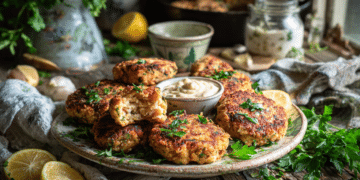

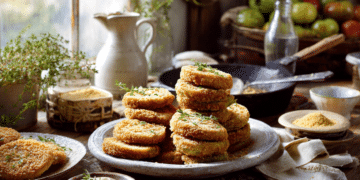








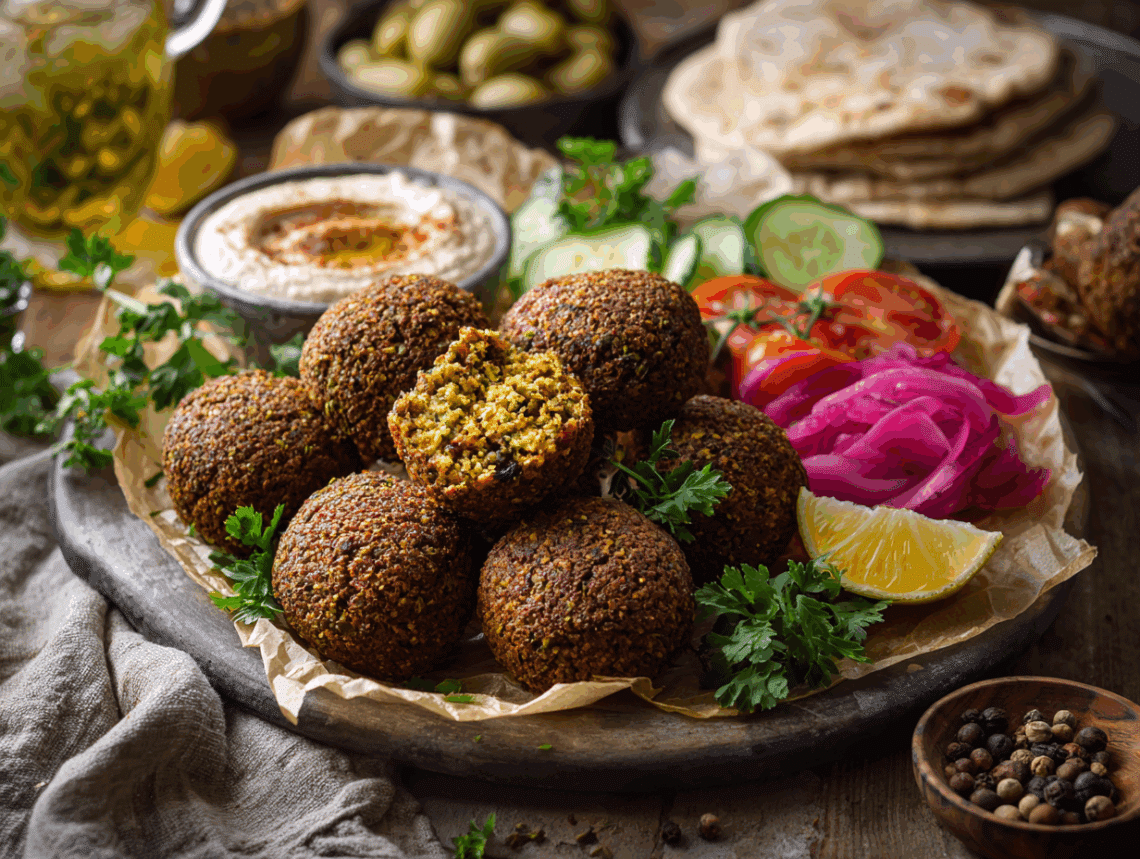
This falafel is made with dried chickpeas — soaked overnight, never canned — blended with fresh parsley, cilantro, garlic, and warm spices, then fried until deeply golden. The result is crisp on the outside and light inside, not dense or doughy. If you’ve had falafel that fell apart in the pan or tasted like wet flour, this recipe fixes both problems.
The short version of why this works
Two things actually make or break this recipe. First, dried chickpeas only — canned are too wet and will give you a paste that fries up dense and falls apart. Soaking dried chickpeas overnight softens them just enough to process while keeping the mixture coarse, which is what creates that light, slightly crumbly interior. Second, the one-hour chill after mixing is not optional if you’re planning to fry a big batch. It firms the mixture so the falafel holds its shape through repeated handling and multiple rounds of frying, and it lets the flour and baking powder do their job evenly throughout.
Substitutions that actually work
- Chickpea flour instead of all-purpose flour: A straight swap that makes the recipe gluten-free. It binds slightly differently — the mixture may feel a touch drier, so add it one tablespoon at a time until the balls just hold together.
- All parsley, no cilantro: Works fine if cilantro is a problem in your household. The falafel will taste a little less bright but still very good. Don’t try to replace both herbs with dried — fresh is doing real work here.
- Baking instead of frying: The recipe card covers this. Skip the garnish of sesame seeds on top before baking — not worth the extra dish, and they tend to burn before the falafel is fully cooked through.
Troubleshooting
- Falafel explodes or cracks open in the oil: The mixture is too wet or the oil isn’t hot enough. Pat the formed balls dry with a paper towel before frying, and confirm your oil is at 350°F before adding the first batch. Cold oil causes the outside to absorb oil before it sets.
- Mixture won’t hold together when shaping: Add flour one tablespoon at a time and chill for another 20–30 minutes. Over-processing also causes this — the mixture should look like coarse, damp crumbs, not hummus.
- Falafel is cooked outside but raw-tasting inside: Your oil is too hot. The outside browns before the inside cooks through. Drop the temperature to 340–345°F and fry a minute longer per batch.
- Second and third batches come out darker than the first: Oil temperature climbs as you fry. Between batches, let the oil cool for 60–90 seconds or add a small splash of room-temperature oil to bring it back down.
- Mixture smells off after chilling overnight: Fresh herbs ferment quickly. Don’t mix the full batch more than a day ahead — the chickpeas can soak overnight, but once blended with herbs, fry within 24 hours.
Make-ahead notes
The unfried mixture keeps well in the fridge for up to 24 hours after blending — cover it tightly and add the baking powder only when you’re ready to shape and fry. For bigger batches, you can form the raw falafel balls, arrange them on a parchment-lined sheet, freeze until solid (about 2 hours), then transfer to a zip-top bag and freeze for up to 3 months. Fry straight from frozen at 350°F, adding 1–2 minutes to the cook time. Already-fried falafel reheats best in a 375°F oven for 8–10 minutes — it brings back most of the crunch. A microwave will reheat them but the crust goes soft, so save that for tucking into a wrap where it won’t matter.
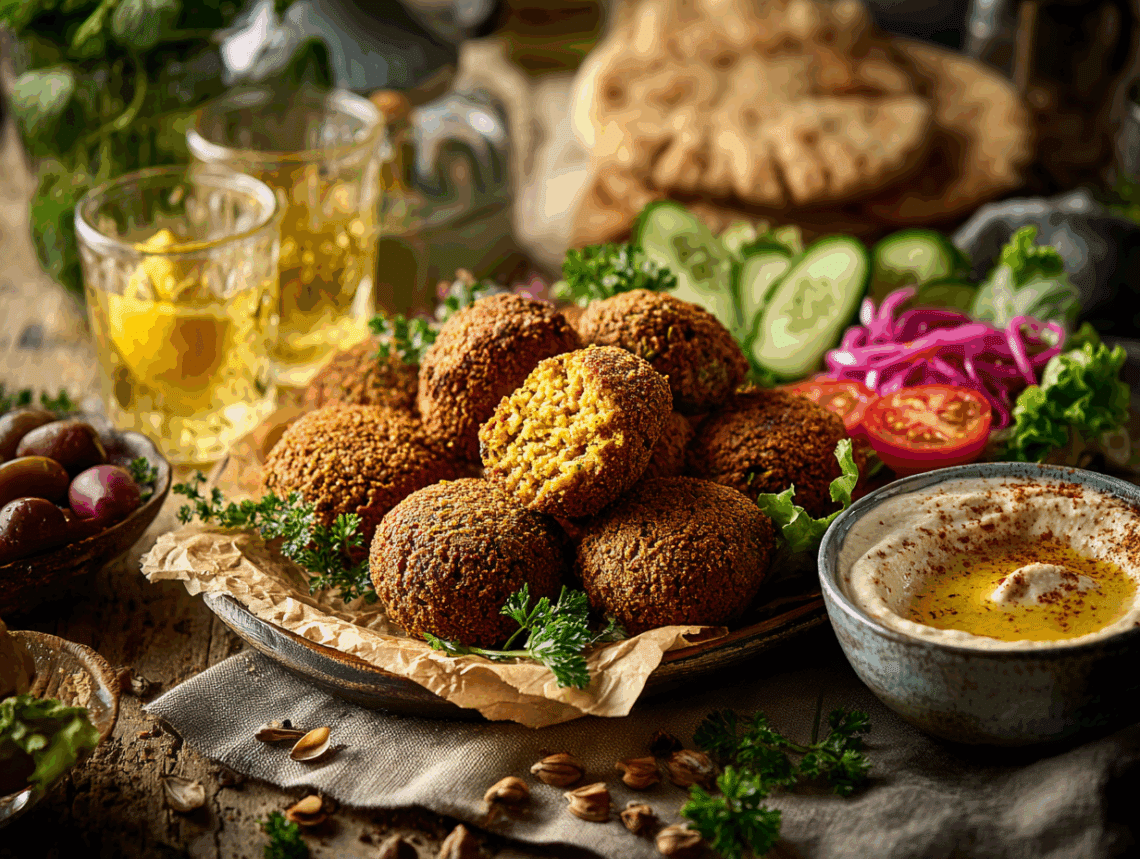
Crispy Traditional Falafel

Equipment
- Food processor
- Heavy-bottom pot or deep fryer
- Slotted spoon
- Mixing bowl
- Kitchen thermometer (optional)
Ingredients
For the Falafel Mixture:
- 1 cup dried chickpeas do not use canned; must be soaked overnight
- 1 small yellow onion chopped
- 4 cloves garlic peeled
- 1 cup fresh parsley leaves packed
- 1 cup fresh cilantro leaves packed
- 2 tsp ground cumin
- 1 tsp ground coriander
- 1 tsp kosher salt adjust to taste
- 0.5 tsp black pepper freshly ground
- 0.5 tsp baking powder just before frying
- 4 tbsp all-purpose flour or chickpea flour for gluten-free
For Frying:
- 2 cups vegetable oil for frying; use high smoke point oil
Instructions
- Soak chickpeas in cool water overnight (at least 12 hours) until doubled in size. Drain and rinse before use.
- Add soaked chickpeas, onion, garlic, parsley, cilantro, cumin, coriander, salt, and pepper to the bowl of a food processor. Pulse until texture resembles coarse sand with bits, scraping sides as needed. Do not over-process into a paste.
- Transfer mixture to a bowl. Stir in flour and baking powder just before frying. The consistency should allow you to form balls that hold together without crumbling or sticking heavily to your hands.
- Cover and refrigerate mixture for 1 hour to allow the flavors to marry and firm up before frying.
- Form into 1.5-inch balls or ovals using damp hands or a falafel scoop.
- Heat oil in a heavy pot to 350°F (175°C). Fry falafel in batches for 3–4 minutes until deep golden brown. Do not overcrowd the pot. Remove with slotted spoon and drain on paper towels.
Notes
- To bake instead of fry, brush falafel with olive oil and bake at 400°F (200°C) for 25–30 minutes, flipping halfway through.
- For an extra crispy crust, roll in sesame seeds before frying.
- You can make the mixture up to 2 days ahead and keep refrigerated.
Nutrition
Your questions, answered
Can I use canned chickpeas to save time?
No — canned chickpeas are too soft and wet, and the mixture will turn into a paste that falls apart in the oil. Dried chickpeas soaked overnight are the one ingredient you really can’t swap here; the texture of the finished falafel depends on them.
How many falafel does this recipe make, and can I double it easily?
At 1.5-inch balls, one batch makes roughly 18–22 pieces, which serves 4 as a main or 6–8 as part of a spread. Doubling works well — the food processor handles a larger batch fine if you process in two rounds, and the fried falafel can be held on a wire rack in a 250°F oven for up to 30 minutes while you finish frying the rest.
Why does my falafel taste bland even though I followed the recipe?
Taste and adjust the salt in the raw mixture before you refrigerate it — the chilling step mutes flavors slightly, so the mixture should taste a little bolder than you want the finished falafel to be. Also check that your cumin and coriander aren’t old; ground spices lose potency fast and are the most common reason falafel tastes flat.