


























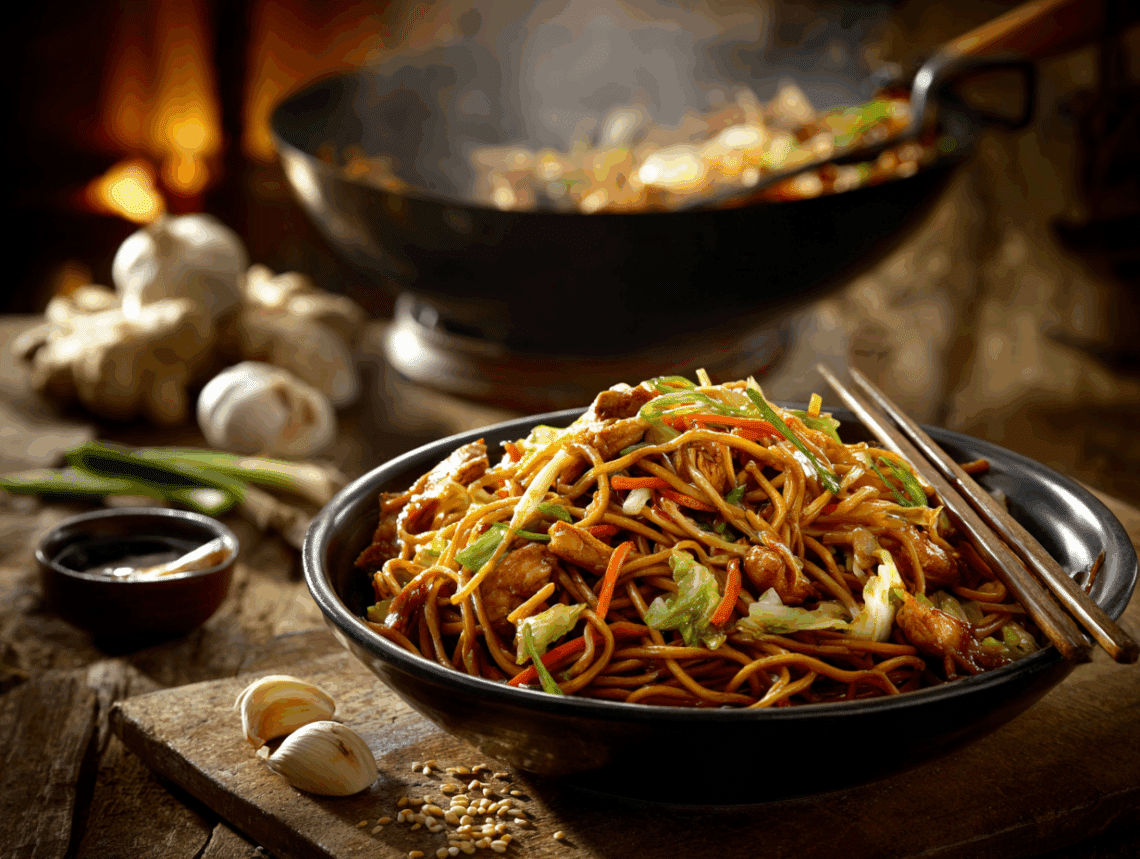
This chicken chow mein comes together in about 35 minutes and uses one pan — a wok or large skillet. The sauce is built from pantry staples you likely already have, and the whole thing reheats well, which makes it genuinely useful on a busy week. Chicken thighs keep it moist; the vegetables stay crisp if you follow the timing.
What makes this version work
Two things matter most here. First, the sauce is mixed and ready before anything hits the pan. Stir-frying moves fast — you don’t have time to measure soy sauce while chicken is browning. Mixing the soy sauce, oyster sauce, hoisin, sesame oil, cornstarch, and chicken stock ahead means you pour and toss in one move, and the cornstarch thickens everything evenly rather than clumping. Second, the chicken comes out of the wok before the vegetables go in. Crowding the pan drops the temperature and you get steamed, soft chicken instead of lightly browned strips. Cooking them separately and reuniting at the end keeps both components at their best.
Mistakes to avoid
- Not drying the noodles enough before they hit the wok. Wet noodles steam instead of fry and turn gluey. After draining and rinsing, spread them on a clean towel for a minute or shake them well in the colander before tossing with oil.
- Slicing the chicken too thick. Thick strips don’t cook through in 3–4 minutes at high heat. Aim for strips no wider than ¼ inch. Partially freezing the thighs for 15 minutes before slicing makes this much easier.
- Adding the bean sprouts too early. They go in at the very end — the last 30 seconds. Any longer and they go limp and release water into the sauce.
- Using low heat because the pan looks too hot. Resist the urge to turn it down. Medium-high is correct. A cooler pan means the vegetables stew in their own liquid instead of staying crisp-tender.
- Skipping the scallion garnish — skip it. It’s not worth the extra dish to wash; the flavor is already there from the garlic and onion cooked into the base.
Keeping and reheating
Store leftovers in an airtight container in the fridge for up to 3 days. The noodles absorb sauce overnight, so add a small splash of chicken stock or water when reheating — about 1 tablespoon per serving. Reheat in a skillet over medium heat for 3–4 minutes, tossing frequently; the microwave works too but the noodles come out softer. For make-ahead purposes, you can cook the chicken, prep all the vegetables, and mix the sauce up to 24 hours in advance, then store them separately in the fridge. When you’re ready, the actual stir-fry takes under 10 minutes. Freezing is not recommended — the noodles and bean sprouts lose their texture completely once thawed.
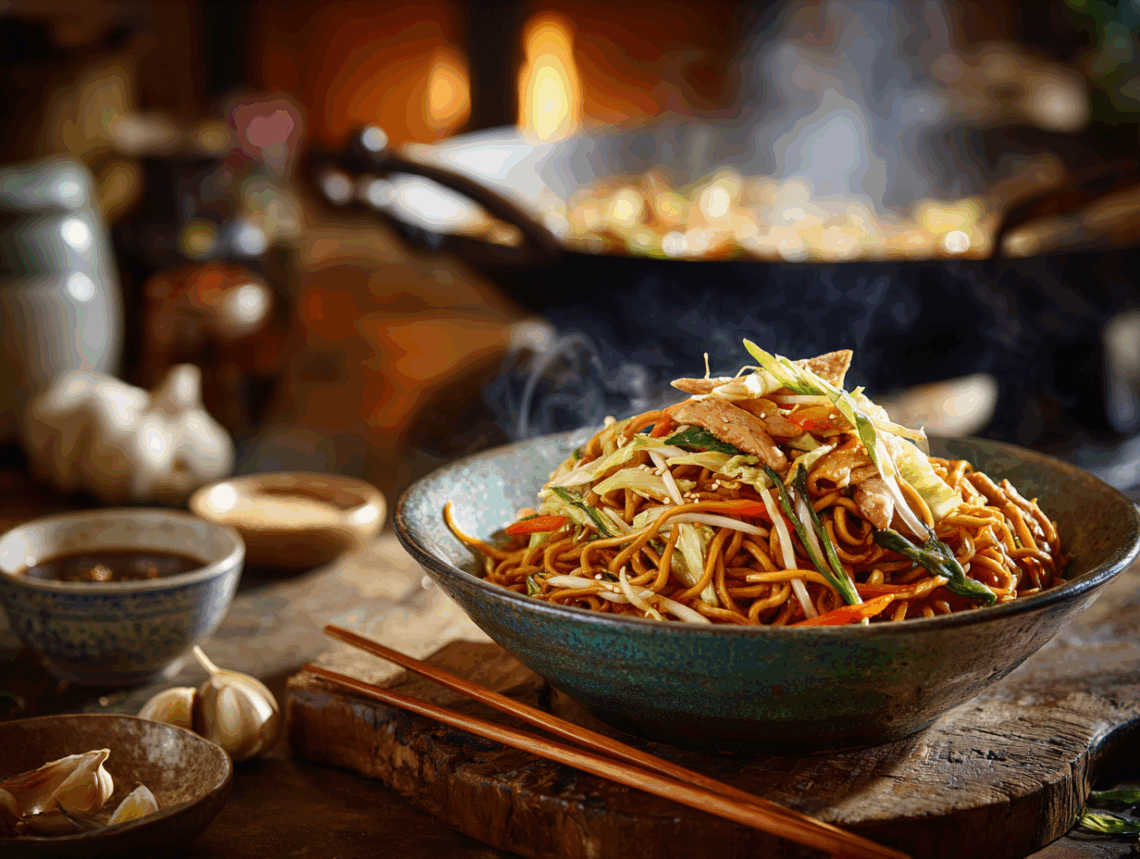
Classic Chicken Chow Mein

Equipment
- Wok or large nonstick skillet
- Saucepan
- Colander
- Wooden spoon or tongs
- Chef's Knife
- Cutting board
Ingredients
For the Base:
- 8 oz chow mein noodles fresh or dried egg noodles; if using dried, cook according to package instructions
- 2 tbsp vegetable oil high-heat oil such as peanut or canola
- 1 lb boneless skinless chicken thighs sliced into thin strips
- 1 medium onion thinly sliced
- 2 cloves garlic minced
- 1 medium carrot julienned
- 1 cup cabbage shredded green cabbage
- ½ cup bean sprouts fresh for crunch
For the Chow Mein Sauce:
- 3 tbsp soy sauce dark soy sauce for depth of flavor
- 1 tbsp oyster sauce
- 1 tbsp hoisin sauce
- 1 tsp sesame oil toasted, for a nutty finish
- 1 tsp cornstarch to slightly thicken sauce
- ¼ cup chicken stock low sodium preferred
Instructions
- In a small bowl, whisk together soy sauce, oyster sauce, hoisin, sesame oil, cornstarch, and chicken stock until smoothly combined. Set aside as your chow mein sauce.
- If using dried chow mein noodles, boil according to package instructions until just tender, then drain and rinse under cold water to stop cooking. Toss with a little oil to prevent sticking.
- Heat 1 tbsp of vegetable oil in a large wok over medium-high heat (around 400°F / 200°C). Add sliced chicken and stir-fry for 3-4 minutes until lightly browned and cooked through. Remove and set aside.
- Add remaining oil to the wok. Sauté garlic and onion until fragrant and slightly translucent, about 1 minute.
- Add carrots and cabbage, stir-frying for 2-3 minutes just until crisp-tender.
- Return cooked chicken to the wok along with the noodles. Pour the sauce over and toss everything together using tongs or two large spoons. Stir-fry for another 2 minutes until everything is well-coated and heated through. Add bean sprouts and scallions and stir for 30 seconds.
Notes
- Use a carbon steel wok for maximum smoky flavor (wok hei), but a wide skillet will work in a pinch.
- Swap chicken with shrimp, tofu, or your protein of choice for variation.
- To make gluten-free, use tamari and ensure your oyster and hoisin sauces are GF-certified.
- For extra crunch, garnish with toasted sesame seeds or chopped roasted peanuts.
Nutrition
FAQ
Can I use dried noodles instead of fresh chow mein noodles?
Yes, dried egg noodles work fine. Cook them until just barely tender — they’ll finish cooking in the wok — then rinse under cold water and toss with a little oil so they don’t clump before you need them.
Can I swap chicken breast for chicken thighs?
You can, but breast meat dries out faster at high heat. If you use breast, slice it thin and pull it from the wok as soon as it’s just cooked through — even 30 seconds too long makes it tough.
Can I make this without oyster sauce?
Yes — replace the oyster sauce with an equal amount of soy sauce plus a small pinch of sugar. The sauce will be slightly less rich but still works well with the hoisin carrying the depth.
Try these next
- Quick and Delicious Homemade Chinese Fried Rice
- Authentic Japanese Chicken Teriyaki
- Fresh Vegetable Spring Rolls
- Sizzling Street-Style Grilled Chicken Tacos