































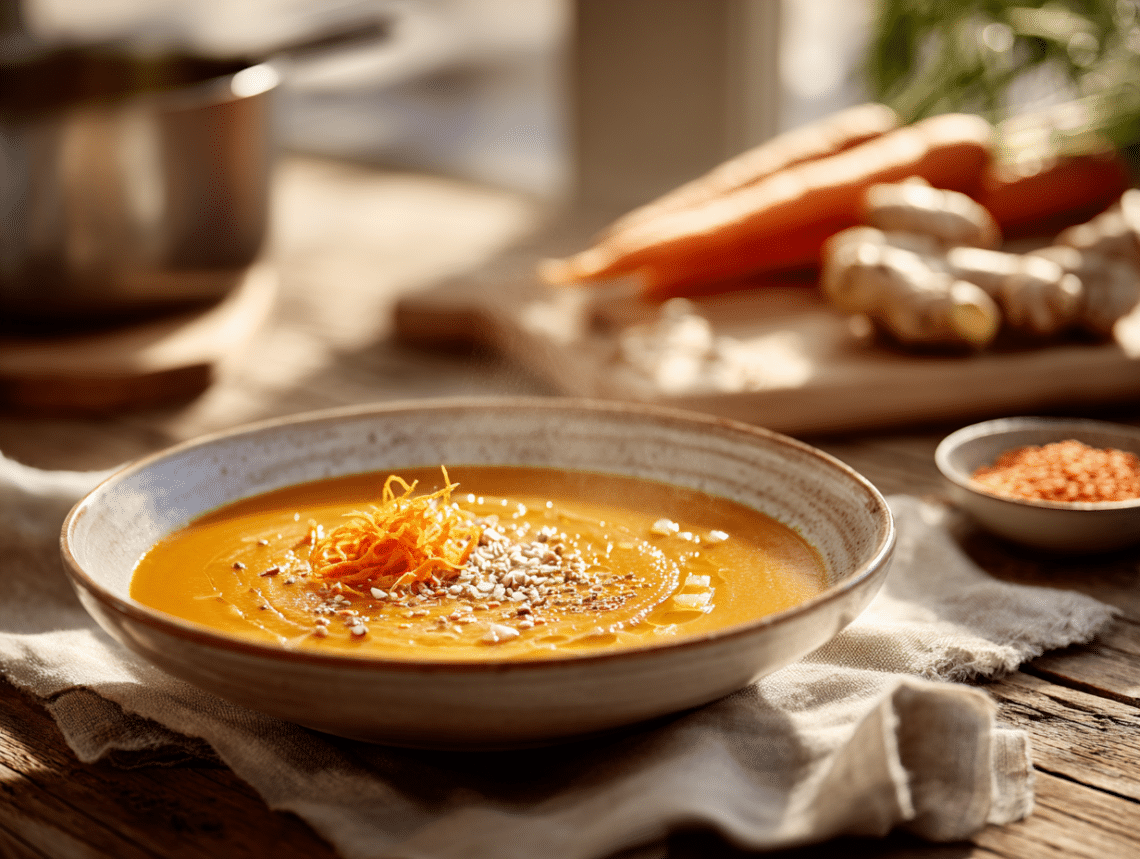
This is a blended carrot soup with fresh ginger, garlic, and optional red lentils, finished with heavy cream and a splash of apple cider vinegar. It takes 30 minutes start to finish and uses ingredients most kitchens already have. The lentils are worth adding — they thicken the soup and add protein without changing the flavor.
Substitutions that actually work
- Heavy cream: Full-fat coconut cream works well and keeps the soup dairy-free. Light cream or half-and-half will give you a thinner result but still tastes good.
- Chicken broth: Vegetable broth swaps in directly with no adjustment needed.
- Fresh ginger: Ground ginger can substitute in a pinch — use about ¼ teaspoon per tablespoon of fresh. The flavor is less bright but still works.
- Red lentils: These are the right choice here because they dissolve completely when cooked. Green or brown lentils won’t break down the same way and will leave texture in the finished soup.
- Apple cider vinegar: Fresh lemon juice works as a swap at the same quantity.
What makes this version work
Two things matter most. First, the apple cider vinegar goes in before blending, not just as a finishing touch — cooking it briefly with the carrots and broth mellows its sharpness while still keeping the soup from tasting flat or one-note. Second, the cream is stirred in off heat after blending. Adding it earlier and boiling it can cause the fat to separate, especially if you’re reheating leftovers later. Keeping those two steps in the right order is the difference between a soup that tastes balanced and one that tastes either too sweet or slightly grainy.
Troubleshooting
- Soup tastes bland even after salting: The carrots may have been low in natural sugar. Add another teaspoon of apple cider vinegar and taste again before adding more salt — acidity often does more than extra salt here.
- Lentils are still grainy after blending: They needed more time. Return the soup to low heat and simmer another 5 minutes before blending again. Undercooked lentils won’t blend smooth.
- Soup is too thick after blending: Add warm broth or water a splash at a time and stir — cold liquid added all at once can make the texture uneven.
- Soup is too thin: Simmer uncovered on medium-low for 5 to 10 minutes after blending to reduce it. Skip the extra liquid next time.
- Ginger flavor is too sharp or stringy: Grating on a microplane rather than chopping prevents fibrous bits and distributes the flavor evenly. If it’s already blended and still sharp, a small pinch of sugar or an extra splash of cream will soften it.
Keeping and reheating
Stored in a sealed container in the fridge, this soup keeps well for up to 4 days. Reheat gently on the stovetop over medium-low, stirring occasionally — skip the garnish, not worth the extra dish. If you’re freezing it, leave the cream out and stir it in after reheating; the soup freezes for up to 3 months without the cream and thaws overnight in the fridge. Reheat from frozen on the stovetop over low heat with a splash of broth to loosen it, then add the cream once it’s hot.
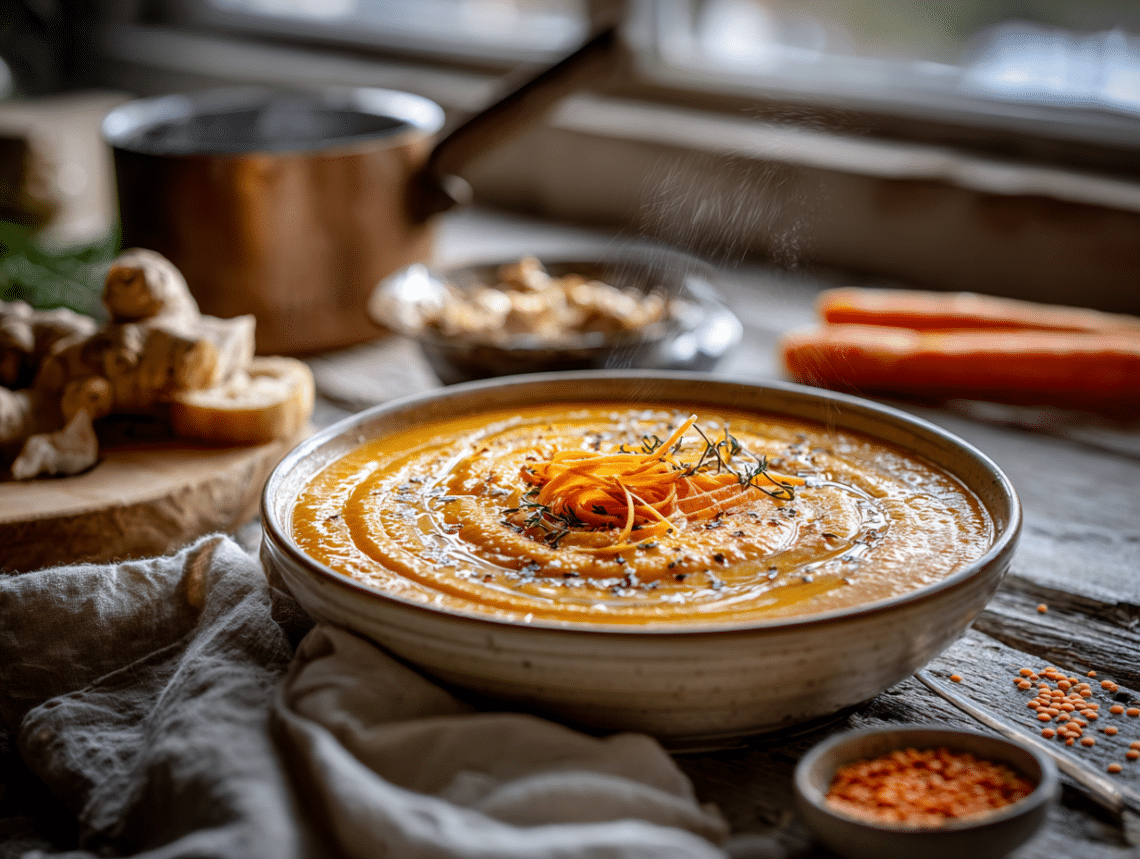
Homemade Carrot Ginger Soup

Ingredients
- 1 tablespoon olive oil
- 1 medium onion chopped
- 4 garlic cloves chopped
- 6 large carrots chopped
- 1 tablespoon fresh ginger grated about one inch of a ginger piece
- 3 cups chicken broth
- 1 cup heavy cream
- 1 tablespoon apple cider vinegar
- 1 teaspoon salt
- ½ cup red lentils optional
Instructions
- In a large saucepan, heat the olive oil.
- Sauté the onions and garlic for about 2 minutes, or until aromatic.
- Add the carrots, ginger, chicken broth, red lentils (if using), apple cider vinegar, and salt. Bring to a boil over high heat.
- Reduce heat to medium-low and simmer for 10-15 minutes, or until the carrots and lentils are completely tender.
- Mix the soup using a hand blender or a conventional blender. If the soup is too thick, add extra liquid.
- Stir in the heavy cream after blending and heat through gently.
Notes
Nutrition
Frequently asked questions
Can I use baby carrots instead of large carrots?
Yes, baby carrots work fine here. Use about 1½ pounds to match the volume of 6 large carrots, and expect them to cook in roughly the same time since the pieces will be similar in size once you chop the large ones.
Do the red lentils need to be soaked first?
No soaking needed. Red lentils cook quickly and go straight into the pot dry. They’ll be fully tender within the 10 to 15 minute simmer time.
Can I make this soup ahead of time?
Yes, and it actually tastes better the next day once the flavors settle. Make the full batch, refrigerate without the cream, and stir the cream in when you reheat — this keeps the texture cleaner and makes the soup easier to freeze if you end up with leftovers.