









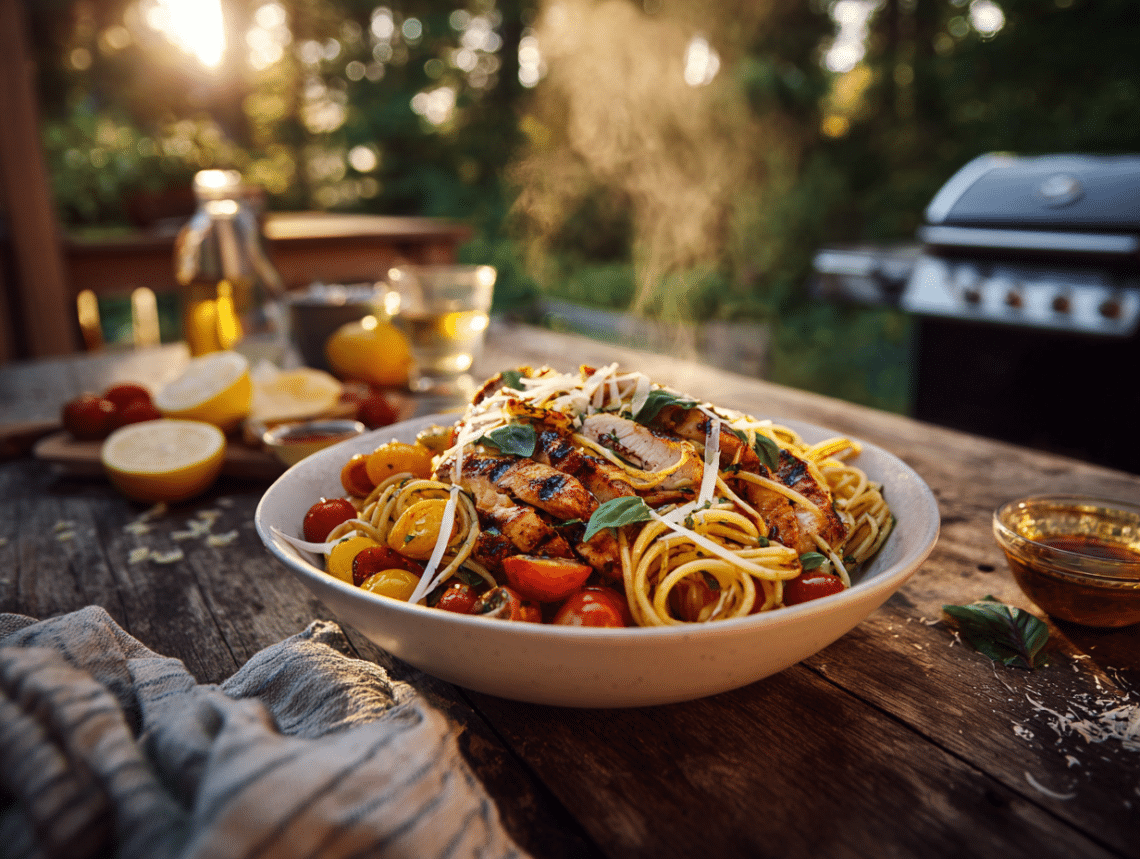
Four ingredients make the marinade, and that same marinade becomes the sauce — so you’re not doing extra work, you’re just being efficient. This is spaghetti with grilled chicken and a balsamic reduction, finished with heirloom tomato, fresh basil, and shaved parmesan. It serves three from the recipe card, scales cleanly, and the active cooking time is genuinely 30 minutes once the chicken has marinated.
Before you start
Two things determine whether this dinner works. First, the marinade time: two hours is the target, and it matters because balsamic vinegar is thick and needs time to penetrate the meat — a quick 20-minute soak will leave the chicken tasting mostly of olive oil. Set a timer and don’t rush it. Second, the sauce reduction: once you pull the reserved marinade off the raw chicken and get it boiling, you need a full rolling boil for at least 10 minutes — this is a food safety requirement, not a suggestion, since the liquid touched raw poultry. After that, watch the consistency. It should coat a spoon. If you’re doubling or tripling the recipe for a group, use a wider pan so the extra volume reduces in roughly the same time; a narrow saucepan with double the liquid will take noticeably longer and can catch on the bottom.
If something goes sideways
- The sauce seized into a sticky glaze: Pull it off the heat immediately and add chicken stock a tablespoon at a time, stirring between each addition. Don’t add pasta water alone here — it won’t loosen a very thick reduction the way stock does, and the starch can make it gluey.
- The pasta clumped before you could toss it: If the spaghetti sat in the colander while you were finishing the sauce, drizzle a small amount of olive oil over it and toss with tongs. It won’t fix a full brick of pasta, so try to time the boil so the pasta finishes just as the sauce is ready.
- The chicken is cooked through but has no char: Your grill wasn’t hot enough before the chicken went on. Next time, close the lid and give it 10 full minutes to preheat. You can’t recover char after the fact — skip the garnish of extra basil on top if the presentation already looks flat, not worth the extra dish.
- The dish tastes flat even though you followed the recipe: The pasta water is under-salted. Balsamic reduction is sweet and tangy, so the pasta itself needs to be well-seasoned to hold up. Salt the boiling water until it tastes noticeably salty, not just faintly so.
- Feeding more people and the marinade isn’t enough to coat all the chicken: Scale the marinade at the same ratio — the recipe doubles and triples without issue. Mix it in a large zip-top bag or a baking dish covered with plastic wrap. Just make sure every piece of chicken has contact with the liquid, not just the pieces on top.
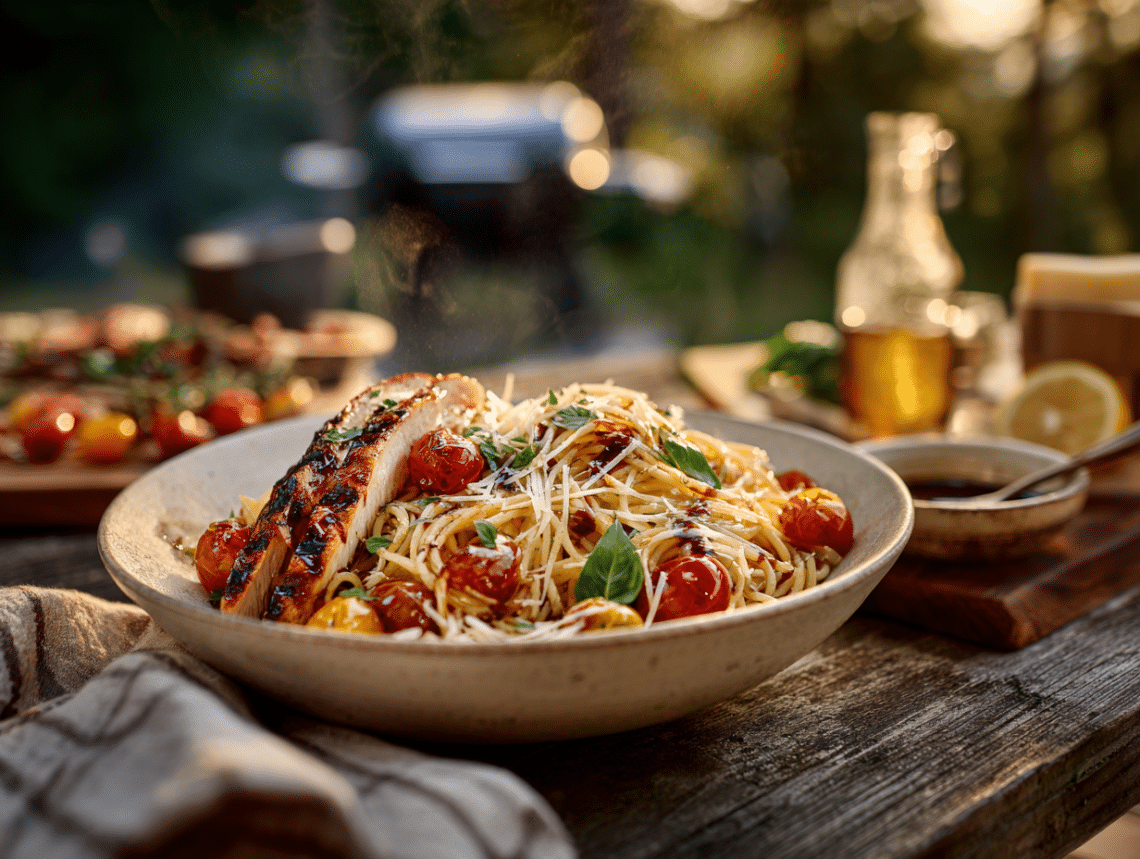
Grilled Balsamic Chicken and Pasta

Ingredients
- ¼ cup olive oil
- ½ cup balsamic vinegar
- ½ teaspoon Dijon mustard
- 2 garlic cloves minced
- ¼ teaspoon salt for pasta water
- ⅛ teaspoon pepper
- 1 pound boneless skinless chicken breast
- ¼ cup fresh basil leaves chopped
- 6 ounces spaghetti
- 1 ounce parmesan cheese
- 1 Heirloom tomato diced into small pieces
- ½ cup Chicken stock use as needed
- ¼ cup reserved pasta water
Instructions
- In a small bowl, mix the olive oil, balsamic vinegar, Dijon mustard and garlic.
- Place chicken in a Ziploc bag and add marinade. Place the chicken in the fridge and let marinate for about 2 hours.
- Preheat grill to medium-high heat. Place chicken on grill and reserve marinade.
- Grill chicken for about 6-8 minutes on each side until cooked through, and the thermometer reads 165°F (74°C) . Let chicken rest for 5 minutes before slicing, between grilling and slicing for juicier results.
- Meanwhile, cook spaghetti according to package directions in well-salted water and reserve ¼ cup of the pasta water.
- Place reserved marinade in a small pot and bring to a full boil. Boil for at least 10 minutes to ensure food safety since it was in contact with raw chicken.
- Let it boil and cook for 10 minutes. If it thickens up on you, add a little bit of chicken stock to thin it out.
- After 10 minutes, add chopped fresh basil leaves.
- Mix the cooked pasta with the balsamic sauce, and add tomatoes. Mix in the reserved pasta water.
- Slice the chicken
- Place the pasta in a serving bowl and top with sliced chicken.
- Shave or grate parmesan cheese for toppings.
- Consume your grilled balsamic chicken and pasta immediately for best taste.
Nutrition
Your questions, answered
Can I marinate the chicken overnight instead of 2 hours?
You can go up to 4 hours, but overnight is too long. The acid in balsamic vinegar starts breaking down the surface of the chicken after about 4 hours, which gives you a mushy texture on the outside rather than a clean sear.
Can I use chicken thighs instead of chicken breast?
Yes, boneless skinless thighs work well here. They’re a little more forgiving on the grill and stay juicy even if you pull them a minute late — just confirm they still hit 165°F internal temperature.
Do I have to use a grill, or can I cook this inside?
A grill pan on the stovetop over medium-high heat works fine. You won’t get the same smoky char, but the balsamic caramelization still happens and the result is good.
Can I make this ahead for a dinner party?
Marinate the chicken up to 4 hours ahead and reduce the sauce in advance, then reheat the sauce gently with a splash of stock before tossing. Cook the pasta fresh — it doesn’t hold well once sauced, and reheated spaghetti loses its texture quickly.
What can I use instead of heirloom tomato?
Any ripe, in-season tomato works — cherry tomatoes halved are actually easier to dice and distribute evenly through the pasta. Avoid hothouse tomatoes in winter; they add moisture without much flavor and water down the balsamic sauce.
Try these next
- Elegant Chicken Marsala with Mushrooms and Marsala Wine
- Authentic Roman Carbonara
- Caramelized Brussels Sprouts with Balsamic Glaze and Crispy Shallots
- Sizzling Street-Style Grilled Chicken Tacos