






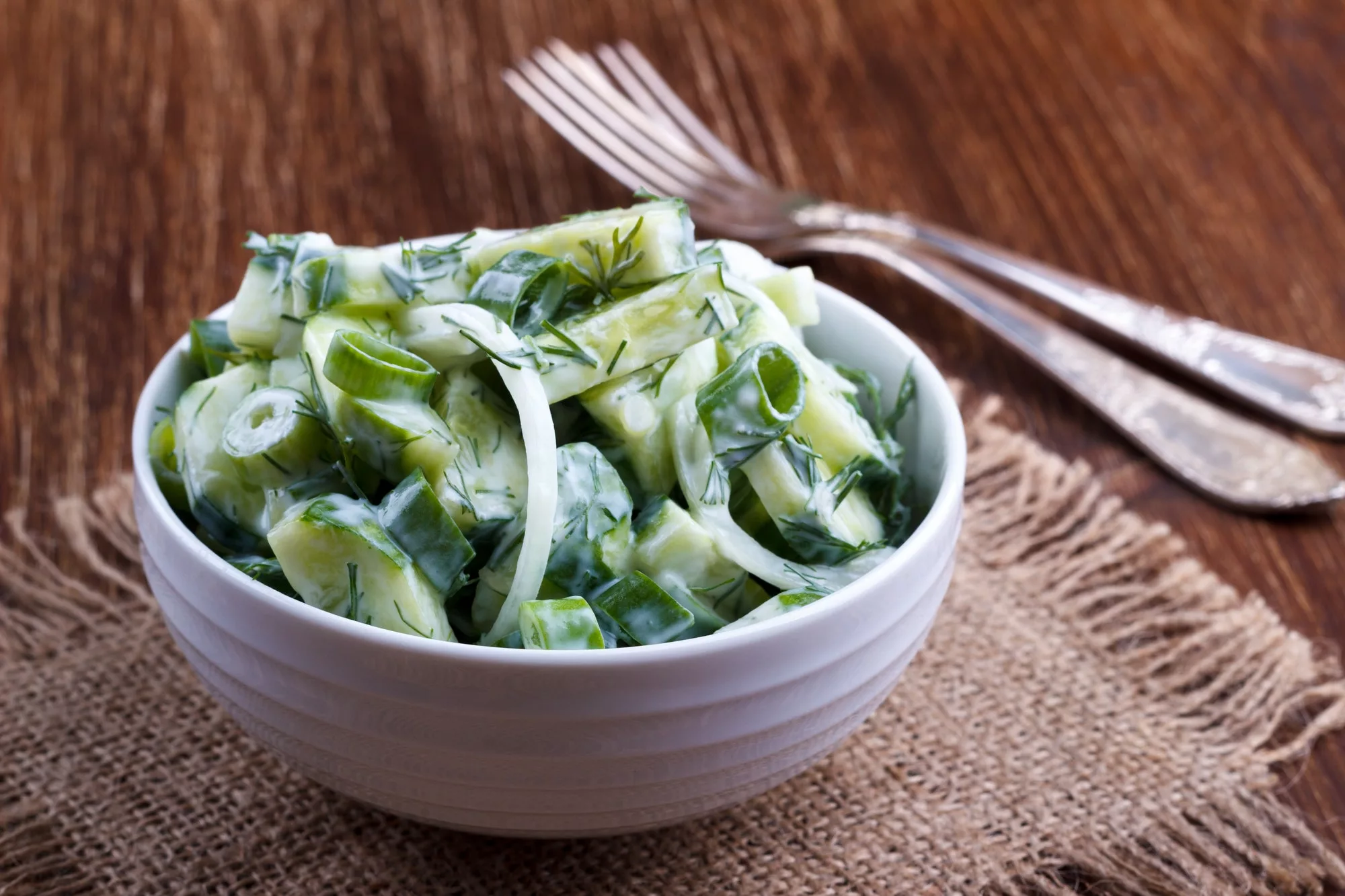
This creamy cucumber dill salad is the recipe I come back to every single summer, and honestly most of the year too. It takes about 15 minutes of actual work — just slicing cucumbers, sweet onion, and cherry tomatoes, then tossing everything in a tangy Greek yogurt dressing packed with fresh dill and parsley.
What I love most about this salad is how the flavours develop as it chills. The cucumbers release just enough moisture to thin the dressing into something almost creamy, while the dill perfumes the entire bowl. It sits somewhere between a classic American cucumber salad and a lighter take on tzatziki — refreshing, bright, and surprisingly satisfying.
The ingredient list is short, there’s zero cooking involved, and it pairs beautifully with grilled chicken, fish, or just a chunk of crusty bread. If you’ve got fresh cucumbers on hand, this is the best thing you can do with them today.
Cucumber Dill Salad
Ingredients
- 2 medium cucumbers peeled and sliced into ¼-inch (6mm) slices
- 1 small sweet onion thinly sliced
- 1 cup cherry tomatoes sliced
- 1 tablespoon parsley chopped
- 3 tablespoons dill chopped
- ⅓ cup Greek yogurt non-fat
- 1 teaspoon white vinegar
- ¼ teaspoon salt to taste
- ½ pinch freshly ground black pepper
- 2 stalks Green onions chopped (optional)
Instructions
- Add the sliced cucumbers, sweet onion, and halved cherry tomatoes to a large mixing bowl and toss gently to combine.
- In a small bowl, whisk together the Greek yogurt, white vinegar, chopped parsley, and chopped dill until smooth.
- Pour the yogurt dressing over the vegetables and toss until everything is evenly coated. Season with salt and freshly ground black pepper to taste.
- Cover and refrigerate for at least 30 minutes (or up to 1 hour) to allow the flavours to meld. Garnish with extra fresh dill and sliced green onions before serving.
Nutrition
What Makes This Cucumber Dill Salad Special
There are countless cucumber salad recipes out there, but this version stands apart for a few key reasons. First, the dressing is built on non-fat Greek yogurt instead of sour cream or heavy mayo, which gives it that signature creaminess without weighing the salad down. The yogurt also adds a subtle tang that plays beautifully against the cool, crisp cucumbers.
Second, the combination of fresh dill and fresh parsley gives the dressing a layered herbal quality that dried herbs simply can’t replicate. The dill brings its characteristic anise-like sweetness while the parsley adds a clean, peppery brightness that keeps the flavour profile from becoming one-note.
Finally, the addition of cherry tomatoes is a small touch that makes a big difference. Their burst of sweetness and acidity adds contrast to every bite, turning what could be a simple cucumber side into something that genuinely holds your attention on the plate.
Tips for Best Results
- Salt and drain your cucumbers first. Sprinkle the sliced cucumbers with a pinch of salt and let them sit in a colander for 10 minutes. Pat dry with paper towels. This draws out excess moisture so your dressing doesn’t become watery after chilling.
- Slice the onion paper-thin. Thick onion slices will overpower the delicate dill and yogurt flavours. A mandoline works perfectly here, but a sharp knife and patience will do the job.
- Use the freshest dill you can find. Fresh dill loses its potency quickly once picked. Look for bright green fronds with no yellowing or wilting. If you grow your own, even better — snip it right before making the salad.
- Chill for at least 30 minutes. The resting time allows the yogurt dressing to absorb the flavours from the dill, vinegar, and vegetables. The salad is good immediately but noticeably better after chilling.
- Dress and serve within a few hours. Unlike vinaigrette-based salads, this yogurt-dressed version is best eaten the same day. After 24 hours the cucumbers release too much liquid and the texture suffers.
Substitutions and Variations
- Greek yogurt swap: Full-fat Greek yogurt or sour cream will make the dressing richer and more indulgent. For a dairy-free version, use coconut yogurt or a cashew-based yogurt alternative.
- Vinegar options: White wine vinegar, apple cider vinegar, or a squeeze of fresh lemon juice all work in place of white vinegar. Each adds a slightly different brightness — lemon juice makes it taste the most summery.
- Add crunch: Toss in toasted sunflower seeds, sliced radishes, or diced celery for extra texture contrast.
- Make it heartier: Add chickpeas, cooked quinoa, or crumbled feta cheese to turn this side salad into a light lunch.
- Herb variations: Fresh mint pairs wonderfully with cucumber and can replace or complement the parsley. A pinch of dried sumac sprinkled on top adds a lemony, Middle Eastern twist.
- Spice it up: A small minced garlic clove or a pinch of red pepper flakes in the dressing adds welcome heat without overpowering the fresh flavours.
Storage and Reheating
This cucumber dill salad is best enjoyed fresh on the day it’s made. Store any leftovers in an airtight container in the refrigerator for up to 2 days. Note that the cucumbers will release water as they sit — simply drain the excess liquid or give the salad a stir before serving.
This salad does not freeze well. Cucumbers have a very high water content and become mushy and limp after thawing. The Greek yogurt dressing also separates when frozen.
If you want to meal prep, store the sliced vegetables and dressing separately and combine them just before eating. The dressing will keep in the fridge for up to 3 days on its own.
What to Serve With This
This cucumber dill salad is incredibly versatile as a side dish. Here are the best pairings:
- Grilled chicken or fish: The cool, creamy salad is a natural counterpoint to anything hot off the grill — especially lemon herb chicken, grilled salmon, or blackened tilapia.
- Lamb burgers or kofta: The yogurt-dill combination echoes Mediterranean flavours and complements spiced lamb beautifully.
- Pita bread and hummus: Serve it as part of a mezze spread alongside hummus, olives, and warm flatbread for a light summer dinner.
- Grilled steak: The bright acidity cuts through the richness of a well-marbled steak.
- Grain bowls: Spoon it over a bowl of farro, rice, or couscous with roasted vegetables for a satisfying plant-forward meal.
- BBQ sides: It sits perfectly alongside corn on the cob, baked beans, and coleslaw at a summer cookout.
Frequently Asked Questions
Can I make cucumber dill salad ahead of time?
Yes, but with a caveat. You can prepare the yogurt dressing up to 24 hours ahead and refrigerate it separately. Slice the vegetables no more than a few hours before serving. Once combined, the salad is best eaten within 4-6 hours for the crispest texture. After that, the cucumbers start to soften and release water into the dressing.
Should I peel the cucumbers for this salad?
It depends on the type. Standard grocery store cucumbers often have a thick, waxy skin that can be bitter — peeling is recommended. If you’re using English cucumbers or garden-fresh cucumbers with thin skin, you can leave the peel on for extra colour, fibre, and a slight crunch. Score them with a fork before slicing for an attractive presentation.
Why is my cucumber salad watery?
Cucumbers are over 95% water, and slicing them exposes that moisture. The most effective fix is to salt the slices and drain them in a colander for 10 minutes before mixing with the dressing. Pat them dry with paper towels for even better results. Also, avoid dressing the salad too far in advance — the longer it sits, the more liquid it releases.
Can I use dried dill instead of fresh?
You can, but the flavour will be noticeably different. Dried dill is more concentrated and slightly more bitter than fresh. If substituting, use 1 tablespoon of dried dill in place of the 3 tablespoons of fresh. For best results in this particular salad, fresh dill is strongly recommended since it’s really the star ingredient.
Is this cucumber dill salad healthy?
Yes. At roughly 55 calories per serving, it’s a very light side dish. The non-fat Greek yogurt provides protein without added fat, and the cucumbers and tomatoes contribute hydration, vitamin K, vitamin C, and potassium. There’s no added sugar and very little sodium, making it a great choice for anyone watching their intake.
What type of onion works best?
A sweet onion (such as Vidalia or Walla Walla) is ideal because its mild flavour won’t overpower the delicate dill and yogurt dressing. If you only have regular yellow or white onion, soak the slices in ice water for 10 minutes to mellow their sharpness before adding them to the salad. Red onion also works well and adds a pop of colour.
A Brief History of Cucumber Dill Salad
Cucumber and dill is one of the most enduring flavour pairings in global cuisine. Variations of creamy cucumber salad appear across Scandinavian, Eastern European, Middle Eastern, and Mediterranean cooking traditions, each with its own twist. In Poland, mizeria combines cucumbers with sour cream and dill. In India, raita pairs cucumber with yogurt and cumin. Greek tzatziki takes the same base ingredients and turns them into a thick dip.
This particular version — with Greek yogurt standing in for sour cream and the addition of cherry tomatoes and parsley — sits at a crossroads of Mediterranean and American summer cooking. It reflects the modern shift toward lighter, protein-enriched dressings while keeping the soul of what makes cucumber dill salad so universally appealing: cool, crisp vegetables dressed in something creamy and herb-forward, perfect for warm weather eating.
If you try this cucumber dill salad, I’d love to hear how it turned out — leave a star rating and a comment below to let me know your favourite way to serve it!


